








Executive Overview
When modern society visualizes plastic pollution, our minds naturally gravitate toward the obvious culprits: discarded single-use beverage bottles bobbing in coastal waters, brittle plastic bags snagged in coastal brush, or sprawling, sun-bleached garbage patches floating in the open ocean. For decades, environmental advocacy and public awareness campaigns have rightly focused on these macro-scale plastic items. More recently, public consciousness has expanded to encompass microfibers—the microscopic, squiggly, spaghetti-like strands that shed from our synthetic garments like polyester and nylon every time we run a washing machine.
Yet, a far more pervasive, insidious, and chemically complex source of microplastic pollution has been hiding in plain sight, situated quite literally under our feet. Every single day, millions of motor vehicles travel across the world’s roadways, serving as an invisible conveyor belt of contamination. The culprit is not exhaust pipe emissions, but something far more fundamental to vehicular movement: tire wear particles.
As vehicles accelerate, brake, navigate turns, and cruise along asphalt, the physical friction generated between heavy rubber tires and abrasive road pavement causes tires to slowly disintegrate. This process releases trillions of microscopic fragments of synthetic and natural rubber into the environment. Driving a car, or even riding a bus, is ecologically akin to dragging an industrial eraser across the planet, leaving behind a trail of toxic microplastic crumbs.

Because these particles are dense and heavy, many wash off roadways during rainstorms, infiltrating municipal storm drains and eventually flowing unimpeded into streams, rivers, and the global ocean. Until recently, advanced analytical blind spots meant scientists could not reliably quantify tire wear particles in traditional microplastic counts. Today, however, researchers recognize them as one of the single largest sources of microplastics entering our ecosystems.
With overnight bans on driving impossible and the complete reformulation of global tire manufacturing years away, communities need immediate, pragmatic defense mechanisms. Enter green infrastructure—engineered natural systems such as bioswales, rain gardens, roadside vegetative buffers, and permeable pavements. By trapping stormwater runoff and forcing it to percolate through soil and plant roots, green infrastructure offers a vital, near-term shield to protect vulnerable wildlife and aquatic ecosystems from the onslaught of tire-derived microplastics.
Detailed Chronology: Unmasking the Tire Wear Threat
The realization that automotive tires are a major ecological hazard did not happen overnight. It is the result of decades of cumulative scientific discovery, evolving analytical chemistry, and a growing intersection between urban planning and marine conservation.
The Early Decades: Exhaust-Centric Focus
For the better part of the 20th century, government regulators, environmental scientists, and the automotive industry focused almost exclusively on tailpipe emissions. Environmental policies centered on reducing carbon monoxide, nitrogen oxides, and particulate matter ($textPM2.5$ and $textPM10$) discharged directly from internal combustion engines. Non-exhaust emissions—specifically the wear and tear of brakes, road surfaces, and tires—were largely overlooked or assumed to be minor background noise compared to the visible smoke and smog of fossil-fuel combustion.

The Turn of the Century: Emerging Chemical Warnings
In the late 1990s and 2000s, toxicologists studying urban runoff began noticing mysterious mass mortality events among Pacific Northwest coho salmon populations returning to urban streams to spawn. Whenever heavy rains washed stormwater from metropolitan roads into these waterways, the adult salmon would exhibit rapid signs of distress—circling, gasping at the water surface, and dying within hours—long before they could reproduce.
For years, the exact chemical trigger remained an ecological mystery. However, this phenomenon laid the groundwork for targeted investigations into what was actually being washed off city streets.
2020–2021: The Breakthrough Discovery of 6PPD-Q
A monumental breakthrough occurred in late 2020 when an interdisciplinary team of researchers led by Washington State University scientists finally identified the smoking gun. They discovered that 6PPD, a chemical antioxidant and preservative added universally to rubber tires to prevent them from degrading and cracking under ozone exposure, reacts with ozone in the atmosphere to form a byproduct known as 6PPD-quinone (6PPD-Q).
When tire wear particles settle on roads and mix with rainwater, 6PPD-Q is leached into the water column. The research proved that even at astonishingly low, trace-level concentrations, 6PPD-Q is acutely toxic to coho salmon, single-handedly bridging the gap between urban roadway runoff and mysterious fish kills. This landmark study galvanized the scientific community, shifting regulatory and research focus from generalized air pollution to the specific chemical and physical hazards of tire debris.
Present Day: Integrating Green Infrastructure into the Urban Matrix
Recognizing that tire wear particles evade traditional municipal water treatment facilities, environmental organizations—including the Ocean Conservancy—along with academic institutions like the University of Toronto, have shifted toward a preventative, localized approach. Funded by initiatives like the Tire Industry Project, contemporary research has moved beyond merely documenting the problem.
Today, scientists are actively evaluating, testing, and designing city-level green infrastructure networks. By treating roadsides as active filtration zones rather than mere conduits for drainage, current conservation chronology is entering an era of actionable, nature-based engineering solutions designed to intercept tire microplastics before they reach aquatic habitats.
Supporting Context & Metrics: The Scale of the Crisis
To fully grasp the magnitude of tire wear particle pollution, one must look closely at the numbers. They reveal an environmental challenge that is staggering in both frequency and volume.
Microscopic Scale, Macro-Level Volume
- Trillions of Particles: Modern laboratory testing indicates that a single vehicle’s tires can emit more than two trillion microscopic particles for every single mile driven.
- Annual Per Capita Output: Studies show that the average citizen’s daily driving habits contribute to the generation of nearly two pounds of tire wear particles per person, per year.
- The Invisible Composition: Tires are not made of simple rubber. They are complex industrial composites combining natural rubber, synthetic polymers (such as styrene-butadiene rubber), metallic reinforcements, fillers like carbon black and silica, and an array of chemical softeners, vulcanizing agents, and antidegradants like 6PPD.
Pathways to the Ocean
Once these trillions of particles are shed from a moving vehicle, their ultimate fate is dictated by physics and meteorology:
- Airborne Dispersion: The lightest, smallest tire wear particles become airborne dust. Swept up by wind currents, these particles drift away from roadways, settling onto agricultural soils, forest floors, and surface waters far from the original source.
- Surface Accumulation: Heavier particles settle directly onto asphalt and concrete roadways, accumulating in the spaces between lanes, along shoulders, and within urban gutters.
- Stormwater Runoff: During precipitation events, rainwater acts as a flushing agent. It sweeps accumulated tire debris, heavy metals, and associated chemical toxins into municipal storm sewer systems. Because many stormwater systems discharge directly—and untreated—into local rivers, bays, and estuaries, these particles ultimately end up in the marine environment, where they are ingested by filter feeders, fish, and coastal wildlife.
Official Statements and Expert Perspectives
The complexity of tire wear pollution requires transparent, authoritative communication from leading scientists and policy experts. Ocean Conservancy leadership has been at the forefront of translating this complex issue for the public and policymakers alike.
"What do you think about when you hear the words ‘microplastic pollution?’ Your mind may immediately go to imagery of colorful fragmented plastics broken off from bottles, buckets and other items we use in our everyday lives. Or, perhaps, you imagine a pile of microplastic fibers—the tiny, squiggly, spaghetti-shaped plastics that shed from our synthetic clothing. There is another major source of microplastic pollution that’s hiding in plain sight, quite literally under our feet, that might change how you think about microplastics: tire wear particles."
— Dr. Britta Baechler, Director of Ocean Plastics Research, Ocean Conservancy
Dr. Baechler has frequently underscored the physical reality of driving in the modern world, offering a vivid analogy for the public:
"Driving a car or even riding in a bus is a bit like dragging an eraser across the planet, except the crumbs are microplastics. Toxic microplastics."
— Dr. Britta Baechler
Complementing this perspective, policy frameworks are shifting to address structural solutions rather than placing the entire burden of behavioral change on individual consumers. Dr. Anja Brandon, Director of Plastics Policy at Ocean Conservancy, emphasizes the necessity of bridging rigorous scientific discovery with tangible municipal action:
"Tire wear particle pollution can feel like an overwhelming problem. After all, it’s tied to transportation, which most of us rely on every day. But that’s exactly why research like this matters: It gives us a real, near-term path forward that doesn’t require waiting for the entire global transportation system to change first."
— Dr. Anja Brandon, Director of Plastics Policy
The Solution: Harnessing Green Infrastructure
While researchers and chemical engineers are actively exploring the long-term possibility of reformulating tire rubber to be less toxic or structurally resistant to rapid shedding, these industrial overhauls will take decades to develop, test, and scale across the billions of vehicles currently traversing the global fleet. Humanity cannot afford to wait for a completely zero-emission, zero-wear tire market to materialize before taking defensive action.
Instead, conservationists are championing green infrastructure as one of our most effective, immediate, near-term defense lines.
What is Green Infrastructure?
Green infrastructure refers to strategically engineered natural and semi-natural systems designed to mimic natural hydrological cycles. Rather than relying exclusively on traditional "grey infrastructure"—concrete pipes, subterranean culverts, and rapid-discharge drainage ditches that channel polluted water directly into sensitive water bodies—green infrastructure utilizes natural elements to manage stormwater. Key components include:
- Bioswales: Broad, shallow, vegetated channels designed to concentrate and attenuate stormwater runoff while slowing its velocity.
- Rain Gardens: Planted depressions that absorb runoff from impervious surfaces like rooftops, driveways, and roadways, allowing water to pool temporarily and infiltrate the soil.
- Roadside Buffers: Strip plantings of deep-rooted native grasses, shrubs, and trees established along highway corridors to catch and filter particulate matter before it reaches curb lines.
- Permeable Pavements: Specialized porous asphalt, concrete, or interlocking pavers that allow rainwater to drain directly through the road surface into an underlying stone reservoir, filtering out suspended solids and microplastics on-site.
How Natural Systems Filter Microplastics
When road runoff laden with tire wear particles flows through a bioswale or rain garden, a multi-layered filtration process takes place. The physical velocity of the water is dramatically reduced, causing heavy particulate matter to settle out of suspension via gravity.
As the water continues to percolate downward through layers of engineered soil, organic mulch, and root networks, microplastic particles and associated chemical pollutants (such as heavy metals and 6PPD-Q) become physically trapped in the soil matrix. Furthermore, specialized soil microbes and plant root zones can break down certain organic contaminants over time, significantly reducing the toxic load that ultimately makes its way into local streams and coastal estuaries.
Future Outlook: Bridging Science and Municipal Action
Understanding that green infrastructure can capture tire wear particles in a controlled laboratory setting is only the first step. The critical unknown that scientists and urban planners currently face revolves around scalability.
The Ocean Conservancy and University of Toronto Partnership
To bridge this knowledge gap, Ocean Conservancy’s plastics science and policy teams have partnered with researchers at the University of Toronto on a groundbreaking research initiative funded by the Tire Industry Project. This study is designed to evaluate the real-world economic costs, logistical hurdles, and ecological benefits of scaling up green infrastructure specifically for tire wear particle capture at an entire city level.
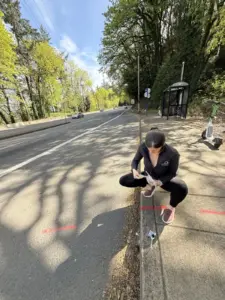
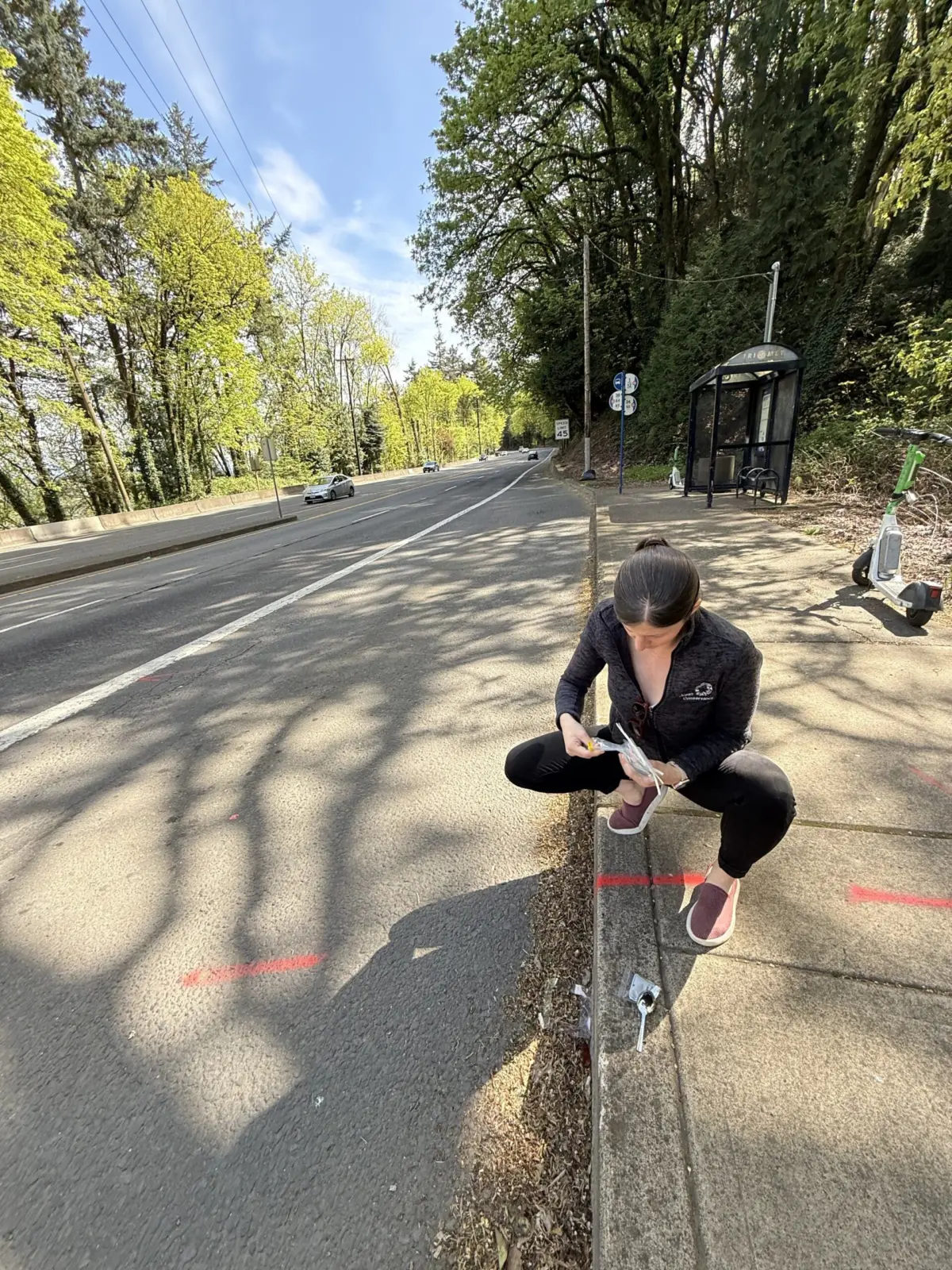
If you happen to walk or drive through the streets of participating study cities—such as Portland, Oregon—you might spot field scientists crouched near curbsides, carefully scooping sediment samples from roadside gutters and bioswale inlets. While field collection using specialized spoons and vials may look unconventional to passing motorists, it represents cutting-edge environmental science in action.
Core Objectives of the Ongoing Research Initiative
- Quantifying Capture Efficiency: Accurately measuring the percentage of tire wear particles successfully intercepted by varying configurations of roadside bioswales and permeable surfaces during heavy rain events.
- Cost-Benefit Modeling: Developing comprehensive economic frameworks to help municipal governments calculate the financial investment required to retrofit existing urban streetscapes with green infrastructure.
- Translating Science into Policy: Equipping city planners, state departments of transportation, and federal policymakers with empirical data to transition from theoretical discussions ("Could this work?") to confident, large-scale capital investments ("We know this works, let’s build it").
A Path Forward for Communities and Individuals
It is easy for individuals to feel paralyzed by the sheer ubiquity of tire wear particle pollution. Transportation is the lifeblood of modern society, underpinning commerce, community connection, and daily livelihoods. We cannot simply stop driving overnight.
However, targeted research proves that we do not need to overhaul global transportation networks to make meaningful, immediate progress in ocean and wildlife conservation. By investing in smart, nature-based urban design—one roadway, one bioswale, and one city at a time—we can intercept microplastics at their source before they devastate aquatic ecosystems.
Public engagement remains vital. Supporting evidence-based research, advocating for municipal investments in green stormwater management, and staying informed on plastic pollution policy empower communities to take proactive stances. Together, through a combination of rigorous science, forward-thinking policy, and engineered natural solutions, we can work toward a healthier, more resilient future—and a global ocean free of plastic pollution, forever and for everyone.