








Executive Overview
In the dynamic and hyper-competitive landscape of global commercial aviation, few variables remain as volatile—or as economically disruptive—as the price of jet fuel. For decades, carriers have weathered cyclical energy shocks by adjusting pricing models, hedging futures, and temporarily introducing fuel surcharges. Yet, the post-pandemic recovery era has ushered in a distinctly different market dynamic: enduring inflationary pressures intersecting with shifting consumer behavior.
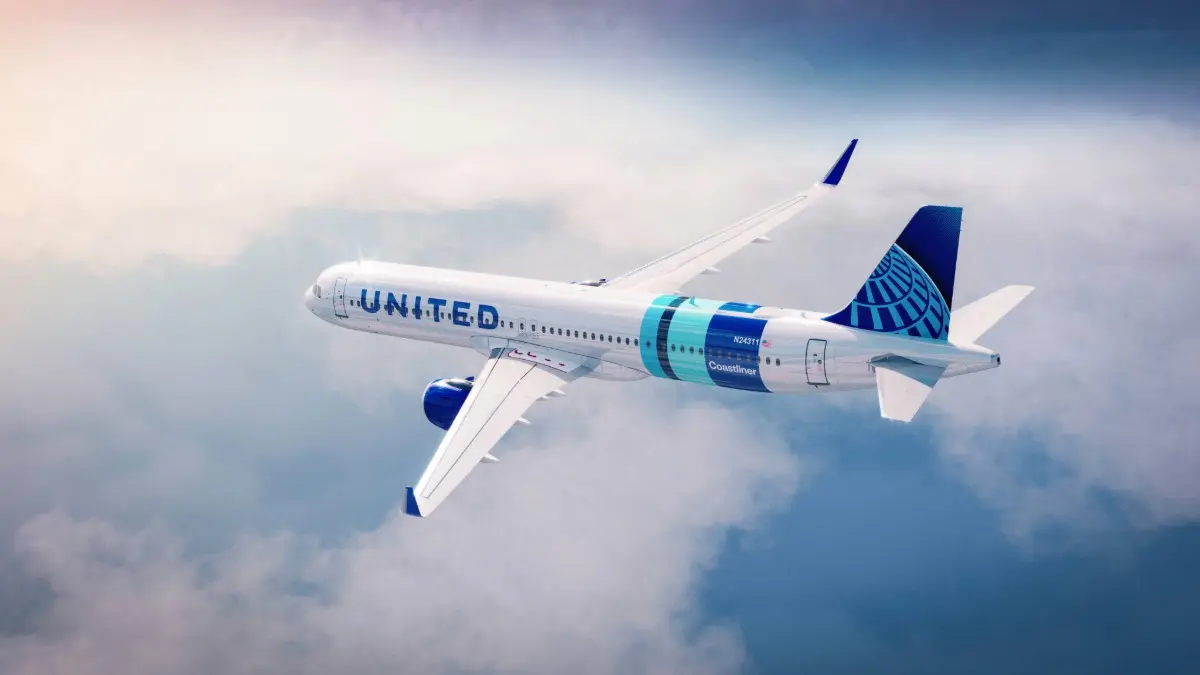
Against this backdrop, United Airlines has struck a defiant chord. Speaking at the recent Morgan Stanley Laguna investor conference, United Chief Financial Officer Michael Leskinen outlined an aggressive, unabashed strategy for navigating the latest surge in energy markets. Despite a sharp, rapid spike in crude and refined product prices, United’s leadership remains fully confident in its ability to achieve a 100% recovery of jet fuel costs by the conclusion of the fiscal year.
This financial optimism is not built on traditional cost-cutting measures alone. Instead, United is placing a massive, multi-pronged wager on the enduring resilience of high-end consumer demand. By betting that travelers will continue to pay a premium for spacious cabins, elevated onboard service, and cutting-edge amenities—such as the upcoming fleet-wide integration of SpaceX’s Starlink high-speed Wi-Fi—United is attempting to decouple its revenue growth from raw commodity fluctuations.
However, this strategy is fraught with immediate friction. Because airlines operate on forward-booking curves, the recent energy shock has created an unavoidable financial lag. With roughly 35 percent of fourth-quarter tickets already booked and locked in at legacy price points, United cannot retroactively claw back the margin compression caused by sudden market spikes. Nevertheless, the carrier’s executive team views this as a temporary timing issue rather than a structural threat. This report offers a comprehensive examination of United’s financial positioning, the mechanics of its fuel recovery model, the broader economic pressures facing the aviation sector, and the long-term gamble defining the airline’s modern trajectory.
Detailed Chronology: The Energy Crunch and the Booking Curve Lag
The modern commercial aviation industry operates on a razor-thin margin of error, where minute fluctuations in fuel expenditures can tilt an otherwise profitable quarter into the red. To understand United Airlines’ current operational stance, it is essential to trace the chronology of the recent market movements and the internal mechanics of airline revenue management.
The Summer Volatility and the Autumn Spike
Throughout the summer travel peak, jet fuel prices experienced typical seasonal ebbs and flows, buoyed by robust global demand for passenger travel. However, entering the autumn shoulder season, geopolitical tensions in key energy-producing regions, coupled with unexpected refinery constraints and tightening global inventories, triggered a rapid escalation in fuel costs. For airlines, which purchase jet fuel on a spot-and-contract hybrid basis, the upward movement was swift and unforgiving.
When fuel prices spike within a compressed timeframe, carriers face an immediate structural impediment known in the industry as the "booking curve lag." At the Morgan Stanley Laguna investor conference on Wednesday, CFO Michael Leskinen articulated this mathematical reality with absolute clarity:

"Fuel prices have spiked pretty rapidly. We’ve got about 35% of our tickets booked already in the fourth quarter. So you can’t go back and reprice those tickets."
This dynamic creates a temporary earnings squeeze. When roughly a third of a quarter’s inventory is already sold before an energy shock occurs, those seats cannot absorb the incremental cost of production. The financial weight must be carried entirely by the remaining 65 percent of tickets yet to be sold, requiring steep and immediate upward adjustments to airfares for late-booking business and leisure travelers.
The Mechanics of the Recovery Timeline
Despite the lag imposed by the fourth-quarter booking curve, Leskinen’s timeline for full cost recovery remains steadfast. United’s revenue management systems are designed to react dynamically to shifting input costs. As unsold inventory diminishes closer to departure dates, yield-management algorithms automatically push fares higher to capture maximum willingness-to-pay from time-sensitive travelers—predominantly corporate flyers and last-minute vacationers.
By asserting that United will recover 100% of these elevated fuel costs by the end of the year, Leskinen is signaling to Wall Street that the carrier’s pricing power remains largely intact. Unlike previous economic cycles where aggressive discounting eroded yields during demand soft patches, United is holding the line on pricing, trusting that the market will bear the higher ticket prices necessary to maintain operating margins.
Supporting Context & Metrics: The Economics of Modern Airline Operations
To contextualize United Airlines’ bullish outlook, one must examine the broader macroeconomic metrics dictating airline health in the mid-2020s. Jet fuel traditionally accounts for between 20 percent and 30 percent of an airline’s total operating expenses, making it second only to labor as the largest variable cost center. When fuel prices swing dramatically, the ripple effects are felt across income statements globally.
The Structural Shift in Consumer Spending
Historically, leisure demand has exhibited high price elasticity—meaning that a significant increase in ticket prices leads to a sharp decline in passenger volume. However, the post-pandemic era has rewritten traditional economic playbooks. Analysts across the aviation sector have noted a structural shift in consumer priorities, where discretionary spending on travel and experiential consumption has proven remarkably resilient, even in the face of persistent economy-wide inflation and higher borrowing costs.
United has leaned aggressively into this behavioral evolution. Over the past several years, the carrier has systematically restructured its aircraft configurations to feature more premium seats. By expanding First Class, Premium Plus, and extra-legroom Economy Plus footprints across its domestic and international fleets, United has successfully captured a disproportionate share of high-yield revenue.
| Operational Metric / Focus Area | Strategic Intent | Financial Impact |
|---|---|---|
| Premium Cabin Expansion | Increase square-footage allocation for First/Business class seats. | Generates higher revenue per available seat mile (RASM) to absorb cost spikes. |
| Forward Booking Management | Dynamically reprice remaining 65% of Q4 inventory to offset the 35% locked-in lag. | Mitigates margin erosion caused by sudden fuel volatility. |
| Fleet Modernization & Starlink | Install high-speed satellite Wi-Fi and upgrade interior amenities. | Enhances competitive differentiation, driving brand loyalty and pricing power. |
| Fuel Cost Recovery Model | Achieve 100% pass-through of fuel price increases via fare adjustments. | Protects bottom-line profitability against volatile energy markets. |
The Power of Product Differentiation: The Starlink Factor
Pricing power is rarely sustained through fare hikes alone; it requires a compelling value proposition that convinces consumers the product is worth the extra expenditure. Recognizing this, United is currently undertaking one of the most ambitious onboard experience overhauls in modern aviation history, anchored by its pending partnership with SpaceX to install Starlink high-speed, low-latency Wi-Fi across its entire mainline and regional fleet.
In an era where connectivity is no longer a luxury but a baseline expectation for business travelers and digital natives alike, standard airline Wi-Fi has long been a source of immense customer frustration. Legacy satellite systems are frequently plagued by high latency, bandwidth throttling, and exorbitant pricing models. By introducing gate-to-gate, high-speed internet capable of supporting streaming, gaming, and remote video conferencing for free, United is establishing a powerful competitive moat.
Industry analysts note that this technological upgrade directly supports United’s fuel-passing strategy. When corporate travel managers and premium leisure flyers weigh their carrier options, an onboard experience featuring reliable, office-grade connectivity justifies a higher ticket price. By bundling superior hard products (spacious cabins, modern seatback entertainment) with best-in-class soft products (Starlink connectivity), United is creating a consumer mindset that is less sensitive to base fare increases.
Official Statements and Industry Analysis
The commentary delivered by CFO Michael Leskinen at the Morgan Stanley Laguna investor conference serves as a masterclass in corporate communication during periods of macroeconomic uncertainty. By addressing the elephant in the room—the rapid spike in fuel prices—head-on, United sought to preemptively manage analyst expectations regarding fourth-quarter margin compression while simultaneously projecting unwavering confidence in its operational framework.
Deconstructing the Executive Narrative
Leskinen’s framing of the "lag" is a critical takeaway for institutional investors and industry observers. By explicitly stating that 35 percent of fourth-quarter tickets were already booked prior to the price surge, he provided financial modelers with the exact variables needed to adjust their near-term forecasts accurately. However, the more significant portion of his statement was the definitive reassurance that nothing fundamental has broken in United’s pricing engine.
"There is nothing that is changing that causes us to not be able to pass [costs on]."
This declaration underscores a broader cultural shift within United Airlines under the leadership of CEO Scott Kirby and his executive team. Historically, legacy carriers often engaged in defensive capacity-dumping or destructive fare wars during cost shocks. Today, United operates with a posture of disciplined capacity management and uncompromising yield preservation. If market demand does not support a flight at a price point that fully absorbs operating costs, United has demonstrated a willingness to trim capacity rather than fly empty or unprofitable seats.
Industry Reaction and Competitive Landscape
Competitors are watching United’s strategy closely. While carriers like Delta Air Lines and American Airlines also leverage premium seating strategies, United’s aggressive push into bleeding-edge technological amenities like Starlink gives it a unique differentiator.
Wall Street analysts have generally responded with cautious optimism to United’s messaging. While short-term earnings models will inevitably factor in the cost lag mentioned by Leskinen, the overarching thesis—that United can successfully extract higher yields from a resilient consumer base—remains intact. Aviation economists point out that as older, unhedged fuel contracts roll over into current spot prices across the entire industry, all major network carriers will be forced to raise fares concurrently, neutralizing any individual competitive disadvantage that United might face from leading the price hikes.
Future Outlook: Navigating Headwinds and Seizing Long-Term Opportunities
As United Airlines looks beyond the immediate hurdles of the fourth quarter and sets its sights on the years ahead, the carrier’s strategic roadmap is defined by a delicate balance between aggressive innovation and disciplined financial management. The success of its fuel-recovery gamble will ultimately serve as a litmus test for the broader commercial aviation sector’s pricing power in an inflationary global economy.
The Macroeconomic Horizon
Looking forward, the global energy landscape remains fraught with uncertainty. Geopolitical flashpoints, shifting OPEC+ production quotas, and the transition toward sustainable aviation fuels (SAF) mean that fuel price volatility is here to stay. For United, relying indefinitely on fare increases to offset commodity spikes is a viable short-to-medium-term strategy, but long-term sustainability will require deeper structural efficiencies.
This is where United’s ongoing fleet modernization program plays a pivotal role. The integration of newer, more fuel-efficient aircraft—such as the Boeing 787 Dreamliner and various models from the Airbus A321neo family—naturally reduces the burn rate per available seat mile. By pairing a modern, fuel-efficient fleet with robust pricing power and high-margin premium cabins, United is engineering a business model that is structurally more resilient to energy shocks than its predecessors were a decade ago.
The Horizon for Passenger Experience
Over the next 12 to 24 months, the physical rollout of the Starlink Wi-Fi system will move from concept to reality, with early testing phases slated to begin soon. As passengers begin experiencing gate-to-gate high-speed internet on United flights, the airline will monitor whether this amenity translates into sustained corporate account wins and higher customer Net Promoter Scores (NPS). If successful, it will cement United’s reputation as an industry innovator, further validating management’s thesis that consumers are willing to pay more for a demonstrably superior travel experience.
Conclusion
United Airlines’ current operational posture is a calculated bet on the modern traveler’s mindset. By openly acknowledging the fourth-quarter booking lag while refusing to waver from its goal of 100% fuel cost recovery, the carrier is projecting a masterclass in executive transparency and strategic resolve.
Whether consumers will continue to absorb higher ticket prices indefinitely remains the ultimate question for the quarters ahead. However, armed with an expanded premium product lineup, disciplined capacity management, and game-changing technological investments like Starlink, United Airlines is positioning itself not merely to survive the next energy shock, but to thrive within it—redefining the economic standards of global aviation for years to come.