







Executive Overview
Transit and paratransit agencies across the United States are caught in a relentless operational squeeze. On one side, federal and state sustainability mandates demand rapid, aggressive decarbonization. On the other, municipal leaders and transit directors must navigate hyper-constrained operating budgets, volatile fossil fuel markets, and the ever-present pressure of taxpayer accountability. For public transit executives, balancing these conflicting demands is no longer just a logistical challenge—it is an existential test of leadership and fiscal stewardship.
Fortunately, a vital financial lifeline is on the horizon. The Federal Transit Administration (FTA) has made $610 million available through the FY 2026 Buses and Bus Facilities Competitive Program and the Low or No Emission (Low-No) Grant Program. These federal funding mechanisms offer a powerful pathway to accelerate fleet modernization, replace aging and polluting vehicles, and deploy clean-energy systems.
However, simply applying for these grants is no longer enough. With competition fierce and evaluation criteria stricter than ever, transit agencies must craft bulletproof applications that harmonize environmental compliance with ironclad operational feasibility. To win a share of this $610 million pool before the September 21 deadline, transit leaders must look beyond standard electrification playbooks. They must build proposals that address the realities of grid lag, maximize capital efficiency, ensure emergency resiliency, and deliver a demonstrably lower Total Cost of Ownership (TCO).
This article provides an exhaustive, authoritative guide for transit directors, fleet managers, and municipal planners looking to maximize their odds of FTA grant success. By evaluating diverse alternative-fuel strategies—particularly the strategic integration of propane autogas alongside electrification—agencies can present federal reviewers with de-risked, turnkey projects that secure vital capital and future-proof public transit networks.
Detailed Chronology: The Evolution of Federal Transit Decarbonization and the FY 2026 Funding Cycle
To understand the strategic importance of the current $610 million FTA funding opportunity, it is necessary to examine the historical evolution of federal transit grants and the regulatory shifts that have shaped today’s landscape.
Phase 1: The Transition from Voluntary to Mandated Sustainability (2015–2020)
For decades, public transit agencies operated diesel-heavy fleets with minimal federal pressure regarding greenhouse gas (GHG) emissions. However, the mid-2010s marked a turning point. As federal climate policies evolved under the Fixing America’s Surface Transportation (FAST) Act and subsequent executive directives, the FTA began steering capital assistance programs toward lower-emission technologies.
During this phase, grants were largely experimental. Agencies used early Low-No iterations to test small batches of hybrid-electric or compressed natural gas (CNG) buses. While these early deployments proved that alternative fuels could work in municipal settings, high upfront capital costs and immature fueling infrastructures limited widespread adoption.

Phase 2: The Infrastructure Investment and Jobs Act Boom (2021–2024)
The passage of the Infrastructure Investment and Jobs Act (IIJA), commonly known as the Bipartisan Infrastructure Law, fundamentally transformed transit funding. Pumping billions of dollars into surface transportation, the law supercharged the Buses and Bus Facilities Program and the Low-No Grant Program, injecting unprecedented capital into the market.
Suddenly, transit agencies were flooded with opportunities to electrify. However, this rush revealed structural bottlenecks. Many agencies rushed to adopt battery-electric buses (BEBs) without fully accounting for the grueling realities of electrical grid upgrades, depot modifications, and long-term battery replacement costs. The mismatch between federal ambitions and ground-level execution risks became a glaring industry-wide hurdle.
Phase 3: The FY 2026 Landscape and the Call for Execution Realism (Present–September 2025)
Entering the FY 2026 funding cycle, the FTA has refined its evaluation criteria. While aggressive carbon reduction remains a non-negotiable priority, federal evaluators are placing unprecedented scrutiny on project readiness and execution risk.
Agencies can no longer submit speculative proposals that rely on wishful thinking regarding utility timelines. Reviewers want to see concrete strategies that account for supply chain realities, grid congestion, and budgetary longevity. The September 21 deadline represents a critical inflection point: agencies that align their grant applications with pragmatic, high-efficiency, multi-fuel pathways will secure the lion’s share of the $610 million available.
Supporting Context & Metrics: Overcoming the Hidden Pitfalls of Fleet Modernization
When crafting a winning grant application, transit agencies must view their proposals through the eyes of an FTA evaluator. What separates a successful, funded project from a rejected application? The answer lies in rigorous risk mitigation, capital efficiency, and measurable long-term performance.
1. Mitigating Grid Lag and Implementation Risks
One of the most common pitfalls in modern transit grant proposals is underestimating implementation timelines. Agencies frequently commit to full-scale depot electrification without consulting local electric utilities early in the process.
High-voltage electric charging infrastructure is notorious for severe utility interconnection delays. In many metropolitan and suburban jurisdictions, waiting times for heavy-duty transformer upgrades, substation expansions, and grid tie-ins extend from 18 to 36 months. During this multi-year lag, agencies face stranded capital, delayed service rollouts, and escalating project management costs. Federal evaluators actively scrutinize these timeline risks, often downgrading proposals that lack a clear, verified utility partnership.
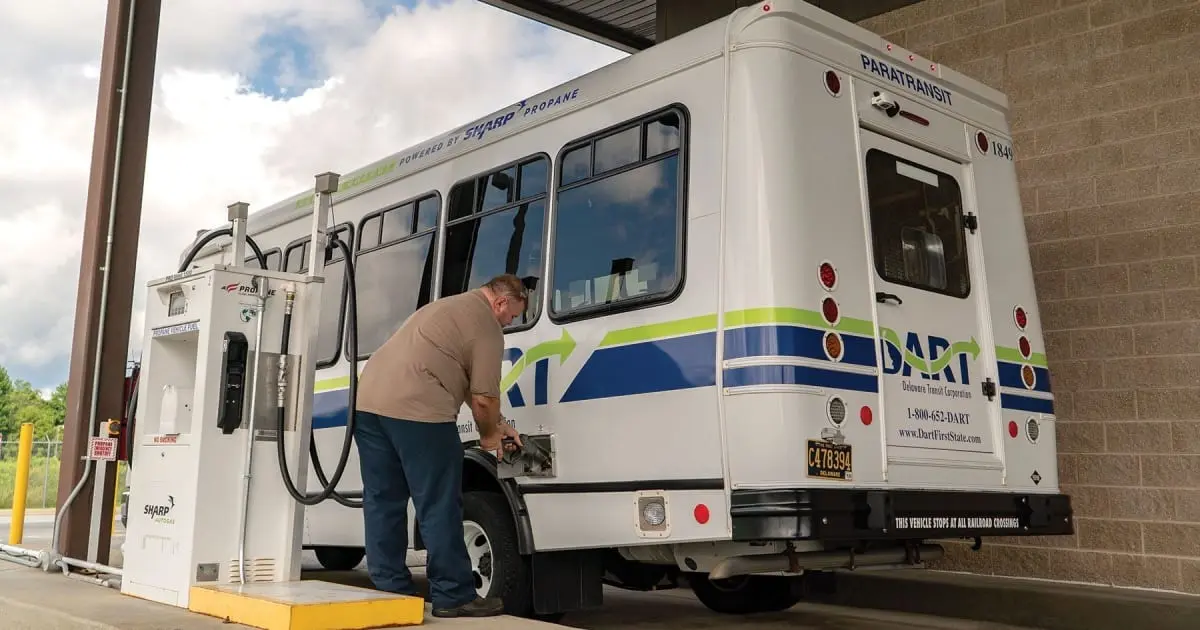
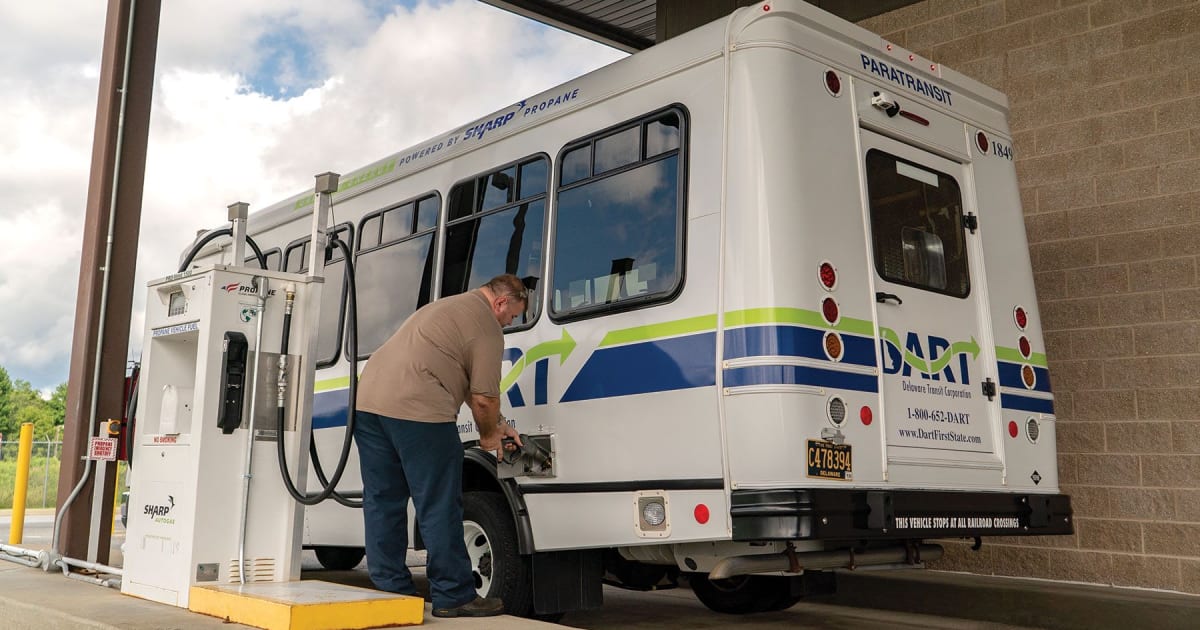
This is where fuel diversification becomes a strategic asset. Propane autogas significantly mitigates project execution risk. Because propane fueling infrastructure can be deployed rapidly—often requiring minimal permitting and zero complex grid upgrades—proposals featuring propane autogas present evaluators with a highly executable, turnkey project. Agencies can achieve immediate emissions reductions without waiting years for utility approval, transforming a high-risk timeline into a swift, dependable deployment.
2. Positioning Resiliency as a Score Multiplier
In an era defined by extreme weather events, severe storms, and grid vulnerabilities, grant reviewers increasingly prioritize projects that deliver operational resilience. Weather-hardened, reliable infrastructure serves as a major scoring differentiator in competitive FTA evaluations.
- The Vulnerability of Surface Charging: Surface-level electric charging stations are intrinsically vulnerable to power grid failures, rolling blackouts, and localized flooding. If a severe storm knocks out local power, an electric bus fleet plugged into the depot can be completely immobilized, crippling emergency transit response capabilities.
- The Closed-Loop Security of Propane: Conversely, propane autogas infrastructure relies on pressurized, closed-loop systems. Because the fuel is stored locally in dedicated tanks, it is entirely independent of the electrical grid. This ensures continuous fleet dispatchability during severe weather events, grid failures, or natural disasters, providing transit networks with an indispensable layer of operational security.
3. Maximizing Total Cost of Ownership (TCO) and Capital Efficiency
Grant evaluators favor proposals that stretch federal investment to achieve maximum community impact. Lower upfront costs for alternative-fuel infrastructure allow agencies to make federal dollars go further, procuring a larger volume of clean vehicles and expanding rider service reach into underserved communities.
Beyond initial capital savings, transitioning from conventional diesel or gasoline to domestic propane autogas delivers a superior Total Cost of Ownership (TCO). The financial metrics speak for themselves:
- Case Study in Savings: Broward County Transit transitioned a portion of its demand-response fleet to propane autogas and achieved $9.8 million in fuel and maintenance savings over six years. This massive financial relief shielded local operating budgets from the severe price shocks characteristic of global petroleum markets.
- Simplified Maintenance: Traditional diesel engines require complex aftertreatment systems, diesel particulate filters (DPFs), and continuous Diesel Exhaust Fluid (DEF) management. These systems are prone to clogging, sensor failures, and costly downtime. Propane autogas engines eliminate these cumbersome aftertreatment requirements, drastically reducing routine maintenance labor, lowering parts expenditures, and maximizing fleet uptime.
Official Statements and Expert Insights
To gain a deeper perspective on how transit agencies can successfully navigate federal grant applications and fleet modernization, industry leaders emphasize the need for pragmatic flexibility and strategic realism.
The Realities of Fleet Decarbonization
Transit planners across the country are increasingly realizing that a one-size-fits-all approach to sustainability is failing. While battery-electric and fuel-cell technologies play a vital role in heavy-duty fixed-route transit, demand-response, paratransit, and light-duty support fleets require agile, cost-effective solutions.
According to municipal transit directors who have successfully secured federal funding, the key to a winning application is transparency and risk management. Evaluators do not want to read idealistic marketing copy; they want to see engineering blueprints, realistic timelines, and robust financial models.
Expert Perspective: The Strategic Value of Propane Autogas
Joel Stutheit, Senior Manager of Business Development for the On-Road Market Portfolio at the Propane Education & Research Council (PERC), underscores the importance of a balanced, de-risked approach to fleet modernization:
"To submit a winning application for FY 2026 FTA funding, transit agencies must present a project that is environmentally sound, financially efficient, and immediately actionable. By leveraging propane autogas, transit agencies can present grant reviewers with a de-risked, highly cost-effective fleet strategy that addresses both budget constraints and urgent emissions reduction mandates."
Stutheit notes that agencies that attempt to electrify every single vehicle in their inventory simultaneously often run into severe capital walls. By utilizing propane autogas for paratransit and community shuttle routes—where duty cycles require continuous operation and rapid refueling—agencies can meet strict environmental targets immediately while reserving heavy electric investments for routes where the infrastructure is already mature.
Future Outlook: The Next Decade of Sustainable Public Transit
As the public transit sector looks toward 2030 and beyond, the pressures of climate change, urbanization, and demographic shifts will only intensify. Paratransit and demand-response services will experience surging ridership as aging populations require reliable, accessible transit options.
Meeting this future demand requires a fundamental shift in how transit agencies approach capital planning:
- Embracing Fuel Diversity: Future-proof transit agencies will reject monolithic fueling strategies. Instead, they will adopt diversified fleets—combining battery-electric buses for high-density urban corridors with propane autogas and renewable propane for paratransit, rural extensions, and municipal support vehicles. This hybrid approach insulates agencies against single-point technological failures or supply chain disruptions.
- Leveraging Renewable Energy: The environmental profile of propane autogas continues to evolve with the commercial availability of renewable propane. Produced from sustainable feedstocks such as agricultural waste and animal fats, renewable propane offers near-zero carbon emissions while retaining the exact same physical properties, infrastructure compatibility, and reliability as conventional propane. Incorporating renewable propane into FTA grant proposals represents a powerful way to maximize environmental scoring without incurring infrastructure redesign costs.
- Data-Driven Grant Strategies: Future FTA funding cycles will increasingly reward agencies that utilize telematics, predictive analytics, and rigorous TCO modeling. Agencies that can prove—down to the decimal point—how federal dollars will reduce carbon output per passenger-mile while safeguarding local taxpayer funds will consistently outcompete those relying on generalized estimates.
Strategic Takeaway for Applicants
The $610 million made available through the FY 2026 Buses and Bus Facilities Competitive Program and the Low or No Emission Grant Program represents a generational opportunity to modernize America’s public transit infrastructure. However, with the September 21 deadline fast approaching, transit directors and municipal planners must act with absolute precision.
Winning applications will not be those that promise impossible timelines or ignore grid realities. They will be those that present a comprehensive, de-risked strategy:
- Environmentally sound projects that aggressively cut local emissions.
- Financially efficient deployments that stretch capital dollars to maximize rider reach and lower Total Cost of Ownership.
- Immediately actionable solutions, such as propane autogas, that bypass grid interconnection delays and guarantee operational resilience during emergencies.
By structuring grant applications around proven, turnkey technologies, transit leaders can satisfy strict federal mandates, protect their operating budgets, and deliver safe, reliable, sustainable mobility to the communities they serve.