







Executive Overview
For over a decade, Dr. Britta Baechler, Director of Ocean Plastics Research at Ocean Conservancy, has operated as a terrestrial sentinel of the marine environment. Working inside laboratories and pouring over vast analytical datasets, she has spent her career attempting to map the invisible trajectory of synthetic materials once they abandon human hands and enter the biosphere. Yet, the sterile, controlled conditions of a laboratory can only reveal so much about a planetary-scale crisis.
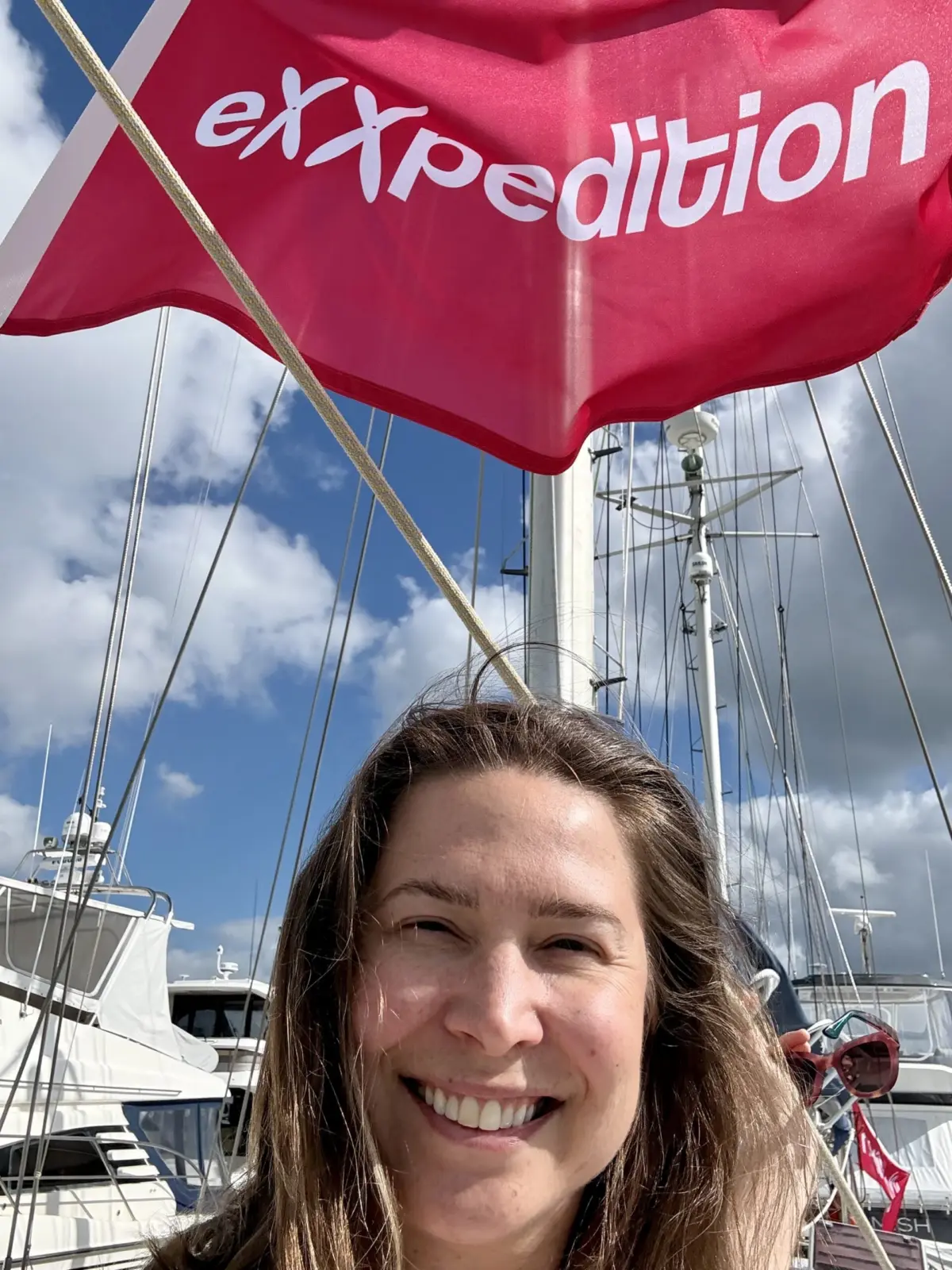
In the spring of 2026, Dr. Baechler traded her lab coat for a lifejacket, embarking on a high-stakes, 10-day scientific expedition in the Southern Hemisphere. Joining the inaugural leg of the all-female eXXpedition voyage from Auckland to the Bay of Islands, New Zealand, she took to the open water aboard the 70-foot research vessel Wind Shift.
Working alongside a multidisciplinary crew of 12 women—whose professional backgrounds spanned structural engineering, circular economy strategy, sustainable fashion, robotics, and marine research—Dr. Baechler engaged in rigorous oceanographic fieldwork. From deploying manta tow nets across the wind-swept surface of the Hauraki Gulf to auditing debris on the remote, protected shores of Aotea Great Barrier Island, the crew sought to track the complex, insidious migration of plastics from urban centers to the deepest recesses of the sea.
The findings of this voyage confirm what environmental scientists have increasingly feared: synthetic pollution is ubiquitous, invasive, and entirely indifferent to geographic remoteness. As global regulatory bodies debate the parameters of international plastics treaties, researchers like Dr. Baechler are bringing empirical rigor directly to the waves, demonstrating that while the crisis is global and systemic, actionable, localized solutions already exist.
Detailed Chronology: From the Urban Streets of Auckland to the Remote Shores of Aotea
The 10-day voyage, running from April 27 to May 6, 2026, was structured as an end-to-end observational study mapping the land-to-sea continuum of plastic waste.
Phase 1: Urban Transects in Auckland
Before casting off into the Tasman Sea, the crew of the Wind Shift initiated their fieldwork on dry land. Armed with measuring tapes, spatial mapping tools, and collection containers, the researchers surveyed city streets and coastal access points in Auckland. The goal was to quantify the immediate leakage points of urban waste—such as degraded packaging, cigarette filters, and litter—before stormwater runoff and wind could sweep them into the marine environment. These terrestrial surveys provided a baseline for the types of consumer polymers most prevalent in high-density human settlements.
Phase 2: Crossing the Hauraki Gulf and Surface Trawling
Departing Auckland, the Wind Shift set a course across the Hauraki Gulf toward Aotea Great Barrier Island. During this transit, the crew deployed manta tow nets—specialized, long cone-shaped mesh nets towed alongside the vessel at low speeds—to skim the sea-surface microlayer.
Operating these trawls on a rolling vessel proved to be an immediate physical challenge. Sorting through krill-laden seawater samples under a microscope while combating seasickness is a test of endurance. Yet, these surface trawls captured critical physical evidence of how microplastics travel on ocean currents, long after their initial manufacturing and disposal on land.
Phase 3: The Remote Beach Audit on Aotea Great Barrier Island
The expedition’s final major field milestone involved landing on a remote, ostensibly protected stretch of coastline on Aotea Great Barrier Island. Working in partnership with local environmental NGO Sustainable Coastlines, the crew conducted exhaustive micro- and macro-debris audits.
Despite the island’s relative isolation from heavy industrial hubs, the beach told a damning story. The research team recovered weathered bottle caps, fragmented food containers, industrial plastic pellets (nurdles), and tangled commercial fishing debris. The items were identical in material composition to those cataloged during the Auckland street surveys, proving that ocean currents and atmospheric deposition act as an invisible conveyor belt, depositing human waste into the planet’s most pristine marine sanctuaries.
Supporting Context & Metrics: The Omnipresence of Microplastic Fibers
To fully grasp the gravity of the data collected aboard the Wind Shift, one must understand the microscopic architecture of modern synthetic pollution. While macro-plastics like discarded ghost nets and floating bottles capture public attention, the most pervasive threat to marine ecosystems is fundamentally microscopic.
The Dominance of Microfibers
Among the myriad samples analyzed on board, one specific pollutant dominated the findings: microplastic fibers. These particles, often no wider than a human hair, are the most common form of microplastic recovered from global environmental samples.
Microfibers originate from a variety of degraded consumer goods, including industrial ropes, wet wipes, and deteriorating cigarette butts. However, the overwhelming primary source is synthetic textiles—the polyester, nylon, acrylic, and rayon fabrics that make up the vast majority of modern clothing.
The Laundry Pipeline
The journey of a microfiber typically begins not at sea, but in domestic washing machines. Research indicates that a single standard load of laundry can shed up to 18 million individual microfibers into wastewater systems. While municipal wastewater treatment plants capture a significant portion of these particles, millions still slip through filtration infrastructure, entering rivers, estuaries, and ultimately the open ocean.
Finding these microscopic threads floating miles away from the nearest human settlement or washing machine underscores the systemic nature of the pollution cycle. It proves that human domestic habits are intrinsically linked to the chemical composition of distant marine habitats.
Official Statements and Interdisciplinary Perspectives
The eXXpedition model relies heavily on the cross-pollination of diverse professional expertise. By bringing together women from disparate technical sectors, the voyage fostered a holistic dialogue on how systemic industrial changes can halt pollution at its source.
Reflecting on the emotional and intellectual weight of the fieldwork, Dr. Baechler noted the profound psychological shift that occurs when transitioning from theoretical modeling to empirical observation:
"I have been studying plastic pollution for more than a decade. I’ve analyzed hundreds of samples in labs, pored over data and spent years thinking hard about where plastics go once they leave our hands and enter the environment… And here’s where it took me! I was thrilled to have the opportunity to join the first leg of eXXpedition’s voyage in the South Pacific this past spring, trading my lab coat for a lifejacket to study microplastics at sea."
Dr. Baechler emphasized that the terrifying ubiquity of the crisis should not breed fatalism, but rather operational urgency:
"The plastic is out there, even in far-flung corners of the ocean. And the answer is not to be paralyzed by that fact, but to use it as fuel. Every sample we collected is now a data point in a larger story about where plastic comes from and where it goes. Every cleanup, every surface trawl, every street block walked and every hour spent at a microscope are parts of building the evidence base that informs policies, regulations and systems-level changes that can actually turn this crisis around."
The collective expertise of the all-female crew—representing structural engineering, sustainable fashion, circular economy frameworks, and robotics—ensured that data collection was immediately contextualized within broader industrial and legislative frameworks. The team concurred that beach cleanups, while culturally and environmentally valuable for local ecosystems, serve merely as a palliative measure if upstream manufacturing and laundering practices remain unregulated.
Future Outlook: Systems-Level Solutions and the Path Forward
As the data from the Wind Shift voyage is integrated into global environmental databases, Ocean Conservancy and its research partners are leveraging these findings to advocate for structural interventions. Addressing the microplastic crisis requires a three-pronged approach: robust public policy, sustainable product redesign, and aggressive investment in municipal waste management.
The Immediate Technological Fix: Washing Machine Filters
While overhauling global textile manufacturing and wastewater treatment infrastructure will take decades, there is an immediate, highly effective intervention available today for microplastic fibers: washing machine filtration.
Much like the lint traps installed in standard household tumble dryers, specialized microplastic filters can be retrofitted or built directly into washing machines. These tightly woven mesh systems are proven to capture roughly 90% of microplastic fibers before wastewater leaves the home. By making these filters a regulatory standard for all new washing machines—and incentivizing retrofits for existing units—governments can dramatically stanch the flow of synthetic fibers into the water supply overnight.
Policy Action and Public Mobilization
Environmental advocacy organizations are increasingly pressing lawmakers to mandate these technological safeguards. Campaigns timed around global initiatives, such as Plastic Free July, aim to mobilize citizens to pressure elected officials into passing legislation requiring microfiber filtration in residential and commercial laundry systems.
The takeaway from the deck of the Wind Shift is clear: the health of the global ocean is inextricably bound to human choice, industrial design, and political will. The data gathered by Dr. Baechler and her colleagues in the South Pacific provides the empirical foundation necessary to turn the tide against plastic pollution, ensuring that future generations inherit an ocean that is protected, resilient, and enduringly vibrant.