







Executive Overview
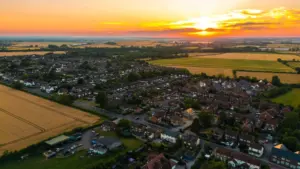
While international travelers descending upon England frequently restrict their itineraries to the architectural marvels, theatrical hubs, and urban sprawl of London, a more authentic, deeply rooted British experience lies just beyond the capital’s commuter belt. The county of Shropshire—a picturesque, undulating region nestled harmoniously between the Welsh border and the bustling industrial engine of Birmingham—remains one of England’s best-kept secrets. Within its verdant borders, visitors can unearth medieval Norman fortresses, remnants of ancient Roman fortifications, and sprawling agrarian landscapes largely untouched by mass tourism.
At the heart of this regional renaissance sits Whitchurch, the oldest recorded market town in Shropshire. Dating back to Roman antiquity, this historic enclave has quietly transformed itself into a dynamic cultural and culinary epicenter. Far from being a sleepy backwater, Whitchurch boasts a rare convergence of high-end Michelin-starred gastronomy, centuries of rich architectural heritage, and immediate proximity to some of the United Kingdom’s most breathtaking natural wonders, including Hawkstone Park, the Sandstone Trail, and the engineering marvel of the Llangollen Canal.
Positioned ideally as an accessible day-trip destination—roughly a 45-mile drive from Liverpool and under an hour and a half from Birmingham—Whitchurch serves as both a captivating standalone destination and an optimal base camp for wider explorations into Cheshire and North Wales. This report provides an authoritative, in-depth examination of Whitchurch’s historical foundations, its contemporary culinary revolution, and its burgeoning appeal to discerning travelers seeking an alternative to Britain’s overcrowded tourist hubs.
Detailed Chronology: From Roman Outpost to Market Town Marvel
The Roman Genesis: Mediolanum (70 A.D.)
The recorded history of Whitchurch begins in the twilight of the first century. Established around 70 A.D. by the Roman Empire, the settlement was christened Mediolanum. In Latin, the term translates literally to "middle plain," a geographical descriptor fitting for a strategic hub situated in the expansive Shropshire-Cheshire basin.
Interestingly, Mediolanum is also the ancestral, classical name of Milan, the illustrious Italian metropolis today celebrated globally for fashion, industrial design, and culinary excellence. While the modern visitor walking down Whitchurch’s bustling High Street will find few overt, towering stone ruins from the Roman era—unlike the amphitheaters of nearby Chester—the urban grid and subterranean archaeological deposits bear profound witness to its initial status as a vital military and commercial waypoint in Roman Britain. It served as a critical nexus connecting regional garrisons, facilitating the movement of legions, trade goods, and communication across the western frontier.
The Middle Ages and the Birth of "The White Church"
As the Roman Empire receded and the Anglo-Saxon period took root, the settlement underwent a linguistic and structural evolution. The town’s contemporary moniker, Whitchurch, is derived directly from its medieval ecclesiastical history.
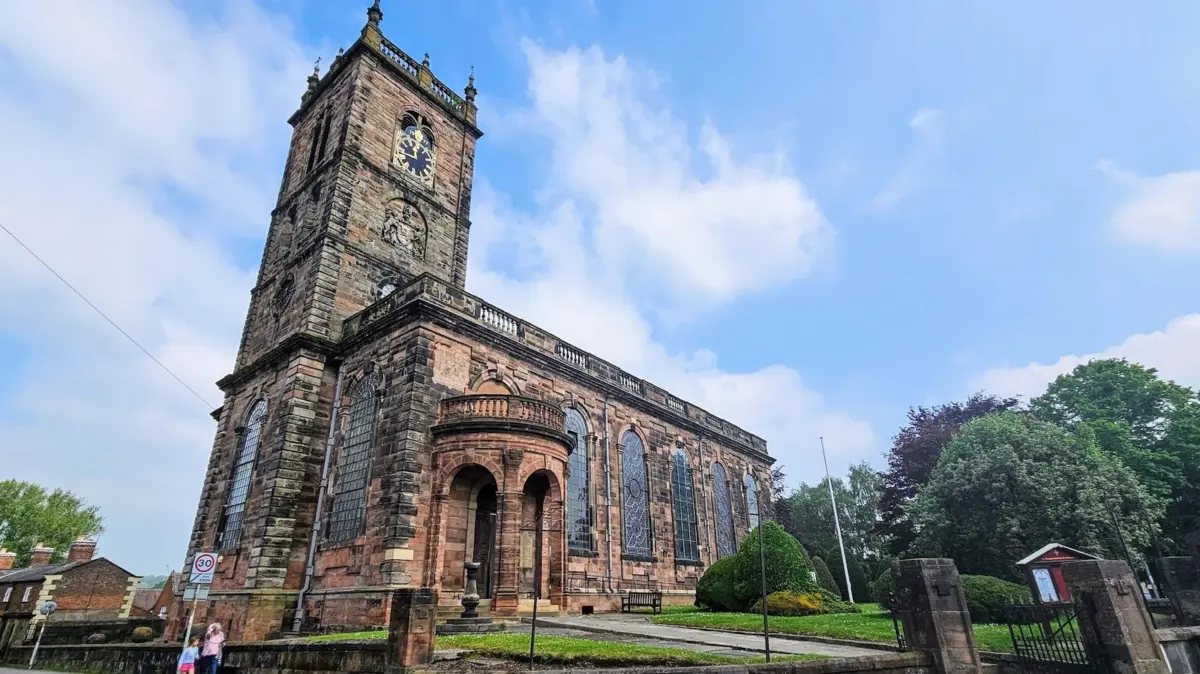
In centuries past, the local landscape was dominated by a prominent church constructed of white stone—a stark architectural contrast to the timber-framed and dark-stone structures typical of the early medieval English countryside. Though the original white stone building has long since vanished, its memory lingers in the town’s name. In its place stands the magnificent St. Alkmund’s Church, a striking reddish-brown sandstone edifice constructed in later centuries, featuring an authentic, functioning sundial dating back to the early 18th century. St. Alkmund’s remains an active spiritual and community anchor, hosting seasonal services and historical exhibitions that draw architectural historians and casual visitors alike.

The Post-Medieval and Industrial Transition
Throughout the medieval and post-medieval periods, Whitchurch solidified its status as a prosperous market town. Its charter granted it the economic privilege to host regular markets and fairs, drawing traders from across the Welsh Marches and the English midlands. The construction of the Whitchurch Grammar School in subsequent centuries underscored the town’s growing commitment to civic education and local governance.
By the 18th and 19th centuries, the advent of canal networks—most notably the nearby Llangollen Canal, engineered by Thomas Telford—transformed Whitchurch into a commercial conduit. Waterways facilitated the efficient transport of agricultural produce, dairy, and manufactured goods, laying the infrastructural groundwork for the charming, cohesive architectural streetscape visible today.
Supporting Context & Metrics: Geography, Economy, and Tourism Infrastructure
Accessibility and Location Metrics
Whitchurch’s strategic geographical placement makes it exceptionally viable for both weekend excursions and extended holidays. Quantitative transit metrics highlight its accessibility:
- From Liverpool: Approximately 45 miles south-east, translating to a straightforward 60-to-65-minute drive via the A41 and major connecting arterial routes.
- From Birmingham: Roughly 54 miles north-west, achievable in under one hour and thirty minutes by car, offering an ideal rural antidote to England’s second-largest metropolitan area.
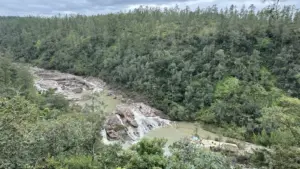
- Proximity to Regional Highlights: A 10-minute drive connects visitors to the historic Combermere Abbey, while world-class regional landmarks such as Chester and Wales’ Conwy Falls sit within comfortable driving radiuses.
Natural Topography and Biodiversity
The surrounding Shropshire landscape is defined by its glacial meres, rolling hills, and sandstone ridges.
- Hawkstone Park and Follies: Spanning over 100 acres of historic woodland, Hawkstone Park features a dramatic series of natural sandstone cliffs, dark subterranean caves, and whimsical 18th-century "follies"—architectural eccentricities including bridges, towers, and hermitages designed to evoke romanticism and mystery.
- The Sandstone Trail: A premier 34-mile long-distance footpath that meanders across the Peckforton Hills and Cheshire Plain, offering panoramic vistas of the Welsh mountains and intersecting closely with the UNESCO-designated Llangollen Canal.
Retail and Local Economy
Whitchurch’s commercial core thrives on independent entrepreneurship rather than homogenized high-street chains.
- Whitchurch Antiques Emporium: Housed fittingly within a repurposed historic church building, this multi-dealer marketplace hosts an extensive collection of second-hand and vintage wares, ranging from mid-century apparel and delicate glassware to rare antiquarian books and vintage comics. With an aggregate user rating of 4.4 stars across more than 100 verified Google reviews, it serves as a testament to the town’s vibrant antique-trading culture.
- Wagstaffes: Located centrally on the High Street, this independent boutique provides high-end apparel and footwear, frequently cited by patrons for exceptional, personalized customer service.
The Culinary Revolution: Michelin-Starred Excellence in a Market Town
Perhaps the most astonishing modern evolution of Whitchurch is its emergence as a premier destination for haute cuisine. For decades, international perceptions of British gastronomy labored under outdated stereotypes, while domestic food tourism concentrated heavily on London or, more recently, Birmingham’s burgeoning Balti Triangle and fine-dining establishments. Yet, Whitchurch has defied conventional economic gravity by attracting world-class culinary talent capable of securing prestigious Michelin recognition.
Wild Shropshire: The Vanguard of Micro-Seasonal Dining
At the forefront of this gastronomic shift is Wild Shropshire, an intimate dining establishment that has captured the attention of national and international critics alike. The restaurant has not only earned a coveted listing in the Michelin Guide but has also been awarded the prestigious Michelin Green Star, an accolade reserved for dining rooms that demonstrate exceptional leadership in sustainable gastronomy and farm-to-table ethics.
Operating on a strictly "micro-seasonal" ethos, Wild Shropshire offers a multi-course tasting menu—typically ranging from nine to ten courses, priced between $148 and $200 USD—that relies exclusively on foraging, local growers, and ethical farming within North Shropshire and its immediate borders. Every dish functions as an edible narrative of the local ecosystem, celebrating wild herbs, preserved summer fruits, forest mushrooms, and responsibly sourced regional proteins.
Docket Restaurant: European Technique Meets Shropshire Terroir
Complementing the local culinary scene is Docket, another fine-dining stalwart that has maintained its presence in the Michelin Guide since 2020. Spearheaded by experienced executive chefs, Docket offers guests an immersive dining experience—including an exclusive chef’s counter option where diners can observe the meticulous preparation of each course.
Priced competitively alongside its peers (averaging around $135 USD for a comprehensive ten-course tasting menu), Docket fuses contemporary European culinary techniques with the robust agricultural bounty of the Shropshire plains. The result is a sophisticated interplay of textures and global inspirations grounded firmly in regional provenance.
Accessible Gastronomy: Etzio
For travelers seeking a more relaxed or budget-conscious dining experience without sacrificing quality, the High Street features Etzio, a traditional Italian bistro. Etzio bridges the gap between casual dining and local accessibility, offering fixed-price lunch menus (such as a main course paired with a glass of authentic Italian wine for approximately $15 USD), proving that Whitchurch caters equitably to backpackers, families, and high-end gourmands alike.
Future Outlook
As the global travel sector increasingly pivots toward sustainable tourism, regional authenticity, and "slow travel," destinations like Whitchurch are exceptionally well-positioned to capture the imaginations of modern explorers. Overtourism in European capitals has sparked a systemic migration toward secondary and tertiary towns—places where heritage remains tangible, local economies thrive on independent commerce, and natural environments are preserved rather than commercialized.
Future municipal and regional development strategies for Whitchurch focus heavily on enhancing eco-tourism infrastructure, expanding cycling and walking trails along the Llangollen Canal corridor, and fostering sustainable agricultural partnerships to support the town’s growing reputation as a culinary destination.
For the international traveler willing to look beyond the iconic skyline of London or the industrial heritage of Birmingham, Whitchurch offers a rare, harmonious blend of the ancient and the modern. Whether one is descending into the sandstone caves of Hawkstone Park, tracing the footsteps of Roman legionaries along the High Street, or savoring a nine-course Michelin-starred tasting menu crafted from foraged Shropshire flora, Whitchurch stands as a shining exemplar of small-town Britain at its absolute finest.