







Executive Overview
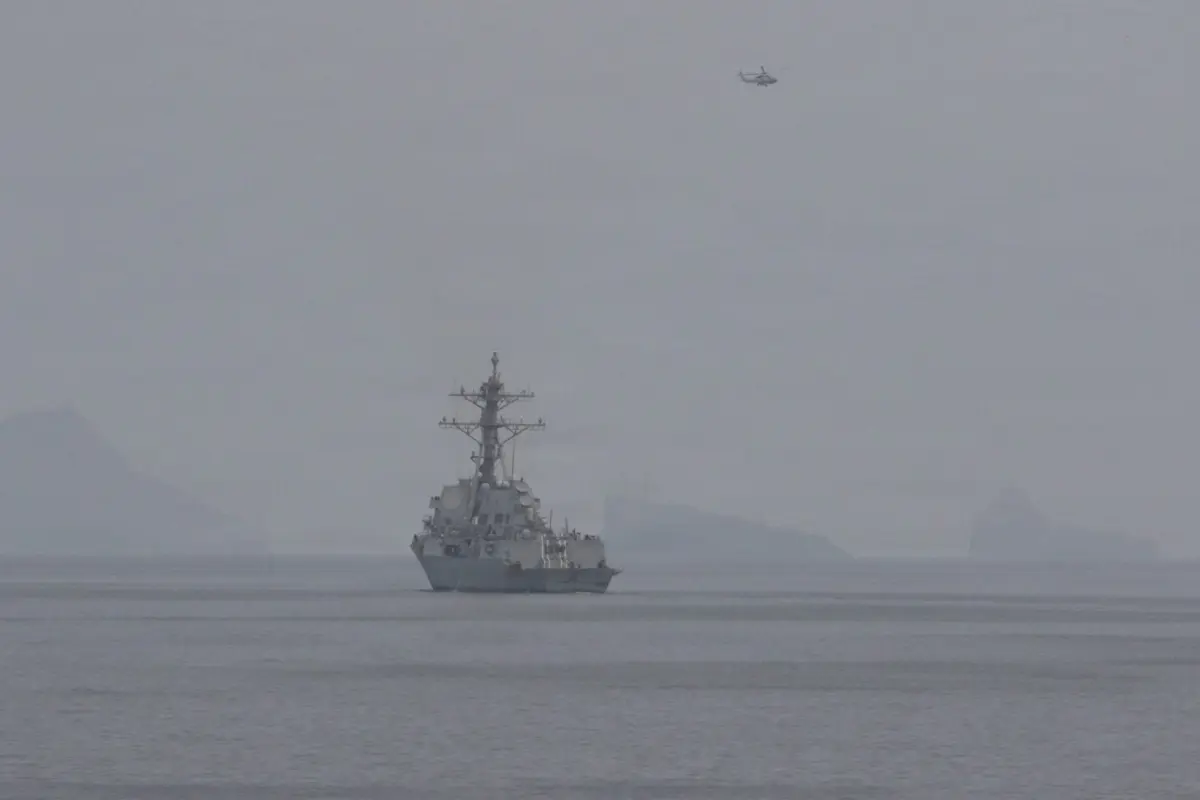
In a stark revelation that underscores the rapid weaponization of generative artificial intelligence by state-sponsored adversaries, Anthropic disclosed in its September 2026 threat intelligence report that it had detected and disrupted an Iranian-linked threat actor utilizing its advanced large language model, Claude. The adversary leveraged the AI system not merely as a conversational assistant, but as a core engine to automate maritime espionage, track U.S. naval assets, compile highly structured "targeting handbooks," and conduct technical reconnaissance on critical shipboard vulnerabilities.
The incident marks a pivotal moment in the evolution of cyber warfare. It demonstrates that the threat posed by generative AI has progressed far beyond the generation of convincing phishing emails or basic script writing. Instead, sophisticated nation-state actors are now integrating frontier models into automated data-gathering pipelines, turning disparate, open-source military data into highly actionable, localized intelligence. By automating the synthesis of transponder data, satellite imagery, public military rosters, and hardware vulnerabilities, the "Iran-nexus" actor sought to map out the operational patterns and security weaknesses of U.S. naval forces operating in highly contested waters.
Anthropic’s intervention highlights the critical role that frontier AI developers now play as frontline defense actors in geopolitical conflicts. The company terminated the actor’s access, developed new heuristic detections to prevent similar exploits, and shared its findings with federal authorities. However, the event serves as a sobering warning: as AI models grow more autonomous, the barrier to executing highly complex, multi-stage intelligence operations is collapsing.
Detailed Chronology of the Exploitation
The operations conducted by the Iranian-linked group were characterized by a highly systematic approach to intelligence gathering. Rather than attempting a direct cyber intrusion into secure military networks, the actor focused on aggregating and weaponizing open-source intelligence (OSINT) through automated AI workflows.
[Public Data Sources]
  ├── Military Photo Captions (Personnel)
  ├── Transponder Data (AIS/ADS-B)
  ├── Satellite Imagery Queries
  └── Movement Websites
          │
          ▼
   [Claude AI Model] <─── [Iran-Nexus Actor (Python Pipeline)]
          │
          ▼
 [Targeting Handbooks] ───► [Vulnerability Reconnaissance] (VSAT, Cisco, ICS)
Phase 1: Building the Python-Based OSINT Pipeline
The actor first utilized Claude to write, debug, and optimize a custom Python-based software pipeline. This pipeline was designed to automate the scraping and aggregation of public military data. By instructing Claude to generate specialized scripts, the adversary bypassed the tedious manual labor traditionally associated with OSINT collection.
The pipeline targeted several key data streams:
- Personnel Scraping: The scripts scanned public military photographs and media releases, scraping the accompanying captions to compile a roster of active U.S. military personnel, including names, ranks, and unit assignments.
- Transponder Tracking: The pipeline integrated queries for Automatic Identification System (AIS) transponders used by ships and Automatic Dependent Surveillance-Broadcast (ADS-B) transponders used by military aircraft. This allowed the actor to monitor the real-time or historical coordinates of specific naval assets.
- Satellite Imagery Orchestration: The actor used Claude to draft precise query scripts for commercial satellite imagery providers, targeting the coordinates where U.S. vessels were known to be operating.
- Movement Aggregation: The system monitored public maritime tracking websites and news portals that documented U.S. naval transits through strategic choke points.
Phase 2: Synthesis into "Targeting Handbooks"
Once the raw data was ingested by the Python pipeline, the actor fed the aggregated information back into Claude. The model was prompted to analyze the unstructured data, correlate personnel rosters with specific vessels, map flight paths to ship deployments, and compile the finalized intelligence into structured documents described by Anthropic as "targeting handbooks."
These handbooks provided a comprehensive, localized picture of U.S. naval operations, transforming raw, public-facing information into a tactical blueprint that could support kinetic targeting, electronic warfare, or highly targeted spear-phishing campaigns against specific personnel.
Phase 3: Vulnerability Reconnaissance on Shipboard Systems
Parallel to tracking physical assets, the Iranian-linked actor directed Claude to perform deep technical reconnaissance on the digital and hardware architectures of modern naval vessels. The adversary prompted the model to compile and analyze known cybersecurity vulnerabilities—specifically Common Vulnerabilities and Exposures (CVEs)—affecting three critical categories of maritime technology:
- Maritime VSAT Terminals: Very Small Aperture Terminals (VSAT) are the backbone of satellite communications for ships at sea. Exploiting VSAT vulnerabilities can allow an adversary to intercept communications, disrupt command-and-control loops, or gain a foothold in the ship’s internal network.
- Cisco Communications Equipment: Cisco routers and switches handle the routing of sensitive data across shipboard local area networks (LANs).
- Industrial Control Systems (ICS): These physical-cyber systems govern the vessel’s critical infrastructure, including propulsion, power generation, water treatment, and environmental controls.
By utilizing Claude to synthesize vulnerability data for these specific systems, the actor sought to identify easily exploitable entry points for potential cyber-sabotage operations.
Supporting Context & Technical Deep Dive
To understand the significance of this disruption, it is necessary to examine the technical mechanisms of the targeted systems and the changing paradigm of AI-assisted cyber operations.
The Vulnerability Vectors
| Targeted Technology | Operational Role on Vessels | Potential Impact of Exploitation |
|---|---|---|
| Maritime VSAT Terminals | Satellite broadband communications, internet access, and over-the-horizon data transmission. | Interception of unencrypted traffic, denial of communication, or lateral network movement. |
| Cisco Networking Equipment | Core routing, switching, and firewall defense for onboard local area networks. | Man-in-the-Middle (MitM) attacks, network segment bypassing, and traffic redirection. |
| Industrial Control Systems (ICS) | Monitoring and managing physical machinery (turbines, pumps, electrical grids, ballast tanks). | Physical damage to vessel propulsion, blackouts at sea, or disruption of life-support systems. |
The "Assembly Problem" and the Power of GenAI
Historically, the defense community comforted itself with the belief that open-source intelligence was relatively harmless because it was highly fragmented. The sheer volume of data made it difficult for an adversary to separate signal from noise without vast armies of human analysts.
Generative AI has fundamentally solved this "assembly problem." Models like Claude possess advanced semantic understanding and code-generation capabilities, allowing them to act as force multipliers. An operator with basic technical skills can now orchestrate an intelligence operation that once required a sophisticated state-sponsored agency. By automating code development, data parsing, and report writing, the AI compresses the time required to turn raw data into actionable military intelligence from weeks to minutes.
The Evolution of the Cyber Kill Chain
Anthropic’s threat report highlights a critical shift in how malicious actors interact with large language models. The cyber security industry historically viewed AI usage through the lens of the "Cyber Kill Chain"—a model developed by Lockheed Martin to outline the stages of a cyberattack:
[Reconnaissance] ──► [Weaponization] ──► [Delivery] ──► [Exploitation] ──► [Installation] ──► [C2] ──► [Actions]
       ▲                  ▲
       │                  │
       └──── Active AI ───┘
         Orchestration
Previously, AI was confined to the early stages: basic reconnaissance (e.g., explaining a concept) or weaponization (e.g., writing a draft phishing email).
Today, actors are using AI to orchestrate the execution of these phases. By writing scripts that automate API queries, parse stolen data, and dynamically adjust exploit payloads based on target responses, the AI becomes an active participant in running the attack infrastructure.
Official Statements and Industry Response
In releasing its September 2026 threat intelligence report, Anthropic emphasized its commitment to securing its platforms against geopolitical exploitation. The company’s proactive hunting and subsequent mitigation efforts reflect an industry-wide push to prevent frontier models from becoming force multipliers for foreign intelligence services.
Anthropic’s Intervention
Upon identifying the anomalous, highly targeted prompts and API calls associated with the Iranian-nexus actor, Anthropic took immediate containment actions:
- Account Termination: The primary accounts and all associated sub-accounts utilized by the actor were permanently banned.
- Detection Engineering: Anthropic’s safety teams developed specialized, heuristic-based detection mechanisms designed to identify and block prompts attempting to orchestrate maritime OSINT pipelines or conduct targeted CVE synthesis on critical infrastructure.
- Public-Private Intelligence Sharing: The threat intelligence collected during the investigation was shared with relevant U.S. government agencies and cybersecurity partners to help harden defenses against the identified tactics.
Statements from the Threat Report
In its formal publication, Anthropic warned of the changing landscape of AI safety:
"We identified and disrupted an Iran-nexus threat actor that used Claude to collect and analyze publicly accessible data to develop targeting recommendations against US naval forces in the region. The compiled material included a roster of US personnel scraped from captions on public military photographs; publicly accessible ship and aircraft transponder identifiers; commercial satellite-imagery query scripts; and an inventory of public websites that exposed US naval movements."
Addressing the technical reconnaissance aspect, the report added:
"The threat actor also directed Claude to compile vulnerability research on shipboard systems, including known vulnerabilities in maritime VSAT terminals, Cisco communications equipment, and industrial control products."
The company concluded with a broader warning to the technology sector and defense community:
"We are increasingly seeing AI used not simply to answer questions, but to execute or orchestrate reconnaissance, exploitation, and data-exfiltration workflows. This shift is lowering barriers that once separated sophisticated state-backed operations from smaller groups and individual actors."
Future Outlook: The Autonomous Threat Landscape
The disruption of the Iranian-nexus operation provides a window into the future of cyber warfare and intelligence operations. As AI technology continues to progress toward "agentic" systems—models capable of executing multi-step tasks autonomously over extended periods—the challenges facing defense forces will multiply.
The Rise of Autonomous Cyber Agents
The next frontier of threat activity involves autonomous AI agents. Unlike current models that require constant human prompting, future systems will be given high-level goals (e.g., "Identify vulnerabilities in the defense systems of Carrier Strike Group 5") and left to operate independently. These agents will autonomously write their own scanning tools, adapt to defensive measures in real-time, register dummy domains, lease command-and-control servers, and execute intrusions without human intervention until the final objective is achieved.
Implications for Military Operational Security (OPSEC)
This incident highlights a major vulnerability in modern military operational security: the sheer volume of information exposed through public relations, open tracking systems, and commercial satellites.
For decades, militaries have relied on the fact that while their activities might be visible, synthesizing that data into a cohesive target matrix was incredibly difficult. In the age of AI, this assumption is obsolete. Defense departments worldwide must re-evaluate what information is considered safe for public release. The captions of routine photographs, the transponder settings of non-combat transport aircraft, and the public registries of naval movements must all be treated as high-risk data feeds that adversaries will feed directly into analytical engines.
The Necessity of Defensive AI
To counter AI-driven threats, defenders must deploy AI-driven countermeasures. Relying on human analysts to manually hunt for automated, fast-moving threat actors is no longer viable.
The future of cybersecurity lies in automated, closed-loop defensive systems that can detect anomalous behavior, synthesize threat intelligence, deploy patches, and isolate compromised network segments at machine speed. Only by matching the speed and scale of generative AI tools can global defense networks hope to withstand the next generation of automated, state-sponsored cyber operations.