










While nations across Europe and Asia aggressively capitalize on the booming economics of offshore wind power—turning atmospheric breezes into export revenue and energy independence—the United States finds itself locked in a regressive, politically charged domestic energy paradox.
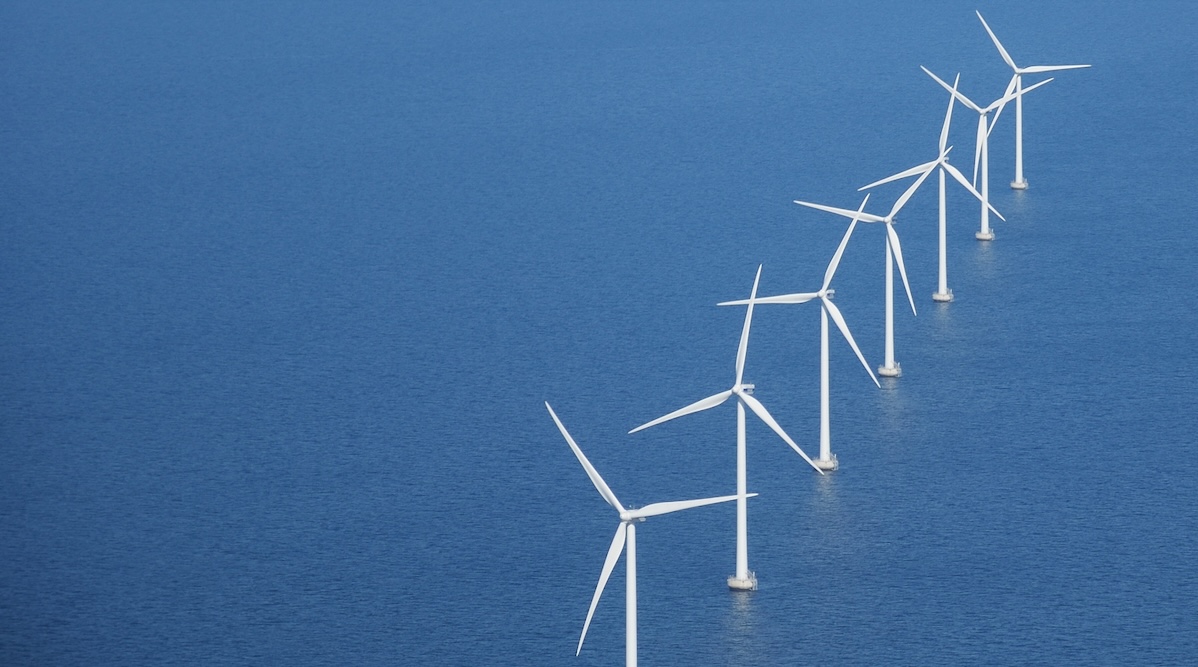
Take Denmark as a prominent global benchmark. Last Friday, the nation’s advanced wind infrastructure achieved a staggering 140% generation mark. This milestone meant that wind turbines entirely covered 100% of the country’s domestic electricity demand while leaving a massive surplus of clean kilowatt-hours available for export to neighboring European grids.
Conversely, the United States sits on an astronomical, underutilized wind power gold mine spanning thousands of miles of Atlantic, Pacific, and Gulf coastlines. Despite Department of Energy (DOE) assessments indicating a national offshore wind potential exceeding 35,000 megawatts, the federal government has intentionally decelerated progress.
Driven by a combination of executive overreach, political expediency, and a decades-old personal grudge harbored by President Donald Trump regarding a Scottish wind farm visible from his golf course, current U.S. policy actively suppresses the offshore wind sector. Bizarrely, this obstruction exists alongside a federal embrace of alternative renewables—such as wave, tide, and geothermal energy—revealing a convoluted administrative framework that rejects mature, economical wind tech in favor of slower, more expensive alternatives.
Detailed Chronology & Policy Timeline
To understand how the United States arrived at its current crossroads regarding offshore wind energy, one must examine the specific sequence of executive actions, judicial interventions, and policy pivots that have defined the post-2024 political landscape.
The 2024–2025 Executive Pivot
Upon taking office in early 2025, President Trump immediately declared a broad "energy emergency," a rhetorical framing designed to fast-track fossil fuel production while abruptly halting renewable infrastructure initiatives under federal jurisdiction. Acting through the Department of the Interior (DOI), the administration ordered the Bureau of Ocean Energy Management (BOEM) to cease the issuance of all new offshore wind leases.
This directive sent immediate shockwaves through the clean energy sector, halting multi-billion-dollar supply chain investments and casting a pall of regulatory uncertainty over Atlantic states that had spent the preceding two decades cultivating regional wind hubs.

Judicial Pushback and Administrative Workarounds
The administration’s initial attempts to cancel or indefinitely delay existing wind projects already deep in the construction pipeline met stiff resistance in the federal courts. Several federal judges ruled that while the executive branch possesses broad statutory discretion over new leasing rounds, utilizing emergency powers to invalidate legally binding, pre-existing contracts exceeded executive authority.
Faced with these judicial roadblocks, the administration pivoted to a novel and legally questionable tactic: direct lease buyouts. Rather than relying solely on stop-work orders or regulatory delays, the federal government began orchestrating financial buyouts of existing offshore leases. This effectively neutralized multi-gigawatt projects by paying developers to step away from federal waters, circumventing the normal administrative rulemaking processes and creating a chilling effect across the industry.
The Irony of the "Reliability Standard"
To justify these maneuvers, the administration introduced the "American Energy Dominance" policy framework. This doctrine establishes a strict baseload reliability standard that effectively penalizes wind and solar generation for their intermittent nature. Interior Secretary Doug Burgum leaned heavily into this narrative, infamously claiming that solar power installations experience "catastrophic failure" every evening when the sun sets—conveniently omitting the rapid commercialization and deployment of utility-scale battery energy storage systems (BESS).
However, bureaucratic silos within the federal government have created amusing policy contradictions. While the Department of the Interior blocks wind and solar, the Department of Energy (DOE)—headed by Energy Secretary Chris Wright—has continued to allocate funding and authorize long-duration energy storage projects. Programs like Vermont’s regional storage initiatives and ongoing grid modernization grants demonstrate that federal support for the very technologies that solve wind and solar intermittency continues unabated, even as top-tier political appointees rail against the generation sources themselves.
Supporting Context & Metrics: Denmark vs. the United States
The divergence between U.S. stagnation and European acceleration is starkly illustrated by hard data regarding wind capacity, resource availability, and macroeconomic ambition.
Denmark’s "Energy Islands" and 140% Milestone
Denmark’s achievement of 140% wind generation last Friday morning—occurring during a window of high wind speeds and low nocturnal electricity demand—underscores the resilience of modern grid integration. Rather than treating surplus energy as a liability, the Danish energy grid seamlessly absorbed the excess locally while routing the remainder to international interconnectors.
Building upon this success, the Danish Energy Agency (DEA) is spearheading the construction of two artificial "energy islands" in the North and Baltic seas. Operating as industrial-scale green power plants at sea, these hubs are engineered to:
- Transmit high-voltage electricity directly to coastal domestic grids.
- Divert excess offshore generation toward green hydrogen production via water electrolysis.
- Manage a combined wind capacity capable of powering the equivalent of 5 million European households.
- Scale the North Sea facility from an initial 3–4 gigawatts up to a staggering 10 gigawatts of offshore wind capacity, with the Baltic Sea hub adding another 3 gigawatts.
The U.S. Offshore Potential
By comparison, the United States possesses coastal geographies that dwarf Denmark’s footprint. According to multi-year assessments by the U.S. Department of Energy, the nation’s total offshore wind potential exceeds 35,000 megawatts.
- The Atlantic Seaboard: Spanning from Maine down to North Carolina, the Atlantic coast features vast stretches of shallow continental shelf waters. These conditions are ideal for traditional monopile turbine foundations, making it the most cost-effective region for rapid, utility-scale deployment.
- Deepwater Floating Platforms: While Maine lacks the shallow waters of the mid-Atlantic, state researchers have pioneered advanced deepwater floating offshore wind platforms. These structures are tethered to the seabed via high-tensile mooring cables. Similar floating turbine technologies developed in U.S. labs are already being exported to test beds in Europe and Asia.
- The Gulf of Mexico: Although the Gulf experiences lower average wind speeds than the Atlantic, regional stakeholders are forming consortia to repurpose defunct oil and gas platforms. By retrofitting stranded offshore fossil fuel assets into renewable energy and green hydrogen production nodes, the Gulf states are plotting a path toward a circular offshore economy.
Official Statements & Institutional Perspectives
The ideological battle over offshore wind has generated sharp rhetorical divisions across government agencies, international observers, and private industry.
The Executive Branch and the "Reliability" Doctrine
The official stance of the White House frames the rejection of wind and solar not as an ideological vendetta, but as a hard-headed defense of grid stability. The "American Energy Dominance" platform explicitly prioritizes baseload power sources—including nuclear energy, geothermal, biomass, and conventional hydropower—while sidelining weather-dependent renewables.
Interior Secretary Doug Burgum defended the administration’s posture during a recent policy briefing, emphasizing traditional infrastructure security:

"A reliable American energy grid cannot be built on the fickle whims of weather patterns. Our nation requires dispatchable, 24/7 baseload power that protects industrial competitiveness and shields American ratepayers from the catastrophic system failures inherent to unmanaged intermittency."
The Energy Department and Marine Energy Re-engagement
Conversely, career scientists and programmatic staff at the Department of Energy have maintained a focus on kinetic aquatic energy, inadvertently finding a loophole within the administration’s baseline mandates. Because wave, tidal, and ocean current technologies provide a more predictable and continuous hydrological cycle than atmospheric wind, marine energy has managed to slip through administrative roadblocks.
A newly updated DOE briefing paper highlights the staggering scope of these resources:
"The kinetic power coursing through America’s oceans and rivers could meet nearly 60% of the United States’ total electricity needs. Even if only a fraction of this energy is successfully harvested, marine renewables can make substantial contributions to local grids, offering millions of citizens reliable, affordable, and home-grown power."
This institutional enthusiasm is backed by concrete milestones, including the recent operational launch of PacWave South off the coast of Oregon. As a premier wave energy test bed, PacWave provides developers with an open-ocean laboratory to test wave-energy converter devices under real-world maritime conditions.
Future Outlook: The Law of Unintended Consequences
As federal policy continues to penalize traditional offshore wind development, the American energy landscape is experiencing the unpredictable effects of administrative overreach.
By pushing a rigid 24/7 reliability standard that selectively permits marine kinetic energy while barring atmospheric wind turbines, the administration has inadvertently catalyzed a boom in alternative ocean technologies. However, energy analysts note a profound disconnect: while wave and tidal energy technologies represent a promising frontier, they remain years—if not decades—away from achieving the commercial maturity, manufacturing scale, and supply chain integration currently enjoyed by the global wind industry.
Meanwhile, the personal grudge that catalyzed much of this policy—dating back to Trump’s early-2000s legal battles against an offshore wind farm in Scottish waters within view of his Aberdeen golf course—continues to cast a long shadow over U.S. climate policy.
As Denmark, the United Kingdom, and Asian economies cement their dominance in the multi-gigawatt offshore wind market, the United States risks stranding its own maritime potential. Whether through future judicial challenges, shifting congressional majorities, or the sheer economic inevitability of cheap kilowatt-hours, the American offshore wind sector remains poised for a reckoning—trapped for now between immense natural abundance and manufactured political hostility.