





Executive Overview
A catastrophic flash flood tore through the inner depths of the Grand Canyon on Saturday, August 29, leaving a trail of devastation that has claimed at least two lives and triggered a massive, multi-agency search and rescue operation. The sudden wall of water and debris—originating in Bright Angel Canyon—caught hikers, campers, and river runners completely off guard, transforming a tranquil desert landscape into a raging torrent of boulders, mud, and churning debris within a matter of minutes.
As of early this week, National Park Service (NPS) officials have confirmed the recovery of two bodies, while approximately 15 people remain unaccounted for, prompting an urgent public plea for assistance in tracking down missing hikers. More than 60 individuals have been successfully evacuated from the historic Phantom Ranch area, some hauled to safety via emergency helicopter operations while others scrambled frantically up steep canyon walls to escape the rising tide.
Beyond the human toll, the disaster has inflicted catastrophic damage on park infrastructure. Essential footbridges spanning Bright Angel Creek have been obliterated, and initial assessments reveal that roughly 40 percent of the critical Transcanyon Waterline—currently undergoing a massive $208 million rehabilitation project—has been severely compromised or destroyed. The resulting infrastructure failures have forced widespread park closures, suspended all overnight lodge accommodations, and triggered strict water conservation mandates across the South Rim.
With ongoing weather forecasts warning of persistent rain, thunderstorms, and the looming threat of secondary flooding, park authorities remain on high alert as they navigate one of the most severe natural disasters to hit the inner canyon in recent memory.
Detailed Chronology: How Saturday’s Disaster Unfolded
The Gathering Storm and Sudden Onset
The sequence of events began on Saturday afternoon when unseasonably heavy monsoonal rainfall battered the upper reaches and rim country of the Grand Canyon. While summer storms are a familiar seasonal hazard in northern Arizona, the atmospheric conditions aligned to dump an extraordinary volume of water into the narrow drainages feeding Bright Angel Canyon in an alarmingly short timeframe.
For hikers navigating the narrow, picturesque passages of the inner canyon, the warning signs materialized with terrifying speed. Parth Desai, a hiker caught directly in the path of the deluge, described the surreal and terrifying transformation of the landscape.
“We saw the creek flood, waterfalls coming up out of nowhere, boulders, mud, landslides happening everywhere,” Desai recounted in an interview with The Associated Press.
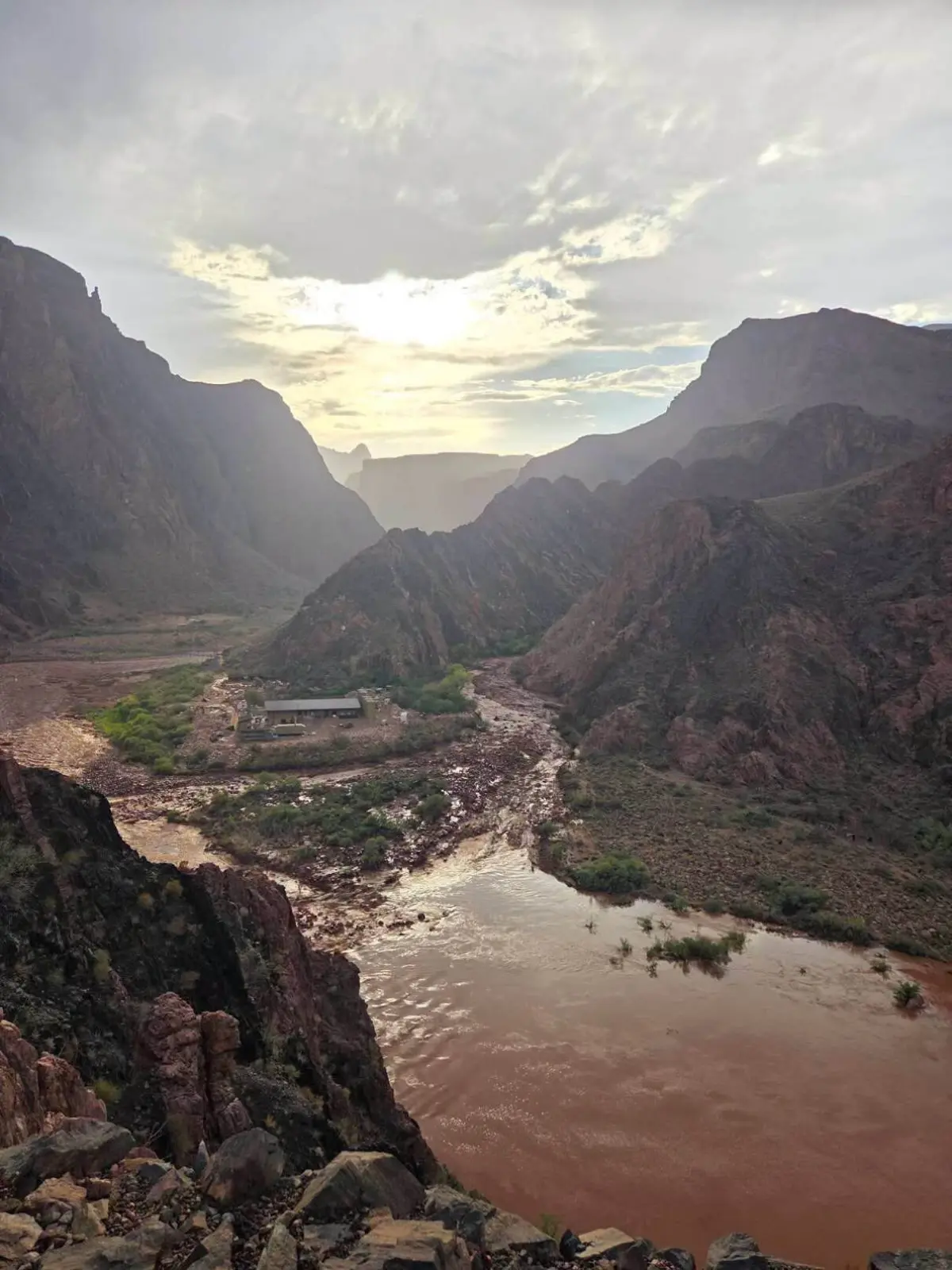
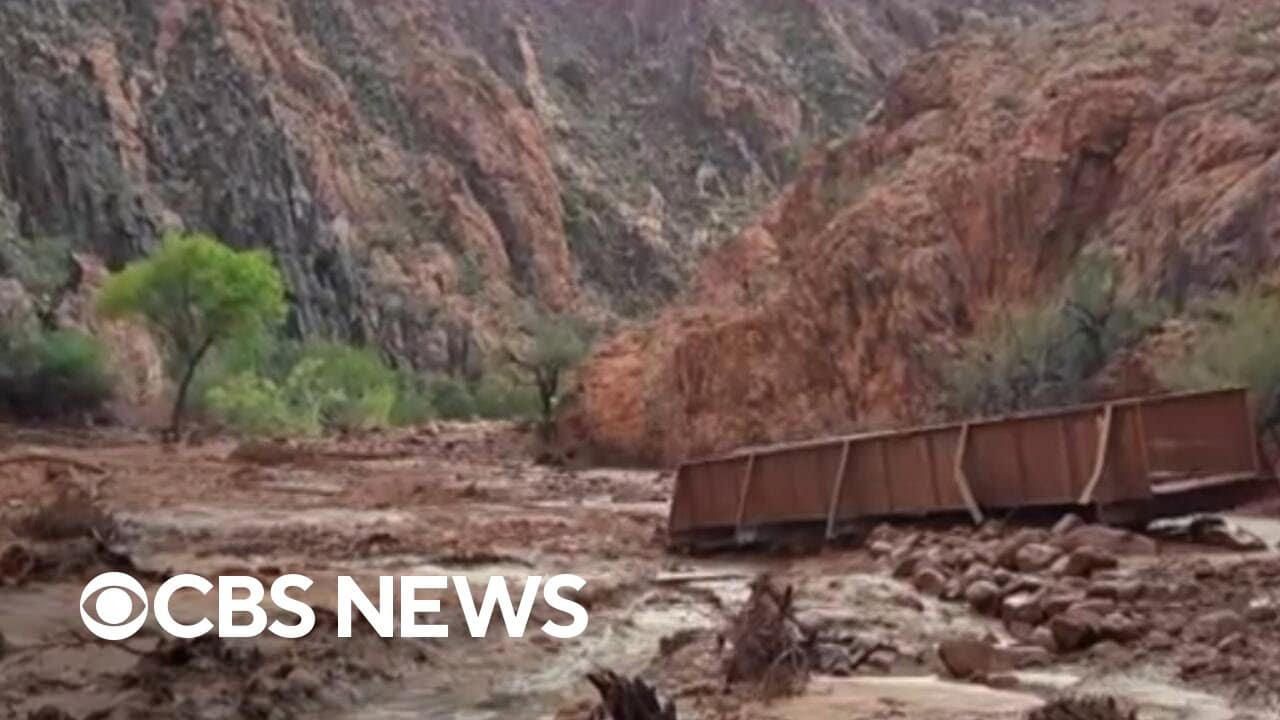
Without advanced warning systems capable of penetrating the deep limestone and sandstone corridors of the gorge, visitors had virtually no time to react. The trickle of Bright Angel Creek violently morphed into a four-foot (one-meter) high wall of liquid debris, carrying pulverized rock, shattered vegetation, and structural wreckage down the canyon floor.
The Scramble for Survival at Phantom Ranch
As the towering wave of debris surged down the Bright Angel corridor toward the Colorado River, hikers and backpackers found themselves in a desperate fight for survival. Cries of warning echoed through the canyon. Desai recalled a fellow hiker shouting frantic commands—“Up, Up, Up, Up!”—as the wall of destruction bore down upon them.
With conventional trails compromised and the rushing water rapidly blocking escape routes, Desai and other survivors plunged off the path into a dense patch of native cacti, enduring puncture wounds and severe scrapes to stay clear of the crushing force of the debris flow.
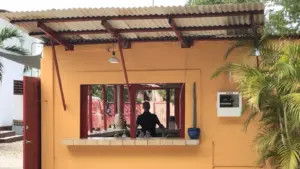
Downstream at Phantom Ranch—a historic oasis featuring a canteen, stone cabins, and dormitories nestled near the confluence of Bright Angel Creek and the Colorado River—the floodwaters inundated the delta area. Rafters stepping off the river and backpackers resting at the historic hub were suddenly forced into emergency evacuation protocols.
Some visitors were hoisted vertically into rescue helicopters hovering perilously above the chaotic gorge, while others were guided on foot to higher ground by park rangers. By Sunday morning, coordinated ground and air operations had safely evacuated over 60 people from the immediate danger zone.
Search, Recovery, and the Missing
As the skies cleared temporarily on Sunday, the focus of the National Park Service shifted definitively from immediate evacuation to search, rescue, and recovery operations.
The first grim milestone of the operation came on Sunday evening, when search teams recovered the body of a 46-year-old man near Crystal Rapids along the rushing waters of the Colorado River. As rescue personnel combed through miles of debris-choked shoreline and battered side canyons, Grand Canyon National Park officials announced via social media on Monday that a second body had been recovered. Additional details regarding the identity of the second victim have been withheld pending family notification and ongoing forensic evaluations.
Simultaneously, park authorities launched a public appeal to account for approximately 15 individuals believed to have been hiking or camping in the inner canyon along the Bright Angel Creek corridor on August 29, but whose current whereabouts remain entirely unknown. The National Park Service Investigative Services Branch has urged anyone with information regarding independent backpackers, commercial clients, or independent travelers in the area on that fateful Saturday to come forward immediately.
Supporting Context & Metrics: Assessing the Scale of Destruction
The true magnitude of the Bright Angel Canyon flash flood extends far beyond the immediate rescue metrics, highlighting the extreme vulnerability of deep-canyon infrastructure to sudden hydrologic events.
Infrastructure Collapse and the Transcanyon Waterline
The flash flood delivered a crippling blow to the Grand Canyon’s complex internal lifeline: its water supply system. The Transcanyon Waterline, a vital pipeline spanning the canyon to transport potable water from Roaring Springs on the North Rim to millions of visitors on the South Rim, suffered catastrophic losses.
According to preliminary structural assessments released by park management, approximately 40 percent of the Transcanyon Waterline was damaged or entirely destroyed. This blow comes at a particularly sensitive juncture; the pipeline was already the focus of a massive, multi-year $208 million rehabilitation project scheduled for completion next year. With the pipeline nonoperational, the park has been plunged into a severe water resource crisis.
Additionally, the physical crossings of the inner canyon have been wiped clean. Nearly all historic and functional footbridges spanning Bright Angel Creek—crucial links connecting the North and South Kaibab trails—were swept away, leaving behind little more than battered stone pylons and tangled piles of structural metal.
River and Trail Closures
The ripple effects of the debris flows have paralyzed backcountry recreation across the national park:
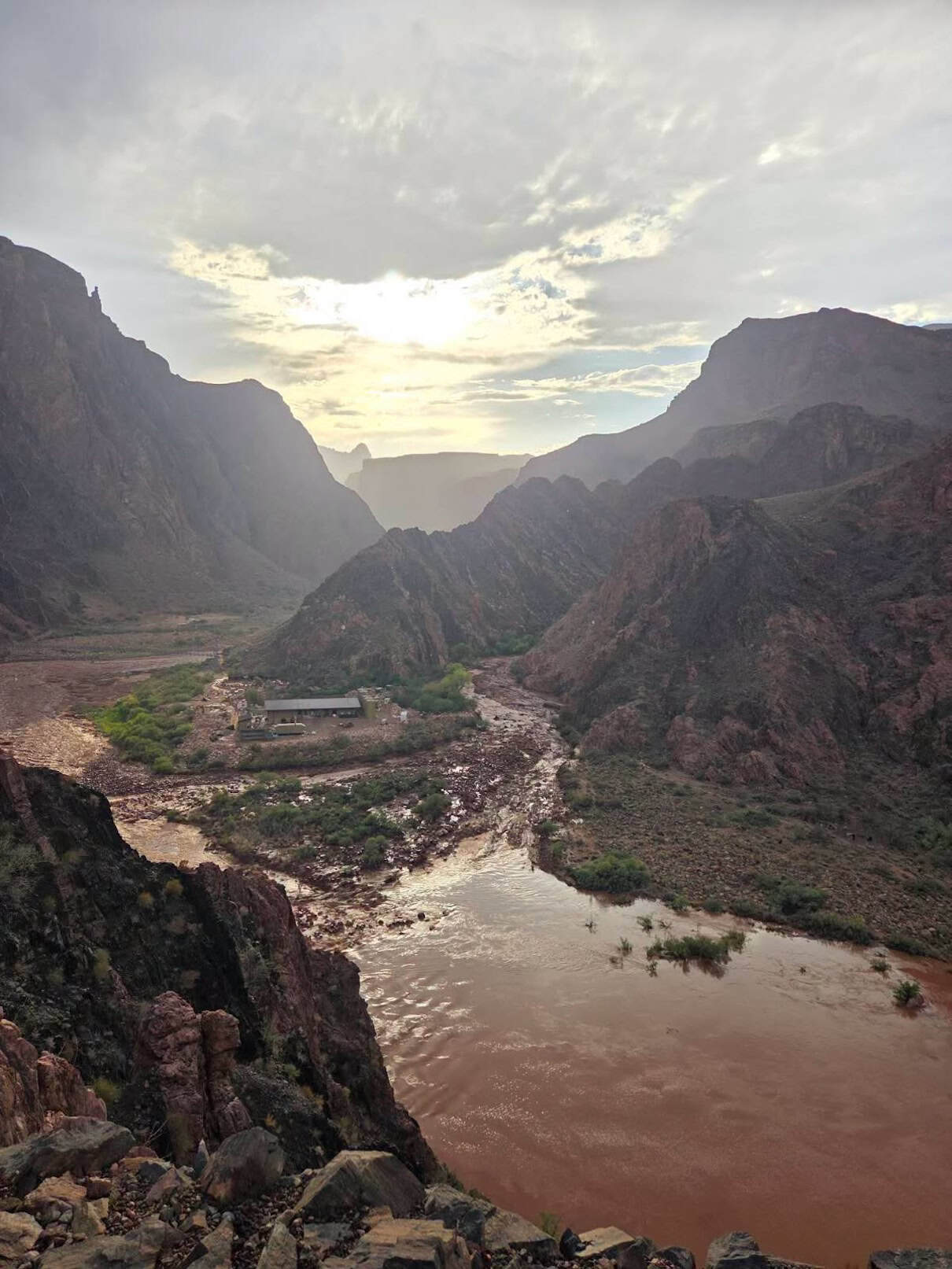
- The Colorado River: Temporarily closed to all private and commercial river traffic starting Sunday due to heavy metal structures, severed utility lines, and massive debris fields entering the river channel.
- Bright Angel Campground: Closed indefinitely pending extensive safety sweeps and geotechnical evaluations.
- Phantom Ranch Facilities: The historic canteen, cabins, and associated dormitories are closed until further notice.
- Trails: The North Kaibab Trail and connecting corridors through the lower Bright Angel gorge remain closed to all foot traffic.
River expeditions currently navigating the canyon are receiving real-time navigation directions and emergency directives through park rangers and the Grand Canyon River Alert system, which broadcasts critical updates directly to subscribers via satellite messaging devices.
Official Statements and Emergency Response
In the wake of the disaster, park leadership has emphasized that public safety remains the absolute priority, even as adverse weather conditions threaten to complicate ongoing operations.
In an official release, Grand Canyon National Park superintendents detailed the multi-jurisdictional cooperation required to secure the canyon floor. Search and rescue teams, supported by aviation units and specialized swift-water rescue technicians, have worked tirelessly despite treacherous terrain, unstable canyon walls, and unpredictable river currents.
However, the National Park Service has issued strict warnings regarding Mother Nature’s reluctance to grant a reprieve. Meteorological forecasts for Monday predicted further rounds of showers and convective thunderstorms over the high country, raising red flags for potential secondary flash floods, rockfalls, and mudslides.
“Forecasted weather on Monday may affect the timing and speed of rescue operations,” park officials cautioned in a public advisory. “Further rain and thunderstorms could bring more flooding to the area, creating highly volatile conditions for our ground crews and air support.”
For families searching for missing loved ones, the park service has established dedicated communication channels through the NPS Investigative Services Branch. Authorities are asking anyone with itineraries, photographs, or communications from hikers in the Bright Angel corridor on August 29 to submit tips via their official online portal.
Future Outlook: Rebuilding the Canyon’s Lifeline
As search operations transition slowly toward recovery and damage mitigation, the long-term outlook for the Grand Canyon’s inner infrastructure remains deeply uncertain.
The immediate domestic fallout has forced drastic conservation measures across the park’s South Rim. Effective Sunday, the park implemented emergency water restrictions. All overnight hotel and lodge accommodations within the park have been temporarily shuttered to drastically reduce human water consumption, with authorities permitting only "dry camping" for visitors already holding backcountry permits outside the impacted zones. Furthermore, all visitor water spigots along the South Rim have been turned off or restricted, and visitors are being urged to pack in their own emergency water supplies.
Rebuilding the pulverized sections of the Transcanyon Waterline and replacing the obliterated footbridges across Bright Angel Creek will require an unprecedented engineering and logistical effort. Transporting heavy construction equipment, raw materials, and specialized labor into the inner canyon—traditionally managed via pack mule strings or helicopter long-lines—will be severely bottlenecked by the destruction of the trail network itself.
For the adventure travel and river-running communities, the disaster serves as a stark, sobering reminder of the raw, untamed power of the American Southwest’s monsoon season. As experts analyze the meteorological triggers that turned Bright Angel Canyon into a death trap on August 29, the Grand Canyon National Park community mourns the lives lost, prays for the safe recovery of the missing, and prepares for a long, arduous road to recovery.