










Executive Overview
In a landmark legal defeat for the federal government’s fossil fuel preservation strategies, the D.C. Circuit Court of Appeals has ruled that the U.S. Department of Energy (DOE) grossly abused its emergency powers. The court struck down federal orders forcing the continued operation of the aging J.H. Campbell coal-fired power plant in West Olive, Michigan.
The unanimous decision, delivered by a three-judge panel on Friday, September 11, 2026, marks a major turning point in an ongoing tug-of-war between states, regional grid operators, and federal regulators over the future of American energy infrastructure. Writing for the court, Judge Cornelia Pillard emphasized a foundational tenet of the U.S. electrical grid: the management of long-term resource planning, day-to-day supply, and demand fluctuations belongs firmly to states and regional transmission organizations (RTOs)—not federal bureaucrats looking to prop up politically favored energy sources under the guise of faux emergencies.
For over a year, the administration utilized obscure clauses within the Federal Power Act to repeatedly bypass market-driven retirements. In doing so, it forced Midwest ratepayers to shell out more than $248 million for an unreliable, dirty, and entirely unnecessary facility. Legal experts, environmental organizations, and consumer advocates view the ruling not only as a localized victory for Michigan, Illinois, and Minnesota ratepayers, but as a critical nationwide warning against executive overreach in the energy sector.

Detailed Chronology: From Market Planning to Federal Impoundment
The Rise and Scheduled Fall of J.H. Campbell
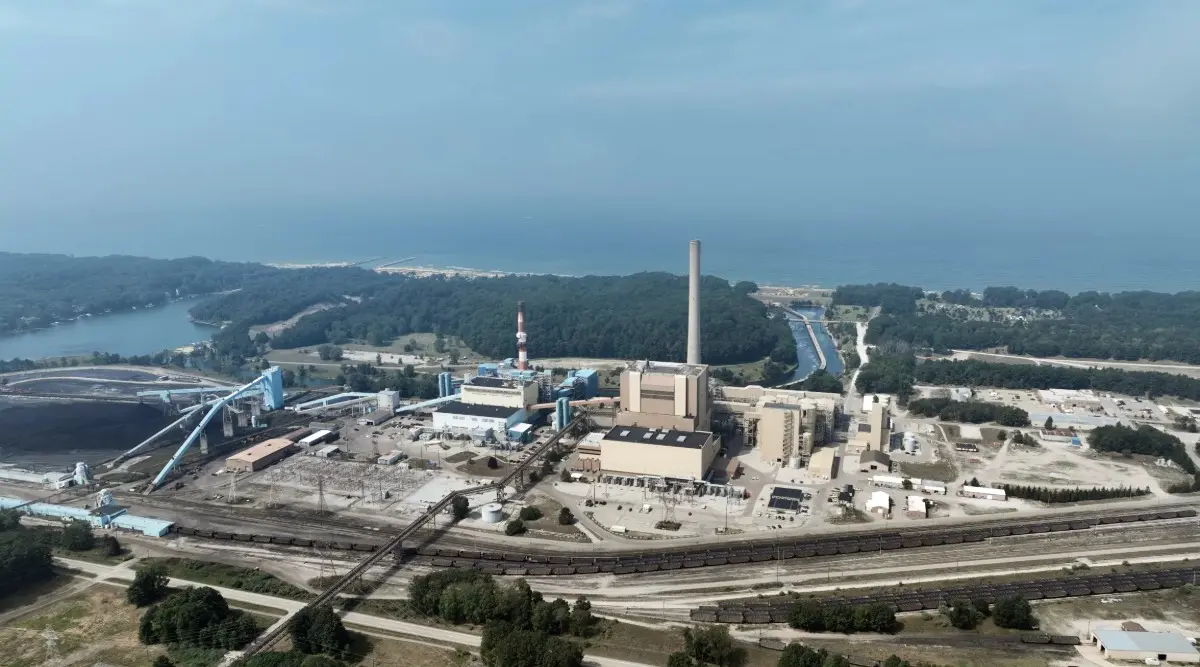
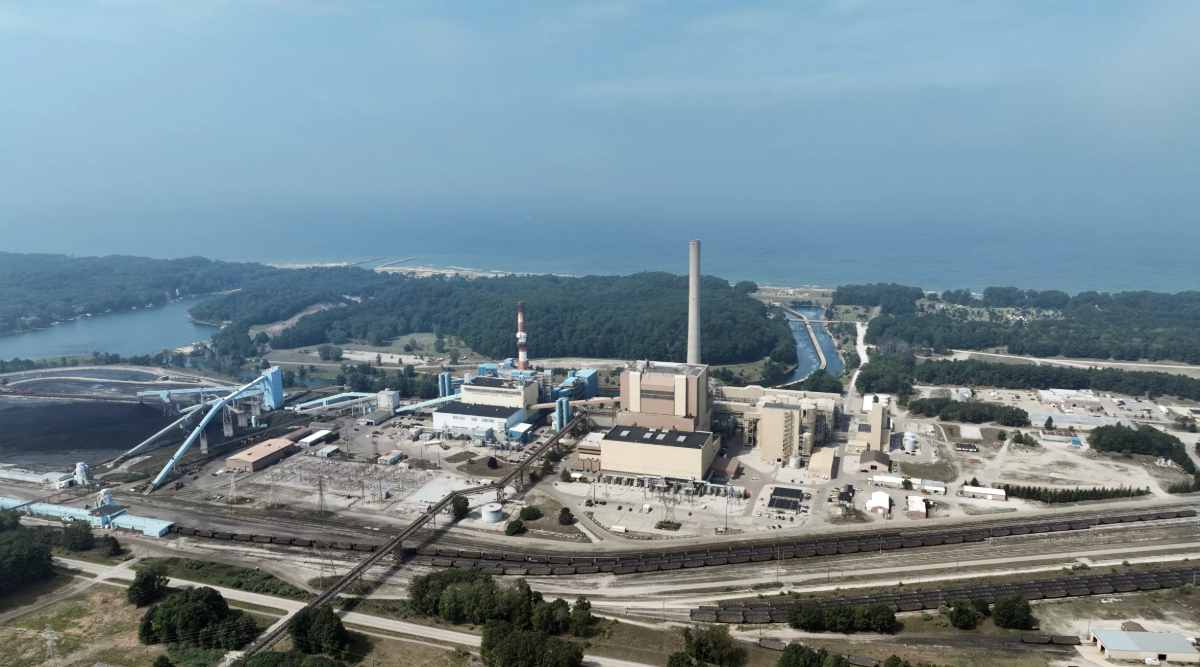
Situated just miles from the shores of Lake Michigan in West Olive, the J.H. Campbell generating station first entered service in 1962. At its historical peak, the three-unit facility supplied 1,420 megawatts (MW) of coal-fired electricity to the region.
However, after six decades of operation, the facility’s owner, Consumers Energy, recognized the economic and environmental imperatives of the modern era. In 2022, the utility formulated a comprehensive transition plan to shutter the aging plant. The strategy involved replacing Campbell’s output with a cleaner, cheaper portfolio of utility-scale solar installations, methane resources, and advanced battery energy storage systems.
This transition plan was subject to rigorous scrutiny. It underwent comprehensive reviews by Michigan state utility regulators and secured official clearance from MISO (Midwest Independent System Operator), the grid manager responsible for overseeing power reliability across the lower Michigan peninsula and large swaths of the American Midwest. Grid operators and planners confirmed that the new clean energy and storage mix would more than adequately match Campbell’s historical output while providing an extra safety margin of electrons. The retirement of the coal plant was set to deliver cleaner air, reduced carbon emissions, and substantial cost savings to local ratepayers.
The Exploitation of Section 202(c)
Enter Russell Vought and the Heritage Foundation playbook. During the political transition periods, conservative strategists cataloged federal statutes for statutory "time bombs"—vague or rarely utilized emergency powers embedded within federal law that could bypass normal legislative or regulatory processes.

They targeted Section 202(c) of the Federal Power Act. Historically, this provision was designed for true, short-term national emergencies—such as extreme weather events or sudden transmission line failures—permitting the federal government to order fossil fuel plants to keep running for a matter of days.
Vought and administration loyalists realized that the statute contained no explicit cumulative time limits. Under their interpretation, once an "emergency" was declared, the Department of Energy could issue a 90-day operating order. When that expired, the administration simply declared the emergency ongoing and issued another 90-day extension. In the case of J.H. Campbell, the administration repeated this maneuver six consecutive times, effectively freezing the plant’s scheduled retirement indefinitely.
The Legal Counter-Offensive
Recognizing a direct assault on state sovereignty and consumer protection, a multi-state coalition—comprising Michigan, Minnesota, and Illinois—joined forces with top environmental legal organizations, including Earthjustice, the Sierra Club, the Natural Resources Defense Council (NRDC), the Environmental Law and Policy Center, the Clean Air Task Force, and the Environmental Defense Fund. They petitioned the D.C. Circuit Court of Appeals to vacate the DOE’s unlawful directives.
The court’s ruling on September 11, 2026, validated the coalition’s arguments. The panel dismantled the DOE’s justifications, ruling that the agency had manufactured a fictitious "energy emergency" to override state-level resource planning and artificially sustain a dying fossil fuel asset.
Supporting Context & Metrics: Unreliability and Ratepayer Plunder
The Reality of Grid Reliability
Proponents of the federal mandates frequently claimed that keeping plants like J.H. Campbell online was essential to prevent rolling blackouts and maintain grid stability under MISO. Reality, however, told a starkly different story.
Data compiled during the tenure of the Section 202(c) orders exposed the severe unreliability of the aging facility:
- The June 2025 Stress Test: On June 23, 2025, one of the most electrically stressed days of the summer season, Campbell Unit 1 suddenly tripped offline in the middle of the day.
- Chronic Outages: Campbell Unit 2 had been completely offline since the emergency orders first took effect on May 23, 2025, and struggled to maintain operational stability throughout the duration of the federal mandate.
Rather than acting as a reliable grid anchor, the aging coal plant proved to be a liability—prone to unexpected mechanical failures precisely when the grid experienced peak demand.
Financial Toll on Midwest Ratepayers
The cost of this political theater has fallen squarely on the shoulders of everyday consumers. According to financial assessments, ratepayers in the MISO service area have been forced to subsidize more than $248 million simply to keep the dysfunctional, expensive J.H. Campbell facility functioning over the past year.
A broader study published by energy consulting firm Grid Strategies estimates that preventing the retirement of America’s aging coal fleet for the duration of the current presidential term could siphon at least $3 billion per year directly from consumer pockets. This artificial market distortion directly contradicts long-standing conservative rhetoric favoring free-market competition and "all-of-the-above" energy policies, substituting it instead with government-mandated corporate welfare for fossil fuel operators.
Official Statements and Legal Perspectives
The judicial rebuke drew strong praise from legal representatives and environmental advocates who fought the mandates from day one.
Michael Lenoff, Lead Attorney for Earthjustice:
"The court rejected the Department of Energy’s use of emergency authority, and agreed with our interpretation that emergency authority is to be used for actual emergencies, not picking preferred resources or addressing issues that Congress and the law have entrusted states to deal with. The court rebuked the administration’s abuse of emergency powers. The DOE needs to stay in its lane and use its emergency powers only in actual emergencies."
Kathryn McGrath, Public Affairs and Communications Strategist at Earthjustice:

"The court affirmed that the DOE grossly overstepped its authority when it prevented the retirement of the J.H. Campbell coal plant. The court ruled that the Department’s justification for the order—that it can keep a power plant open when there is no imminent need to do so—was unlawful. The federal government may not override well-established long-term planning processes to force an old, polluting coal plant to continue to operate."
Sanjay Narayan, Chief Appellate Counsel for the Sierra Club:
"Today’s ruling is a victory for families across the Midwest who are tired of paying to keep this old, expensive, and dirty power plant online. Instead of working to lower costs and clean up our air and water, the administration has been pulling out all the stops to try to bolster dirty and expensive fossil fuels—at public expense. This reckless agenda will not succeed. We will continue to hold the Department of Energy accountable to the law."
Future Outlook: Flooding the Zone and the Road Ahead
The Machiavellian Playbook of Delay
Legal scholars point out that the administration’s strategy relies heavily on procedural friction. By issuing immediate executive orders that take effect instantly, the federal government forces opponents into lengthy, multi-year court battles. Even when courts ultimately declare these actions illegal—much like previous rulings against administration-backed tariffs—the executive branch simply pivots, utilizing alternative emergency provisions to reissue virtually identical mandates.
This strategy of "flooding the zone" with executive edicts allows fossil-fuel-friendly policies to remain active for months or years before the judiciary can catch up, leaving ratepayers to foot the bill in the interim.
Repercussions Across the Country
While the D.C. Circuit Court’s decision provides immediate relief to Michigan, Illinois, and Minnesota, its implications stretch nationwide. The New York Times has reported that similar emergency orders have been deployed to block coal plant retirements in states like Washington, Indiana, and Colorado.
Despite these desperate federal lifeboats, the American coal industry continues to bleed jobs and market share. Natural gas, wind, solar, and battery storage have simply become too economically competitive for coal to survive under normal market conditions.
As legal challenges mount against similar federal overreaches across the country, the September 2026 ruling stands as a formidable judicial barrier. It reasserts the boundaries of executive power, protects state-level energy autonomy, and signals that manipulating emergency statutes to prop up uneconomic fossil fuels will no longer go unchecked by the courts.