







Executive Overview
Despite shifting federal headwinds and an increasingly polarized political landscape regarding green energy incentives, the commercial freight sector is accelerating its transition toward electrification. Driven by skyrocketing fossil fuel costs—exacerbated by ongoing geopolitical conflict in Iran—diesel prices have surged to unprecedented heights, reaching a record $5.85 per gallon in September 2026. This volatile economic reality has transformed the adoption of electric trucks from an environmental aspiration into an immediate, bottom-line financial necessity for fleet operators.
Across both the East and West Coasts of the United States, major regional initiatives are taking root. In the New York and New Jersey metropolitan areas, a massive influx of federal funding is reshaping port logistics through strategic partnerships aimed at deploying zero-emission cargo handling equipment and heavy-duty trucks. Simultaneously, on the West Coast, an unprecedented international alliance known as the "BC2BC" corridor is linking British Columbia, Washington, Oregon, California, and Baja California. This transcontinental infrastructure project establishes a seamless, zero-emission freight superhighway spanning three nations.
Far from stalling out in the face of shifting national policies, the electric vehicle (EV) freight revolution is proving resilient, underpinned by total cost of ownership (TCO) advantages that make electric trucks increasingly difficult for commercial logistics managers to ignore.
Detailed Chronology of Events
The convergence of economic pressures, geopolitical friction, and targeted regional infrastructure investments has created a fast-moving timeline for commercial fleet electrification:
- 2021 (The Pandemic Baseline): Amid previous pandemic-era supply chain disruptions and fuel price spikes, researchers at the University of California, Berkeley, published landmark economic data demonstrating that long-haul electric trucks were already 13% cheaper to own and operate than diesel equivalents, with projected lifetime savings reaching up to $200,000 per vehicle.
- 2024 (Federal Infrastructure Commitments): The U.S. Environmental Protection Agency (EPA) issued a critical $451 million grant to the Port Authority of New York and New Jersey under the Bipartisan Infrastructure Law’s Clean Ports program. This funding was specifically earmarked to transition East Coast port logistics away from fossil fuels.
- August 26, 2026 (The BC2BC Corridor Launch): Elected officials and transit leaders from California, Oregon, Washington, British Columbia, and Baja California officially unveiled the British Columbia to Baja California (BC2BC) ZEV freight corridor. Designed to support high-density commercial traffic along Interstate 5, the initiative mapped out an initial deployment of 20 electric truck charging stations and 3 hydrogen fueling stations.
- September 3, 2026 (The Port Authority-CALSTART Partnership): Capitalizing on its federal allocation, the Port Authority of New York and New Jersey announced a $45 million collaboration with the nonprofit electrification organization CALSTART. The partnership directed $39 million toward zero-emission trucks, yard tractors, and on-site charging infrastructure, with an additional $5 million dedicated to off-site charging hubs within ten miles of marine terminals.
- September 4, 2026 (The Diesel Price Peak): According to the AAA gas price tracker, the national average for diesel fuel hit a staggering all-time high of $5.85 per gallon, driven heavily by compounding pressures from the ongoing conflict in Iran. This pricing milestone underscored the urgent financial vulnerability of diesel-dependent supply chains.
Supporting Context & Metrics: The Total Cost of Ownership
While political debates surrounding clean energy mandates continue to dominate headlines, fleet managers are increasingly making decisions based on cold, hard mathematics. Fuel represents one of the single largest operational expenditures for commercial trucking fleets. When diesel prices breach $5.80 per gallon, traditional internal combustion engine (ICE) fleets experience immediate margin compression.
To help operators navigate this transition without guesswork, the International Council on Clean Transportation (ICCT) developed a meticulously calibrated Total Cost of Ownership (TCO) calculator. This tool evaluates everything from Class 2b–3 medium-duty delivery vans to massive Class 8 long-haul semi-trucks, factoring in maintenance savings, electricity rates, vehicle acquisition costs, and operational lifespans.
The economic thesis for electrification is further supported by predictive economic modeling:

- The Berkeley Projections: UC Berkeley’s Goldman School of Public Policy projected that long-haul electric trucks would achieve a 13% reduction in operating costs compared to diesel variants, scaling up toward a projected 50% savings milestone by 2030.
- Battery Cost Trajectories: Continuous declines in lithium-ion battery pack production costs have significantly shortened the payback period for fleet operators, neutralizing upfront capital expenditure concerns over the lifetime of the asset.
- Maintenance Reductions: Because electric powertrains feature significantly fewer moving parts than internal combustion engines—eliminating oil changes, complex transmission overhauls, and exhaust aftertreatment system repairs—commercial operators realize substantial reductions in vehicle downtime and workshop expenditures.
Official Statements and Institutional Actions
Regional authorities and international coalitions are refusing to let shifting federal priorities derail multi-state decarbonization goals. Instead, regional leadership is stepping into the void, utilizing federal grants secured prior to recent policy reversals to build out robust, future-proof freight networks.
The Port Authority and CALSTART’s East Coast Push
The $45 million initiative launched by the Port Authority of New York and New Jersey in partnership with CALSTART represents a sophisticated, data-driven approach to port electrification. Rather than merely handing out subsidies, the program establishes accountability and performance tracking.
According to Port Authority planning documents, CALSTART has been tasked with developing advanced operational dashboards. "These tools will monitor deployment, vehicle performance, and charger utilization across port operations before being fully transferred to the Port Authority in 2028," the agency noted in an official statement.
Furthermore, the initiative addresses the human element of the green transition. A dedicated $3 million EPA planning grant is funding the creation of a Port Community Advisory Council, designed to spearhead clean energy workforce training and ensure that local communities benefit directly from high-tech green jobs. Beyond trucks, the broader Clean Ports funding sweep includes shore power infrastructure—allowing docked container ships to plug into land-based electricity grids and completely shut down their auxiliary diesel engines while in port.
The Tri-State and International "BC2BC" Alliance
On the opposite coast, the establishment of the BC2BC corridor marks a major milestone in cross-border infrastructure cooperation. By uniting agencies across international boundaries—including the California State Transportation Agency and the University of California, Davis Institute of Transportation Studies—the coalition is tackling the primary psychological barrier for fleet managers: range anxiety.

The initial phase of the BC2BC project focuses on building out a reliable network of at least 20 heavy-duty electric charging stations and 3 hydrogen refueling stations along the heavily trafficked Interstate 5 corridor, which handles an average of 10,000 commercial trucks daily. By guaranteeing fuel availability from the Canadian border down to Mexico, the coalition is providing the structural certainty required for logistics companies to transition their Class 8 fleets with confidence.
Future Outlook: Commercial EV Market Dynamics
The commercial electric vehicle market is rapidly maturing, evolving from niche pilot projects into a fiercely competitive industrial sector. Heavy-duty manufacturers are racing to capture market share just as structural demand hits an inflection point.
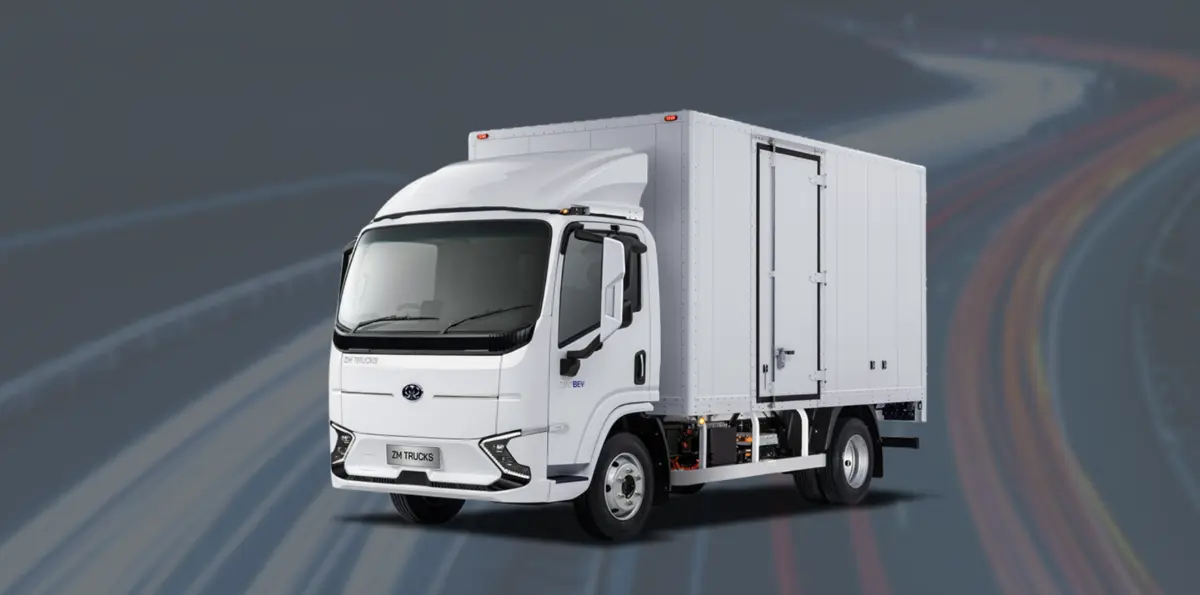
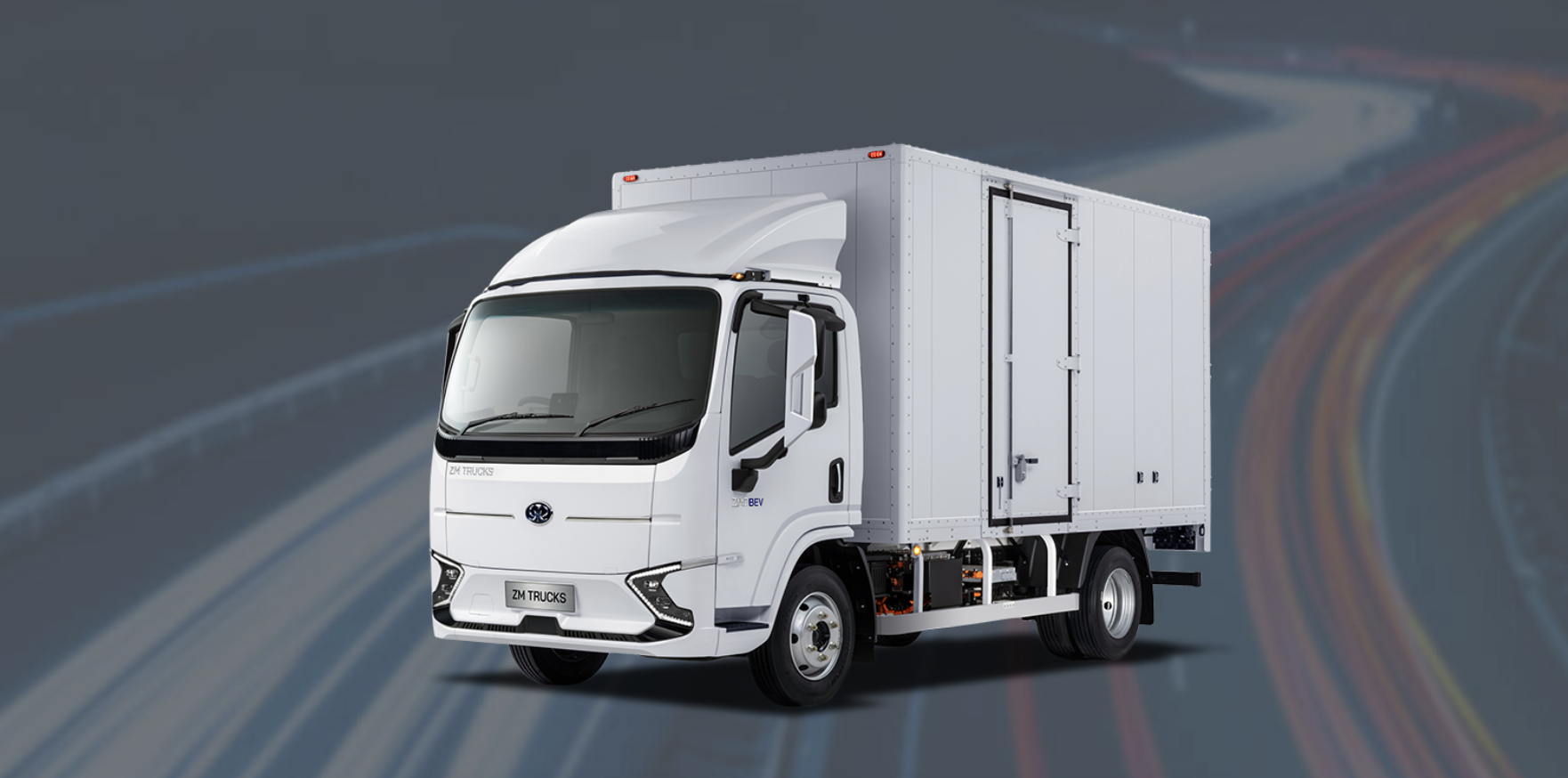
Tesla’s Class 8 Semi is gaining traction in volume production, providing the company with strong commercial validation following mixed consumer-market rollouts in other segments. At the same time, specialized medium- and heavy-duty manufacturers are establishing domestic footprints. Companies such as ZM Trucks—the U.S. arm of Japan’s ZO Motors—are moving forward with production facilities in manufacturing hubs like Fontana, California, targeting everything from urban delivery "Baby 8" trucks to heavy-duty regional haulers. Volvo, Freightliner, and traditional commercial vehicle giants are similarly ramping up their zero-emission portfolios.
As diesel prices remain elevated and regional networks like BC2BC and the Port Authority’s East Coast hubs come online, the economic momentum behind freight electrification appears unstoppable. The transition away from fossil fuels is no longer merely a regulatory compliance exercise; it has become a masterclass in economic survival and operational efficiency.