









Executive Overview
For millions of travelers across the globe, the word "Tokyo" evokes an immediate, dizzying sensory montage: the neon-drenched canyons of Shinjuku, the frantic, sea-of-humanity pedestrian crossings in Shibuya, the towering glass monoliths of Roppongi, and the ultra-efficient commuter rail networks humming beneath a metropolis of nearly 14 million people. It is the epitome of the 21st-century hyper-urban landscape. Yet, hidden just a couple of hours away from the urban core lies a striking geographic reality that defies this conventional narrative. Deep within the heavily forested, rugged mountains of western Tokyo rests Lake Okutama—also known formally as the Ogouchi Reservoir.
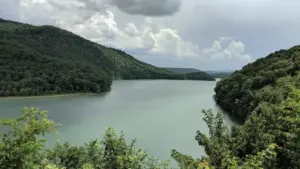
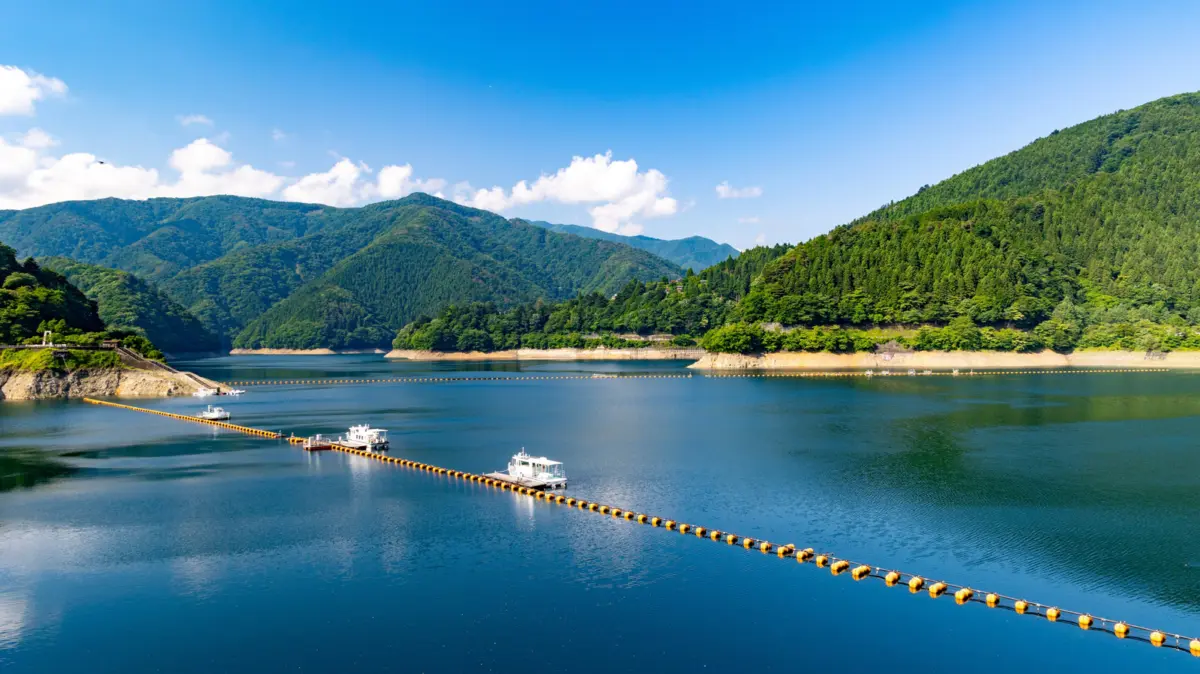
Encompassing a staggering volume of roughly 185 million cubic meters of water (nearly 50 billion gallons), this aquatic marvel stands as Japan’s largest reservoir dedicated exclusively to municipal water supply. But for the discerning traveler, statistician, and nature enthusiast alike, Lake Okutama’s true value extends far beyond municipal civil engineering. It serves as a transformative psychological escape hatch. Here, the deafening roar of urban traffic is replaced by the rustle of dense cedar canopies, the mirror-like reflections of towering alpine peaks, and a network of meditative trails that trace an untouched shoreline.
Trading pristine asphalt for winding historical footpaths and modern structural infrastructure for surreal floating bridges, Lake Okutama proves that Tokyo is not a monolithic concrete jungle. Instead, it is a vast prefecture of geographical contrasts, where visitors can effortlessly transition from the cutting-edge modernity of downtown Shinjuku to the timeless, mist-shrouded wilderness of Mount Kumotori—Tokyo’s highest summit—in a matter of hours.
Detailed Chronology and Structural Evolution
The transformation of this deep western valley from a secluded network of mountain hamlets into a vital, life-sustaining hydrological artery is a fascinating tale of civil engineering, wartime endurance, and post-war reconstruction. To understand Lake Okutama today, one must trace the historical timeline that birthed its existence.
Pre-Construction and the Genesis of the Ogouchi Project (Early 20th Century)
By the 1930s, the rapid industrialization and population explosion of the Greater Tokyo Area placed an unprecedented strain on the region’s existing water infrastructure. The Tama River, which naturally feeds the basin, was subject to erratic seasonal fluctuations—delivering catastrophic floods during the monsoon seasons and severe water shortages during dry summer months.
In 1936, the Tokyo municipal government officially greenlit the ambitious "Ogouchi Dam Project." The engineering blueprint called for the damming of the upper reaches of the Tama River, a feat that would permanently submerge several established mountain villages, including Ogouchi and Kosuge, and displace hundreds of local farming and forestry families.
Wartime Stagnation and Post-War Completion (1938–1957)
Construction officially commenced in 1938 under the shadow of mounting geopolitical conflict. The immense logistical challenges of hauling heavy construction materials deep into the mountainous terrain of western Tokyo were soon compounded by the outbreak of World War II.
By 1943, as material shortages and labor drafts crippled the Japanese industrial sector, the project was forced to a grinding halt. Massive concrete forms and partially excavated earthworks sat dormant as nature slowly began to reclaim the construction sites.
Following the cessation of hostilities, as Japan embarked on its miraculous post-war economic recovery, the Japanese government recognized the urgent necessity of completing the reservoir to secure the capital’s booming population. Construction resumed in earnest in 1948. Nearly a decade later, in 1957, the monumental Ogouchi Dam was officially completed, and the valley filled to create the sprawling expanse now known as Lake Okutama. The completion not only secured Tokyo’s water future for the latter half of the 20th century but also unintentionally birthed a pristine ecological sanctuary.
Supporting Context, Infrastructure, and Metrics
A deeper dive into the technical and geographical parameters of Lake Okutama reveals why this artificial body of water functions so effectively both as a utility asset and as an eco-tourism destination.
Hydrological and Geographical Dimensions
- Total Volume: Approximately 185 million cubic meters (roughly 49.6 billion gallons).
- Dam Specifications: The Ogouchi Dam is a massive concrete gravity dam standing approximately 149 meters (489 feet) tall, making it one of the tallest dams in the Tokyo prefecture.
- Elevation: Situated high in the mountains, the lake sits at an average elevation of over 500 meters above sea level, contributing to a noticeably cooler microclimate compared to central Tokyo.
- Surrounding Peaks: The lake is framed by formidable mountains, most notably Mount Kumotori, which stands at an impressive 2,017 meters (6,617 feet)—the absolute highest geographical point in Tokyo.
Architectural Marvels: The "Drum Can" Floating Bridge
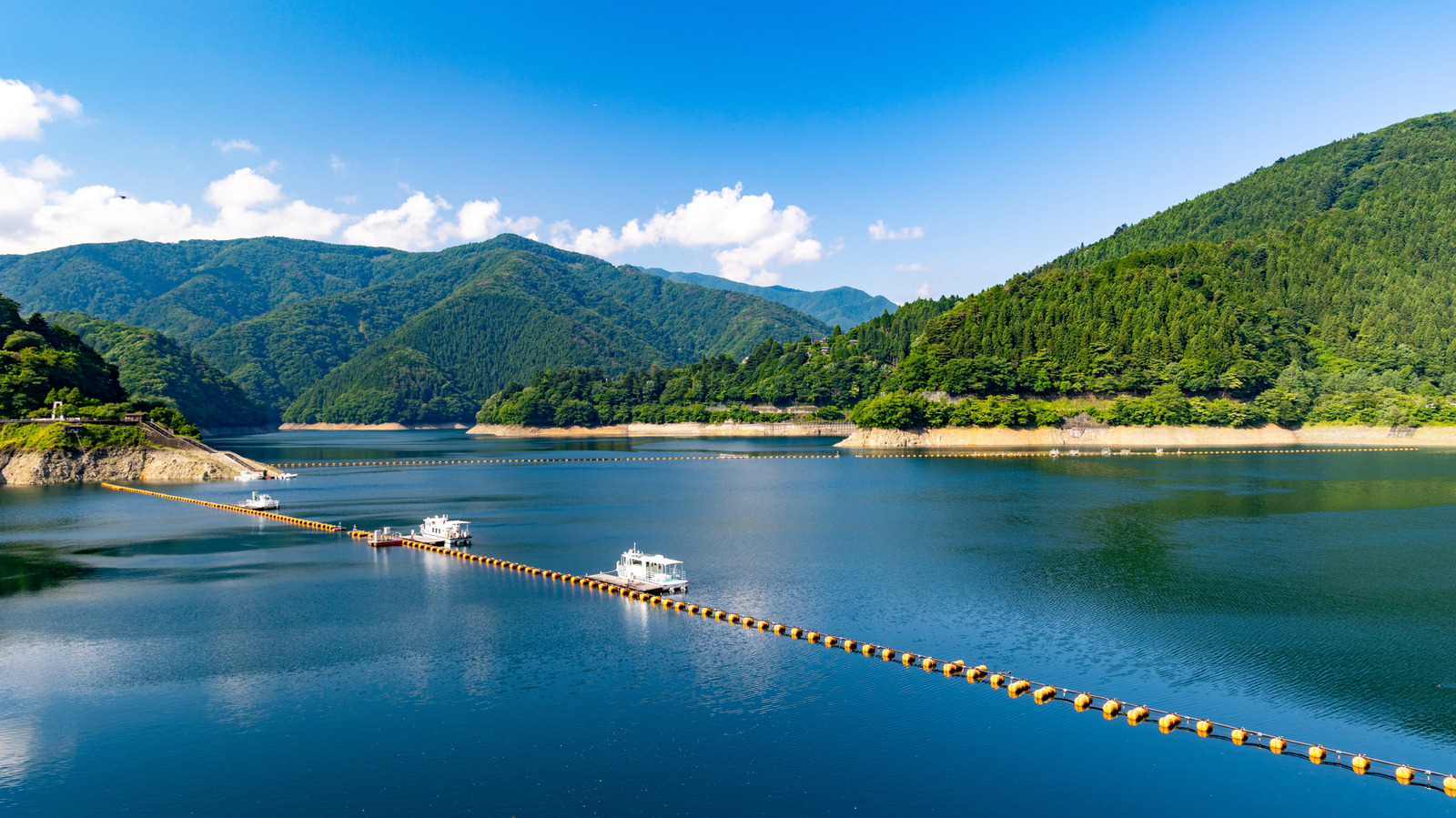
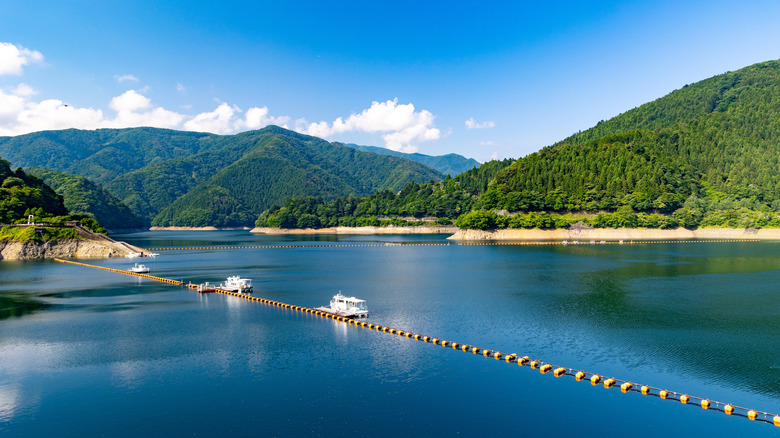
One of the most unique engineering features associated with Lake Okutama is the inclusion of floating pedestrian bridges, locally and affectionately referred to as Doramu Kan Buri-ji (Drum Can Bridges). The Mugiyama Floating Bridge, for instance, does not rest on traditional fixed concrete or steel pylons anchored to the lakebed. Instead, it is buoyed across the water by a series of hollow, drum-shaped resin floats.
This design allows the bridge to dynamically adjust to the fluctuating water levels of the reservoir. For pedestrians, crossing the bridge offers a sensory-rich, slightly bouncy walking experience. As footsteps fall, the bridge gently sways and bobs with the subtle ripples of the deep-blue water, offering uninterrupted 360-degree panoramic views of the dense forests tumbling down the surrounding mountain slopes.
However, this dynamic nature means the bridge is inherently tethered to the operational realities of the reservoir. When municipal water management requires significant drawdowns during dry spells, the altered water levels can render the floating spans structurally unsafe or inaccessible, prompting the Tokyo Metropolitan Bureau of Waterworks to temporarily restrict public access.
Official Statements and Administrative Guidelines
Managing a hybrid zone that serves as both a primary municipal water source and a public recreation area requires a delicate administrative balancing act. The Tokyo Metropolitan Bureau of Waterworks, alongside local tourism boards, maintains strict oversight of human activity around Lake Okutama to preserve water purity and protect the surrounding Chichibu-Tama-Kai National Park.
Water Quality and Conservation Directives
Because Lake Okutama supplies drinking water to millions of residents downstream, environmental preservation is paramount. Unlike many recreational lakes across the globe, Lake Okutama explicitly prohibits swimming, motorized watercraft, and unstructured boating. There are no manicured sandy beaches, rental jet ski docks, or commercial marinas.
In official advisories, the Tokyo Metropolitan Bureau of Waterworks emphasizes:
"The preservation of the Ogouchi Reservoir’s water quality is a foundational pillar of Tokyo’s public health infrastructure. Visitors are reminded that while the surrounding trails and designated observation platforms offer profound engagement with nature, the lake waters themselves are protected strictly for municipal use. All recreational activities are bounded by the imperative of ecological stewardship."
Visitor Etiquette and Trail Preservation
Local authorities and tourism bureaus also place heavy emphasis on trail etiquette. Given the surge in international tourism across Japan, the juxtaposition of urban visitors unfamiliar with rural Japanese customs has occasionally sparked friction with local mountain communities.
Chief among local grievances is litter management. Japan’s widespread cultural norm of "packing out your trash"—where public waste receptacles are rare and individuals are expected to carry their refuse home—often catches foreign tourists off guard. Environmental rangers patrolling the Lake Okutama trail networks have issued ongoing reminders:
"The serenity of the Okutama mountains relies entirely on mutual respect between the traveler and the environment. Littering or disturbing the indigenous flora and fauna disrupts not only the delicate balance of the national park but also deeply offends the sensibilities of the local communities who view these mountains as living cultural landscapes."
Future Outlook: Sustainable Tourism and Modern Accessibility
As Tokyo looks toward the middle of the 21st century, the role of peripheral escapes like Lake Okutama is undergoing a significant strategic re-evaluation. With urban density continuing to concentrate populations in core wards, the demand for accessible, low-impact ecotourism is skyrocketing.
Navigating Climate Variability and Infrastructure Maintenance
The future viability of Lake Okutama as a recreational destination is increasingly tied to global climate patterns. Extended periods of low rainfall and anomalous winter snowpacks directly impact reservoir levels, frequently forcing the closure of iconic features like the Mugiyama Floating Bridge. In response, local municipal authorities are investing in smart monitoring systems and real-time digital notification networks. These systems allow prospective hikers to check water levels and bridge operational statuses online before embarking on the two-hour journey from Shinjuku, minimizing disappointed trips and optimizing visitor flow.
Enhancing Eco-Tourism Without Compromising Wilderness
Future development plans centered around Okutama town and the lake periphery are strictly focused on sustainable, low-impact infrastructure. Rather than expanding commercial hospitality ventures or paving access roads, the focus remains on the meticulous upkeep of legendary trails:
- The Ikoino Michi ("Path of Relaxation"): A gentle, 12-kilometer (7.5-mile) trail hugging the southern shore from the Ogouchi Dam to the Yamano Furusato natural park. It offers visitors of all fitness levels an immersive forest bathing (shinrin-yoku) experience, complete with encounters with native wildlife such as Japanese macaques.
- The Okutama Mukashi Michi ("Old Okutama Road"): A historic 9-kilometer (5.5-mile) heritage route connecting the Okutama JR Station to the lake. This trail serves as an open-air museum, winding past ancient Shinto shrines, weathered dosojin (roadside guardian) stone statues, and the nostalgic, moss-covered tracks of abandoned forestry railways.
Seamless Multimodal Transit
Accessibility remains a cornerstone of Okutama’s enduring appeal. Thanks to the legendary efficiency and affordability of the Japanese Railways (JR) network, travelers can board a seamless train at Shinjuku Station and disembark at Okutama Station just over two hours later, transitioning effortlessly from underground subway lines to scenic mountain buses.
Ultimately, Lake Okutama stands as a triumphant testament to harmonious coexistence—a place where vital industrial infrastructure meets untamed natural beauty. For the traveler willing to trade the flashing lights of the Yamanote Line for the mist-veiled peaks of western Tokyo, Lake Okutama offers an irreplaceable reward: a profound, soul-stirring silence just a stone’s throw from one of the busiest cities on Earth.