










Executive Overview
After nearly two years of careful deliberation, strategic evaluation, and shifting macroeconomic tides, private equity titan Blackstone is reportedly steering Hotel Investment Partners (HIP) toward a landmark initial public offering (IPO) on the Spanish stock exchange this autumn. According to prominent financial daily Cinco Días, the Barcelona-based hotel owner and resort titan—which boasts one of the most enviable portfolios of leisure properties across the Mediterranean basin—is being groomed for a late October or early November market debut.
The transaction is expected to value the enterprise at a staggering €6 billion to €7 billion ($6.9 billion to $8.1 billion), making it one of the most significant real estate and hospitality public offerings in Europe in recent years. Should the timeline hold, formal prospectuses and regulatory filings will land at Spain’s National Securities Market Commission (CNMV) by early October.
This prospective flotation marks a watershed moment for the European hospitality sector. It underscores the resilient post-pandemic appetite for leisure real estate, even amid broader macroeconomic headwinds, persistent inflationary pressures, and fluctuating interest rate environments. While neither Blackstone nor HIP management has formally responded to media inquiries or issued official statements regarding the reports, industry insiders suggest that the private equity firm has steadily assembled a powerhouse advisory syndicate to orchestrate the public listing.
For Blackstone, taking HIP public is the culmination of a multi-year consolidation strategy that transformed a regional collection of Spanish beachside hotels into the dominant hospitality asset owner in Southern Europe. For the broader Spanish equities market, a successful multibillion-euro debut represents a much-needed psychological and capital boost, re-establishing Madrid as a premier destination for large-scale institutional listings.
Detailed Chronology: The Evolution and Path to Public Markets
The Genesis of a Hospitality Goliath
The story of Hotel Investment Partners (HIP) is inextricably linked to the aggressive expansion playbook deployed by Blackstone in the wake of the European sovereign debt crisis and the subsequent economic recovery. Founded in 2015, HIP was originally conceived as a vehicle to capitalize on the distressed real estate and debt portfolios plaguing Southern European banking systems.
Blackstone seized the opportunity in 2017, acquiring HIP from Banco Sabadell for a reported €630 million. At the time of acquisition, the portfolio was modest by contemporary standards, consisting primarily of mature, under-managed Spanish resort hotels requiring significant capital expenditure, operational overhauls, and rebranding.
Recognizing the immense latent potential within the Mediterranean leisure market—where predictable sunshine, deep-rooted cultural tourism, and high barriers to entry for new coastal developments create a structural supply deficit—Blackstone injected substantial capital into the platform. Over the next several years, HIP embarked on a relentless acquisition spree, absorbing regional portfolios, independent resort assets, and prime coastal real estate across Spain, Greece, Italy, and Portugal.

The Strategic Pivot: Weighing a Dual-Track Process
By late 2022 and early 2023, as HIP matured under Blackstone’s stewardship, rumors began swirling across financial capitals regarding an impending exit. Private equity funds operate on finite lifecycles, and Blackstone faced the classic dilemma of how to monetize a multi-billion-euro asset of this scale without disrupting its underlying operations.
Initially, financial advisors explored a classic "dual-track" process, evaluating both a potential trade sale to sovereign wealth funds or competing mega-funds and a public market listing.
- The M&A Route: In 2023, reports surfaced that Blackstone had engaged investment banks to sound out potential corporate buyers. Sovereign wealth funds from the Middle East, alongside massive global pension funds and infrastructure investors, were floated as natural suitors. However, finding a single buyer capable of writing a check exceeding €6 billion in an era of elevated cost of debt proved exceptionally challenging.
- The Private Refinancing Alternative: Concurrently, Blackstone utilized the private debt markets, executing large-scale recapitalizations and securing institutional financing to return capital to its LPs (limited partners) while buying time to optimize portfolio performance.
The Decision to List in Madrid
By mid-2024, the M&A climate for wholesale corporate buyouts remained subdued due to conservative lending practices by major European banks. Consequently, Blackstone shifted its primary focus toward the public markets.
Choosing the Madrid stock exchange over alternative venues like London or Euronext Amsterdam is a strategic nod to HIP’s core operational footprint and Spanish corporate identity. Barcelona serves as the company’s operational heartland, while Madrid hosts the institutional capital infrastructure and regulatory bodies necessary to support a large-cap real estate investment vehicle.
According to Cinco Días, preparations have shifted into high gear over the summer months. Advisers are currently finalizing the structural mechanics of the IPO, determining the exact percentage of equity to be floated, and structuring the dividend distribution policies that real estate investment trusts (REITs) or similar entities typically require to attract yield-hungry institutional investors.
Supporting Context & Metrics: Inside the HIP Portfolio
To fully comprehend the magnitude of a €6B–€7B valuation, one must examine the operational and physical scale of the assets under HIP’s umbrella.
Portfolio Footprint and Scale
- Total Properties: 61 high-end resort and urban leisure hotels.
- Total Room Count: Approximately 18,000 to 19,000 keys, positioning HIP among the largest hotel asset owners in Europe.
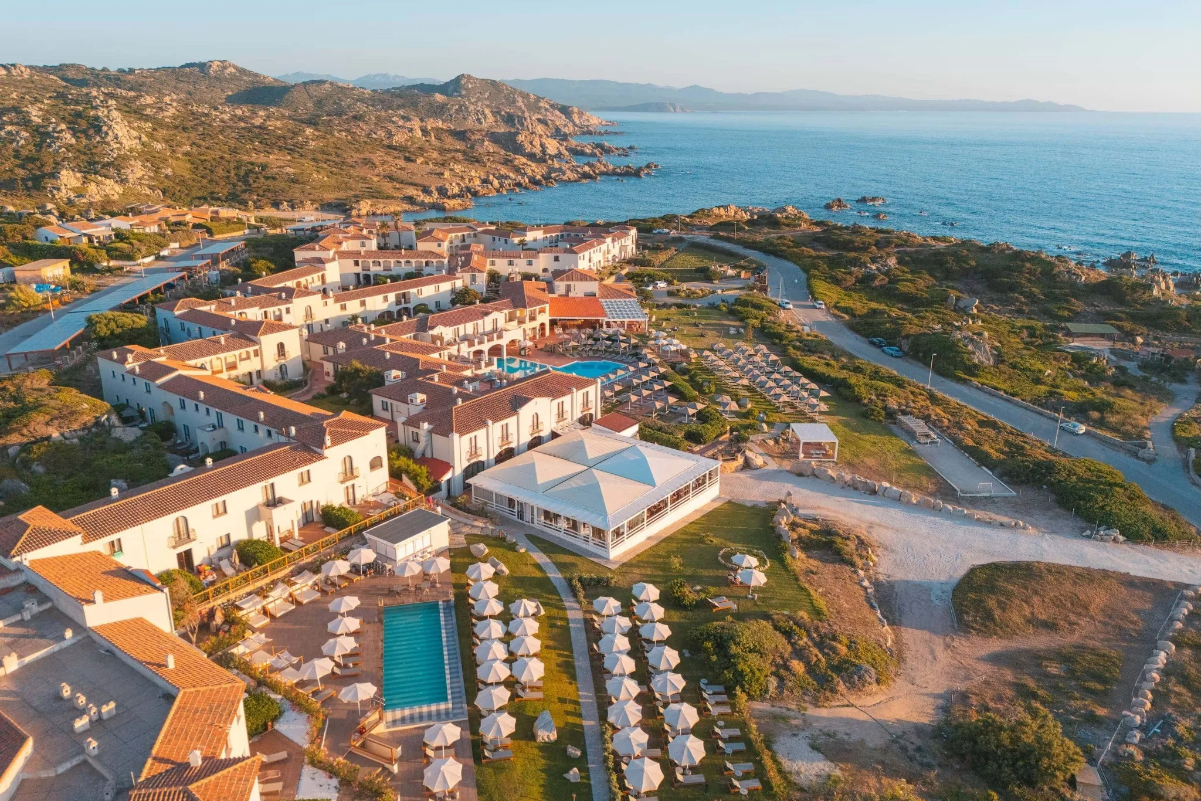
- Geographic Distribution: The vast majority of the portfolio is anchored in prime Spanish coastal destinations—including the Balearic Islands, the Canary Islands, the Costa del Sol, and the Costa Brava. In recent years, HIP has systematically diversified its geographic exposure, expanding deeper into high-growth Mediterranean markets such as Greece and Italy.
The Asset-Heavy, Brand-Light Business Model
Unlike traditional hotel operators (such as Marriott, Hilton, or IHG) that focus primarily on management contracts and franchising, HIP operates under an asset-heavy real estate model. HIP owns the physical bricks and mortar of the hotels, while partnering with premier global and regional hotel operators—such as Meliá Hotels International, Barceló Hotel Group, AMResorts, and Marriott—to manage the daily operations and guest experiences.
This division of labor insulates HIP from day-to-day operational wage inflation and staffing volatility, while allowing the company to capture the long-term appreciation of prime Mediterranean real estate. Furthermore, Blackstone’s playbook involved heavy capital injection to renovate aging properties, repositioning three-star and unbranded assets into four- and five-star luxury lifestyle resorts. This repositioning strategy dramatically boosted Average Daily Rates (ADR) and Revenue Per Available Room (RevPAR) across the portfolio.
Macroeconomic Tailwinds: The Booming Mediterranean Leisure Economy
The timing of the IPO coincides with a historic boom in European tourism. Following the disruptions of the COVID-19 pandemic, consumer spending shifted decisively toward experiential travel and leisure. Southern Europe has been the primary beneficiary of this structural trend.
- Record Tourist Arrivals: Spain, Greece, and Italy have repeatedly shattered pre-pandemic tourism records, driven by pent-up global demand and strong arrivals from Northern Europe, North America, and the Middle East.
- Climate Resilience and Seasonality Extension: Historically, Mediterranean resorts suffered from intense seasonality, experiencing extreme occupancy peaks in July and August and near-dormancy in the winter months. HIP has actively invested in year-round programming, wellness tourism, and conference facilities, successfully extending the operating season and smoothing out cash flow volatility.
- Supply Constraints: Strict municipal zoning laws, environmental regulations, and a scarcity of beachfront land mean that building new competing resorts along the Mediterranean coast is virtually impossible. This structural supply shortage guarantees strong pricing power for existing asset owners like HIP.
Official Statements and Industry Reactions
As of early October, an aura of deliberate corporate silence surrounds the transaction.
The Blackstone Stance
When approached by financial journalists from Skift and other leading trade publications, representatives for Blackstone declined to comment on the Cinco Días report. This refusal to confirm or deny is standard operating procedure for private equity giants in the sensitive pre-filing window of an IPO. Premature disclosures can trigger regulatory scrutiny from the CNMV, complicate underwriting syndicates, or create unnecessary volatility in debt negotiations.
Market and Analyst Perspectives
Industry analysts and real estate investment bankers have offered overwhelmingly positive commentary regarding the viability of the offering:
"A €6 billion to €7 billion listing for HIP is entirely rational given the current macroeconomic backdrop," notes a senior European real estate analyst based in London. "Institutional investors are actively seeking defensive, cash-generating real estate assets that offer a natural hedge against inflation. Prime Mediterranean leisure real estate is virtually irreplaceable; you cannot manufacture more coastline."
However, some market watchers maintain a note of cautious pragmatism regarding equity market conditions. European IPO windows have historically proven fragile, easily derailed by geopolitical tensions, shifting central bank interest rate trajectories, or broader equity market corrections. For Blackstone, executing a successful debut will hinge heavily on pricing the asset attractively enough to ensure a healthy "pop" or stable post-listing trading performance, thereby securing strong secondary market liquidity.
Future Outlook: What the IPO Means for the Industry
The impending public flotation of Hotel Investment Partners is poised to send ripples across the European hospitality landscape, setting several important precedents for the years ahead.
1. Re-Energizing the European Hospitality IPO Market
For several years, macroeconomic uncertainty caused capital markets to slam the door on large-scale real estate IPOs. If Blackstone successfully executes the HIP offering, it will serve as a bellwether for other private equity sponsors looking to exit heavy real estate holdings. A successful debut could unlock a wave of secondary and tertiary public listings across European exchanges, signaling that public markets are once again open for multibillion-euro asset-backed plays.
2. The Future of Blackstone’s Strategy in Europe
While an IPO reduces Blackstone’s direct ownership stake, it does not necessarily mean an immediate, wholesale exit. Private equity firms frequently retain a significant minority share post-IPO, gradually divesting their holdings over subsequent quarters or years through block trades as market liquidity permits. This approach allows Blackstone to continue cashing in on the long-term upside of Mediterranean tourism while freeing up dry powder for its next major deployment cycle.
3. Implications for Hotel Operators and Competitors
For hotel management brands partnering with HIP, a publicly traded landlord provides a stable, well-capitalized institutional partner capable of funding future property upgrades and expansions. Conversely, rival hospitality platforms—such as those backed by Brookfield, Starwood, or sovereign wealth funds—will be closely monitoring HIP’s public valuation metrics. The implied capitalization rates and valuation multiples established by the IPO will serve as a crucial benchmark for pricing upcoming transactions across the European leisure real estate sector.
Conclusion
As the calendar turns toward October, all eyes are fixed on Madrid. The formal filing with the CNMV will provide the definitive roadmap for what promises to be one of the most consequential financial events in the European travel and tourism sector in over a decade. Whether Blackstone’s grand vision for Hotel Investment Partners achieves its targeted €7 billion valuation will ultimately depend on institutional investor appetite—and their enduring faith in the sun-drenched resilience of the Mediterranean leisure economy.