








By the Environmental Desk
Published: September 2026
Executive Overview
Across the globe, nature operates on a rhythm of astonishing precision. Each year, humpback whales embark on monumental migrations across thousands of miles of open ocean to reach their historic breeding grounds. Simultaneously, under the cover of night, a trillion-strong procession of microscopic plankton, silver fish, and darting squid rise from the dark abyss of the deep ocean toward the surface to feed. These biological cycles have persisted for millennia, functioning as the vital heartbeat of Earth’s aquatic ecosystems.
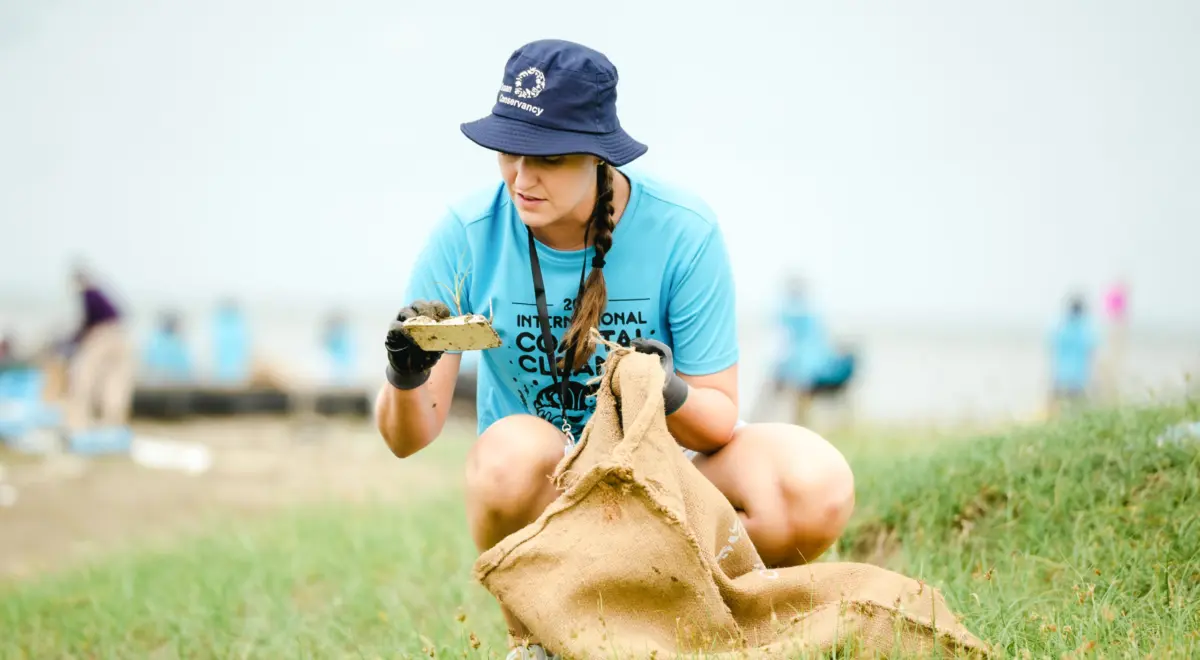
Yet, alongside these ancient natural migrations, a modern, human-driven movement has emerged out of necessity. Every year, hundreds of thousands of individuals converge on the shores of oceans, lakes, rivers, and creeks to take part in what has become one of the largest volunteer-driven environmental efforts on the planet: the International Coastal Cleanup® (ICC).
Spearheaded by the Ocean Conservancy, the ICC is now launching its historic 41st season. As communities worldwide prepare to scour shorelines for discarded plastics and hazardous debris, organizers emphasize that this annual mobilization is far more than a simple trash collection drive. It is a vital scientific data-gathering mission, a shield for vulnerable marine wildlife, and a powerful global testament to humanity’s enduring connection to the sea.
With innovative digital tracking tools now quantifying the direct impact of volunteer labor in real time, and with communities facing an escalating plastic pollution crisis, the 41st ICC arrives at a critical juncture for the future of global marine health.
Detailed Chronology: The Evolution of a Global Movement
From Grassroots Cleanup to International Phenomenon
To understand the scale of the International Coastal Cleanup today, one must look back at its origins more than four decades ago. What began as a localized effort to clear unsightly and dangerous refuse from a single coastline has systematically snowballed into a worldwide phenomenon. The initiative was born out of a stark realization: the world’s oceans were drowning in anthropogenic debris, and traditional municipal waste management strategies were failing to capture the vast amounts of trash washing ashore.
Over the last 41 years, the ICC has expanded across continents, uniting people of diverse ages, nationalities, and socioeconomic backgrounds. While the official peak of the cleanup season traditionally concentrates around the month of September, the movement has evolved into a year-round commitment. Today, cleanups occur on every inhabited continent, driven by localized community groups, schools, corporate partners, and passionate individuals who refuse to stand by while waterways choke on refuse.
The Personal Dimension of Environmental Stewardship
For Sarah Weller, Associate Director of the International Coastal Cleanup®, the 41st season holds profound personal significance. As she prepares to lead this year’s global mobilization, Weller is participating with a unique co-pilot: her eight-month-old daughter.
"I personally am extra-excited about this year’s movement," Weller notes, viewing the event through the dual lens of a seasoned conservation leader and a new mother. "It will be the first cleanup with my eight-month-old in tow, hopefully her first of many."
This intergenerational passing of the torch captures the core philosophy of the ICC. For millions of participants, cleaning local waterways transforms from an isolated volunteer activity into an ingrained family tradition—a generational ritual aimed at preserving the natural world for those who will inherit the Earth tomorrow.
Supporting Context & Metrics: Quantifying the Crisis and the Cure
The Science of Scale: By the Numbers
The sheer volume of waste recovered during the International Coastal Cleanup is staggering, but the true power of the initiative lies in its rigorous data collection methodology. Every piece of trash collected—whether it is a discarded plastic bottle, a fragment of synthetic rope, a food wrapper, or a lost fishing net—is meticulously cataloged.
During the previous year’s mobilization, the metrics achieved by the global volunteer network were extraordinary:
- Total Volunteers: More than 630,000 individuals mobilized across the globe.
- Weight Removed: A colossal 7.9 million pounds (approx. 3.4 million kilograms) of trash was hauled away from delicate aquatic environments.
- Items Tallied: Volunteers logged an astonishing 13.8 million individual debris items.
This data does not simply disappear into a ledger; it feeds directly into an online, open-access database managed by Ocean Conservancy. This repository serves as an invaluable resource for researchers, policy-makers, and environmental advocates striving to draft legislation—such as single-use plastic bans and extended producer responsibility laws—that targets the root causes of the ocean plastic crisis.
Real-Time Impact: The Wildlife Impact Calculator
While systemic policy changes take time to wind through legislative bodies, the localized benefits of shoreline cleanups are immediate and measurable. Thanks to groundbreaking scientific research led by Ocean Conservancy experts—work that recently earned the prestigious Cozzarelli Prize for scientific excellence—conservationists have unlocked a deeper understanding of how marine debris interacts with vulnerable wildlife.
To bridge the gap between abstract clean-up efforts and tangible biological preservation, Ocean Conservancy developed the Wildlife Impact Calculator. Integrated directly into the organization’s free mobile application, Clean Swell®, this tool calculates the specific protective impact of a cleanup session.
When volunteers use the Clean Swell app to log their findings, the calculator operates in real time, showing users precisely how many marine birds, sea turtles, seals, and other coastal mammals have been spared potential entanglement, ingestion, or habitat destruction by their efforts. By quantifying conservation outcomes instantly, the app empowers everyday citizens to see the direct, life-saving consequences of their labor.
Official Statements and Community Voices: What the Ocean Means to Us
The impetus to protect the marine environment is rarely driven by statistics alone; it is fundamentally rooted in human emotion, childhood memories, and a profound respect for the Earth’s life-support systems. Ahead of the 41st ICC, Ocean Conservancy surveyed its extensive network of supporters, asking a fundamental question: What does the ocean mean to you, and why do you feel called to protect it?
The responses reflect a universal reverence for the sea, underscoring why millions dedicate their time to its preservation:
-
Debra E. emphasized the moral imperative of intergenerational equity:
“I would love for future generations to be able to see the beautiful ocean we have. We need to stop the destruction of pollution, overfishing, and warming of our oceans.” -
Suzy W. highlighted the ocean as a realm of future discovery and inherent wonder:
“It is our future! And it is an honor to explore it at times. I wish everyone could see its beauty below the surface.” -
Derek H. framed the marine environment as humanity’s final uncharted frontier:
“It’s one of the most important places on the planet, and it is still as unknown to us as outer space, for this is the final frontier to be explored. And now more than ever, our future depends on a healthy, thriving ocean.” -
Cynthia K. spoke to the deeply personal, nostalgic ties formed in youth:
“The ocean and wildlife were part of my childhood. It was where I felt like I belonged. I want to protect it so future generations can have the connection that I had.” -
Laurie S. offered a sweeping philosophical perspective on the ocean as the literal pulse of the planet:
“The ocean is life itself; a vast, breathing force whose rhythms sustain the planet, nourish entire ecosystems, and cradle an extraordinary tapestry of wildlife. It embodies natural beauty in its purest form… Without the ocean, all life ends; with it, the planet thrives. It is both a wonder and a responsibility.”
These powerful testimonies illustrate that the International Coastal Cleanup is not merely an environmental sanitation project; it is a manifestation of collective human affection for the blue planet.
Future Outlook: Envisioning a World Without Plastic Pollution
As the 41st International Coastal Cleanup gets underway, organizers and participants are united by a common, ambitious dream: a future where cleanups are no longer necessary.
While removing legacy debris and plastics currently littering our waterways remains an indispensable triage measure, visionary conservationists are looking past the cleanup buckets toward systemic prevention. The overarching goal is to render the plastic pollution crisis a relic of the past—a historical chapter of industrial negligence closed by proactive global policy, circular economies, and sustainable material innovation.
The tools and technological solutions required to achieve a plastic-free ocean already exist. What remains is the collective global will to prioritize, fund, and implement them across industrial sectors and governmental bodies. Until that vision becomes a reality, the annual migration of hundreds of thousands of volunteers to the world’s coastlines will continue unabated.
How You Can Participate
The 41st International Coastal Cleanup welcomes individuals, families, corporate teams, and community groups. Whether joining an organized local cleanup event this September, or utilizing the Clean Swell® app to conduct an independent cleanup on any day of the year, every participant plays a direct role in safeguarding global marine biodiversity.
To learn more about how to get involved, find a cleanup near you, or download the tracking app, visit the official Ocean Conservancy International Coastal Cleanup portal. Join the global movement today, and help secure a healthy ocean and a thriving planet—forever, and for everyone.