







Jamaica’s tourism sector is entering a decisive new chapter. Despite weathering the immense physical and economic headwinds left in the wake of Hurricane Melissa, the island nation has officially welcomed 2.34 million visitors and generated a staggering $2.5 billion in tourism earnings through the end of August.
This resilience is not merely a testament to the enduring global appeal of the Caribbean destination; it highlights a profound structural imbalance in the current recovery phase: underlying consumer demand is dramatically outpacing physical resort capacity.
At present, roughly 70 percent of Jamaica’s total hotel inventory is operational, leaving approximately 30 percent of the island’s rooms offline as restoration efforts grind forward. Year-to-date visitor arrivals and tourism revenues remain suppressed—down 17 percent and 18 percent respectively compared to pre-hurricane figures.
However, when contextualized against a nearly one-third deficit in available hotel stock, these numbers paint a remarkably optimistic picture. Travelers are not shunning Jamaica; rather, they are clamoring to visit a destination that simply cannot yet field its full pre-storm complement of rooms and airline seats.
As major hospitality groups stage strategic phased reopenings across Montego Bay and Negril, and as airlines report near-capacity passenger loads on active routes, Jamaica’s tourism machinery is shifting gears. The central challenge for Minister of Tourism Edmund Bartlett and industry stakeholders is no longer convincing tourists to return—it is accelerating the restoration of infrastructure fast enough to capture a market demand that is already overflowing.
Detailed Chronology: From First-Quarter Shocks to Late-Summer Momentum
To understand the trajectory of Jamaica’s current tourism landscape, one must trace the timeline of recovery from the depths of the first quarter through the crucial inflection points of late summer.
The Q1 Nadir and the Aftermath of Hurricane Melissa
In the immediate aftermath of Hurricane Melissa, Jamaica’s tourism economy absorbed a punishing blow. First-quarter metrics released by the Caribbean Tourism Organization (and reported by Caribbean Journal in July) revealed that Jamaica recorded just 534,652 stayover visitors—a sharp 27.5 percent decline compared to the same period in the previous year. This represented the steepest percentage drop of any destination across the wider Caribbean region for that timeframe.
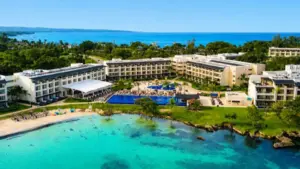
The figures reflected a tourism ecosystem temporarily crippled by catastrophic infrastructure damage, extended power grid outages, and the sudden closure of iconic resort corridors across western Jamaica. For months, the narrative surrounding the island was dominated by disaster mitigation, structural assessments, and an agonizingly slow rebuilding timeline.
Narrowing the Gap Through Spring and Summer
By the time mid-year data was compiled, however, the narrative began to pivot. Through the end of August, the year-to-date decline in overall visitor arrivals had narrowed significantly to 17 percent. While first-quarter stayover numbers and year-to-date aggregate figures utilize different evaluation metrics and cannot be directly juxtaposed, the directional trend is unmistakable: the recovery curve is steepening.
This narrowing gap coincides directly with the physical return of key hotel inventory. The reopening timeline has unfolded in strategic waves, injecting vital room capacity back into the market just as global travelers begin planning their autumn and winter getaways.
- The Half Moon Milestone: Montego Bay’s historic luxury titan, Half Moon, completed its painstaking restoration process, bringing back its full ecosystem—including Eclipse at Half Moon, Founders Cove, its exclusive villa collection, the Fern Tree Spa, its championship golf course, and its celebrated restaurants and beaches. The return of Half Moon was more than a routine reopening; it signaled to the luxury market that Jamaica’s premier tier of hospitality was back online.
- Negril’s Marriott-Affiliated Resurgence: Negril secured a major capacity injection with the late-August reopening of Royalton Negril, Hideaway at Royalton Negril, and Grand Lido Negril, restoring three prominent Marriott-affiliated all-inclusive properties to Seven Mile Beach.
- The Montego Bay Expansion: Continuing the momentum, Royalton Blue Waters Montego Bay and Hideaway at Royalton Blue Waters are slated for their official reopenings, completing a five-resort rollout by Marriott that serves as a cornerstone of the summer recovery strategy.
Supporting Context & Metrics: Supply Versus Demand
The defining analytical insight of Jamaica’s current economic recovery lies in the mathematical delta between missing rooms and missing bodies.
[Current Recovery Snapshot (Jan - Aug)]
├── Total Visitors: 2.34 Million
├── Tourism Earnings: $2.5 Billion
├── Operational Hotel Inventory: ~70%
├── Unavailable Hotel Inventory: ~30%
├── Arrival Decline (Year-to-Date): -17%
└── Revenue Decline (Year-to-Date): -18%
The 70/30 Inventory Reality
According to official figures shared by Tourism Minister Edmund Bartlett, roughly 70 percent of the island’s total hotel room inventory is currently receiving guests. This means that nearly one out of every three hotel rooms remains out of commission due to ongoing reconstruction.
When weighed against a year-to-date visitor arrival decline of just 17 percent, the analytical conclusion is clear: the drop in tourism volume is significantly smaller than the deficit in room supply. Had Jamaica maintained 100 percent of its hotel stock post-Melissa, empirical indicators suggest arrival figures would look radically different—likely showing flat or even positive growth against historical baselines.
The Aviation Equation
Hotel rooms, however, represent only one half of the equation. Airlift capacity remains constricted compared to pre-hurricane baselines. Yet, the flights currently servicing Norman Manley International Airport in Kingston and Sangster International Airport in Montego Bay are operating at near-maximum payloads.
"They are flying full on every occasion," Minister Bartlett noted regarding the island’s airline partners. This creates a symbiotic cycle: as grounded hotels successfully complete repairs and reopen their doors, they provide airlines with the commercial justification needed to restore cancelled routes and increase seat allocations. Conversely, every newly restored airline seat provides the logistical conduit required to fill the newly reopened resort suites.
Official Statements and Industry Analysis
The resilience of the destination has prompted a reassessment from tourism leaders and travel economists alike. The primary constraint on the island’s economic rebound is no longer consumer hesitation, but rather physical asset availability.
Speaking on the performance of the sector, Minister Edmund Bartlett emphasized the unusual nature of this growth trajectory: "Our arrival performance is outpacing our inventory."
This dynamic has fundamentally inverted standard crisis recovery playbooks. Typically, destinations emerging from natural disasters must spend millions on marketing campaigns to rebuild consumer confidence and entice hesitant travelers back to their shores. Jamaica, conversely, is experiencing a backlog of organic consumer demand. The destination’s marketing challenge is not stimulating interest, but rather managing capacity and tempering expectations as properties work frantically to bring offline inventory back to market.
Furthermore, industry analysts point out that this supply shortage has introduced pricing anomalies across the market. During the initial months of recovery, properties seeking to stimulate immediate cash flow deployed aggressive promotional strategies. For instance, boutique properties like the 45-room White Sands Negril offered promotional rates as low as $123 per night—an exceptional value that drove high occupancy for independent operators during a tumultuous period. However, market observers caution that such deep discounts are rapidly evaporating as major luxury complexes reopen and the lucrative winter high season looms on the horizon.
Future Outlook: The Road Ahead and Remaining Hurdles
While the 2.34 million visitor milestone and $2.5 billion in earnings represent a triumph of logistical endurance, significant hurdles remain before Jamaica’s tourism sector can declare a complete recovery.
The Montego Bay Bottleneck
The single largest hurdle facing the destination is the concentration of offline inventory in the Montego Bay and Rose Hall corridors. While independent luxury mainstays like Half Moon have successfully reopened, a crucial cluster of massive all-inclusive resorts remains dark.
Travel partners and corporate stakeholders have confirmed that major properties—including Hyatt Zilara Rose Hall, Hyatt Ziva Rose Hall, Secrets St. James Montego Bay, Secrets Wild Orchid Montego Bay, Breathless Montego Bay Resort & Spa, Dreams Rose Hall Resort & Spa, and Jewel Grande Montego Bay Resort & Spa—have had their projected reopening timelines pushed into the first quarter of next year.
The continued offline status of these seven mega-resorts represents a massive block of inventory. Until these properties re-enter the active market, Jamaica’s overall arrival figures will remain artificially capped, regardless of how robust global consumer demand proves to be.
Macroeconomic Pressures: Airfares and Supply Chains
Beyond physical infrastructure, macroeconomic headwinds continue to cast a shadow. Global aviation supply-chain constraints, elevated jet fuel costs, and broader economic pressures have kept airfares high. Minister Bartlett has publicly acknowledged that these ticket price inflations present a persistent challenge, potentially pricing out budget-conscious travelers who would otherwise take advantage of regional getaways.
The Winter Season Test
The ultimate stress test for Jamaica’s tourism recovery will arrive with the peak winter tourism season. As the remaining 30 percent of hotel inventory gradually returns to service—with a significant wave of properties scheduled to unlock their doors between late autumn and the first quarter—the destination will finally test its full operational capacity.
If airline partners successfully scale up seat allocations to match this returning inventory, and if the mega-resorts of Montego Bay meet their targeted Q1 reopening dates, Jamaica is poised to surge past its recovery milestones. The fundamental question is no longer whether the tourists want to come back. The question is whether Jamaica can finalize its infrastructural renaissance fast enough to welcome them all home.