







Executive Overview
Nestled in the heart of Polk County, Florida, the city of Winter Haven has long worn its aquatic identity as a badge of honor. Known affectionately as the "Chain of Lakes City," Winter Haven boasts roughly 50 distinct bodies of water, with approximately half interconnected by a sophisticated, navigable system of scenic canals. While the bustling northern and eastern shores often capture the spotlight, the South Chain—spanning more than a dozen expansive lakes—represents the grander, more sprawling side of this aquatic network. For travelers, conservationists, and outdoor enthusiasts seeking an authentic immersion into Florida’s indigenous ecosystems, the South Lake Howard Nature Park serves as the ultimate gateway.
Established in 2001, this verdant escape sits at the southern terminus of Lake Howard, one of the largest and most ecologically significant lakes in the region. Located roughly equidistant between the metropolitan hubs of Orlando and Tampa, the park is an easily accessible hour-long drive from either downtown core, depending on traffic. Yet, despite its proximity to rapid urban centers, stepping into South Lake Howard Nature Park feels akin to entering a completely isolated wilderness.
Originally engineered as a dual-purpose stormwater management facility, the park seamlessly merges civil engineering with ecological restoration and public recreation. Today, the site is undergoing a sweeping, multi-phase transformation backed by municipal investment and strategic land acquisitions. As local officials work to expand its boundaries and supercharge its environmental filtering capabilities, South Lake Howard Nature Park is transitioning from a localized hidden gem into a premier regional destination for ecotourism, birdwatching, and sustainable outdoor recreation.

Detailed Chronology
The evolutionary trajectory of South Lake Howard Nature Park is a fascinating study in municipal planning, environmental stewardship, and adaptive reuse. To understand how a pristine wetland ecosystem rose from an open pasture, one must examine the chronological milestones that have shaped the park over the past two decades.
Pre-2001: From Open Pasture to Engineering Blueprint
Long before the boardwalks were laid and the native oak hammocks were designated for public enjoyment, the land comprising the modern park bore little resemblance to a thriving wetland. Decades ago, the acreage served primarily as open agricultural pasture, susceptible to agricultural run-off and devoid of the complex ecological filtration systems required to protect downstream water bodies. As Winter Haven experienced rapid population growth and commercial development, municipal leaders recognized an urgent environmental vulnerability: untreated stormwater runoff was carrying heavy metals, excess nutrients, and urban pollutants directly into the 600-plus-acre Lake Howard.
2001: The Inception of a Dual-Purpose Facility
In 2001, the city of Winter Haven officially established South Lake Howard Nature Park. Rather than viewing stormwater management and public recreation as mutually exclusive goals, civil engineers and urban planners designed a hybrid facility. The core infrastructure was built around a series of man-made ponds and wetland terraces engineered to capture, detain, and biologically filter storm runoff. Concurrently, pathways and basic access points were integrated into the design, allowing citizens to witness firsthand how municipal infrastructure could successfully mimic and support natural wetland habitats.
2010s–2024: Cultivating a Local Sanctuary
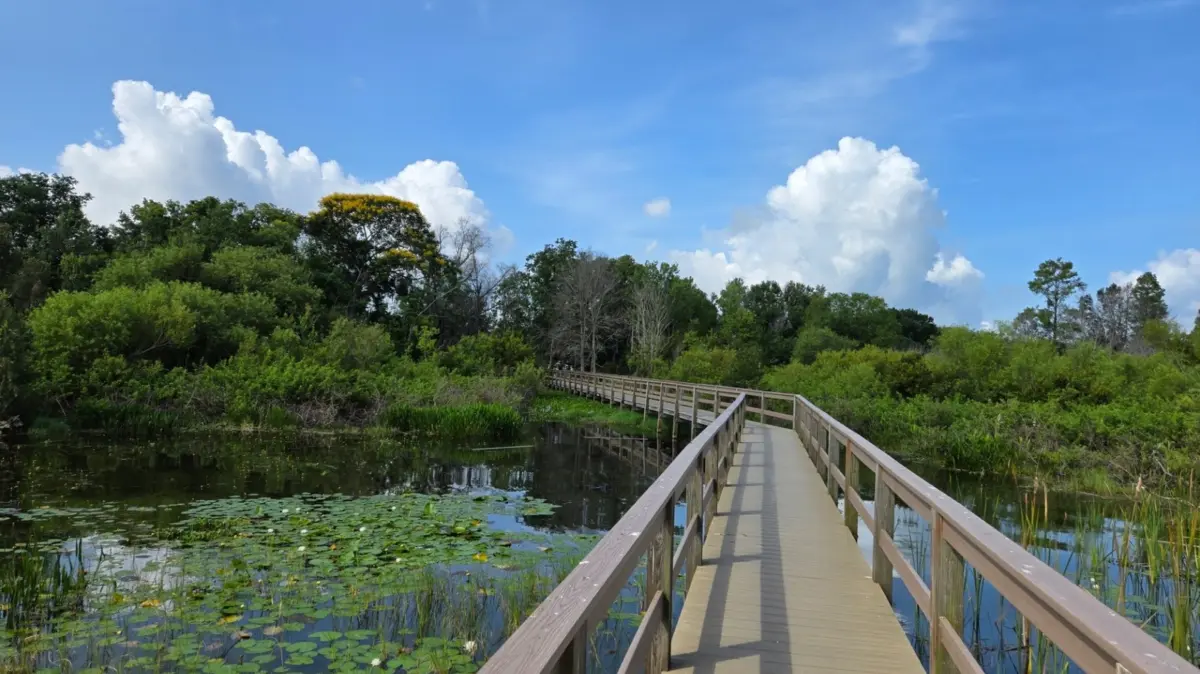
Over the subsequent decade and a half, the park matured into a beloved local secret. While major tourist draws dominated Orlando and Tampa, locals and discerning travelers discovered the park’s tranquil atmosphere, dense forest canopies, and thriving wildlife populations. The construction of a 1,000-foot wooden boardwalk near the entrance established a signature feature, carrying pedestrians over the swampy waters and linking picnic areas with observation decks. During this period, the park quietly earned a sterling reputation among regional birdwatchers, naturalists, and families seeking an uncrowded escape into the Florida wilderness.
Early 2025 – Present: The Major Expansion Era
Marking its most significant developmental chapter to date, early 2025 ushered in a comprehensive, multi-phase expansion project. Prompted by municipal foresight and the strategic acquisition of adjacent parcels of land, Winter Haven officials initiated a sweeping redevelopment plan. This ongoing initiative is designed to achieve two critical objectives simultaneously: drastically improving local water quality through enhanced stormwater treatment technologies, and exponentially expanding the park’s recreational footprint. As construction crews break ground on new amenities, the park remains partially accessible, though visitors are met with evolving trail layouts and intermittent zone closures as the transformation presses forward.
Supporting Context & Metrics
To fully appreciate the scope and impact of South Lake Howard Nature Park, one must examine the quantitative metrics and environmental data that underpin its existence. The park is far more than a scenic backdrop; it is a critical ecological engine for the broader Winter Haven Chain of Lakes.
Hydrological Mechanics and Water Quality Metrics
The transformation of the park’s terrain from a barren pasture into a dynamic wetland system yields profound ecological dividends. Every year, the man-made pond and wetland filtration network intercepts millions of gallons of urban stormwater runoff. As water flows through the park’s interconnected basins, natural biological processes, aquatic vegetation, and sediment settling pools work in tandem to scrub the water clean.
Environmental monitoring data indicates that these wetlands successfully filter out thousands of pounds of heavy metals, suspended solids, nitrogen, phosphorus, and other chemical compounds annually. By intercepting these pollutants before they empty into the 600-plus-acre Lake Howard, the park acts as an indispensable ecological kidney, directly mitigating the eutrophication risks that threaten urban freshwater lakes across Central Florida.
Geographic and Accessibility Metrics
- Total Acreage & Expansion: Spanning multiple acres of restored wetlands and hardwood hammocks, the park is currently undergoing its largest spatial expansion in history following the acquisition of neighboring parcels in 2024 and 2025.
- Proximity to Urban Centers: Located roughly halfway between Orlando and Tampa, the park is accessible within a 45-to-60-minute drive from either metropolitan center under normal traffic conditions.
- Boardwalk Dimensions: The signature wooden boardwalk stretches approximately 1,000 feet from the primary entrance—complete with restrooms and picnic facilities—deep into the swampy interior.
- Avian Biodiversity: According to eBird database metrics, nearly 150 distinct bird species have been officially documented within the park’s boundaries, cementing its status as a premier birdwatching hotspot in the Sunshine State.
Official Statements
The ambitious revitalization of South Lake Howard Nature Park represents a collaborative vision shared by city planners, environmental advocates, and community stakeholders. Municipal authorities have emphasized that the current expansion is a vital investment in both the ecological resilience of Winter Haven and the quality of life for its residents.
In recent planning briefs released by Winter Haven’s municipal departments, city officials underscored the dual imperative of the project:
"Our objective with the South Lake Howard Nature Park expansion is twofold: aggressively safeguard our vital waterways through advanced stormwater treatment infrastructure, while simultaneously enriching the public realm with world-class recreational amenities that invite our community to deeply engage with Florida’s native landscape."
Environmental engineers overseeing the stormwater enhancements have similarly highlighted the sophistication of the nature-based solutions being deployed across the expanded footprint:
"We are leveraging natural ecological architecture to do the heavy lifting of water purification. By expanding the wetland filtration cells, we are not only increasing the volume of stormwater we can process, but we are also creating a more resilient, biodiverse sanctuary that will protect Lake Howard for generations to come."
Local visitors and outdoor enthusiasts have echoed these official sentiments through community feedback channels. Reviewers frequently praise the park’s ability to offer profound psychological respite just minutes from urban development. One widely cited visitor review encapsulates the local sentiment: "The forest landscape is gorgeous and the atmosphere is incredibly calming—it is hard to believe you are right in the middle of a growing city." Similarly, family-oriented hikers utilizing platforms like AllTrails have celebrated the site as a "nice easy trail to walk with family," noting that the accessible infrastructure makes nature immersion effortless for visitors of all ages.
Future Outlook
As the multi-phase expansion project progresses through its scheduled milestones toward completion, the future of South Lake Howard Nature Park has never looked brighter. The roadmap for the park’s next chapter balances cutting-edge environmental infrastructure with an unprecedented array of recreational upgrades designed to cater to a diverse demographic of visitors.
Upcoming Recreational Infrastructure
When the expansion officially wraps up, park-goers can look forward to a comprehensive suite of new amenities that will fundamentally transform the visitor experience:
- Water Access Integration: The addition of a brand-new boat dock and a dedicated kayak launch will directly connect land-based explorers to the aquatic trails of the South Chain of Lakes, opening up seamless paddling excursions.
- Family and Community Spaces: A state-of-the-art playground will provide younger visitors with engaging, nature-integrated play areas.
- Sporting Enhancements: The introduction of a professionally designed disc golf course will offer recreational athletes a challenging, scenic course winding through the park’s wooded peripheries.
- Expanded Trail Networks: New hiking trails and elevated boardwalk extensions will weave deeper into the newly acquired acreage, providing fresh vantage points of previously inaccessible wetland and oak hammock ecosystems.
Navigating the Transition
While the long-term outlook promises an enhanced ecological and recreational masterpiece, visitors during the construction window should exercise mindful planning. Because the revitalization is rolling out in carefully managed phases, park administrators advise checking local municipal notices for intermittent trail closures or restricted zones. However, even amidst ongoing construction, the existing network of shaded oak hammocks, paved loops, and the iconic 1,000-foot boardwalk remain accessible at various points, offering uninterrupted encounters with marsh rabbits, armadillos, wading birds, and the occasional resident alligator.
Ultimately, South Lake Howard Nature Park stands as a shining exemplar of modern municipal stewardship. By harmonizing rigorous environmental engineering with accessible, immersive ecotourism, Winter Haven has ensured that its precious aquatic heritage will be preserved, protected, and celebrated for decades to come. Whether you are a dedicated ornithologist logging your 150th bird species via mobile database, a family seeking a peaceful weekend stroll, or a conservationist tracking urban water quality, this evolving sanctuary on the shores of Lake Howard offers an unmatched window into the natural soul of Florida.