





Executive Overview
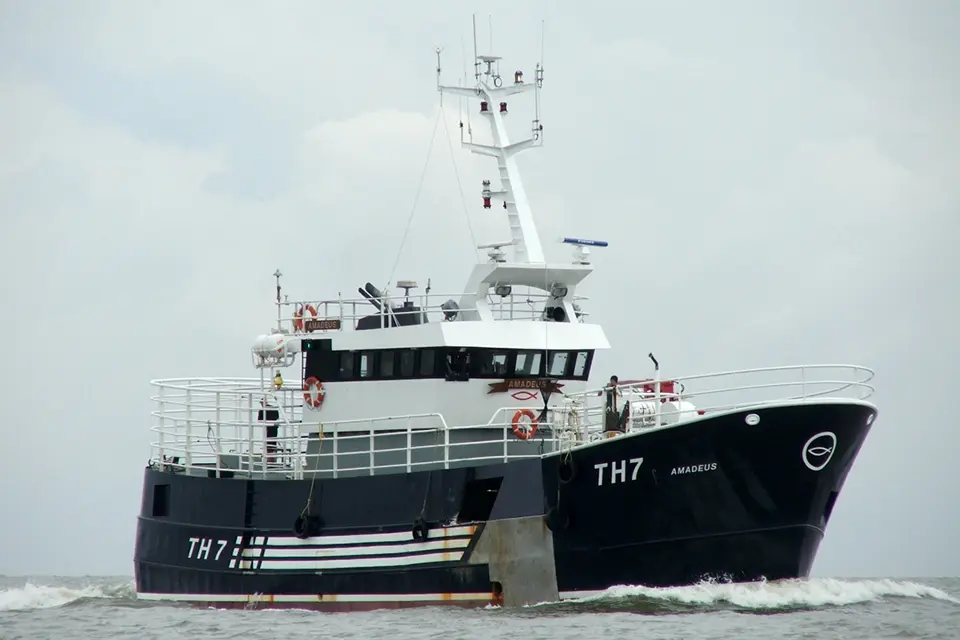
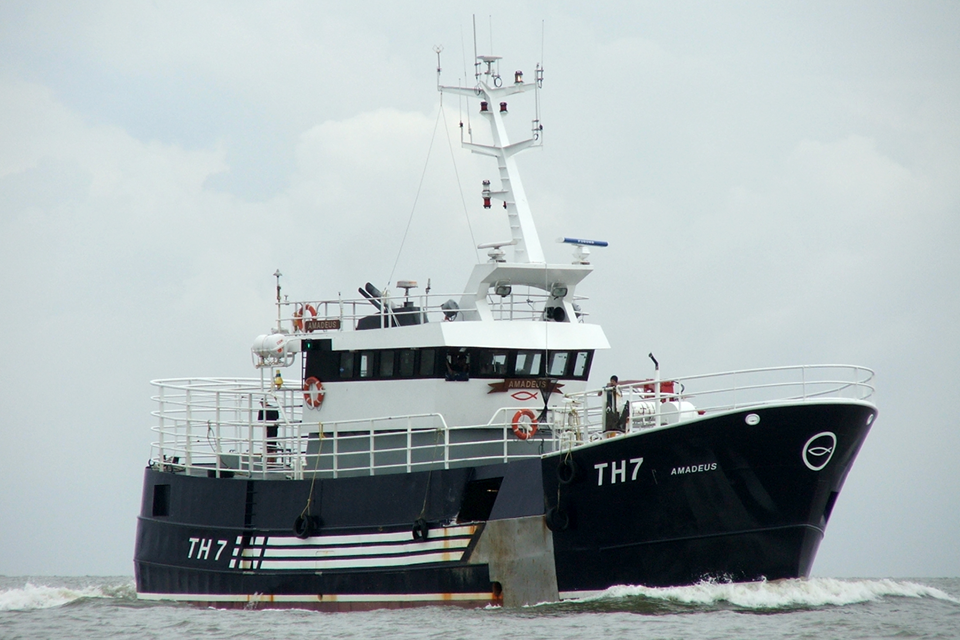
Maritime safety investigators have released a comprehensive and sobering accident report detailing the tragic death of a young deckhand who fell overboard from the crab-potting vessel Amadeus (TH7) in the treacherous waters of the German Bight, North Sea. The fatal incident, which occurred on December 13, 2023, has once again laid bare the perilous reality of commercial fishing—an industry that consistently ranks among the most hazardous occupations globally.
The investigative findings, published by the Marine Accident Investigation Branch (MAIB), paint a grim picture of extreme physical exhaustion, grueling operational tempos, and the systemic underestimation of routine risks in adverse weather conditions. Rather than framing the tragedy as an isolated mishap, the report’s leadership has issued a resounding warning to the broader maritime community: systemic fatigue cannot and must not be normalized as an acceptable cost of doing business at sea.
This in-depth feature explores the mechanics of the accident, the human factors that contributed to the fatality, the broader implications for the commercial fishing sector, and the urgent calls for regulatory reform and enhanced safety protocols across European and international waters.

Detailed Chronology: The Final Hours Aboard the Amadeus
While the official report focuses heavily on the preceding conditions that set the stage for disaster, understanding the sequence of events on December 13, 2023, is critical to grasping how rapidly a routine fishing operation can deteriorate into a catastrophe.
The Operational Environment
The Amadeus was operating in the German Bight—a southeastern bight of the North Sea bounded by the coastlines of Germany and Denmark. Known for its shallow waters, erratic currents, and rapidly changing weather systems, the North Sea in mid-December presents a formidable challenge to even the most seasoned mariners. On the day of the incident, the crew was contending with rough winter seas characterized by heavy swells and biting, freezing winds.
The vessel, a specialized crab-potting ship, was engaged in the intensive labor of hauling, emptying, baiting, and resetting heavy steel-and-mesh pots. This cycle is physically punishing under optimal conditions; in rough winter weather, it becomes an exhausting battle against both the elements and the ship’s momentum.
The Incident
According to the investigation, the deckhand was working on the open deck, exposed to the elements and actively engaged in hauling heavy gear. The task required him to repeatedly lean over the vessel’s low-profile side, applying physical leverage while the ship pitched and rolled in the heavy swells.
For weeks leading up to this fateful day, the crew had been subjected to relentless work schedules with inadequate time for restorative sleep. The cumulative toll of this sleep deprivation severely impaired the deckhand’s reaction times, spatial awareness, and muscular coordination.
At a critical moment during the hauling operation, a combination of vessel instability and a sudden, violent lurch by the ship threw the deckhand off balance. Having reached the absolute threshold of his physical endurance, he was unable to recover his footing or catch himself. In a fraction of a second, he was pitched over the vessel’s side and into the freezing, turbulent waters of the North Sea.
Despite immediate efforts by the crew to raise the alarm, locate the man, and execute recovery procedures in the hostile sea state, the operation transitioned rapidly from a rescue to a recovery mission. The young deckhand lost his life, leaving behind a grieving family and a shaken crew.
Supporting Context & Metrics: The Crisis of Fatigue and Man Overboard Dangers
The tragedy aboard the Amadeus is not an isolated anomaly. It is part of a persistent, systemic crisis plaguing the commercial fishing sector worldwide. To fully comprehend the weight of the MAIB report, one must examine the broader statistical and physiological context of modern commercial fishing.
The Hidden Toll of Commercial Fishing
Commercial fishing remains disproportionately lethal compared to almost any other industrial sector. According to data from international maritime and labor organizations, commercial fishers face fatality rates that can be dozens of times higher than the national averages for land-based industries. Within these grim statistics, "Man Overboard" (MOB) incidents represent one of the leading causes of death at sea.
However, statistics often mask the human elements—specifically, the insidious nature of fatigue. Operating a commercial fishing vessel during peak seasons often means enduring continuous 14- to 18-hour workdays for weeks at a time. Sleep is frequently fragmented, taken in short, broken intervals punctuated by the constant noise of the engine, the violent motion of the hull, and the psychological pressure to maximize catch yields before weather windows close.
The Science of Fatigue at Sea
Fatigue is frequently misunderstood as merely feeling tired. In a maritime context, chronic sleep deprivation fundamentally alters cognitive and physical performance:
- Impaired Proprioception and Balance: Exhausted workers experience reduced neuromuscular control, making it exponentially harder to maintain stability on a rolling, pitching deck.
- Delayed Reaction Times: When a vessel lurches unexpectedly, a well-rested crew member can instinctively grab a safety line or brace against a bulkhead. A severely fatigued worker’s reaction can be delayed by crucial milliseconds—the difference between life and death.
- Tunnel Vision and Reduced Situational Awareness: Exhaustion narrows a worker’s focus onto the immediate task, blinding them to environmental hazards, such as an approaching rogue wave or an unstable footing position.
The MAIB report underscores that the deckhand on the Amadeus was not careless; rather, he was operating at the absolute outer limits of human endurance, placed in an unstable environment where the margin for error was effectively zero.
Official Statements and Industry Reaction
The release of the accident investigation report has sent ripples through the maritime community, prompting strong statements from regulatory leaders and industry advocates alike.
The Chief Inspector’s Warning
Rob Loder, the Chief Inspector of Marine Accidents, delivered a scathing critique of how the industry perceives and accepts fatal accidents. His official statement cut through maritime euphemisms, demanding a cultural reckoning:
"This accident must not be dismissed as yet another fatal man overboard from a fishing vessel. In the blink of an eye, a young man lost his life doing a task many in the industry would consider routine—but there was nothing routine about the physical toll it took. After weeks of demanding work and inadequate rest, he was hauling heavy pots in rough winter seas, repeatedly leaning over the vessel’s side in an exhausting and unstable task, until one violent lurch was enough to send him overboard.
Exhaustion must not become simply part of the job. This accident is a stark reminder that, without effective safeguards, this could happen to any crew member."
Industry Responses and Accountability
Maritime safety experts have seized upon Loder’s words to challenge vessel owners, skippers, and commercial operators. For decades, the unwritten culture of commercial fishing has romanticized grueling physical labor and sleep deprivation as marks of dedication. Safety advocates argue that this toxic normalization of risk must be dismantled from the top down.
Fishing federations and vessel management companies are now facing mounting pressure to review their operational guidelines, particularly regarding mandatory rest periods, crew complements, and the physical ergonomics of hauling gear on deck.
Future Outlook: Reforming Safety and Preventing Future Tragedies
In tandem with the publication of the Amadeus accident investigation report, the MAIB has released a specialized safety flyer to the fishing industry. This educational and preventative document is designed to bridge the gap between regulatory policy and daily deck operations, offering actionable guidance for vessel owners and skippers.
Key Recommendations for the Industry
To prevent future tragedies similar to the loss of the Amadeus, maritime authorities and safety experts emphasize several critical areas for reform:
1. Strict Enforcement of Rest Periods
Vessel operators must move away from informal, catch-driven scheduling and adopt formalized rest-hour compliance frameworks. Just as commercial aviation and long-haul trucking enforce strict maximum work hours to prevent catastrophic operator fatigue, the commercial fishing sector must legally and practically prioritize adequate, uninterrupted sleep for all crew members.
2. Engineering Out the Hazard: Ergonomics and Deck Safety
Relying solely on human vigilance is no longer acceptable. Vessel designers, naval architects, and owners must invest in engineering solutions that minimize the need for crew members to lean over unshielded vessel sides. This includes:
- The installation of higher, more robust bulwarks and safety rails.
- The retrofitting of automated or semi-automated pot-hauling systems that keep workers safely behind physical barriers.
- The strategic placement of fixed handholds, non-slip decking surfaces, and secure harnesses for crew members working in high-risk zones.
3. Universal Adoption of Personal Protective Equipment (PPE)
While preventing a fall overboard is the primary objective, surviving a fall is the ultimate safety net. The widespread, non-negotiable adoption of personal flotation devices (PFDs) equipped with integrated personal locator beacons (PLBs) must become standard practice. Too many fishers perish in cold water not from the fall itself, but from drowning or hypothermia before they can be located in choppy seas.
4. Cultural Shift in Skipper Leadership
Skippering a vessel involves more than navigating to productive fishing grounds and maximizing catches; it requires absolute responsibility for crew welfare. Skippers must be empowered—and required—to stand down operations when sea states, combined with crew fatigue, create an unacceptable risk profile.
Conclusion
The tragedy aboard the crab-potting vessel Amadeus on December 13, 2023, stands as a tragic monument to the hidden costs of commercial fishing. It forces a stark confrontation with uncomfortable truths about labor practices, physical exhaustion, and safety standards at sea.
As the maritime industry digests the MAIB’s findings, the true measure of this report will not be found in the pages of documentation produced, but in whether it sparks genuine, lasting behavioral and systemic change. Exhaustion can no longer be accepted as "just part of the job." For the sake of the thousands of men and women who make their living on the restless seas, the lessons of the Amadeus must be learned, implemented, and rigorously enforced.
For full details, access the official accident investigation report and the accompanying safety flyer via the Marine Accident Investigation Branch (MAIB) portal.