







Executive Overview
A high-stakes maritime standoff in the Strait of Hormuz has entered a critical new phase. The United States military has disclosed the operational details of a highly classified, months-long campaign to clear Iranian-laid sea mines from the world’s most sensitive oil transit chokepoint. Admiral Brad Cooper, Commander of U.S. Central Command (CENTCOM), announced that specialized American forces have successfully cleared the internationally recognized shipping lanes of the Strait’s Traffic Separation Scheme (TSS). This operation laid the groundwork for President Donald Trump’s sweeping declaration that the critical waterway has been reopened to global commerce.
However, a deep dive into the operational realities reveals a complex and precarious security environment. While the U.S. military has secured the primary commercial transit lanes, independent maritime monitoring organizations warn of persistent, severe dangers. Only hours before the political declaration of a "Mission Accomplished" milestone, an commercial tanker, the AL SALAM II, was struck by an unknown projectile in the Strait. This incident underscores the fragile nature of the security triumph.
As Washington attempts to enforce a total blockade on Iranian crude exports, Tehran is seeking to bypass U.S. hegemony. Iran is currently pursuing an alternative bilateral diplomatic framework with the Sultanate of Oman to establish a joint security corridor. This report provides a comprehensive analysis of the military campaign, the underlying maritime metrics, the divergence between political rhetoric and naval reality, and the geopolitical future of the Persian Gulf.
Detailed Chronology of the Mine-Clearing Campaign
The deployment of naval mines in the Strait of Hormuz represents one of the most significant disruptions to global energy security in decades. It follows nearly six months of intense maritime conflict that crippled international shipping. Below is the chronological progression of the U.S. response and the tactical operations that culminated in the clearing of the TSS.
[Early 2026: Conflict Escalates]
       │
       ▼
[Spring 2026: Iran Deploys Sea Mines in TSS]
       │
       ▼
[Mid-2026: Secret U.S. Demining Campaign Commences]
  (Navy SEALs, EOD Divers, Joint Air Assets deploy quietly)
       │
       ▼
[August 25, 2026: Tanker AL SALAM II Attacked]
  (Struck above waterline; minor fire extinguished)
       │
       ▼
[August 25-26, 2026: Trump Declares "Mission Accomplished"]
  (Truth Social posts announce complete mine removal)
       │
       ▼
[Late August 2026: Admiral Cooper Briefs Public]
  (Details specific TSS clearance; JMIC maintains "SEVERE" threat)
Phase I: The Silent Sentry (Spring – Summer 2026)
Following the placement of Iranian contact and magnetic-influence sea mines within the Strait of Hormuz, commercial shipping ground to a near-halt. Under strict operational security, CENTCOM initiated a counter-mine offensive. Rather than deploying highly visible fleet assets that could invite preemptive Iranian strikes, the U.S. Navy utilized a low-signature approach.
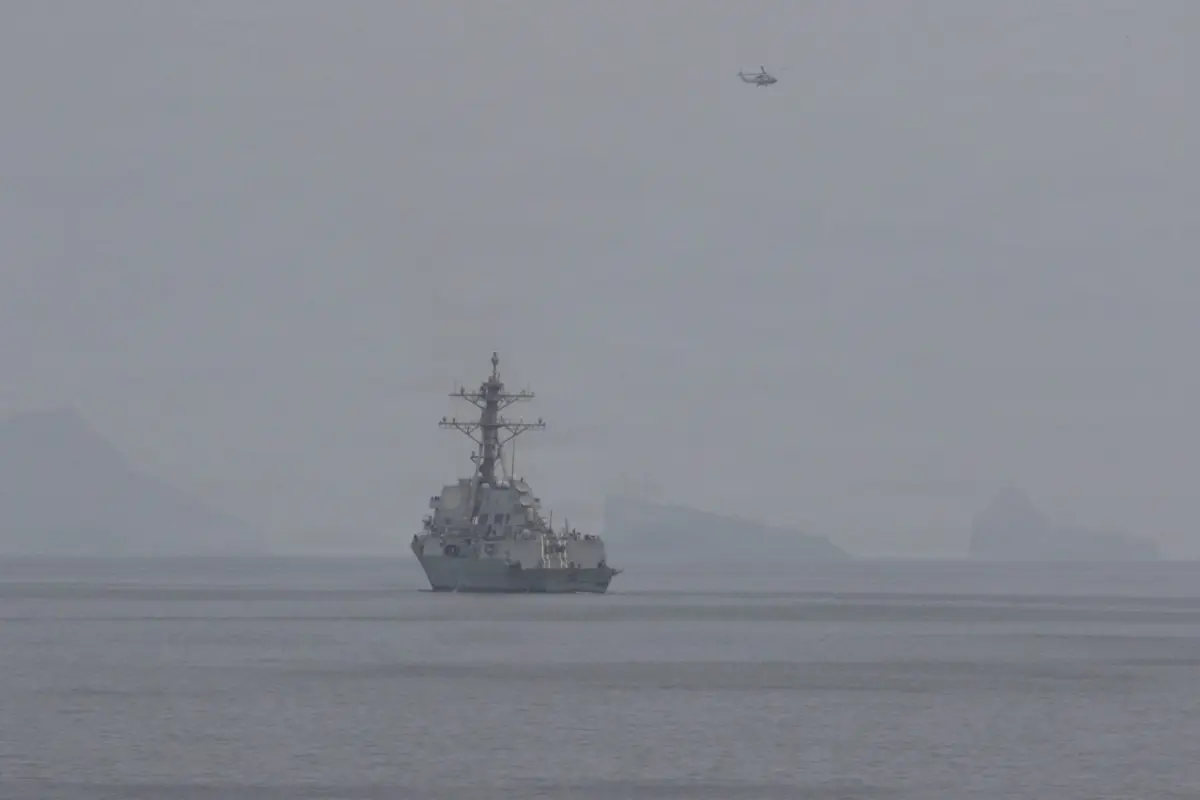
For months, U.S. Navy Explosive Ordnance Disposal (EOD) technicians, Navy SEALs, and specialized littoral units worked in the shadows. Operating in the treacherous currents of the Strait, divers conducted nocturnal dive missions to identify, neutralize, and recover naval mines. These underwater operations were supported by a joint-service air umbrella. The U.S. Army, Navy, Air Force, and Marine Corps integrated aerial surveillance, electronic warfare, and rotary-wing mine countermeasures to map and clear the sea lanes.
Phase II: The August Flashpoint and the Attack on the AL SALAM II
By late August, the operation reached its operational climax. On August 25, 2026, as final clearance sweeps were being conducted, the commercial tanker AL SALAM II was transiting eastbound through the Strait of Hormuz. Despite the intensive U.S. military presence, the vessel was struck by an unknown projectile just above the waterline.
The impact tore a small hole in the hull and ignited a localized fire. The ship’s crew successfully extinguished the blaze, and no casualties were reported. However, the attack served as a stark reminder of the persistent threats in the region.
Phase III: The Political and Military Declarations
Almost simultaneously with the attack on the AL SALAM II, President Donald Trump took to social media to declare a total victory in the maritime theater. Writing on Truth Social, the President announced that the U.S. Navy had successfully removed or detonated all mines within the international waters of the Strait. He accompanied the announcement with the triumphant slogan: "MISSION ACCOMPLISHED 2026."
Days later, Admiral Brad Cooper released a video address via X (formerly Twitter) to provide the formal military briefing. Cooper’s address sought to bridge the gap between the White House’s broad political declarations and the specific operational achievements of his forces. He confirmed the clearance of the critical shipping lanes but focused his remarks specifically on the Traffic Separation Scheme (TSS).
Supporting Context & Key Metrics
To understand the scale of the U.S. military intervention and the ongoing economic warfare, it is necessary to examine the maritime and energy metrics defining this conflict.
┌──────────────────────────────────────────────────────────┐
│             STRATEGIC MARITIME METRICS                   │
├──────────────────────────────┬───────────────────────────┤
│ U.S.-Facilitated Transits    │ 1,500 Vessels             │
├──────────────────────────────┼───────────────────────────┤
│ Volume of Crude Facilitated  │ ~750 Million Barrels      │
├──────────────────────────────┼───────────────────────────┤
│ Post-Blockade Iranian Export │ 0 Barrels (U.S. Estimate) │
├──────────────────────────────┼───────────────────────────┤
│ Pre-Conflict Daily Average   │ ~138 Transits (2025)      │
├──────────────────────────────┼───────────────────────────┤
│ Peak August Daily Transits   │ 18.5 Transits (Aug 25-26) │
└──────────────────────────────┴───────────────────────────┘
The Strait of Hormuz and the TSS
The Strait of Hormuz is a narrow waterway separating the Persian Gulf from the Gulf of Oman. At its narrowest point, it spans just 21 miles. To prevent maritime collisions, international shipping relies on the Traffic Separation Scheme (TSS). The TSS consists of two-mile-wide inbound and outbound shipping lanes, separated by a two-mile-wide buffer zone.
By targeting the TSS with sea mines, Iran effectively blocked the main artery of global energy distribution. The U.S. counter-mine campaign focused on these lanes to restore the flow of global commerce.
The Economic War: Zero Oil and Escorted Convoys
A key driver of the conflict is the reinstatement of the U.S. blockade on Iranian oil. According to Admiral Cooper, the blockade has successfully reduced Iran’s official seaborne oil exports to "zero." In retaliation, Tehran has sought to disrupt the shipping of neighboring Gulf states.
To keep global energy markets stable, the U.S. military has transitioned from passive monitoring to active convoy facilitation. Central Command reports that U.S. forces have facilitated the safe passage of 1,500 vessels through the Strait. These escorted transits carried approximately 750 million barrels of crude oil to international markets.
The Shipping Deficit
Despite these efforts, commercial traffic through the Strait remains severely depressed:
- The 2025 Baseline: Prior to the escalation, the Joint Maritime Information Center (JMIC) recorded an average of approximately 138 vessel transits per day through the Strait.
- The August Slump: Over the critical 48-hour period of August 25 and 26, U.S. forces facilitated only 37 transits.
- Commercial Reluctance: Independent vessel-tracking data reveals that non-facilitated commercial traffic remains low. Shipowners and maritime insurers remain hesitant to transit the waterway without direct military escorts. This caution is driven by skyrocketing war-risk insurance premiums and the threat of asymmetric attacks.
Official Statements and Divergent Narratives
The clearing of the shipping lanes has revealed a notable divergence in messaging between the White House, Central Command, and independent international maritime watchdogs.
The White House: Absolute Victory and Zero Tolerance
President Donald Trump’s public statements framed the operation as a complete, uncontested victory that has eliminated the mine threat from the region. In his Truth Social announcement, the President stated:
"I have just been informed by the United States Navy that all mines have been removed and/or detonated from within the International Waters of the Strait of Hormuz. MISSION ACCOMPLISHED 2026."
Furthermore, the President issued a stern deterrent warning to Tehran, establishing a policy of "Zero Tolerance" regarding future mine-laying operations:
"Any vessel attempting to lay additional mines will be immediately and systematically destroyed."
Central Command: Tactical Specificity and Operational Reality
In contrast, Admiral Brad Cooper’s official video briefing offered a more precise, operationally bounded assessment. Rather than declaring the entire Strait free of mines, Cooper focused on the internationally recognized shipping lanes:
"These are the long-standing lanes international shipping has historically used to transit the Strait of Hormuz. Over the past few months, our forces have meticulously and quietly cleared them of sea mines using a combination of Navy divers, Navy SEALs, and U.S. air power from the Army, Navy, Air Force, and Marine Corps."
Acknowledging the extreme risks faced by his personnel, Cooper added:
"The circumstances were challenging and dangerous, to say the least, but we got the job done. Bottom line: Today, international shipping lanes are open and momentum is building."
Maritime Regulators: A "Severe" Lingering Threat
While the military celebrated the clearance of the TSS, professional maritime security organizations issued immediate warnings to commercial mariners. The Joint Maritime Information Center (JMIC) published an advisory confirming that while the TSS lanes have been swept, the broader region remains highly dangerous:
- Uncharted Hazards: JMIC warned of the ongoing risk from "drifting or uncharted mines" that may have migrated from their original deployment zones due to strong tidal currents.
- Active Danger Zones: Mine danger areas outside the immediate TSS remain active, and surveying operations are ongoing.
- Threat Assessment: JMIC maintained its official maritime threat assessment for the Strait of Hormuz at SEVERE.
This cautious stance was validated by the United Kingdom Maritime Trade Operations (UKMTO), which continues to advise extreme vigilance for all commercial vessels transiting the Gulf of Oman and the Persian Gulf.
Future Outlook and Geopolitical Friction
The clearance of the TSS lanes has resolved the immediate shipping crisis, but the underlying geopolitical tensions in the Persian Gulf remain unresolved. The region is now navigating two competing visions for the future of the Strait.
The U.S. Strategy: Armed Hegemony and Containment
The United States is pursuing a strategy of armed deterrence and economic containment. By pairing the "Zero Tolerance" policy on mine-laying with active naval escorts, Washington aims to maintain the flow of Arab Gulf crude while keeping Iranian exports at zero.
However, this strategy carries significant risks. Maintaining a continuous naval and aerial presence in the Strait is resource-intensive and keeps U.S. forces in close proximity to Iran’s Islamic Revolutionary Guard Corps Navy (IRGCN). This close contact increases the risk of miscalculation or rapid escalation.
The Regional Alternative: The Iran-Oman Diplomatic Track
Recognizing the risks of a long-term U.S. military presence, regional players are pursuing alternative diplomatic solutions. Iran and the Sultanate of Oman are currently advancing a separate security framework aimed at restoring safe navigation without Western military intervention.
┌──────────────────────────────────────────────────────────┐
│            IRAN-OMAN JOINT SECURITY PROPOSAL             │
├──────────────────────────────────────────────────────────┤
│ • Establishment of a temporary joint navigation corridor │
│ • Implementation of a bilateral mine-clearing project    │
│ • Long-term negotiations for a permanent transit highway │
│ • Joint administrative oversight of the Strait of Hormuz │
└──────────────────────────────────────────────────────────┘
This bilateral proposal represents a direct challenge to the U.S.-led maritime security architecture. By partnering with Oman—a traditional mediator in Gulf disputes—Tehran hopes to present itself as a responsible maritime actor. This move is also designed to pressure neighboring Gulf states to reject Western naval escorts in favor of regional security arrangements.
Conclusion: A Fragile Peace
The U.S. military’s successful demining of the Strait of Hormuz’s shipping lanes is a significant tactical achievement. It has prevented a complete halt in global energy supplies and demonstrated the advanced capabilities of U.S. joint-force mine countermeasures.
However, as the attack on the AL SALAM II demonstrates, a cleared shipping lane does not equate to a secure waterway. With the U.S. blockade ongoing, the threat of drifting mines, and competing diplomatic proposals, the Strait of Hormuz remains a highly volatile maritime flashpoint. Commercial operators will likely continue to view the waterway with caution, recognizing that the current peace is maintained only by a heavy naval presence.