








Executive Overview
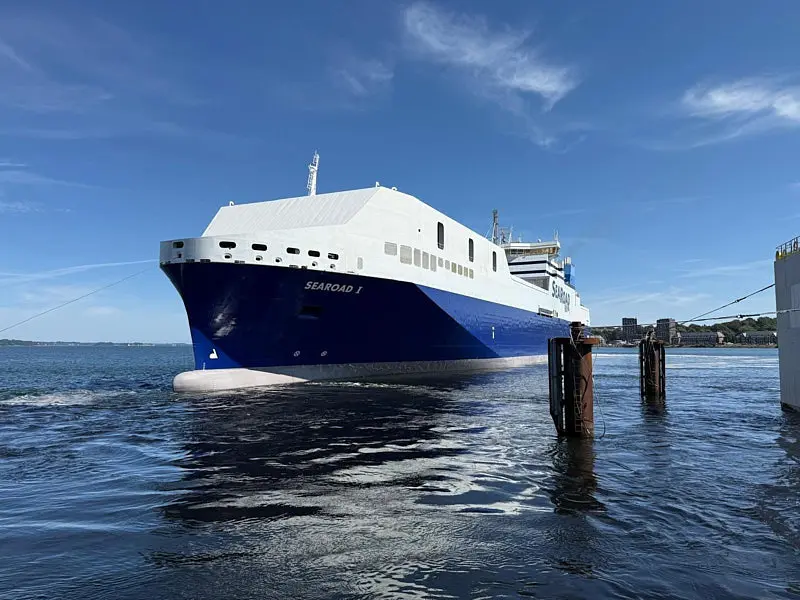
In a milestone for international shipbuilding and Australian coastal shipping, sea trials have officially commenced in Germany for SEAROAD I, the state-of-the-art Liquefied Natural Gas (LNG)-powered Roll-on/Roll-off (RoRo) vessel constructed for Australian logistics operator SeaRoad. Designed specifically to navigate the demanding trade lane across the Bass Strait, the vessel represents the largest and most technologically advanced ship in SeaRoad’s history.
The commencement of sea trials marks the final operational validation phase before delivery. Over the coming weeks, specialized marine engineers, naval architects, and survey authorities will rigorously test the ship’s dual-fuel LNG propulsion, high-maneuverability systems, sea-keeping performance, and integrated automated control systems under real-world maritime conditions.
Measuring 210 meters in length with a beam of 29.3 meters and a gross tonnage of 43,080 GT, SEAROAD I will offer unprecedented freight capacity and operational flexibility. With 3,722 lane meters dedicated to standard trailers and heavy freight, alongside tailored deck space for 101 passenger vehicles—yielding a total carrying capacity of 4,227 lane meters—the vessel will significantly increase shipping capacity between mainland Australia and Tasmania. Furthermore, the ship is engineered to transport individual heavy and oversized project cargo units weighing up to 100 tonnes.
Following the acquisition and revitalization of the German shipyard by the Heinrich Rönner Group, formal construction work on the vessel was restarted in March 2025. With sea trials now underway, the vessel remains firmly on schedule for delivery in the third quarter of 2026, with planned entry into commercial service between the Port of Melbourne and the Port of Devonport in September 2026.
Detailed Chronology: From Yard Restructuring to Sea Trials
The path to bringing SEAROAD I to sea has been a testament to industrial resilience and strategic investment within the European shipbuilding sector. The construction timeline highlights a complex journey through technical design, shipyard restructuring, and precision engineering.
+-----------------------------------------------------------------------------------+
|                               TIMELINE OF MILESTONES                              |
+-----------------------------------------------------------------------------------+
| Early Planning     | Technical specification & contract finalizing for LNG RoRo.   |
| March 2025         | Heinrich Rönner Group acquires yard; construction restarts.  |
| Early 2026         | Structural completion, fitting-out, and initial basin trials.|
| Mid 2026           | Official sea trials commence in German waters.              |
| Q3 2026 (Target)   | Final delivery from shipyard to SeaRoad.                     |
| September 2026     | Maiden commercial voyage: Melbourne to Devonport.            |
+-----------------------------------------------------------------------------------+
Shipyard Acquisition and Construction Restart
The project reached a major turning point in early 2025 when the German shipbuilding facility responsible for the vessel was acquired and reorganized under the management of the Heinrich Rönner Group. Known for its expertise in steel construction, specialized marine engineering, and complex vessel assembly, the Heinrich Rönner Group brought essential financial stability and industrial resources to the yard.
Work on the hull and internal integration formally resumed in March 2025. Under the restructured management, shipbuilding teams prioritized structural assembly, electrical harness installations, and the mounting of the primary dual-fuel LNG powerplants. Over the subsequent twelve months, advanced modular construction techniques allowed the yard to regain lost momentum, completing the fitting-out phase and preliminary basin testing ahead of schedule.
Scope and Objectives of the Sea Trials
With dockside commissioning successfully completed, SEAROAD I departed the shipyard basin to execute sea trials in German maritime trial areas, including the Baltic and North Seas. Sea trials represent the ultimate proving ground for a newbuild vessel, subjecting every primary and auxiliary system to continuous operational stress tests.
Key focus areas during the current sea trials include:
- Propulsion and Speed Validation: Verifying the output curves, fuel consumption rates, and operational transitions between LNG and secondary fuel modes across various power settings.
- Maneuvering and Hydrodynamics: Executing complex steering maneuvers, crash-stop procedures, turning circle assessments, and dynamic positioning tests to ensure responsiveness during harbor docking.
- Environmental and Acoustic Performance: Measuring hull vibration, airborne noise levels, and onboard climate control efficiency in compliance with international maritime comfort and environmental standards.
- Cargo Management and Automation Systems: Validating ballast management systems, anti-heeling stabilization controls, and remote automation software critical for rapid RoRo loading and unloading.
Supporting Context & Metrics: Engineering a Bass Strait Titan
The introduction of SEAROAD I comes at a critical juncture for supply chain logistics between Victoria and Tasmania. The Bass Strait is widely recognized as one of the most volatile and operationally challenging stretches of water in the world, requiring vessels that combine structural endurance with superior stability and fuel efficiency.
Vessel Metrics and Freight Capabilities
SEAROAD I was custom-engineered to meet the growing volume of freight moving across southern Australian supply chains. By optimizing deck layouts and utilizing multi-tier internal ramps, the vessel dramatically expands capacity compared to previous generation ships in the region.
| Parameter / Capability | Specification Metric | Strategic Operational Value |
|---|---|---|
| Overall Length (LOA) | 210.0 meters | Maximizes deck footprint while fitting target berth constraints |
| Beam (Width) | 29.3 meters | Enhances natural transverse stability in rough seas |
| Gross Tonnage | 43,080 GT | Reflects internal volume expansion for multi-deck freight |
| Trailer Freight Capacity | 3,722 lane meters | Accommodates standard roll trailers, drop-trailers, and double-stack units |
| Car Carrying Capacity | 101 vehicles | Dedicated car deck space reducing footprint conflict with freight |
| Total Equivalent Capacity | 4,227 lane meters | Unlocks substantial capacity growth for the Melbourne-Devonport corridor |
| Heavy Lift Accommodation | Up to 100 tonnes per unit | Supports major infrastructure, mining, and industrial project cargo |
| Primary Propulsion | LNG Dual-Fuel Engines | Lowers environmental impact and complies with international emissions standards |
Decarbonization and Environmental Efficiency
A core pillar of the design philosophy behind SEAROAD I is the integration of Liquefied Natural Gas (LNG) technology. As global shipping works to comply with strict International Maritime Organization (IMO) carbon-intensity metrics and local environmental regulations, the adoption of LNG offers significant operational and environmental advantages:
- Emissions Reductions: Burning LNG virtually eliminates Sulfur Oxides ($SO_x$) and Particulate Matter (PM), while reducing Nitrogen Oxide ($NO_x$) emissions by up to 85% compared to conventional marine gas oil.
- Carbon Footprint Mitigation: LNG combustion generates roughly 20% to 25% less Carbon Dioxide ($CO_2$) per unit of energy produced, aligning with SeaRoad’s commitment to fleet decarbonization.
- Modern Power Management: The ship’s dual-fuel main engines are paired with variable-frequency drive systems, optimized propeller pitch controls, and hull coating technologies that minimize hydrodynamic drag, further reducing total energy demand.
EMISSIONS REDUCTION PROFILE (LNG vs. Conventional Marine Fuel)
+-----------------------------------------------------------------+
| Sulfur Oxides (SOx)        | [████████████████████] ~100% Reduction|
| Particulate Matter (PM)    | [███████████████████ ] ~99%  Reduction|
| Nitrogen Oxides (NOx)      | [███████████████     ] ~85%  Reduction|
| Carbon Dioxide (CO2)       | [████                ] ~20-25% Reduc. |
+-----------------------------------------------------------------+
Harbor Integration and Infrastructure Readiness
Operating a vessel of this scale requires matching onshore infrastructure. The arrival of SEAROAD I aligns with comprehensive berth and terminal upgrades at both ends of its route:
- Port of Devonport: The Tasmanian Ports Corporation (TasPorts) has undertaken major civil works under its "QuayLink" master plan, widening berths, enhancing mooring bollards, and building modern RoRo ramp systems tailored for high-capacity vessels like SEAROAD I.
- Port of Melbourne: Specialized freight terminal modernizations, enhanced staging yards, and upgraded gate automation systems will enable rapid cargo handling, allowing the vessel to maintain tight turnaround schedules across the Bass Strait.
Official Statements and Strategic Alignment
The commencement of sea trials highlights the close partnership between Australian logistics operators and European naval shipbuilders. Industry leaders and project directors have expressed strong confidence in the vessel’s engineering and long-term operational impact.
Statements from SeaRoad Leadership
Spokespersons for SeaRoad emphasized the transformative impact the new vessel will have on the company’s operating profile and customer service commitments:
"The commencement of sea trials for SEAROAD I represents a monumental step forward for our company and the freight ecosystem connecting Tasmania with the Australian mainland. This vessel is not merely a replacement; it is a structural step-change in our capacity, environmental footprint, and operational reliability.
By investing in LNG technology and custom heavy-lift capacity, we are ensuring that SeaRoad remains at the forefront of sustainable, modern shipping. We look forward to completing these trials in Germany and bringing this titan of a vessel to her home waters in late 2026."
Statements from the Shipyard and Engineering Group
Representatives from the Heinrich Rönner Group underlined the technical achievements represented by the ship’s completion following the yard’s turnaround:
"Taking on this complex build and pushing forward to sea trials in such a structured timeframe reflects the dedication and technical skill of our shipbuilding workforce. SEAROAD I is a sophisticated piece of maritime engineering, combining dual-fuel LNG integration with high-density RoRo capabilities.
The initial data from dockside trials and early sea testing confirms that the vessel meets or exceeds all design specifications for speed, stability, and fuel consumption. We are proud to work alongside SeaRoad to deliver a flagship that will set new standards in Australian coastal transport."
Future Outlook: Transforming Bass Strait Logistics
As sea trials progress off the coast of Germany, operational planners at SeaRoad are preparing for the ship’s transitional voyage and operational deployment in late 2026.
                      SEAROAD I: DELIVERY TO SERVICE PATH

  [ German Sea Trials ] ---> [ Final Outfit & Handover ] ---> [ Voyage to Australia ]
      (Current Phase)               (Q3 2026)                   (Mid-Late 2026)
                                                                       |
  [ Full Capacity Service ] <-- [ Crew Training & Trials ] <-----------+
    (September 2026)            (Port of Melbourne/Devonport)
Handover and Transit to Australia
Following the successful completion of sea trials and formal classification sign-offs, the yard will execute final cosmetic and internal fitting adjustments before officially handing over SEAROAD I to SeaRoad in the third quarter of 2026.
Once delivered, the vessel will undertake an extended long-haul transit voyage from northern Europe to Australia, passing through strategic maritime corridors before arriving in Victoria.
Operational Integration in September 2026
Upon arrival in Australian waters in late August or early September 2026, SEAROAD I will complete targeted berthing trials at the Port of Melbourne and the newly upgraded QuayLink terminal at the Port of Devonport. These local trials will allow shore crews, bridge officers, and tug operators to practice mooring routines, ramp alignment, and LNG bunkering procedures.
The entry of SEAROAD I into scheduled commercial service in September 2026 will transform the freight landscape across the Bass Strait:
- Capacity Expansion: Supply chains will gain immediate access to thousands of additional lane meters per week, easing holiday and peak-season freight bottlenecks for fresh produce, retail goods, building materials, and automotive transport.
- Heavy Industry Support: The 100-tonne individual unit load capacity will simplify the transport of heavy mining equipment, industrial machinery, and structural components for major infrastructure projects across Tasmania, reducing reliance on specialized charter vessels.
- Green Corridor Foundation: The introduction of a modern LNG-powered ship serves as a model for sustainable coastal freight routes across Australia, establishing a baseline for lower emissions in domestic logistics.
With trials now underway in Germany, SEAROAD I moves one step closer to taking its place as the benchmark of strength, capacity, and environmental performance in Australian maritime shipping.