







Executive Overview
In the fast-paced, highly scheduled world of modern commercial cruising, itineraries are calculated down to the minute. Fuel consumption, port clearances, and guest satisfaction metrics all rely on a vessel maintaining its precise cruising speed. However, an unyielding maritime tradition—and international law—will always override corporate timetables when human life hangs in the balance.
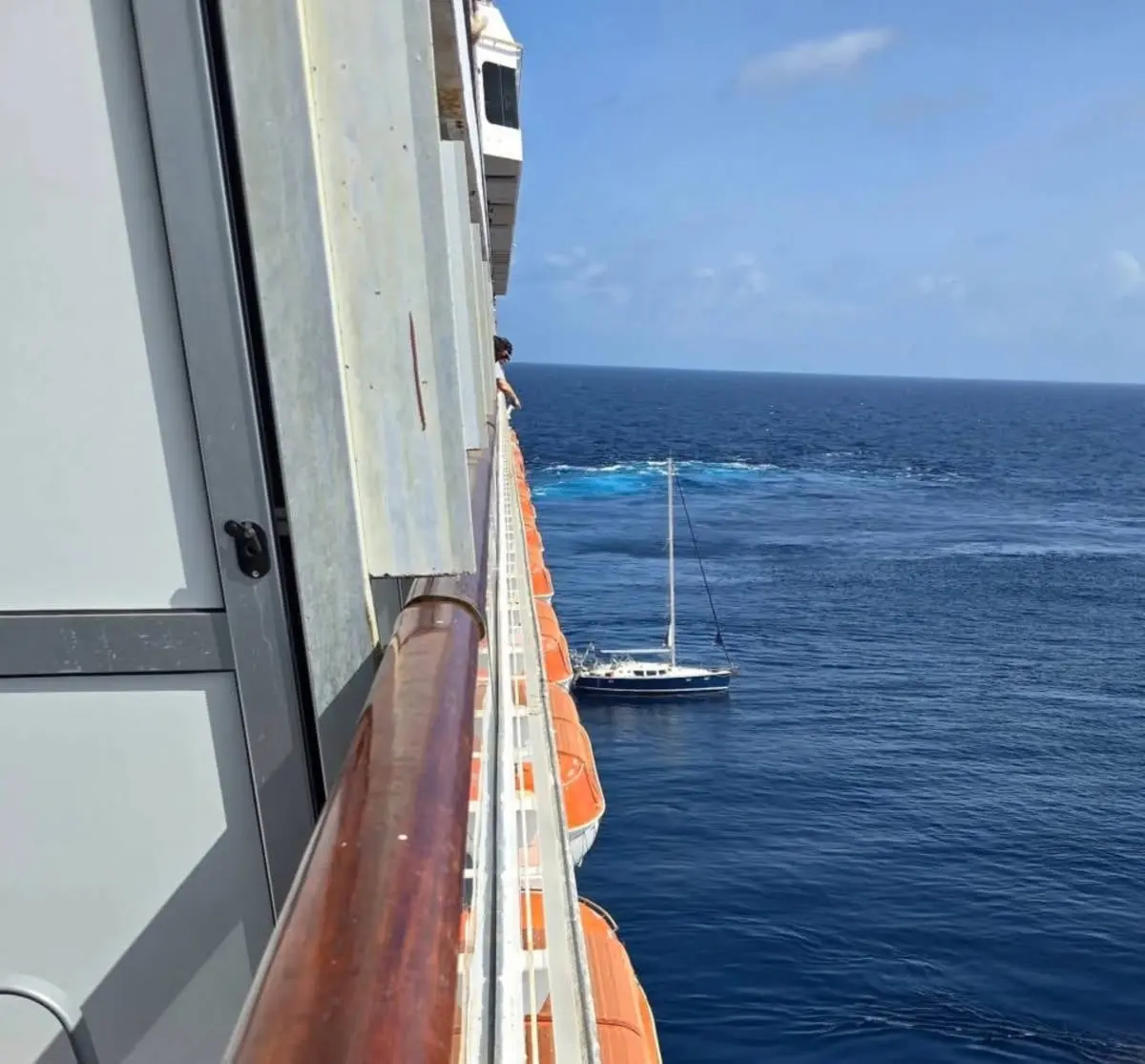
On the afternoon of Wednesday, August 26, 2026, the 2,980-guest cruise ship Carnival Conquest experienced a dramatic interruption to its voyage when it was tasked with a high-seas rescue operation. While navigating open waters en route to the island nation of Grenada, the vessel received an urgent distress relay concerning a compromised sailing craft. Without hesitation, the captain altered course, orchestrating a textbook search-and-rescue mission that ultimately saved the life of a lone mariner stranded aboard a disabled sailboat.
The incident, which quickly captured the attention of passengers on board and maritime observers ashore, highlights the inherent risks of open-water navigation and the vital role that commercial cruise liners play as first responders of the oceans. Under the mandate of the International Convention for the Safety of Life at Sea (SOLAS), Carnival Conquest joined a long lineage of merchant and passenger vessels obligated to render immediate assistance to those in peril.
Despite the operational diversion, the ship’s skilled crew executed the rescue with precision, ensuring the safety of the survivor while maintaining the overarching integrity of the voyage schedule. The episode underscores not only the unpredictable nature of maritime travel but also the rigorous training, preparedness, and humanitarian ethos embedded within the cruise industry.
Detailed Chronology: Anatomy of an Open-Ocean Rescue
The sequence of events on August 26, 2026, unfolded rapidly, transforming a routine day at sea into an emergency response operation. Carnival Conquest was cruising through favorable weather conditions when maritime rescue authorities intercepted a distress signal from a small, isolated sailing vessel.
The Interception and Initial Assessment
Upon receiving the distress relay, the bridge team of the Carnival Conquest calculated the vessel’s coordinates, adjusted the autopilot, and initiated a slight detour to intercept the troubled craft. Passengers lounging on the open decks or participating in afternoon activities soon realized something unusual was happening as the ship’s engines adjusted pitch and public address announcements began to echo across the public decks.
According to passengers who shared real-time updates and footage on social media platforms, the captain maintained clear and transparent communication throughout the ordeal. Regular PA updates informed guests of the unfolding search-and-rescue operation, turning a moment of uncertainty into a unified display of empathy and suspense.
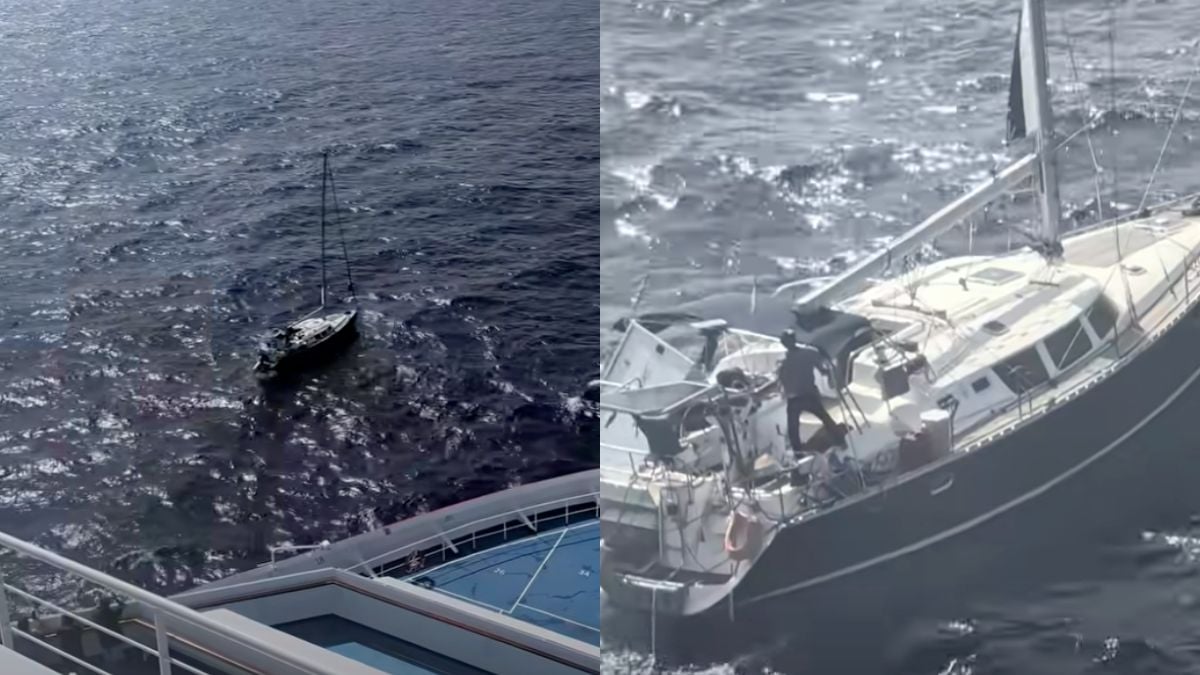
As the massive 110,000-gross-ton cruise ship closed the distance, the contrast between the two vessels became stark. Video footage captured by onboard guests showed a tiny, weathered sailboat pitching violently in the ocean swells. The craft’s sails were entirely stowed—a tactical decision suggesting that the sailboat had either lost its propulsion or steering capabilities, rendering the canvas dangerously unmanageable in the rough open-water conditions.
As Carnival Conquest maneuvered alongside the stricken craft to create a lee (a barrier against wind and waves), the lone occupant of the sailboat was observed by passengers. "When we arrived on scene, we found a sailboat with a single passenger that appeared to be very happy to see us," noted one passenger who documented the encounter from the ship’s upper decks.
The Extraction and Post-Rescue Protocol
Executing a transfer between a towering cruise ship and a bobbing, powerless sailboat requires immense seamanship. The crew of Carnival Conquest deployed specialized marine protocols, safely bringing the sole occupant on board.
Once the mariner was secured aboard the cruise ship, standard maritime procedures dictated the next steps. The location of the now-abandoned sailboat was carefully recorded and transmitted to nearby maritime authorities so that navigational warnings (MARAD alerts) could be issued to warn other commercial and private vessels of the floating hazard.
With the rescue successfully completed, the focus shifted to the immediate well-being of the survivor. The individual was immediately evaluated by the ship’s medical staff, provided with dry clothing, nourishing food, and a secure environment to recover from the physical and psychological toll of being stranded at sea. In accordance with standard security and health protocols, rescued civilian individuals are typically housed in designated quarters separate from regular passenger staterooms, without unmonitored access to public areas, and are prepared for debarkation at the earliest logistical opportunity.
Supporting Context & Metrics: The Voyage, the Vessel, and the Rules of the Sea
To fully understand the gravity of the Carnival Conquest rescue, it is necessary to examine the operational framework, the specific itinerary, and the legal mandates governing such maritime interventions.
The Vessel and the Itinerary
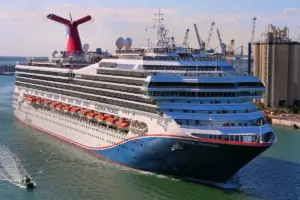
Carnival Conquest, a stalwart member of the Carnival Cruise Line fleet, is a Conquest-class vessel known for its vibrant styling and robust operational capabilities. At the time of the incident, the ship was undertaking a specialized 14-day itinerary that had departed from Miami, Florida, on Friday, August 21, 2026.
Of particular note, this specific voyage was not a standard commercial cruise open to the general public. It was classified as one of Carnival’s exclusive SEA voyages (Sailings Exclusively for Adults)—invitation-only cruises reserved for eligible guests aged 21 and older who receive direct email notifications when these unique itineraries become available. The extensive journey was designed to visit a series of picturesque ports of call, including St. Thomas, St. Croix, Dominica, Antigua, and Grenada, before returning to its home port in Florida on Friday, September 4, 2026.
The Legal Mandate: SOLAS and At-Sea Obligations
While modern cruise ships are often marketed as floating resorts packed with entertainment, restaurants, and leisure amenities, they remain heavy commercial vessels bound by centuries of maritime law and international treaties.
Chief among these is the International Convention for the Safety of Life at Sea (SOLAS). Under Regulation 33 of SOLAS, the master of a ship at sea is bound, upon receiving a signal from any source that persons are in distress at sea, to proceed with all speed to their assistance. This obligation applies universally, regardless of nationality, status, or the circumstances surrounding how the individual came to be in distress—whether through equipment failure, provisioning depletion, or structural damage to their watercraft.
Failing to render assistance without valid justification constitutes a serious breach of international maritime law and professional maritime ethics. The swift redirection of Carnival Conquest reinforces the reality that every captain and crew member at sea is fundamentally a first responder.
Official Statements and Industry Response
The successful rescue operation quickly drew praise from both corporate leadership and the wider maritime community, highlighting the human element that underpins the cruise industry.
Carnival Cruise Line’s Official Word
In an official statement provided to maritime news outlet Cruise Hive, Carnival Cruise Line detailed the mechanics of the operation:
"Carnival Conquest rescued a mariner from a disabled sailing vessel on August 26 while sailing to Grenada. After receiving a distress relay from rescue authorities, the Conquest diverted to the vessel’s location and safely brought the sole occupant aboard. The individual remains in the care of the ship’s team as Carnival Conquest proceeds to St. George’s, Grenada, as scheduled."
Brand Ambassador John Heald Commends the Crew
Carnival Cruise Line’s high-profile brand ambassador, John Heald, took to social media to share the news with the line’s massive base of loyal cruisers. Reflecting on the pause in the ship’s entertainment schedule to accommodate the emergency, Heald praised the dedication of the captain and crew:
"The Fun was paused for many yesterday as they watched the Captain and crew who came to the rescue of a boat in difficulty. Another shining example of how our ships will always do their best to help those in peril on the sea."
His comments resonated deeply with the cruising public, generating thousands of supportive reactions and comments applauding the crew’s professionalism and swift execution.
Future Outlook: Operational Impact and Port Schedule Resilience
A common concern among cruise passengers when an itinerary is disrupted—even for a noble cause—is whether the diversion will cascade into missed ports or delayed arrivals further down the line.
In the case of Carnival Conquest, the master and engineering team executed the detour and subsequent rescue with such efficiency that the core timeline of the voyage remained remarkably intact. Satellite tracking data and port schedules confirmed that the ship did not miss a beat; Carnival Conquest successfully arrived at St. George’s, Grenada, on Thursday, August 27, 2026, docking precisely as scheduled.
The rescued mariner is expected to be safely transferred to local authorities or shore-side support agencies during this port call in Grenada, where appropriate diplomatic, medical, and repatriation measures can be coordinated.
As Carnival Conquest continues the remainder of its 14-day adult-exclusive voyage through the Lesser Antilles before heading back toward Florida, the event will undoubtedly remain a defining memory for the nearly 3,000 guests on board. More broadly, the incident serves as a powerful reminder that beneath the veneer of vacation luxury, the high seas remain an unpredictable domain where vigilance, compassion, and strict adherence to maritime duty continue to save lives every single day.