










Executive Overview
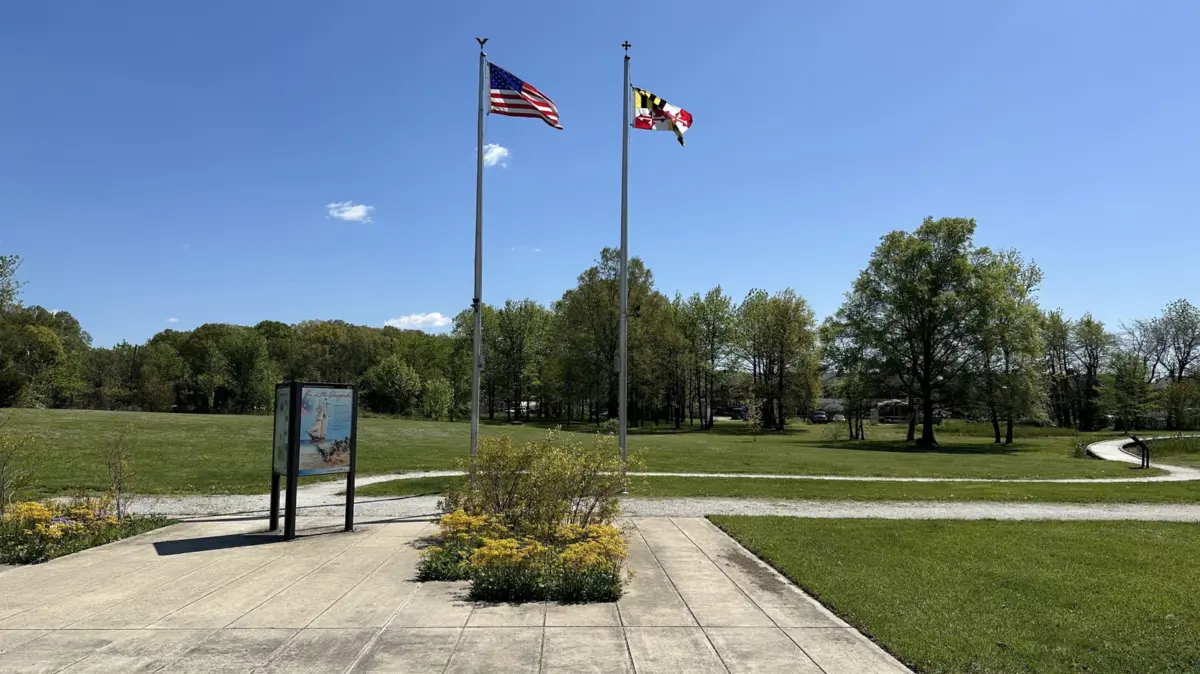
As one of the original thirteen colonies founded in the early 1600s, Maryland remains an open-air archive of early American history. While the state’s deep-rooted colonial heritage and military milestones are widely celebrated—notably through iconic monuments like Fort McHenry in Baltimore—hidden chapters of its storied past continue to emerge from the shadows of quiet nature preserves. Among these is the North Point State Battlefield, an unassuming yet profoundly significant nine-acre historic site located just eight miles southeast of downtown Baltimore in Dundalk, Maryland.
Formally opened to the public in 2015 after years of meticulous preservation efforts, this compact green space marks the crucial September 12, 1814 clash between American defenders and invading British forces during the War of 1812. Serving as the last remaining undeveloped, large-scale engagement site directly related to the defense of Baltimore, the battlefield bridges the gap between historical reverence and ecological conservation. Managed by the Maryland Department of Natural Resources (DNR) as a sister property to the nearby, larger North Point State Park, the battlefield offers visitors a rare opportunity to walk the very grounds where a pivotal line of defense shaped the outcome of a young nation.
Balancing serene, bird-filled wetlands, native wildflower meadows, and gravel walking loops with rich historical interpretive markers, North Point State Battlefield has quietly earned a stellar reputation among both nature enthusiasts and history buffs. Rated 4.5 stars across more than a hundred reviews on Google, it stands out as a peaceful, leashed-dog-friendly sanctuary where the echoes of America’s turbulent past meet the tranquility of the Chesapeake Bay watershed. This in-depth report examines the historical anatomy of the site, the tactical decisions of the Battle of North Point, the operational logistics of visiting the park today, and its enduring role in local and national heritage preservation.
Detailed Chronology: The Road to North Point and the Defense of Baltimore
To fully appreciate the quiet serenity of North Point State Battlefield today, one must transport back to the late summer of 1814. The United States was locked in a brutal, existential struggle against Great Britain in the War of 1812. Fresh off their successful amphibious invasion of Washington, D.C., and the subsequent burning of public buildings, British military and naval leadership set their sights on Baltimore—a bustling, affluent port city considered a primary nest for American privateers who were wreaking havoc on British shipping lines.
The British Strategy and American Preparations
In early September 1814, a massive British armada carrying thousands of battle-hardened veterans under the command of Major General Robert Ross and Vice Admiral Alexander Cochrane entered the Chesapeake Bay. Their objective was twofold: a coordinated land and naval assault on Baltimore.
Recognizing the impending threat, Major General Samuel Smith, commander of the Maryland militia, organized a robust defense of the city. He understood that stopping the British advance early was critical. To accomplish this, he dispatched a formidable detachment of roughly 3,200 Maryland militia forces, known as the Third Brigade, commanded by Brigadier General John Stricker. Their orders were simple yet perilous: march down the Patapsco Neck peninsula, meet the advancing British head-on, inflict maximum casualties, delay their advance, and force them into a costly land battle before they could reach Baltimore’s heavily fortified eastern perimeter.
September 12, 1814: The Battle Unfolds
On the morning of September 12, British forces landed unopposed at North Point. General Ross, brimming with confidence following his easy victory at Bladensburg outside Washington, pushed his troops inland along the narrow neck of land. Unbeknownst to the British commander, American riflemen, sharpshooters, and militia units were well-positioned within thick woodlands and natural terrain bottlenecks.

As the vanguard of the British army advanced, they encountered sharp, harassing fire from American advanced detachments. Major General Ross, riding forward to assess the American lines, was famously struck by American sharpshooters—accounts often credit militia members Daniel Wells and Henry McComas with firing the fatal shots. The death of General Ross dealt a devastating psychological blow to the British forces, throwing their command structure into disarray.
Command promptly fell to Colonel Arthur Brooke. Despite the loss of their charismatic leader, the British pressed the attack, launching a fierce assault against General Stricker’s main defensive line. Outnumbered and facing disciplined British bayonet charges, the American militia fought tenaciously for hours. While General Stricker ultimately ordered an orderly tactical retreat to the secondary defenses at Hampstead Hill (now Patterson Park) to preserve his forces, the mission was a resounding strategic success. The Battle of North Point had successfully delayed the British army long enough for Baltimore’s defenses to be solidified, and crucially, it bought time for the American naval garrison at Fort McHenry to brace for the relentless bombardment that would inspire Francis Scott Key to pen "The Star-Spangled Banner."
Supporting Context & Metrics: Ecology, Geography, and Preservation
While the historical narrative of September 12, 1814, forms the philosophical bedrock of North Point State Battlefield, the physical landscape today represents a triumph of modern environmental management and historic preservation.
Geographic and Ecological Profile
Spanning precisely nine acres within the suburban enclave of Dundalk, the battlefield is an intimate, highly localized park. Despite its small footprint, it packs immense ecological diversity. The site serves as a vital transitional habitat between upland grassy meadows and the fragile tidal wetlands characteristic of the Chesapeake Bay watershed.
Key geographic and ecological metrics of the park include:
- Total Acreage: 9 preserved acres of historic terrain.
- Trail Length: The North Point State Battlefield Park Loop offers an accessible, easy 0.3-mile pathway combining gravel segments and elevated boardwalks.
- Habitat Design: Features a dedicated "no-mow" wildflower garden zone, deliberately curated to protect native flora, attract nomadic migratory birds, and support declining butterfly populations.
- Vicinity: Located exactly 8 miles southeast of downtown Baltimore, making it an easily accessible day trip for urban residents and tourists alike.
- Visitor Satisfaction: Maintains an impressive 4.5-star average rating across more than 100 public reviews on Google Maps, praised consistently for its quiet ambiance and cleanliness.
The Intersection of History and Habitat
Interestingly, the ecological management of the park directly mirrors its historical utility. During the 1814 battle, American commanders utilized the dense native tree lines, thickets, and rolling meadows as natural cover and concealment against British artillery and infantry maneuvers. Today, those same topographical features are protected not for tactical warfare, but for environmental resilience.
The installation of boardwalks over the sensitive wetland areas ensures that visitors can immerse themselves in the pristine natural landscape without disturbing the nesting wildlife or eroding the delicate soil composition. This dual commitment to ecological preservation and historical interpretation makes North Point a unique model for public land stewardship in Maryland.
Official Statements and Administrative Framework
The preservation and ongoing operation of North Point State Battlefield are overseen by the Maryland Department of Natural Resources (DNR). As a state-run entity, the property receives continuous administrative, financial, and logistical support designed to protect its historical integrity while ensuring public accessibility.
In official statements regarding the park’s establishment and development, Maryland DNR representatives have consistently emphasized the importance of safeguarding the state’s vanishing Revolutionary War and War of 1812 landscapes. Because intense suburban development throughout the 20th century swallowed much of Baltimore County’s historic terrain, North Point stands as a rare survivor—the last remaining undeveloped, significant combat site from the War of 1812 within the immediate vicinity of the city.
"Our goal across all state-run public lands is to weave recreational and ecological value with deep-seated historical education," notes literature published by the Maryland DNR public lands division. By designating North Point a formal "commemorative landscape," the department ensures that the site is not treated as a mere recreational park, but as an outdoor museum.
Signage and interpretive panels installed throughout the property draw heavily upon historical accounts from both American and British perspectives. These official placards detail the tactical brilliance of Brigadier General John Stricker, map out troop movements, and explain how the ordinary citizens who made up the Maryland militia altered the course of American history. Furthermore, the park’s administrative alignment with North Point State Park—its larger bayside sibling famous for fishing, wetland trails, and historic resort-era charm—allows for shared resources, park ranger oversight, and cohesive community outreach programs.
Future Outlook: Commemoration, Education, and Tourism
As North Point State Battlefield looks toward the future, its role in Maryland’s cultural tourism economy is poised for expansion. With heritage tourism experiencing a nationwide renaissance, historic sites that offer low-impact, educational outdoor experiences are increasingly valued by travelers seeking authentic connections to the past.
Defenders Day and Living History
The focal point of the park’s annual calendar occurs every September, coinciding with the anniversary of the battle. Defenders Day—recognized as Baltimore’s oldest official holiday, having been celebrated continuously since 1815—transforms the quiet landscape into a vibrant hub of living history.
During the multi-day Defenders Day celebrations, which span across both North Point and the broader Fort McHenry National Monument and Historic Shrine, volunteers dressed in authentic period uniforms conduct military drills, fire replica muskets, and stage dramatic battle reenactments. These events offer visitors an immersive, multisensory glimpse into the hardships and heroism of 1814. Ranger-led interpretive programs, live traditional music, and colonial craft demonstrations further enrich the visitor experience, bridging the gap between textbook history and living community memory.
Integrating Regional Heritage Trails
Looking ahead, regional planners and tourism boards are working to better integrate North Point State Battlefield into wider Maryland heritage corridors. Visitors touring the Charm City can easily pair a morning walk along the North Point loop with excursions to lesser-known urban gems or venture further afield to historic state parks across the state.
For travelers eager to dive deeper into Maryland’s rich historical tapestry, a recommended 76-mile journey west leads to Washington Monument State Park, home to the nation’s original completed presidential monument and stunning Appalachian Trail overlooks. Meanwhile, within Baltimore itself, heritage seekers are increasingly exploring urban trails that connect North Point, Hampstead Hill (Patterson Park), and Fort McHenry into a comprehensive War of 1812 driving and walking tour.
Conclusion: A Quiet Monument to Resilience
North Point State Battlefield proves that monumental history does not always require grand marble columns or sprawling complexes. Sometimes, it resides in a quiet, nine-acre grassy meadow where the wind rustles through native wildflowers and migratory birds dart across protected wetlands. By protecting this landscape, Maryland has ensured that the courage of the 3,200 Americans who stood their ground on September 12, 1814, will never be forgotten. For hikers, birdwatchers, and history lovers alike, a stroll along the North Point loop is more than a walk in the park—it is a journey back to the very moments that helped secure the American dream.