







Executive Overview
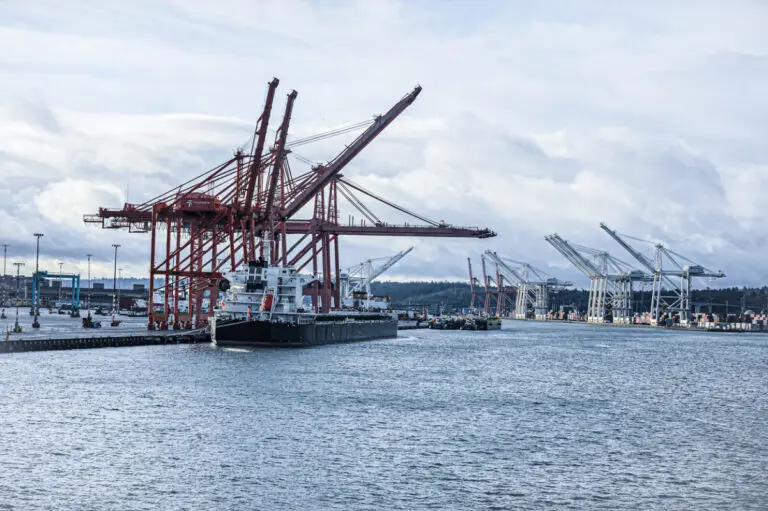
In a strategic move destined to reshape the competitive landscape of the Pacific Northwest maritime corridor, global shipping giant HMM has announced a major, multi-million-dollar investment in Washington United Terminals (WUT), located in the Port of Tacoma. This high-stakes infrastructure play is engineered to expand the terminal’s cargo-handling capacity exponentially, streamline gate and yard movements, and future-proof operations against the relentless demands of ultra-large container vessels (ULCVs).
The centerpiece of this announcement is a dramatic boost to WUT’s annual throughput. The facility will see its handling capacity skyrocket from approximately 590,000 Twenty-Foot Equivalent Units (TEUs) to a staggering 880,000 TEUs—representing an aggressive 50 per cent increase. To achieve this operational leap, the capital injection will fund the immediate modernization of WUT’s heavy-lift equipment portfolio. Outdated, legacy container cranes will be replaced with state-of-the-art machinery, complemented by the addition of cutting-edge rubber-tyred gantry (RTG) cranes.
This infrastructure overhaul arrives at a fascinating macroeconomic crossroads for the region. The announcement directly coincides with the release of mixed year-to-date cargo performance data from the Northwest Seaport Alliance (NWSA). While major international import and export lanes have experienced volume contractions following anomalous pre-tariff shipping spikes in previous cycles, specific segments—such as breakbulk cargo—are flourishing on the back of resilient industrial demand. By upgrading WUT ahead of the scheduled 2028 equipment commissioning window, HMM and its stakeholders are signaling profound long-term confidence in the Pacific Northwest as a primary gateway for trans-Pacific trade.
This comprehensive report explores the multifaceted dimensions of HMM’s investment in Washington United Terminals. We examine the technical specifications of the upcoming terminal upgrades, analyze the broader market realities reflected in the latest NWSA metrics, and evaluate how this strategic collaboration among ocean carriers, terminal operators, organized labor, and regional port authorities is redefining the modern marine supply chain.
Detailed Chronology: The Evolution and Upgrading of Washington United Terminals
Strategic Roots and the Path to Modernization
Washington United Terminals has long served as a critical node in the global containerized supply chain. Situated strategically within the Port of Tacoma—a cornerstone of the Northwest Seaport Alliance—WUT handles a substantial share of regional import and export volumes, connecting Asian manufacturing powerhouses with consumer markets across the American Midwest and Pacific Northwest.
However, as vessel deployment strategies across the global fleet have shifted toward larger ships capable of carrying upwards of 10,000 to 24,000 TEUs, regional marine terminals have faced mounting pressure. Older berths, constrained by shallow drafts, limited yard space, and aging ship-to-shore (STS) gantry cranes, risk becoming bottlenecks in an otherwise agile logistics network. Recognizing these structural vulnerabilities, HMM has orchestrated this capital investment plan to systematically dismantle potential operational constraints at WUT.
The 2028 Horizon: Equipment Overhaul and Infrastructure Upgrades
The transformation of WUT is not merely a financial transaction; it is a meticulously planned engineering project slated for full realization by 2028. The modernization initiative rests on two core equipment acquisitions designed to maximize yard velocity and vessel turnaround times:
- Replacement of Aging Ship-to-Shore Cranes: The terminal’s existing legacy cranes, which are increasingly limited in their outreach and lifting capacity, will be decommissioned and replaced with advanced, high-reach STS cranes. These new structures will feature the outreach and height clearance necessary to comfortably service the largest mega-ships currently navigating trans-Pacific routes.
- Expansion of Rubber-Tyred Gantry (RTG) Fleets: To prevent yard congestion—the primary adversary of terminal efficiency—HMM’s investment will introduce new rubber-tyred gantry cranes. These mobile yard units enhance stacking density, accelerate container retrieval times, and optimize land utilization within the existing terminal footprint without requiring massive acreage expansion.
According to project timelines, the procurement, delivery, and commissioning of this upgraded equipment will unfold progressively over the next several years, culminating in full operational readiness by 2028. Once fully integrated, these tools will work in tandem with advanced Terminal Operating Systems (TOS) to ensure seamless modal transitions between vessel, yard, rail, and truck.
Fostering Collaborative Synergy
Industry analysts note that a capital project of this magnitude cannot succeed in isolation. The WUT upgrade underscores the vital importance of continued collaboration among a diverse ecosystem of stakeholders:
- Ocean Carriers: Providing the volume guarantees and scheduling alignment necessary to justify capital expenditures.
- Terminal Operators: Managing day-to-day landside operations with precision and safety.
- Labour Partners: Deploying skilled workforce members trained to operate next-generation machinery safely and efficiently.
- Port Partners and Supply Chain Stakeholders: Ensuring that intermodal rail connections, trucking corridors, and digital data-sharing platforms keep pace with marine-side improvements.
By aligning these historically siloed entities, the HMM-WUT initiative establishes a blueprint for how critical marine infrastructure can be successfully modernised in North American ports.
Supporting Context & Metrics: Navigating the NWSA Cargo Landscape
To fully understand the strategic timing of HMM’s investment, one must analyze the broader economic and operational environment within which the Northwest Seaport Alliance (NWSA) operates. The release of year-to-date cargo metrics highlights a dynamic, fluctuating market characterized by post-rush normalization, shifting trade policies, and divergent sector performances.
International and Domestic Container Volumes
For the year to July, total containerized cargo volumes across NWSA international and domestic gateways reached 1.67 million TEUs. This figure represents an 11.3 per cent decrease compared to the same period in the previous year. A granular breakdown of these statistics reveals specific sector trends:
- Full Imports: Experienced a significant downward correction, declining by 13.7 per cent year-to-date. This contraction largely reflects a return to baseline inventory levels following aggressive front-loading by importers in prior years, who rushed goods into domestic distribution networks ahead of anticipated tariff implementations.
- Full Exports: Remained relatively resilient, experiencing a modest dip of just 1.1 per cent year-to-date. More encouragingly, when evaluated against a five-year historical average, full exports climbed 2.6 per cent, proving that regional agricultural, forest, and manufactured goods continue to find steady global demand despite currency fluctuations and geopolitical friction.
Month-Specific Analysis: July Performance
Zooming in on the month of July, total container volumes touched 239,220 TEUs, marking a 4.2 per cent decline compared to July of the previous year. The monthly data mirrors the broader year-to-date trajectory:
- Full Imports: Dropped sharply by 11.6 per cent for the month.
- Full Exports: Remained completely flat month-over-month, demonstrating stabilization in outbound agricultural and industrial shipments.
Domestic Corridors: Alaska and Hawaii
Domestic container volumes, which represent the lifeblood of regional supply chains connecting the Pacific Northwest to non-contiguous U.S. states, experienced minor contractions year-to-date compared to prior benchmarks:
- Overall Domestic Volumes: Down 0.8 per cent.
- Alaska Trade Lane: Down a marginal 0.4 per cent, indicating exceptionally stable consumer and industrial demand in the Last Frontier.
- Hawaii Trade Lane: Down 2.6 per cent, reflecting localized economic adjustments and softening retail demand.
Non-Containerized Sectors: Breakbulk vs. Autos
While containerized trade experienced headwinds, non-containerized cargo sectors within the NWSA portfolio presented a fascinating divergence of fortunes:
- Breakbulk Cargo: Emerged as a standout performer, with volumes surging 19.2 per cent year-to-date to reach 249,622 metric tonnes. This impressive growth was fueled by robust industrial demand for project cargo, steel, and heavy machinery, underscoring the Pacific Northwest’s capacity to handle specialized, non-standard shipments.
- Automobile Volumes: Faced persistent headwinds, falling 4.9 per cent year-to-date to 161,743 units. Analysts attribute this contraction directly to ongoing tariff pressures and shifting automotive supply chains that continue to weigh heavily on vehicle imports through the gateway.
Official Statements and Industry Perspectives
The announcement of HMM’s capital injection into Washington United Terminals has drawn widespread commentary from maritime executives, port commissioners, and supply chain analysts, all of whom recognize the systemic importance of the project.
Industry leaders have emphasized that marine terminal infrastructure must evolve proactively rather than reactively. Waiting for volume surges to strain existing facilities often results in severe supply chain congestion, demurrage fees, and loss of market share to competing global ports. By expanding WUT’s capacity to 880,000 TEUs well in advance of the 2028 completion date, HMM is positioning Tacoma as a highly attractive, high-efficiency alternative for ocean carriers seeking to bypass congested Southern California gateways.
Furthermore, representatives from the Northwest Seaport Alliance have lauded the investment as a validation of the region’s strategic value. In public statements regarding the mixed mid-year trade data, NWSA leadership has repeatedly stressed that short-term volume fluctuations—driven by macro-level tariff anticipations and inventory rebalancing—do not diminish the long-term imperative for port modernization. Instead, these temporary lulls provide an ideal operational window to execute heavy civil and mechanical upgrades without causing severe disruption to active vessel strings.
Labor representatives have also expressed cautious optimism regarding the planned equipment acquisitions. The introduction of modern STS and RTG cranes will require specialized training programs, elevating the technical skill sets of local dockworkers and ensuring that the Port of Tacoma remains a competitive, high-paying hub for maritime labor. Collaborative workforce development initiatives are already being discussed to ensure that longshore personnel are fully certified and prepared to operate the new machinery upon its commissioning in 2028.
Future Outlook: Positioning the Pacific Northwest for Sustainable Growth
As the global maritime industry navigates an era defined by geopolitical uncertainty, shifting trade pacts, environmental mandates, and technological disruption, the strategic upgrade of Washington United Terminals offers a clear roadmap for future resilience.
Mitigating Tariff Volatility and Market Shifts
The NWSA’s recent trade reports illustrate how sensitive regional volumes are to macroeconomic interventions, particularly tariffs. When importers pull forward cargo to dodge expected duties, ports experience artificial demand spikes followed by sharp corrections. By boosting terminal efficiency and capacity by 50 per cent, HMM and WUT are creating a buffer against this volatility. A modernized terminal can process surges with greater velocity, reducing vessel dwell times and insulating the supply chain from downstream shocks.
Environmental Sustainability and Operational Efficiency
While direct carbon-reduction metrics were not the primary focus of the initial investment release, modernizing container terminal equipment inherently drives sustainability. Newer ship-to-shore cranes and electric or hybrid rubber-tyred gantry cranes consume less fossil fuel, reduce greenhouse gas emissions, and align with the Port of Tacoma’s broader clean-air strategies. As regulatory pressures mount on terminal operators to green their operations, replacing aging, inefficient equipment with modern alternatives is an essential step toward achieving zero-emission terminal targets.
Strengthening Trans-Pacific Competitiveness
Ultimately, the battle for cargo market share on the West Coast of North America is fierce. Ports in California, Canada, and the Pacific Northwest vie constantly for the favor of major shipping alliances. HMM’s decisive financial commitment to Washington United Terminals sends an unmistakable message to the global logistics community: the Port of Tacoma is open for business, equipped for the future mega-ship era, and dedicated to delivering unmatched supply chain productivity.
As the industry looks ahead to the 2028 commissioning of these new assets, stakeholders across the board will be monitoring WUT’s progress closely. If this modernization initiative achieves its projected outcomes, it will not only secure HMM’s operational footprint in the Pacific Northwest but also serve as a benchmark for terminal revitalization across the global maritime network.