








Executive Overview
When the conversation turns to microplastic pollution, the human imagination is rarely at a loss for vivid imagery. Most people picture brightly colored, fragmented shards of plastic breaking down from single-use beverage bottles, discarded food containers, or the weathered remnants of beach toys. Others visualize microscopic, spaghetti-like synthetic fibers shed from polyester clothing during a standard household laundry cycle. Yet, lurking silently beneath our daily commutes is an entirely different, highly pervasive category of microplastic pollution: tire wear particles.
Every time a vehicle accelerates, brakes, navigates a sharp curve, or simply maintains speed on asphalt, the friction generated between rubber and pavement leaves behind an invisible wake. This friction shears off billions of microscopic rubber fragments. Far from being harmless dust, these tire wear particles are complex chemical matrices composed of natural and synthetic rubber, heavy metals, plasticizers, and dangerous additives. Among them is 6PPD, a chemical preservative that transforms into the toxic byproduct 6PPD-quinone upon reacting with ozone in the atmosphere. This derivative has been proven lethal to iconic aquatic species, such as coho salmon, even at infinitesimal concentrations.
Because these particles are generated continuously across millions of miles of roadways, they have quietly become one of the single largest sources of microplastics entering the global environment. While long-term systemic solutions—such as overhauling global transportation or completely reformulating tire chemistry—will take decades to scale, a pressing question remains: What can we do right now?

Enter green infrastructure. By engineering natural systems like bioswales, rain gardens, permeable pavements, and roadside vegetative buffers, researchers and urban planners are discovering a powerful near-term defense. These systems capture contaminated stormwater runoff and use natural soil profiles and plant root systems to trap dangerous tire particles before they can travel downstream into rivers, lakes, and oceans.
Detailed Chronology: Uncovering the Tire Wear Threat and the Rise of Green Solutions
The realization that car tires represent a massive, neglected environmental hazard is the result of decades of slow-building scientific discovery, followed by recent breakthroughs in analytical chemistry.
The Blind Spot of Early Microplastic Research (Late 20th Century to 2010s)
For decades, marine scientists and environmental toxicologists focused their efforts on macro-litter and easily identifiable secondary microplastics derived from packaging and textiles. During this period, tire wear particles remained effectively invisible. Because they are dark, irregularly shaped, and chemically bound with vulcanized rubber and mineral fillers, standard optical and spectroscopic methods struggled to distinguish them from natural organic matter in environmental samples. Consequently, estimates of microplastic pollution in urban watersheds systematically underestimated or entirely omitted the contribution of vehicular transport.
The Toxic Breakthrough: Identifying 6PPD-Quinone (2020–2021)
A monumental shift occurred in late 2020 when a team of multi-institutional researchers published landmark findings in the journal Science. They identified 6PPD-quinone—a transformation product of the tire preservative 6PPD—as the primary culprit behind "urban runoff mortality syndrome," a mysterious phenomenon that had been killing up to 90% of adult coho salmon returning to urban streams in the Pacific Northwest for decades. This discovery transformed tire wear particles from a generalized physical pollutant into a recognized chemical threat, proving that tire debris could induce acute toxicity in aquatic life at trace levels.

The Advent of Advanced Detection and Scaling Research (2022–Present)
Armed with advanced analytical techniques such as pyrolysis-gas chromatography-mass spectrometry (Py-GC/MS), scientists finally gained the ability to quantify tire wear particles in environmental media accurately. Recognizing that society cannot halt driving overnight, researchers began looking closely at the built environment to intercept these particles at the source.
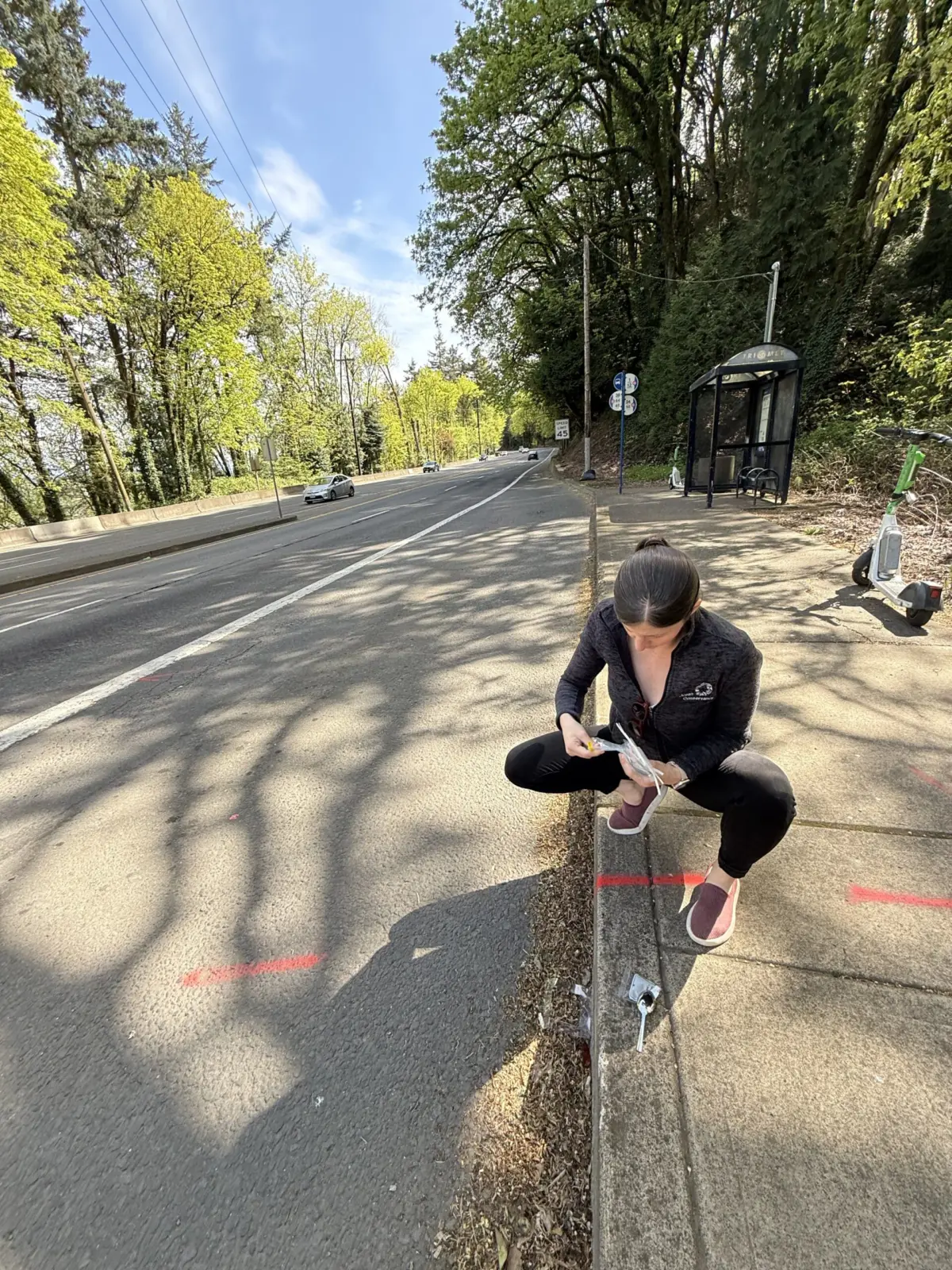
This led to contemporary investigative partnerships—such as the collaborative initiative between the Ocean Conservancy, the University of Toronto, and funding from the Tire Industry Project. Scientists began conducting empirical field studies in urban centers like Portland, Oregon. By systematically sampling roadside soils and analyzing how effectively natural drainage pathways intercept rubber particles, researchers are shifting the paradigm from theoretical risk assessment to actionable urban engineering.
Supporting Context & Metrics: The Scale of the Crisis
To understand the urgency of addressing tire wear particles, one must confront the staggering scale of their generation. The numbers paint a sobering picture of modern automotive dependency.
- Two Trillion Particles Per Mile: Independent automotive and environmental tests indicate that a single vehicle’s tires can emit upward of two trillion microscopic rubber particles for every single mile driven.
- Two Pounds Per Person Annually: Epidemiological and environmental exposure models estimate that the average person generates nearly two pounds of tire wear debris every year through transit-related activities.
- A Primary Contributor to Ocean Plastics: Recent scientific consensus places tire wear particles among the top two sources of microplastics found in global marine and freshwater environments, rivaling or exceeding the volume of degraded single-use packaging in many urbanized regions.
The Atmospheric and Hydrological Pathway
Once shed from a tire, these particles embark on one of two journeys:
- Airborne Transport: Smaller, lighter particles are whipped up by wind and vehicle turbulence, traveling as particulate air pollution that can be inhaled by humans and animals or deposited far from roadways.
- Stormwater Runoff: Heavier particles settle onto roadways, shoulders, and adjacent parking lots. There they accumulate until a heavy rain event washes them into storm drains. Without specialized intervention, this toxic slurry flows directly into local streams, rivers, and coastal estuaries.
Official Statements & Expert Perspectives
The gravity of the tire wear crisis has prompted leading marine scientists and environmental advocates to sound the alarm while emphasizing the viability of nature-based interventions.
Dr. Britta Baechler, Director of Ocean Plastics Research at the Ocean Conservancy, offered a stark visual metaphor for the phenomenon in an interview with Eos magazine:
"Driving a car or even riding in a bus is a bit like dragging an eraser across the planet, except the crumbs are microplastics. Toxic microplastics."
Dr. Baechler further emphasizes that while the problem is dauntingly pervasive, it is not insurmountable if addressed through localized engineering:
"Tire wear particle pollution can feel like an overwhelming problem. After all, it’s tied to transportation, which most of us rely on every day. But that’s exactly why research like this matters: It gives us a real, near-term path forward that doesn’t require waiting for the entire global transportation system to change first."
Echoing the need for robust policy and scientific rigor, Dr. Anja Brandon, Director of Plastics Policy at the Ocean Conservancy, notes that mitigating microplastic pollution requires bridging the gap between laboratory science and municipal infrastructure:
"By pairing rigorous science with practical guidance, we hope to help cities move from asking ‘Could this work?’ to confidently building solutions that we know can be effective."
Future Outlook: Building a Resilient Path Forward
As urban centers continue to expand and vehicle miles traveled increase globally, relying solely on future technological overhauls—such as the eventual transition to entirely non-toxic tire compounds or zero-emission autonomous fleets—is a risky gamble for marine and freshwater ecosystems. The planetary clock is ticking, and aquatic life cannot wait decades for systemic automotive reform.
This is why green infrastructure represents the most promising bridge to the future. Bioswales, vegetated filter strips, permeable asphalt, and engineered rain gardens act as living filters. When strategically integrated into municipal zoning and urban roadway design, these installations slow down stormwater velocity, encourage settling, and leverage rhizosphere biology—the complex interaction between plant roots and soil microbes—to degrade or trap hazardous chemical compounds and micro-rubber fragments.
The Road Ahead for Research and Action
Current field investigations, such as those being conducted on the streets of Portland, Oregon, are vital for establishing cost-benefit frameworks for city planners. By physically sampling roadside matrices, scientists are answering critical questions:
- Exactly how much tire debris do different soil and plant configurations trap over time?
- What are the long-term maintenance costs of municipal bioswales dedicated to heavy-metal and microplastic capture?
- How can city governments optimize spatial planning to maximize runoff filtration in high-traffic corridors?
Ultimately, combating tire wear particle pollution requires a dual approach: holding manufacturers accountable for material safety while aggressively retrofitting our cities with the green infrastructure necessary to heal the scars of modern transportation. Through continued scientific research, community engagement, and evidence-based municipal policy, we can protect our waterways, safeguard wildlife, and steer toward a cleaner, plastic-free ocean.