






Executive Overview
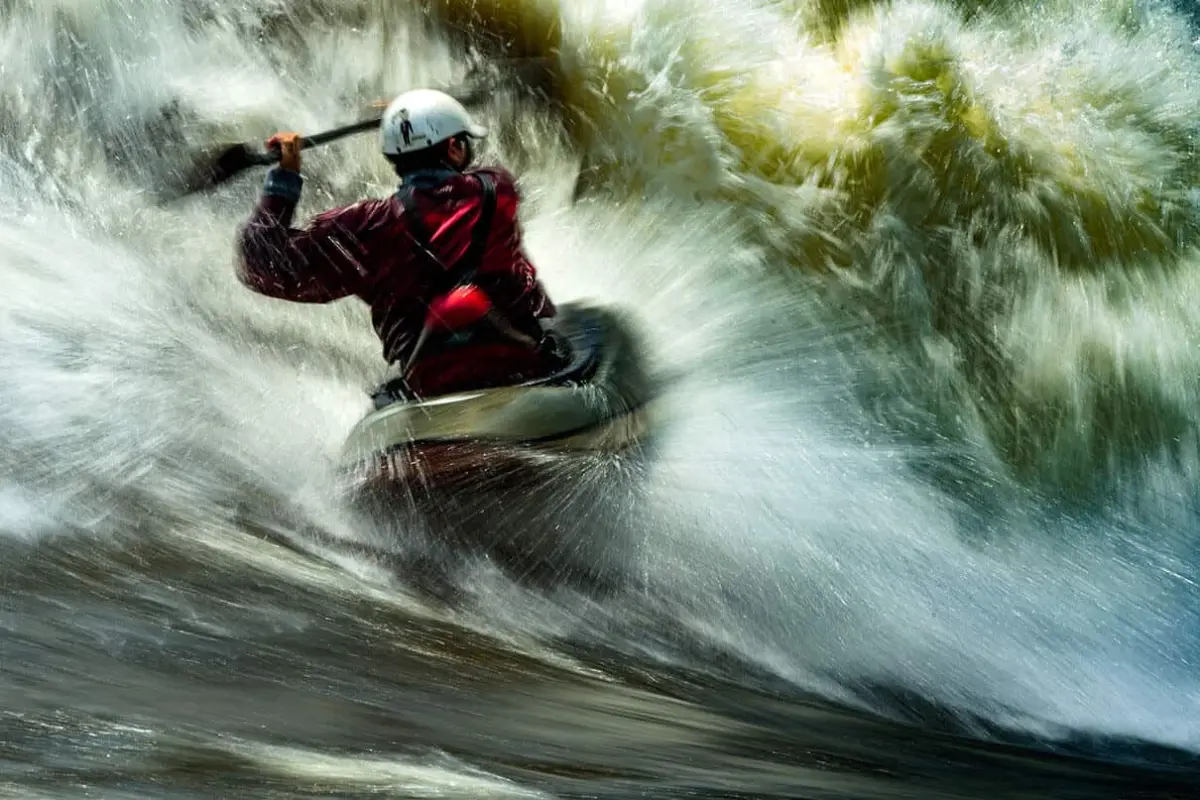
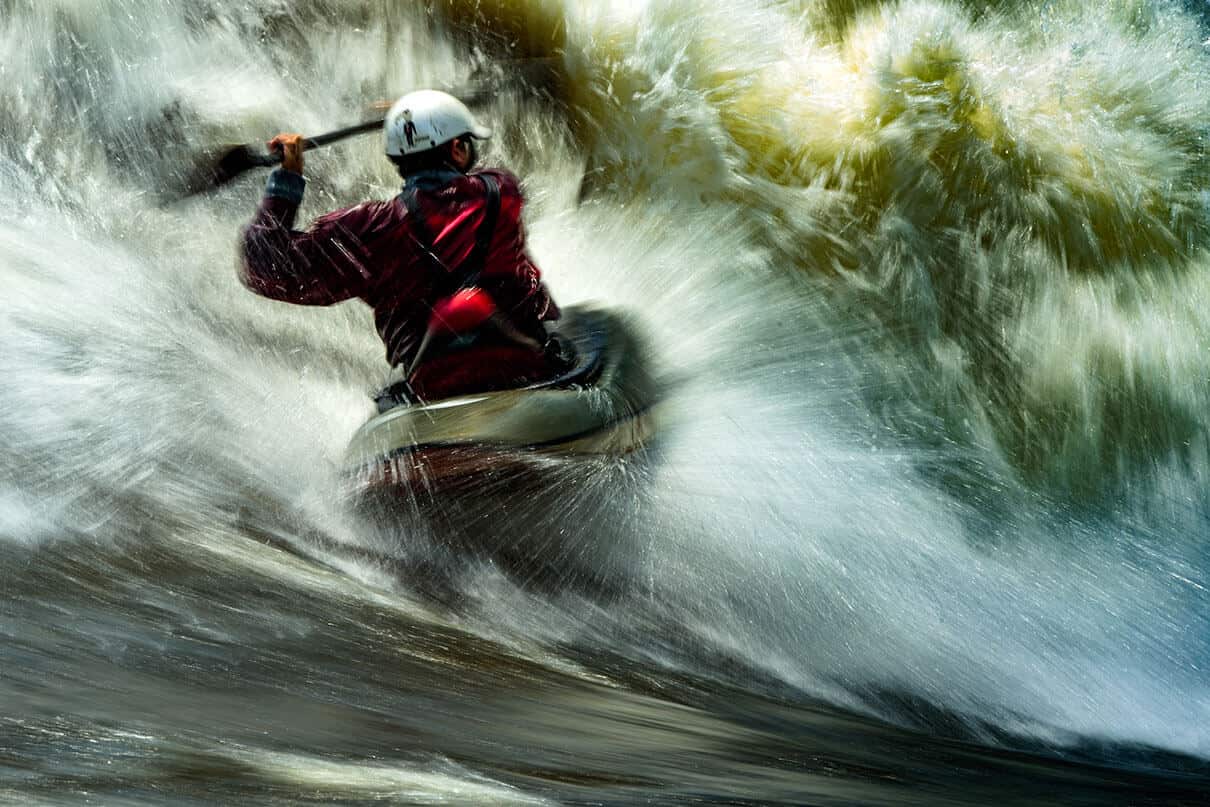
To the casual observer, whitewater kayaking is a mesmerizing display of human grace, fluid dynamics, and controlled adrenaline. World-class kayakers plunge down vertical drops, carve through churning hydraulic holes, and navigate raging torrents with apparent ease. Yet, beneath the polished media clips and triumphant podium finishes lies a stark, unyielding truth: the river is an indifferent, immensely powerful force of nature.
Spend enough time on moving water, and the river will eventually demand your utmost respect—often in the form of a harrowing near-death experience. While the public sees the triumphs, the elite community of professional boaters carries a hidden ledger of profound risks, terrifying miscalculations, and brushes with mortality.
In a recent compilation of raw confessions published in Paddling Magazine, some of the world’s most celebrated whitewater athletes opened up about the scariest moments of their lives. Far from romanticizing danger, these accounts paint a vivid, multi-faceted picture of extreme sports: encounters with dangerous wildlife in remote jungles, terrifying sub-surface entrapments, misdirected local guides, and the heavy psychological toll of pushing human limits. This investigation examines those harrowing stories, exploring the thin line between calculated risk and catastrophe, the evolution of safety protocols, and a growing cultural shift within the paddling community toward caution, humility, and preparedness.
Detailed Chronology: Tales from the Edge of the Abyss
The river does not discriminate between novices and world champions. When things go wrong in remote canyons or high-volume rapids, fractions of a second separate a routine rescue from a fatal outcome. The following firsthand accounts illustrate the volatile spectrum of dangers professional boaters face across the globe.
1. Corran Addison: A Lifetime on the Razor’s Edge
For veteran pro Corran Addison, narrowing down a single terrifying moment is nearly impossible. His career has taken him to the planet’s most formidable waterways, accumulating a staggering catalog of trauma.
"Oh boy, this is a potentially long and scary list. Chased by crocodiles on the Zambezi, drowning on the Verdun in France, pinned under a steel beam in Italy, rescuing a guy on the Seven Teacups in California, breaking my back in North Carolina."
Addison’s ledger highlights the sheer unpredictability of extreme kayaking. It is not merely the hydraulic power of the water that threatens a boater’s life, but a compounding gauntlet of biological hazards (crocodiles), environmental infrastructure (submerged steel beams), mechanical equipment failures, and catastrophic blunt-force trauma.

2. Ben Stookesberry: Midnight Standoff on the Rio das Mortes
Whitewater exploration often requires traveling deep into politically unstable or culturally unfamiliar regions, far beyond the safety net of modern emergency services. Renowned explorer Ben Stookesberry learned this lesson the hard way during an expedition in Brazil.
While driving through a remote field with fellow pro Pedro Olivia, their local guide stopped the truck and shone a spotlight on an owl. The guide began muttering unintelligible warnings before slipping out of the vehicle into the darkness.
Moments later, the situation deteriorated catastrophically. The guide emerged with a rifle leveled directly at the vehicle, screaming about evil spirits and witchcraft. Stookesberry threw himself out of the truck into the tall grass, crawling away as the gunman trained his weapon on the vehicle’s spotlight. While Olivia desperately begged the man not to shoot, Stookesberry crept back toward the tense standoff, waiting for an opening.
When the gunman briefly backed away, the team seized the opportunity, piled back into the truck, and hit the gas. They spent hours hopelessly lost on overgrown jungle paths near the Rio das Mortes (River of the Dead), haunted by the very real fear that their armed guide would reappear from the brush.
3. Nouria Newman: The Nightmare of Family Peril
For elite slalom and adventure racer Nouria Newman, the most terrifying moments do not always involve personal injury. Sometimes, the horror lies in watching someone else face destruction. Her most chilling memory is agonizingly succinct:
"Seeing my dad let go of the rope I was holding and go through a sieve."
In swiftwater rescue terms, a "sieve" is one of the most feared hazards on a river: a rock formation or logjam that allows water to pass through while trapping solid objects—including human bodies—underwater. The helplessness of watching a loved one slip toward such a trap underscores the profound psychological trauma inherent in family paddling expeditions.
4. Emily Jackson: Trapped Beneath the Ottawa
Long before she became a household name in professional kayaking, Emily Jackson experienced a terrifying sub-surface entrapment at just nine years old on the Ottawa River.
Flipping at the very apex of a violent rapid, she waited for her father to execute a standard Eskimo roll and right her kayak. However, her father missed the roll. Jackson was left trapped upside down, cycling through a turbulent hydraulic hole without a paddle.
When her lungs ran out of air, she attempted to release her spray skirt—the waterproof fabric barrier sealing the cockpit—only to find she couldn’t break free. Pinned under water for an agonizingly long duration, she faced the ultimate panic of aquatic entrapment.
The incident fundamentally transformed her relationship with equipment safety. Today, Jackson is an outspoken advocate for child-specific safety gear, pushing for bungee-rand spray skirts that are easily cleared and rigorously tested in controlled environments, rather than relying blindly on a companion to perform a roll.
5. Adriene Levknecht and Benny Marr: Apex Predators on the White Nile
The White Nile in Africa is legendary for its massive, warm-water play waves and thundering volume. It is also home to Nile crocodiles—one of nature’s most efficient and aggressive apex predators. Elite paddlers Adriene Levknecht and Benny Marr found themselves on the wrong end of the food chain during a session on the river, narrowly escaping a predatory ambush that could have ended in tragedy.
6. Dane Jackson: The Calculus of a Missed Ferry
Precision is the currency of the elite boater. A fraction of a second off your line, or a poorly timed ferry angle across a current, can catapult you into an inescapable trap. Dane Jackson recalls a harrowing brush with disaster caused by a simple navigational error:
"Needing to surf across a big wave in front of massive stone ruins in Ottawa that had massive whirlpool siphons that I would definitely not survive if I went into, simply because I put in too low for the ferry. Not my best move."
The margin for error on high-consequence rivers is razor-thin. A single misplaced paddle stroke converted a routine warmup into a life-or-death battle against massive hydrodynamic siphons.
Supporting Context & Metrics: The Anatomy of River Risk
To understand why these athletes face such extreme situations, one must examine the physical and psychological dynamics of extreme whitewater sports.
The Physics of Hazards
River environments feature unique geological hazards that standard emergency medical services (EMS) cannot easily access. According to swiftwater rescue textbooks, the primary hazards include:
- Hydraulics (Holes): When water flows over a submerged ledge, it curls back upstream, creating a recirculating current capable of trapping boats and swimmers indefinitely.
- Undercuts and Sieves: Rock faces carved out by continuous erosion or blocked by fallen timber that force water underneath or through narrow gaps, creating fatal entrapment zones.
- Strainers: Partially submerged trees or fences that allow water to pass through while filtering out solid matter, exerting immense hydraulic pressure on anything pinned against them.
The Psychology of Trauma
While adrenaline fuels high-performance athletics, repeated exposure to near-death scenarios takes a heavy toll. Sports psychologists note that extreme athletes often develop coping mechanisms similar to first responders, compartmentalizing fear during crises only to process the emotional fallout long after leaving the water.
Furthermore, the industry has historically suffered from a "glamorization" of danger. Extreme sports media often elevates the most reckless stunts, creating an unspoken pressure for younger athletes to court disaster in pursuit of sponsorships and digital views.
The Paradigm Shift: Moving Beyond Glorified Danger
Amidst the tales of crocodiles, guns, and sub-surface entrapments, a powerful counter-narrative is emerging within the elite community. Leif Anderson offered a sobering critique of how the sport communicates its risks:
"The scariest thing that ever happened to me was not something I think we should glorify as a paddling community. I find myself telling my most exciting stories about dangerous times too often, and I’m trying to shift to happier stories about caution and preparation."
This sentiment reflects a crucial cultural evolution within modern paddlesports. For decades, whitewater media focused heavily on "carnage"—epic swims, broken boats, and close calls. Today, industry leaders, safety instructors, and professional athletes are actively pivoting toward a culture of risk management, swiftwater rescue education, and conservative decision-making.
Key Pillars of the Modern Safety Movement:
- Comprehensive Swiftwater Rescue Training (SRT): Requiring professional-grade rescue certifications for all members of exploratory and recreational paddling groups.
- Equipment Innovation: Designing fail-safe release systems, reliable PFDs (Personal Flotation Devices) with quick-release harness systems, and child-safe gear as championed by veterans like Emily Jackson.
- De-escalation and Turning Back: Normalizing the choice to walk around a rapid (portaging) or scrub a trip entirely when conditions, logistics, or team dynamics are sub-optimal.
- Mental Health Awareness: Acknowledging the psychological weight of trauma and encouraging open dialogue about fear, anxiety, and post-incident stress among athletes.
Future Outlook: Respecting the Current
As equipment technology improves and satellite communication devices allow for remote rescue coordination, access to previously unrunnable rivers will only expand. Kayakers will continue to push the boundaries of what is physically possible in a small plastic boat.
However, the enduring message from legends like Addison, Stookesberry, Newman, Jackson, and Anderson is clear: the future of whitewater sports depends not on how many times an athlete cheats death, but on how effectively they avoid it in the first place.
The river will always possess raw, untamed power. By shifting the cultural narrative away from reckless bravado and toward meticulous preparation, mutual respect, and shared stewardship, the paddling community is ensuring that the next generation of river runners can tell their stories with wisdom, humility—and from the safety of the shore.
This article was originally published in Issue 75 of Paddling Magazine. To explore print and digital subscriptions or browse extensive archival features, visit their official portal.