By Philippe Lazaro, Digital Content Manager
6 Minute Read
Executive Overview
Storytelling remains one of humanity’s most enduring and fundamental behaviors. Across every continent and civilization, oral traditions have served as the bedrock for sharing cultural values, preserving historical knowledge, and decoding the complexities of the natural world. Far from being arbitrary inventions or mere flights of fancy, the myths and legends that have survived centuries of retelling—kept alive through generational memory, cultural ceremony, and shared ritual—encode vital empirical wisdom.
For coastal and island communities worldwide, this inherited wisdom is intimately tied to the sea. Long before the advent of satellite oceanography, marine biology, and computerized weather modeling, coastal populations relied on acute observation to survive. They tracked migration patterns, noted the behaviors of marine mammals preceding storms, and understood the delicate ecological balance required to sustain life from the water.

This accumulated knowledge was systematically embedded into folklore: stories of shape-shifting seal-people, celestial navigation guides, tempestuous water deities, and divine marine protectors. Today, modern marine science is increasingly validating these ancient narratives, revealing that traditional ecological knowledge (TEK) often anticipated contemporary scientific discoveries by millennia.
Furthermore, these stories perform a critical conservation function. By imbuing marine species and aquatic ecosystems with sacred significance, folklore historically enforced environmental protections and sustainable resource management long before formal legislation existed. As contemporary oceans face unprecedented threats—ranging from climate change and plastic pollution to abandoned fishing gear and decaying offshore oil infrastructure—reconnecting with these ancient traditions offers a powerful reminder of humanity’s reciprocal relationship with the sea.
Detailed Chronology: Five Cultural Traditions of the Sea
To understand how different societies have historically processed and preserved marine knowledge, we examine five distinct coastal and maritime oral traditions from across the globe.
1. Scotland: The Selkie Tradition and Seal Conservation
Early written records from the rugged coasts of Scotland and the Northern Isles describe the selkie—mythical seal-people capable of shedding their aquatic pelts to walk ashore in human form. In these familiar folklore arcs, a mortal might discover a selkie on the beach, steal their sealskin, and bind them to a terrestrial life of marriage and children. Yet, the selkie remains perviously melancholy, endlessly gazing toward the horizon until the day the skin is rediscovered and the creature returns to the ocean without hesitation.


-
The Ecological Roots: The genesis of the selkie myth is rooted in acute zoological observation. Gray seals (Halichoerus grypus) and harbor seals (Phoca vitulina) possess strikingly human-like traits: deeply expressive, soulful eyes; complex vocalizations that can mimic human cries; and maternal behaviors where mothers nurse and cradle their pups on remote shorelines.
-
Conservation Impact: By humanizing seals through folklore, Scottish coastal communities established powerful cultural taboos against the over-hunting and gratuitous slaughter of these marine mammals. Today, modern conservation organizations frequently use the selkie as a cultural bridge to promote ocean stewardship. This historical protection is as vital as ever; Scottish gray seal populations continue to face severe anthropogenic pressures, including entanglement in abandoned, lost, or otherwise discarded fishing gear (ALDFG) and historical culling pressures—precisely the sort of unchecked exploitation the selkie taboo was designed to prevent.
+-------------------------------------------------------------------------+
|                  THE SELKIE CONSERVATION TIMELINE                       |
+--------------------------+----------------------------------------------+
| Pre-Modern Era           | Oral transmission of selkie taboos limits    |
|                          | over-hunting of seal colonies in Scotland.   |
+--------------------------+----------------------------------------------+
| 19th - 20th Century      | Industrial sealing and culling reduce seal   |
|                          | populations, straining local ecosystems.     |
+--------------------------+----------------------------------------------+
| Contemporary Era         | Conservationists revitalize selkie imagery   |
|                          | to combat ghost gear and marine pollution.   |
+--------------------------+----------------------------------------------+
2. Pasifika: Wayfinding, Māui, and Celestial Navigation
Pasifika—the collective term for the Indigenous Peoples of the Pacific Islands—has maintained an unbroken tradition of maritime excellence for more than 3,000 years, successfully navigating and settling the vast, formidable expanses of the Pacific Ocean without modern instruments.
- The Role of Narrative: Their primary instrument for preserving and transmitting this staggering volume of data was storytelling. Navigators passed down complex navigational charts embedded within epic narratives concerning the demigod Māui and his mythical canoe, Waka-a-Māui.
- Empirical Science in Myth: Celestial bodies were woven directly into these tales. For instance, Tāwhirimātea, the god of winds and storms, was linked to specific meteorological phenomena. When his celestial markers—such as the Matariki (Pleiades) star cluster—appeared in specific alignments, it signaled to voyagers that seasonal conditions were optimal for undertaking long-distance ocean voyages. Wayfinding is a rigorous science born of millennia of empirical observation, trial, and error; oral traditions acted as high-capacity data storage systems that ensured this survival-critical knowledge survived intact across generations.
3. Mesoamerica: Chalchiuhtlicue and the Dual Nature of Water
In Aztec cosmology, Chalchiuhtlicue reigned as the goddess of rivers, lakes, streams, and the open ocean, as well as the divine protector of fishermen, sailors, and aquatic navigators. One of the most actively revered deities in the Aztec pantheon, she embodied the profound duality of water: simultaneously revered as a life-giving creator and feared as a destructive force capable of unleashing devastating floods.
- Geographical Context: Mexico’s Pacific coastline and the Gulf of Mexico represent some of the most biologically productive yet storm-vulnerable marine ecosystems on Earth.
- Ecological Philosophy: The worship of Chalchiuhtlicue reflected a sophisticated societal understanding of the hydrological cycle. Indigenous cultures recognized that water was the fundamental substrate of existence, binding terrestrial agriculture to marine health. Respecting the goddess meant maintaining equilibrium with natural hydrological forces, acknowledging that environmental over-extraction or disrespect of water systems could lead to ecological collapse.
4. Vietnam: "Grandfather Whales" and Marine Reciprocity
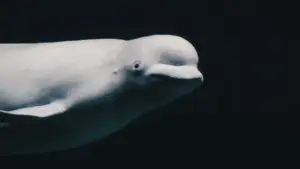
Along the coastal fishing communities of Vietnam, cetaceans are rarely viewed merely as wildlife; instead, they are revered as divine protectors known as Cá Ông, or "Grandfather Whales."
- Behavioral Parallels: Local oral histories hold that when fishing vessels are imperiled in violent monsoons, whales will physically intervene to shield crews or guide capsized boats safely toward shore. This cultural reverence is actively practiced: numerous fishing villages celebrate the bi-annual Whale Prayer Festival, and beached whales are accorded elaborate, sacred Confucian funeral rites.
- Scientific Validation: Modern marine biology confirms that large cetaceans—including sperm whales, humpback whales, and gray whales—exhibit complex empathetic and protective behaviors. Documented instances include whales approaching distressed swimmers, forming defensive rings around injured pod members, or shielding seals and humans from apex predators like orcas. Furthermore, the cultural practice of mourning and burying dead whales mirrors ecological reality: a single fallen whale carcass (known as a whale fall) sustains an entire localized deep-sea ecosystem for decades, supporting hundreds of specialized species through its decomposition.
5. The Caribbean: Mami Wata and the Sacred Species Effect
The multifaceted water deity Mami Wata—known as La Sirène in Haiti, River Mumma in Jamaica, and Yemonja in Brazil—demonstrates the resilience of African oral traditions carried across the Atlantic by enslaved populations and adapted to Caribbean ecosystems. Often depicted as a siren or mermaid, Mami Wata possesses a dual nature: she is generous, musical, and nurturing, yet fiercely dangerous and unpredictable.
- The Manatee Connection: Anthropologists and marine historians note that historical sightings of Mami Wata frequently align with encounters with West Indian manatees (Trichechus manatus). These slow-moving, herbivorous marine mammals exhibit strikingly human-like nursing postures, facial features, and vocalizations.
- The "Sacred Species" Effect: When cultural beliefs surrounding sacred marine entities begin to erode, ecological health often follows suit. Researchers describe the "sacred species" effect as a phenomenon where spiritual reverence provides a layer of protection far more resilient than formal legal frameworks. The moral and social taboos against harming creatures imbued with divine status have historically shielded populations from overexploitation, offering a powerful lesson in community-led conservation.
Supporting Context & Metrics: The Intersection of Myth and Marine Science
While folklore is often dismissed in modern technocratic societies as unscientific, contemporary researchers increasingly recognize that traditional ecological knowledge (TEK) offers critical baselines for environmental science.

- Shifting Baselines: Marine scientists frequently struggle with the "shifting baseline syndrome," where each generation accepts the environmental degradation of oceans as normal because they lack historical context of pristine ecosystems. Oral traditions, encoded in myth and song, often preserve ecological data spanning centuries, documenting historical species distributions, fish stocks, and climatic shifts that predate industrial record-keeping.
- Conservation Efficacy: Studies in ethnobiology indicate that resource management systems rooted in cultural taboos and spiritual reverence often achieve higher compliance rates in remote coastal communities than centralized state regulations. When a community views a marine habitat as sacred—governed by a deity like Chalchiuhtlicue or Mami Wata—overfishing and habitat destruction carry immediate social and moral consequences.
Official Statements and Organizational Perspectives
Modern environmental organizations are increasingly integrating cultural narratives into their conservation frameworks, recognizing that protecting the ocean requires addressing both ecological systems and human relationships with the sea.
"Storytelling is not merely an artistic endeavor; it is an evolutionary survival tool. Across millennia, coastal communities have encoded the intricate rhythms of the ocean into their cultural fabric. When we look at how indigenous and traditional societies revered marine life—from the selkies of Scotland to the Grandfather Whales of Vietnam—we see a blueprint for reciprocity. The ocean is not an infinite extraction zone; it is a living system that demands our respect and stewardship."
— Representative, Ocean Conservancy
Conservation leaders emphasize that modern policy failures—particularly regarding industrial pollution, overfishing, and the neglect of aging offshore infrastructure—stem from a fundamental disconnect between human society and the marine environment. Restoring this connection requires listening to the lessons preserved in global maritime heritage.
Future Outlook: Reclaiming Stewardship Through Policy and Action
The historical lessons imparted by global sea stories converge on a single, urgent truth: humanity’s survival is inextricably linked to the health of the global ocean. Yet, modern industrial practices continue to treat marine ecosystems with profound negligence.
The Threat of Abandoned Offshore Infrastructure
Right now, thousands of miles of aging offshore oil and gas infrastructure are corroding on the seafloor. This decaying industrial apparatus directly threatens many of the marine species, coral habitats, and coastal zones that cultures around the world have cherished for centuries. Corporations responsible for installing this infrastructure routinely exploit regulatory loopholes to avoid the immense costs of decommissioning and cleanup, leaving marine ecosystems to shoulder the ecological burden.
Legislative Solutions: The Offshore Leasing Standards and Accountability Act
Public mobilization can alter this trajectory. Legislative frameworks are currently being advanced to hold corporate polluters accountable. The proposed Offshore Leasing Standards and Accountability Act, currently before the United States Congress, represents a vital step toward regulatory integrity. If passed, the act would legally compel oil and gas corporations to assume full financial and operational responsibility for their installations across all phases of operation—before drilling commences, throughout active production, and rigorously post-operation.
How You Can Take Action
The ocean has sustained human civilization, inspired our greatest art, and guided our navigators for millennia. Now, it requires our defense.
- Engage Locally: Support coastal cleanups, marine protected areas (MPAs), and Indigenous-led conservation initiatives that honor traditional ecological knowledge.
- Advocate for Policy Reform: Add your voice to the movement. Learn more and take action to support the Offshore Leasing Standards and Accountability Act to ensure that corporations are held accountable for safeguarding our shared marine heritage.