











Executive Overview
While national parks often command the spotlight in American conservation conversations, state parks frequently harbor the most intimate, historically rich, and geographically distinct pockets of natural beauty. Among these, Pillsbury Point State Park in Arnolds Park, Iowa, stands out as a fascinating case study in contrasts. Spanning a mere 6.48 acres, it holds the title of the smallest state park in the Hawkeye State. Yet, despite its diminutive footprint, Pillsbury Point packs an extraordinary punch, serving simultaneously as a serene urban sanctuary, a prime recreational lakeside vantage point, and a solemn touchstone to one of the most violent and culturally complex chapters in the history of the American Midwest: the Spirit Lake Massacre of 1857.
Nestled along a narrow finger of land that juts dramatically into the crystalline, glacier-carved waters of West Okoboji Lake, Pillsbury Point is a microcosm of the Iowa Great Lakes region. The park offers visitors a unique synthesis of modern leisure and haunting nineteenth-century heritage. While travelers come today for the postcard-worthy sunsets, the family-friendly picnic facilities, and the proximity to historic boardwalk amusement parks, they walk upon grounds steeped in frontier tragedy. This comprehensive report examines the multifaceted identity of Pillsbury Point State Park, exploring its geography, its deep historical entanglements with the Dakota people and nineteenth-century westward expansion, its modern role as an urban tourism anchor, and its enduring significance in the cultural landscape of Iowa.
Detailed Chronology: From Indigenous Homeland to Frontier Tragedy
To understand Pillsbury Point, one must look far beyond its modern park boundaries and examine the geopolitical and cultural fault lines that characterized the upper Midwest during the mid-nineteenth century. The narrative of the region is one of profound cultural collision, set against the breathtaking backdrop of the Iowa Great Lakes.
Pre-Contact and the Dakota Homeland
For generations prior to the arrival of European-American settlers, the Okoboji and Spirit Lake region served as vital seasonal hunting, fishing, and gathering grounds for indigenous peoples, most notably bands of the Dakota Sioux, including the Wahpekute. The interconnected lakes—abundant in fish, waterfowl, and surrounding timber—were rich resource nodes in a vast tribal territory. However, the inexorable push of westward-bound pioneers in the 1850s disrupted ancestral lifestyles, strained fragile treaties, and catalyzed a volatile environment of mutual distrust, economic desperation, and cultural misunderstanding.
The Winter of 1856–1857: Crisis Point
The catalyst for the events of March 1857 was rooted in a complex matrix of broken federal promises, severe deprivation, and localized conflict. A renegade Wahpekute band led by Inkpaduta (Scarlet Point) had become increasingly alienated from both the United States government and mainstream Dakota leadership due to withheld annuity payments, fraudulent trading practices, and a devastating winter marked by historically deep snows and sub-zero temperatures that crippled hunting efforts.
Starving and resentful, Inkpaduta’s band moved through northwest Iowa and southwest Minnesota. Grievances boiled over following altercations with local settlers over livestock, food, and perceived threats.
The Spirit Lake Massacre (March 1857)
In early March 1857, tensions erupted into unprecedented violence. Inkpaduta’s band attacked the isolated pioneer cabins scattered around the Okoboji lakes and Spirit Lake. Over the course of several days, approximately 32 to 40 settlers were killed in what became historically recorded as the Spirit Lake Massacre.

The violence sent shockwaves through the newly formed state of Iowa, sparking panic along the frontier, triggering hastily organized volunteer rescue militias (such as the expedition that resulted in the freezing deaths of heroic volunteers like Captain J.C. Johnson), and permanently altering the demographic and political landscape of the region.
Captivity and the Legacy of Abbie Gardner
During the raids, four women and children were taken captive by Inkpaduta’s band, the most famous of whom was 13-year-old Abbie Gardner. Gardner endured months of brutal forced marches, cold, and hardship before being ransomed months later through the efforts of fur traders and friendly Dakota leaders in Minnesota.
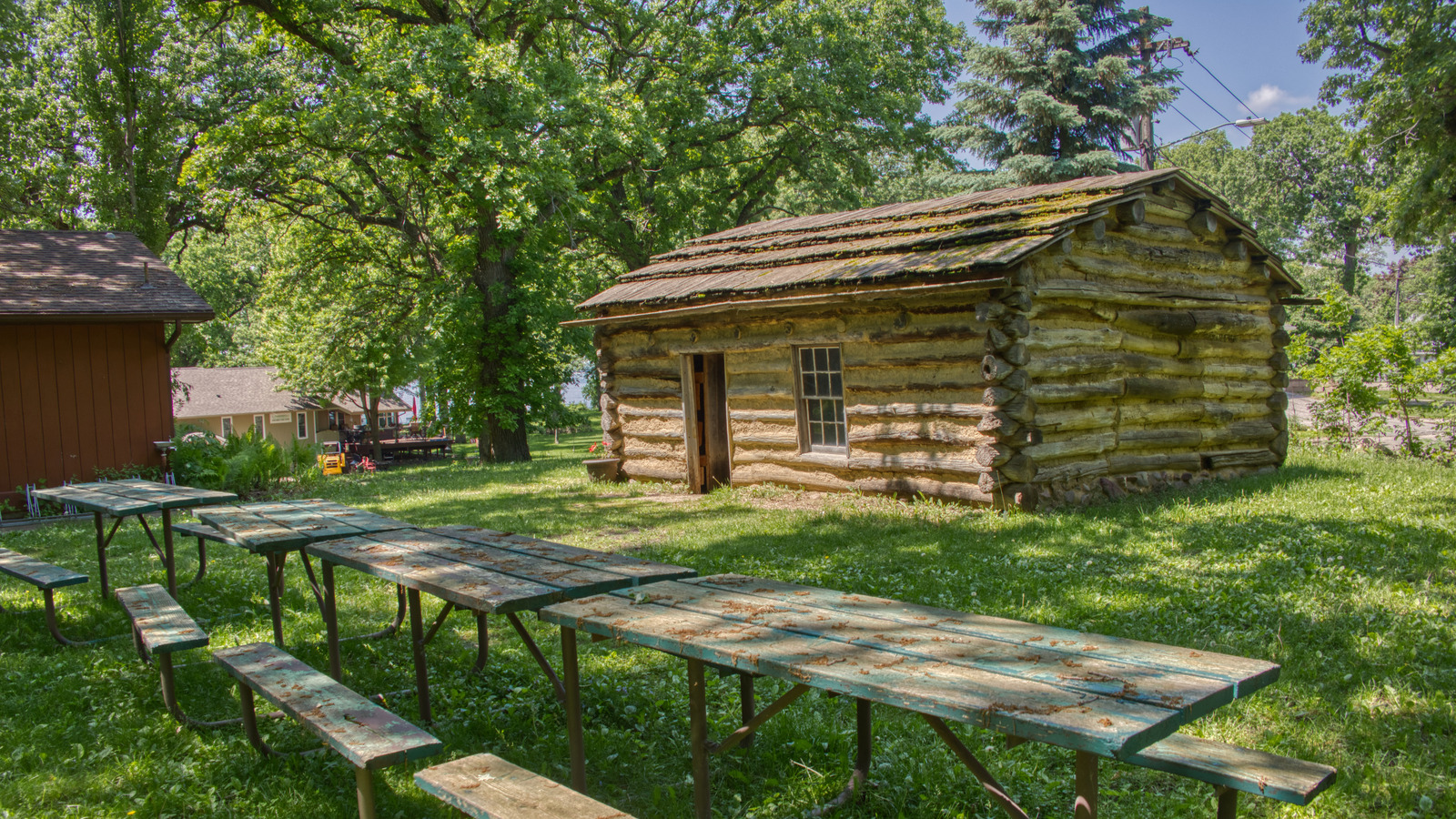
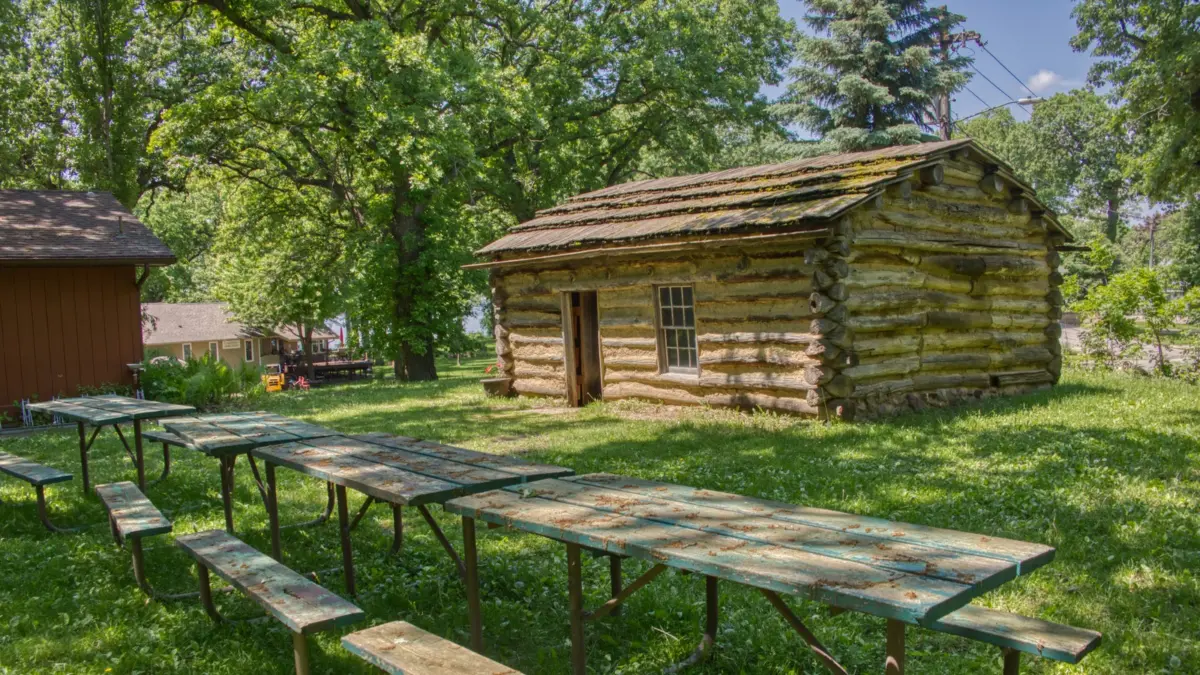
Abbie Gardner eventually returned to the Okoboji area, married a man named Casper Sharp, and spent much of her life preserving the memory of the tragedy. In 1895, she repurchased the original family cabin site near Pillsbury Point, constructed a two-story addition, and operated it as one of Iowa’s earliest tourist attractions and museums. Today, the Abbie Gardner Sharp Cabin stands as a state historic site managed by the State Historical Society of Iowa, offering free admission to educate the public on this dark and pivotal piece of American history.
Supporting Context & Metrics: Geography, Tourism, and Modern Operations
While the historical gravity of Pillsbury Point draws academic and historical researchers, its modern manifestation is defined by community integration, recreation, and geography.
Geographical Metrics and Spatial Economy
- Total Acreage: 6.48 acres, making it the undisputed smallest state park in the Iowa Department of Natural Resources (DNR) system.
- Comparison: To contextualize its size, Iowa’s largest state park, Lake Macbride State Park near Solon, spans over 2,100 acres. Pillsbury Point represents an exercise in micro-conservation.
- Location: Situated within the incorporated limits of Arnolds Park, Iowa, a tight-knit municipality with a permanent population hovering around 1,100 residents.
- Topography: Occupies a strategic, protruding peninsula that offers expansive, unobstructed panoramic views across the deep blue waters of West Okoboji Lake.
The Urban-Nature Interface
Pillsbury Point defies the traditional conception of a sprawling wilderness state park. Instead, it operates as an urban park seamlessly woven into the fabric of the Iowa Great Lakes resort community. Arnolds Park and its neighboring communities (such as Okoboji and Spirit Lake) swell dramatically during the summer months as vacationers flock to the region’s clear glacial lakes.
The park provides essential green infrastructure within this bustling resort corridor. Key amenities include:
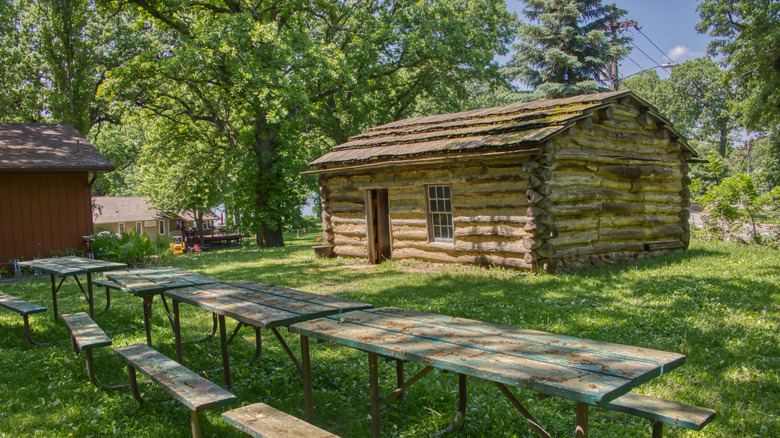
- Picnic Facilities: Equipped with well-maintained picnic tables and grills, allowing visitors to dine al fresco against the backdrop of panoramic lake views.
- Water Access: While not a designated swimming beach, the shoreline serves as a peaceful vantage point for reflection, photography, and witnessing the region’s legendary sunsets.
- Architectural and Cultural Context: The park’s boundaries place visitors within walking distance of some of the Midwest’s most iconic vintage attractions, including the historic Arnolds Park Amusement Park—operating continuously since the late 19th century and featuring the iconic Legend roller coaster.
Historic Preservation Recognition
In recognition of its deep historical layers and archaeological potential, Pillsbury Point and its surrounding district were officially listed on the National Register of Historic Places in 1993. This designation ensures that the landscape is protected from unchecked commercial encroachment, preserving its dual identity as both a recreational asset and an open-air historical archive.
Official Statements & Expert Perspectives
Historians, state park administrators, and tourism boards have long recognized the unique balancing act required to manage a site like Pillsbury Point State Park.
Dr. Arvid Larson, a regional historian specializing in nineteenth-century Upper Midwest frontier conflicts, notes the importance of maintaining sites of historical trauma within recreational spaces:
"Pillsbury Point is a masterclass in historical juxtaposition. When families sit out on the grass here with a picnic basket, enjoying the immaculate breeze off West Okoboji Lake, they are floating on the surface of a very deep, very complicated American story. It is vital that we do not sanitize these landscapes. The tragedy of 1857 reminds us of the human cost of rapid territorial expansion, and keeping sites like this accessible—along with the adjacent Abbie Gardner Sharp Cabin—forces us to engage directly with the complex, often painful truths of our shared past."
Meanwhile, representatives from the Iowa Department of Natural Resources emphasize the ecological and community value of the state’s smaller, urban-adjacent properties:
"Not every state park needs to be tens of thousands of acres of deep forest to be valuable," explains a spokesperson for the Iowa DNR state parks bureau. "Pillsbury Point proves that small urban parks play an indispensable role in connecting local residents and tourists to the outdoors. It provides immediate, equitable access to the shoreline of one of the world’s premier glacial lakes, while serving as an interpretive gateway to local history. It is a jewel of conservation efficiency."
Local tourism officials in Dickinson County frequently highlight the park as an essential anchor in the broader Okoboji vacation ecosystem, which has earned a reputation as one of the Midwest’s most resilient and underrated lakeside getaways.
Future Outlook: Preservation, Interpretation, and Sustainable Tourism
As the Iowa Great Lakes region continues to experience development pressures and shifting tourism trends, the long-term stewardship of Pillsbury Point State Park faces both challenges and opportunities.
Balancing Recreation and Historical Reverence
The primary challenge for park managers moving forward is striking an optimal balance between high-volume summer tourism and the respectful interpretation of a sensitive historical site. With Arnolds Park serving as a magnet for boaters, anglers, and amusement park enthusiasts, maintaining the tranquility and historical dignity of Pillsbury Point requires careful visitor management.
Enhancing Educational Infrastructure
Plans are continually evaluated by the State Historical Society of Iowa and local stakeholders to upgrade interpretive signage, digital mapping resources, and guided walking tours around Pillsbury Point and the Abbie Gardner Sharp Cabin. By integrating modern digital tools—such as QR-code-enabled historical walking trails—the park aims to engage younger generations of travelers who may be unfamiliar with the 1857 conflicts.
Climate and Shoreline Resilience
As with all freshwater lake properties, environmental pressures such as shoreline erosion, agricultural runoff, and invasive species management remain top priorities for the Iowa DNR. Protecting the water quality of West Okoboji Lake is intrinsically linked to preserving the aesthetic and recreational appeal of Pillsbury Point. Investments in sustainable landscaping, native prairie restoration along the park’s margins, and responsible stormwater management will dictate the ecological health of the park for decades to come.
Conclusion
Pillsbury Point State Park may occupy less than seven acres of Iowa soil, but its cultural, historical, and geographical footprint is immense. It bridges the gap between past and present, serving as a tranquil urban escape where visitors can witness breathtaking sunsets over West Okoboji Lake while simultaneously standing upon ground consecrated by the complex and turbulent history of American westward expansion.
Whether visited as a quiet spot for an afternoon picnic, a historical pilgrimage to understand the legacy of the Spirit Lake Massacre, or a gateway to the vibrant amusements of Arnolds Park, this diminutive state park remains an indispensable jewel in the crown of Iowa’s natural and historical heritage.


