









Executive Overview
In an era defined by stringent European environmental mandates and an urgent global push toward maritime sustainability, Attica Group—Greece’s premier passenger shipping conglomerate—has reported landmark progress in its fleet decarbonization and operational safety standards. Newly published operational metrics highlight a substantial year-over-year reduction in greenhouse gas (GHG) emissions intensity across its owned fleet, accompanied by drastic declines in sulfur oxides ($textSOx$) and particulate matter ($textPM2.5$ and $textPM_10$) emissions.
According to audited environmental performance data, Attica Group curtailed its fleet’s carbon intensity by $7.9text kg CO_2texte$ per nautical mile in 2025 compared to 2024 levels. Parallel to its climate mitigation efforts, the group achieved a $48.5%$ reduction in $textSO_x$ output and a $17.6%$ drop in airborne particulate matter emissions. These performance metrics align directly with the company’s broader decarbonization roadmap, which targets a $14%$ overall reduction in greenhouse gas emissions intensity by 2030 against a 2019 performance baseline.
In tandem with its environmental achievements, Attica Group has secured fleet-wide ISO 45001:2018 certification for occupational health and safety across its entire owned fleet. This certification establishes Attica Group as the first Greek passenger shipping entity to achieve complete fleet compliance under this internationally recognized standard.
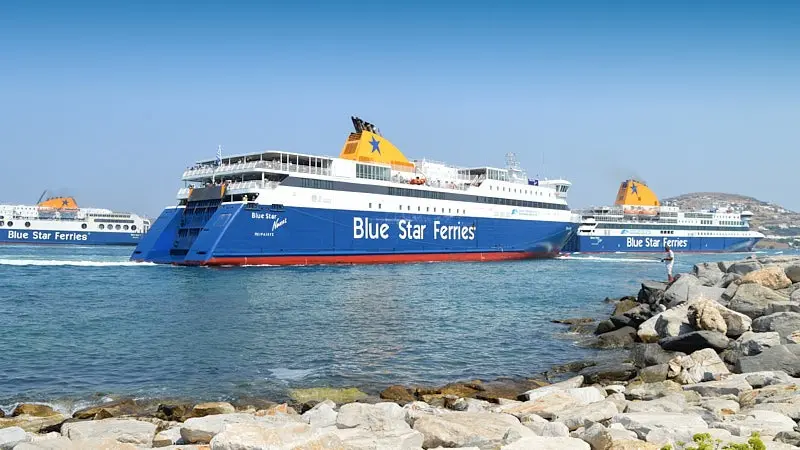
Operating a diverse fleet of 33 vessels under four major brands—Superfast Ferries, Blue Star Ferries, Hellenic Seaways, and ANEK Lines—the group’s Dual Environmental and Safety Milestones signify a major operational pivot. This transformation comes at a critical juncture for Eastern Mediterranean maritime transport, as ferry operators adapt to the inclusion of shipping in the European Union Emissions Trading System (EU ETS) and prepare for the progressive caps enforced by the FuelEU Maritime framework.
Detailed Chronology: The Decarbonization and Safety Journey
Attica Group’s current operational milestones represent the culmination of a multi-year, structured strategy designed to modernize fleet assets, adopt energy-efficient marine technologies, and elevate human-element safety practices.
+-----------------------------------------------------------------------------------+
|                            ATTICA GROUP TRANSFORMATION                            |
+--------------------------+----------------------------------+---------------------+
| 2019                     | 2020–2023                        | 2024–2025           |
| Baseline Year            | Fleet Modernization              | Breakthrough Era    |
+--------------------------+----------------------------------+---------------------+
| • Establishes GHG        | • Installs EGCS (scrubbers)      | • Cuts GHG intensity|
|   intensity baseline     | • Implements silicone hull paints |   by 7.9 kg CO2e/NM |
| • Commences ESG-aligned  | • Integrates ANEK Lines fleet    | • SOx drops 48.5%   |
|   fleet audit protocols  | • Initiates cold-ironing studies | • ISO 45001 secured |
+--------------------------+----------------------------------+---------------------+
The Baseline Phase (2019)
In 2019, Attica Group established its corporate decarbonization baseline, conducting comprehensive energy-efficiency audits across its operational network in the Aegean and Adriatic Seas. The group mapped the baseline fuel consumption, speed profiles, and emission outputs across all operational routes. The 2019 baseline served as the benchmark for establishing long-term science-based reduction targets, culminating in the formal commitment to slash GHG emissions intensity by $14%$ by 2030.
Technical Upgrades and Fleet Integration (2020–2023)
Between 2020 and 2023, Attica initiated a systemic technical upgrade campaign across its vessels. Key interventions included:
- The retrofitting of advanced Exhaust Gas Cleaning Systems (EGCS), commonly known as scrubbers, on long-distance Ro-Pax vessels servicing Adriatic and deep-sea Aegean routes.
- The application of advanced foul-release silicone hull coatings to minimize hydrodynamic drag, reducing fuel burn per nautical mile.
- The absorption and operational streamlining of ANEK Lines, requiring the alignment of legacy operational practices, safety protocols, and technical standards across a combined fleet.
- Feasibility and technical studies for cold-ironing (shoreside power supply) readiness at primary port hubs, including Piraeus and Heraklion.
The Operational Breakthrough (2024–2025)
Entering the 2024–2025 operational cycle, the cumulative impact of these technical and operational strategies yielded measurable results:
- Fleet operational parameters were continuously optimized through real-time telemetry, trim optimization systems, and dynamic route management to curb unnecessary fuel burn.
- The fleet achieved a reduction of $7.9text kg CO_2texte$ per nautical mile year-over-year in 2025.
- Concurrent investments in low-sulfur fuel formulations, optimized fuel treatment, and upgraded combustion components led to a $48.5%$ drop in $textSOx$ and a $17.6%$ reduction in fine particulates ($textPM2.5$ and $textPM_10$).
- Simultaneous audits by accredited international classification societies resulted in full fleet certification under ISO 45001:2018, formally establishing standardized occupational hazard identification, emergency response, and crew health protocols across all 33 vessels.
Supporting Context & Quantitative Emissions Analysis
To evaluate the operational significance of Attica Group’s achievements, its performance metrics must be analyzed alongside maritime engineering principles and regional regulatory requirements.
+------------------------------------------------------------------------------------+
|                       KEY PERFORMANCE INDICATORS (2024 vs 2025)                      |
+------------------------------------+-----------------------+-----------------------+
| Metric                             | Absolute / Relative   | Strategic Significance|
+------------------------------------+-----------------------+-----------------------+
| GHG Emissions Intensity            | -7.9 kg CO2e / NM     | Tracks operational    |
|                                    |                       | carbon efficiency     |
| SOx Emissions                      | -48.5%                | Exceeds MARPOL        |
|                                    |                       | Annex VI standards    |
| PM2.5 & PM10 Particulates          | -17.6%                | Improves air quality  |
|                                    |                       | in port communities   |
| Fleet Health & Safety Standard     | ISO 45001:2018        | 100% owned fleet-wide |
|                                    | Certification         | verification          |
+------------------------------------+-----------------------+-----------------------+
Carbon Intensity and Particulate Reduction Dynamics
A reduction of $7.9text kg CO_2texte$ per nautical mile across a multi-brand fleet of 33 vessels represents a significant efficiency gain in Ro-Pax and passenger vessel operations. Ro-Pax vessels present unique decarbonization challenges due to their distinct operational profile: high service speeds, strict scheduling windows, complex power demands for onboard hotel loads, and substantial seasonal fluctuations in displacement and payload.
  EMISSION REDUCTION TRAJECTORY (2024 vs 2025)

  GHG Intensity   [||||||||||||||||||||||||||||||||||---]  -7.9 kg CO2e/NM
  SOx Output      [||||||||||||||||||||-----------------]  -48.5%
  PM2.5 / PM10    [|||||||||||||||||||||||||||----------]  -17.6%
  2030 Target     [|||||||||||||||||||||||||||||--------]  -14% (vs 2019 Baseline)
The key drivers behind these quantifiable environmental improvements include:
Hydrodynamic and Mechanical Efficiency
The deployment of variable pitch propellers, optimized bulbous bows, dynamic trim management, and advanced anti-fouling hull coatings reduces hydrodynamic resistance, directly lowering fuel consumption per nautical mile traversed.
Auxiliary Power and Engine Load Optimization
By modernizing auxiliary engines and deploying automated energy management systems (AEMS), the fleet minimizes fossil fuel usage during hotel load operations at sea and during harbor dwell times.
Fuel Quality and Combustion Refinement
The $48.5%$ decline in $textSO_x$ emissions stems from a combined approach: accelerating the intake of Very Low Sulfur Fuel Oil (VLSFO) and Ultra-Low Sulfur Fuel Oil (ULSFO), alongside the operational optimization of installed Exhaust Gas Cleaning Systems. Because sulfur oxide formation directly correlates with fuel sulfur content, this drop reduces local atmospheric pollution across sensitive marine environments in the Aegean, Ionian, and Adriatic Seas.
Particulate Matter Suppression
The $17.6%$ reduction in $textPM2.5$ and $textPM10$ particulates mitigates local air pollution in high-density port hubs such as Piraeus, Patras, Igoumenitsa, and Heraklion. Fine particulate matter is a primary focus of coastal environmental health assessments; reducing PM emissions helps mitigate health risks for both port-city populations and shipboard personnel.
Fleet Integration and Operational Scope
Attica Group’s environmental and safety management strategies extend across four specialized brand portfolios, comprising a total of 33 vessels serving over 60 distinct destinations:
               +-------------------------------------------------------+
               |                  ATTICA GROUP FLEET                   |
               |                  33 Owned Vessels                     |
               +---------------------------+---------------------------+
                                           |
        +------------------+---------------+---------------+------------------+
        |                  |                               |                  |
+-------v-------+  +-------v-------+               +-------v-------+  +-------v-------+
|   SUPERFAST   |  |   BLUE STAR   |               |   HELLENIC    |  |  ANEK LINES   |
|    FERRIES    |  |    FERRIES    |               |   SEAWAYS     |  |               |
+---------------+  +---------------+               +---------------+  +---------------+
| High-speed    |  | Mainstay network|             | High-speed    |  | Long-haul     |
| Adriatic and  |  | serving the    |              | catamarans &  |  | Aegean &      |
| deep-sea RoPax|  | Cyclades &     |              | conventional  |  | Crete routes  |
| routes        |  | Dodecanese     |              | Aegean ferries|  |               |
+---------------+ +---------------+ +---------------+ +---------------+- Superfast Ferries: High-speed, high-capacity Ro-Pax vessels operating primarily on international routes between Greece and Italy (Patras/Igoumenitsa to Ancona/Bari/Venice).
- Blue Star Ferries: The primary domestic connectivity network linking mainland Greece (Piraeus, Rafina) with the Cyclades, Dodecanese, North Aegean, and Crete.
- Hellenic Seaways: A hybrid fleet comprising high-speed catamarans, hydrofoils, and conventional ferries operating across the Saronic Gulf, Cyclades, and Sporades.
- ANEK Lines: Long-haul passenger and freight vessel operations focusing on Crete and Adriatic corridors, fully integrated into Attica’s central ESG and health-and-safety framework following its corporate consolidation.
Managing environmental compliance across such a varied operational profile requires tailored, vessel-specific energy efficiency management plans (SEEMP Level III) rather than a uniform, single-technology approach.
Occupational Safety Metrics and ISO 45001:2018
Achieving full-fleet ISO 45001:2018 certification required a comprehensive realignment of safety management processes across all 33 vessels. Unlike standard maritime safety requirements outlined in the International Safety Management (ISM) Code, ISO 45001:2018 places explicit emphasis on:
- Proactive Hazard Identification: Continuous, risk-based evaluations of deck, engine room, and catering/hotel operations to prevent incidents before they occur.
- Employee Involvement: Direct engagement of crew members—from senior officers to deck ratings and service staff—in establishing safety protocols and reporting near-miss incidents without fear of reprisal.
- Psychosocial and Physical Health Management: Comprehensive welfare monitoring, ergonomic assessments, and fatigue mitigation protocols tailored to seafarers working on round-the-clock shift cycles.
- Continuous Systemic Auditing: Regular third-party verification to ensure that occupational safety measures adapt alongside technical updates and operational shifts.
By securing fleet-wide accreditation, Attica Group establishes a consolidated safety framework across its diverse operating brands.
Official Statements and Strategic Governance
Highlighting the structural and strategic importance of these dual achievements, corporate executives emphasized that compliance, environmental performance, and operational safety remain deeply interconnected pillars of Attica Group’s long-term business strategy.
"Securing fleet-wide ISO 45001:2018 certification while delivering tangible reductions in carbon intensity and particulate output demonstrates that corporate responsibility and operational excellence are mutually reinforcing priorities," noted senior ESG leadership at Attica Group. "As the first Greek passenger shipping group to secure fleet-wide safety certification of this caliber, we are setting a clear benchmark for maritime operations in the Mediterranean."
The corporate executive board further contextualized these operational achievements within the ongoing transition of European shipping toward net-zero targets:
"The quantifiable metrics achieved across our fleet in 2025—most notably the drop of 7.9 kg in CO₂e emissions intensity per nautical mile—reflect targeted investments in energy efficiency, low-emission technologies, and fleet modernizations. Our target of a 14% reduction in carbon intensity by 2030 remains our operational guiding principle. We view carbon reduction not simply as a regulatory obligation under the EU Emissions Trading System and FuelEU Maritime, but as an essential imperative to ensure the long-term viability of island connectivity and regional freight corridors."
Corporate governance frameworks within Attica Group have been updated to tie executive oversight and vessel management KPIs directly to ESG metrics. Operational data collected from the 33 vessels are fed into centralized performance management systems, enabling real-time monitoring of fuel efficiency, engine performance, and safety metrics.
Future Outlook: Navigating towards 2030 and Beyond
As Attica Group looks toward its 2030 target of a $14%$ reduction in carbon intensity compared to 2019 levels, its strategic outlook is shaped by regulatory pressure, technological shifts, and structural capital allocation decisions.
+------------------------------------------------------------------------------------+
|                         DECARBONIZATION ROADMAP: 2025-2030                         |
+------------------------------------------------------------------------------------+
| 2025: Achieved -7.9 kg CO2e/NM YoY | ISO 45001 Certification Secured           |
|                                                                                    |
| 2026–2027: Shore Power Integration & Alternative Fuel Feasibility Studies          |
|   • Pilot cold-ironing connections in key ports (Piraeus, Crete)                   |
|   • Evaluate dual-fuel retrofits (Methanol/Bio-LNG) for core Ro-Pax assets         |
|                                                                                    |
| 2028–2029: Next-Generation Fleet Renewal Phase                                     |
|   • Fleet renewal orders incorporating zero-emission-capable propulsion            |
|   • Full alignment with progressive FuelEU Maritime carbon intensity penalties     |
|                                                                                    |
| 2030 TARGET: Complete 14% Carbon Intensity Reduction (vs. 2019 Baseline)           |
+------------------------------------------------------------------------------------+
Regulatory Compliance and Economic Frameworks
The European regulatory ecosystem for shipping is evolving rapidly. The phase-in of the EU ETS requires passenger ferry operators to surrender carbon allowances for their emissions on European routes, establishing a direct financial cost for every ton of $textCO_2$ emitted. Additionally, the FuelEU Maritime regulation enforces step-down reductions in the greenhouse gas intensity of energy used on board ships starting in 2025.
In this economic climate, Attica Group’s recorded reduction of $7.9text kg CO_2texte$ per nautical mile helps buffer the group against fluctuating carbon allowance prices ($EUAs$). By systematically reducing fuel consumption and carbon intensity, the group protects its cost structures, mitigating potential price surges for passengers and freight transport partners across its Aegean and Adriatic networks.
Fleet Renewal and Alternative Fuels
Achieving the remaining increments toward the $14%$ overall decarbonization target by 2030 will require moving beyond operational optimizations and retrofit projects toward asset renewal. Attica Group is pursuing several long-term capital deployment initiatives:
Fleet Modernization and Newbuild Planning
Evaluating next-generation ship designs incorporating dual-fuel capabilities compatible with e-methane, biomethane, or methanol.
Cold-Ironing Readiness
Preparing the fleet to plug into shoreside electricity grids while berthed. If powered by clean energy, cold-ironing eliminates auxiliary engine emissions during port stays, cutting local particulate and carbon emissions to zero.
High-Speed Fleet Electrification
Exploring zero- or low-emission propulsion solutions for short-sea high-speed craft operating within the Saronic Gulf and central Cyclades.
Industry Leadership and Regional Impact
As the largest ferry operator in Greece and one of the largest in the Mediterranean, Attica Group’s strategic decisions carry broad industry implications. Its dual focus on environmental performance and crew health and safety demonstrates that regional ferry networks can adapt to stringent international standards while maintaining vital territorial connectivity and economic cohesion across island communities.
By delivering measurable environmental reductions and establishing high-level health and safety benchmarks across its 33 vessels, Attica Group reinforces its leadership role in Mediterranean passenger transport—advancing toward a cleaner, safer, and structurally resilient maritime operational model.