











Executive Overview
Tucked away in the undulating landscapes of Marion County, Florida, lies a sprawling, ecologically vital sanctuary that remains largely untouched by the frenetic pace of modern development. Spanning an impressive 8,146 acres of protected public land, the Hálpata Tastanaki Preserve stands as a testament to the Sunshine State’s ongoing commitment to conservation, biodiversity preservation, and low-impact outdoor recreation. Situated approximately 60 miles south of Gainesville and 100 miles north of Tampa, the preserve acts as a natural green corridor along the meandering Withlacoochee River, providing a haven for native flora, fauna, and outdoor enthusiasts alike.
The name "Hálpata Tastanaki" carries deep historical and cultural resonance, originating from the Seminole language where it translates directly to "Chief Alligator." This designation honors a revered Seminole leader and anchors the land in the rich indigenous history of the region. Today, the preserve functions as a multi-use recreational and ecological asset, featuring 17 miles of dedicated trails configured for hiking, mountain biking, and horseback riding. Traversing a diverse mosaic of ecosystems—ranging from dense swamps and floodplain forests to upland oak scrub and oak sandhills—the preserve offers a profound immersion into Florida’s native interior.
This comprehensive report examines the multifaceted dimensions of the Hálpata Tastanaki Preserve. From its historical evolution and ecological significance to trail logistics, wildlife management, and regional tourism integration, this analysis provides an authoritative guide for travelers, conservationists, and outdoor adventurers seeking to understand one of central Florida’s most compelling natural gems.
Detailed Chronology and Historical Context
To fully appreciate the ecological and cultural tapestry of the Hálpata Tastanaki Preserve, one must examine the chronological trajectory that transformed this landscape from ancestral indigenous territory into a protected public sanctuary.
Ancestral Roots and Seminole Heritage
Long before the advent of European settlement and contemporary conservation frameworks, the region encompassing the Withlacoochee River basin served as a vital hunting, foraging, and settlement area for indigenous populations. During the 18th and 19th centuries, the area became a significant stronghold for the Seminole people. The preserve’s namesake, Chief Hálpata Tastanaki (Chief Alligator), was a prominent military and political figure during the Seminole Wars, embodying the fierce resilience of a people defending their ancestral homelands against forced relocation by the United States government.
Agricultural Era and Land Alteration
Following the conclusion of the Seminole Wars and the subsequent expansion of European-American settlement into central Florida, much of the Withlacoochee River watershed underwent significant anthropogenic transformation. Throughout the late 19th and early 20th centuries, portions of the land that now comprise the preserve were utilized for extensive cattle ranching, timber harvesting, and rudimentary agricultural ventures. While these activities altered the native canopy and introduced non-native pasture grasses in localized sectors, the inherent seasonal flooding of the river’s floodplain largely shielded the core wetland ecosystems from permanent industrial conversion.
Transition to Public Conservation
The modern era of the Hálpata Tastanaki Preserve began in the late 20th century as state and regional water management agencies recognized the critical importance of protecting the Withlacoochee River basin for aquifer recharge, flood attenuation, and wildlife preservation. Acquired and managed collectively through public conservation initiatives—notably involving the Southwest Florida Water Management District (SWFWMD)—the land was formally designated as a protected preserve. This shift halted commercial exploitation, initiating a multi-decades-long ecological restoration process aimed at reintroducing controlled burns, removing invasive species, and reinstating natural hydrological flows across the expansive property.

Supporting Context, Ecosystems, and Recreational Metrics
The Hálpata Tastanaki Preserve is characterized by a complex matrix of overlapping ecosystems, each supporting distinct biological communities and recreational typologies. Understanding the physical layout and environmental metrics of the preserve is essential for planning a safe and rewarding excursion.
Ecosystem Dynamics and Hydrology
The ecological integrity of the preserve is anchored by the Withlacoochee River, which forms a vital hydrological spine running through the property. The landscape transitions dramatically over short distances, shaped by subtle changes in elevation:
- Swamps and Floodplain Forests: Dominated by bald cypress, water tupelo, and ash trees, these low-lying areas experience regular seasonal inundation, particularly during Florida’s summer rainy season. They act as natural sponges, filtering runoff and mitigating downstream flooding.
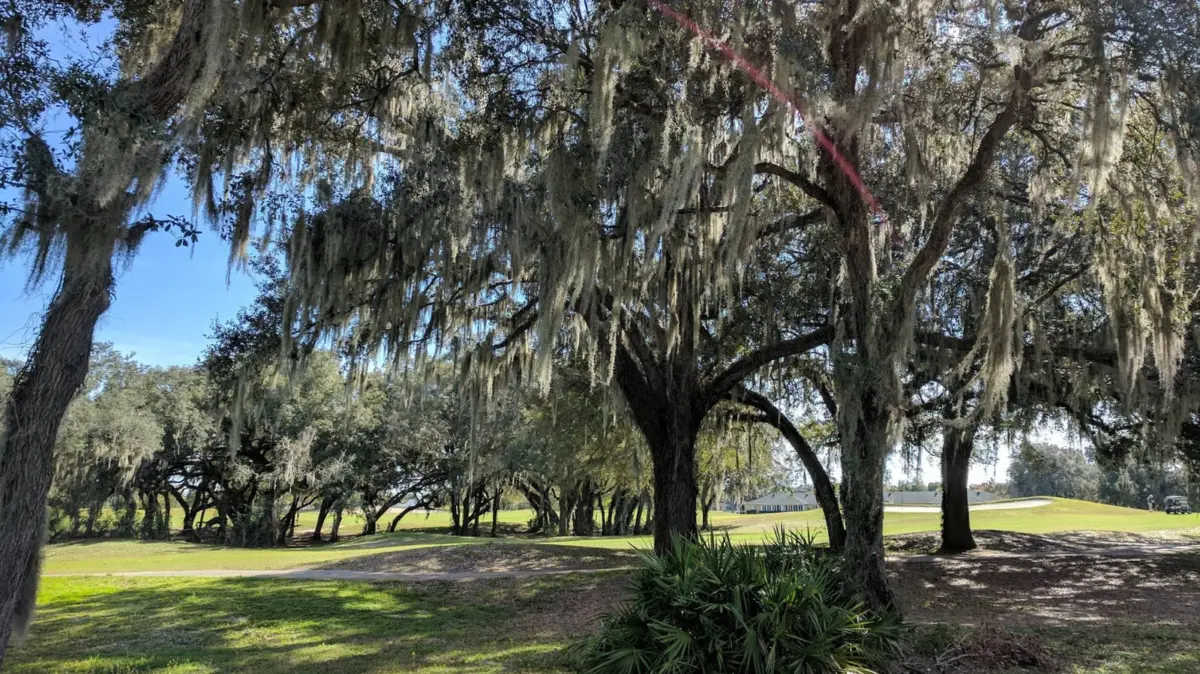
- Oak Scrub and Oak Sandhills: Occupying higher, well-drained sandy ridges, these arid environments feature a canopy of scrub oak, longleaf pine, and saw palmetto. They provide crucial habitat for specialized endemic species that rely on fire-maintained, open-canopy terrain.
- Wet Prairies and Flatwoods: Transitional zones that host a diverse array of grasses, sedges, and wildflowers, serving as primary foraging grounds for large herbivores and avian species.
Recreational Infrastructure and Trail Metrics
Out of the 17 miles of multi-use trails weaving through the property, approximately 13 miles are dual-purposed for mountain biking and horseback riding, accommodating the region’s robust equestrian community.
- The Hálpata Tastanaki Nature Preserve Trail:
- Distance: 4.5 miles (out-and-back format).
- Terrain: Primarily sandy service roads weaving through mixed oak and pine canopies.
- Access: Initiates primarily from the south entrance, offering a moderately challenging trek with excellent opportunities for spotting native reptiles, raptors, and mammalian tracks.
- The Hálpata Preserve Five Mile Loop:
- Distance: Approximately 5 miles (loop format).
- Terrain: Easy-to-navigate pathways traversing open prairies, wetland fringes, and oak hammocks.
- Access: Renowned for exceptional wildlife viewing, this trail is favored by casual hikers, birdwatchers, and nature photographers looking for a tranquil, immersive experience.
Wildlife Inventory and Biodiversity Metrics
The preserve’s diverse habitats support an extraordinarily rich biological inventory. According to observational data logged on platforms like eBird and corroborated by regional naturalists, the property hosts:
- Avian Species: Over 170 bird species have been officially documented within the preserve. Notably, it is one of the few remaining strongholds for the rare, federally threatened Florida scrub-jay. Common avian sightings include red-shouldered hawks, wild turkeys, mourning doves, sandhill cranes, pileated woodpeckers, and great blue herons.
- Mammalian Wildlife: Visitors frequently encounter white-tailed deer, feral hogs, armadillos, eastern cottontail rabbits, and gray foxes. On rare occasions, elusive apex predators such as the Florida black bear traverse the property.
- Herpetofauna: The sandy ridges and wetland edges support robust populations of gopher tortoises (a keystone species), eastern diamondback rattlesnakes, cottonmouths, and various species of frogs and turtles.
Official Statements and Conservation Perspectives
Management of the Hálpata Tastanaki Preserve requires a delicate balancing act between promoting public access and enforcing rigorous conservation protocols. Regional authorities and conservationists emphasize that the long-term viability of the preserve depends heavily on visitor compliance and proactive habitat management.
Land Management and Public Stewardship
Representatives from the Southwest Florida Water Management District routinely highlight the importance of controlled ecological burns in maintaining the health of the preserve’s upland sandhills and pine flatwoods. Without periodic fire, invasive hardwoods overtake fire-adapted understories, choking out rare endemic plants like the Florida scrub-jay’s preferred low-growing scrub oak habitat.
Furthermore, regional land managers stress the necessity of responsible recreation:
"Publicly owned preserves like Hálpata Tastanaki are irreplaceable ecological classrooms and sanctuaries. Our primary mandate is to safeguard the native flora and fauna while providing sustainable, low-impact recreational opportunities. Visitors play a direct role in this mission by respecting trail boundaries, packing out trash, and adhering to seasonal hunting and equestrian regulations."
Visitor Perspectives and Community Feedback
The socio-economic value of the preserve is frequently underscored by enthusiastic testimonials from both local residents and visiting tourists. Central Florida’s booming population—particularly centered around Ocala, recognized globally as the "Horse Capital of the World"—places a premium on accessible green space.
Local equestrians frequently praise the preserve for maintaining dedicated, well-maintained trails that accommodate horse trailers and provide a scenic alternative to suburban riding rings. Meanwhile, ecotourists relocating to central Florida express profound admiration for the sheer density of native wildlife encountered within a single afternoon hike. As one recent visitor noted on public mapping forums:
"I recently moved to this area, and I’m so in awe of the beautiful nature in central Florida. I was able to encounter deer, red-shouldered hawks, wild hare, rattlesnakes, armadillos, and gopher tortoises. It is a fantastic place for hiking, and I sincerely hope we continue to protect more places that serve as home to Florida’s native species."
Future Outlook, Accessibility, and Travel Logistics
As central Florida experiences rapid demographic expansion and urban development, the strategic importance of protecting natural buffers like the Hálpata Tastanaki Preserve will only intensify. Looking forward, regional planners anticipate increased recreational demand, necessitating adaptive management strategies to prevent ecological degradation while expanding community outreach.
Navigating the Preserve: Practical Travel Logistics
For travelers, road-trippers, and outdoor enthusiasts planning an excursion to the Hálpata Tastanaki Preserve, careful preparation ensures a safe and memorable visit:
- Geographic Positioning & Access: Located in Marion County, the preserve is conveniently situated for motorists traversing the Interstate 75 corridor. It serves as an ideal day-trip stop for travelers journeying between Gainesville (60 miles north) and Tampa (100 miles south).
- Air Travel & Lodging: Out-of-state visitors can fly into Gainesville Regional Airport or Tampa International Airport, the latter offering a wider array of international and domestic flight options. Comfortable lodging, dining, and RV amenities are readily available in nearby Dunnellon or the urban core of Ocala.
- Equestrian Requirements: Horse owners visiting the park must adhere strictly to regional regulations, which mandate carrying verifiable proof of each horse’s recent negative Coggins test. Riders are strictly confined to designated multi-use equestrian trails.
- Angling and Hunting Protocols:
- Fishing: Anglers aged 16 and older must possess a valid Florida freshwater fishing license before dropping a line in the Withlacoochee River for largemouth bass, catfish, bluegill, or sunfish. Licenses can be easily acquired online through the Florida Fish and Wildlife Conservation Commission (FWC).
- Hunting: Feral hog hunting is permitted on a strictly limited, quota-based schedule through short three-day events. Interested hunters must consult the official SWFWMD portal well in advance to secure limited permits.
- Essential Gear Recommendations: Given the preserve’s diverse wetland geography, visitors must plan for variable conditions. During Florida’s summer rainy season, low-lying trails are frequently submerged or heavily saturated. Waterproof hiking boots, high-efficacy insect repellent, rain shells, and binoculars for wildlife observation are considered indispensable gear.
Conclusion
The Hálpata Tastanaki Preserve is far more than a recreational park; it is a vital ecological lifeline preserving the primordial character of central Florida. By harmonizing public recreation with rigorous environmental stewardship, the preserve ensures that future generations will continue to hear the rustle of palmettos in the wind, catch the flash of a red-shouldered hawk against the canopy, and experience the untamed serenity of the Withlacoochee River basin.


