










Executive Overview
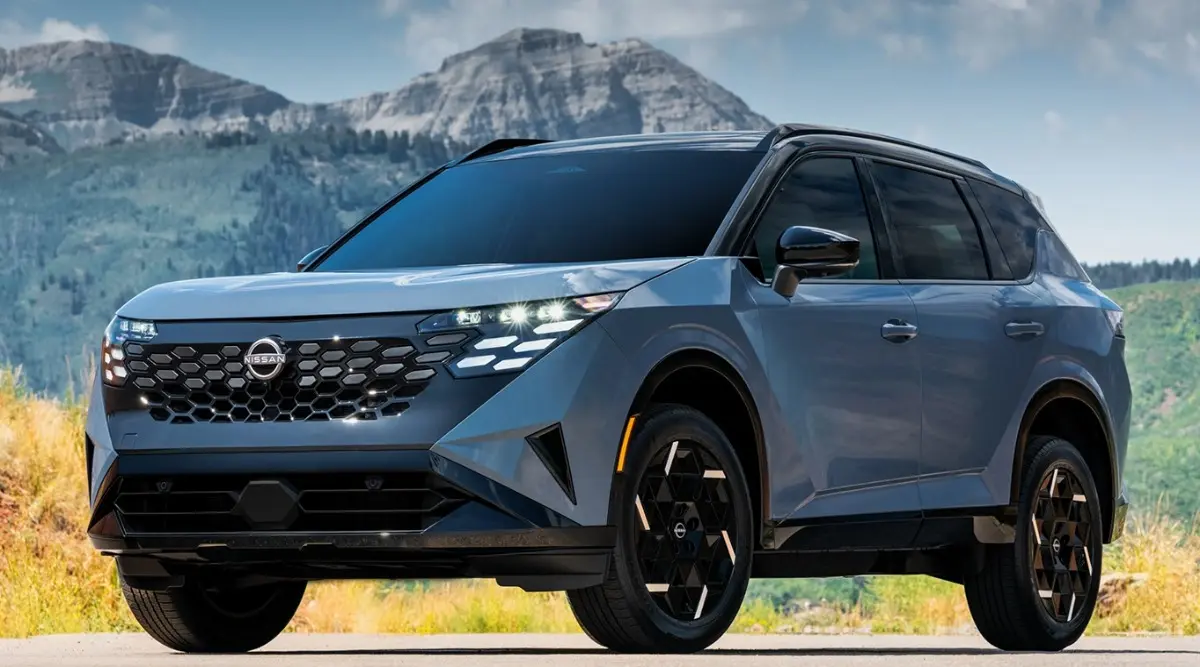
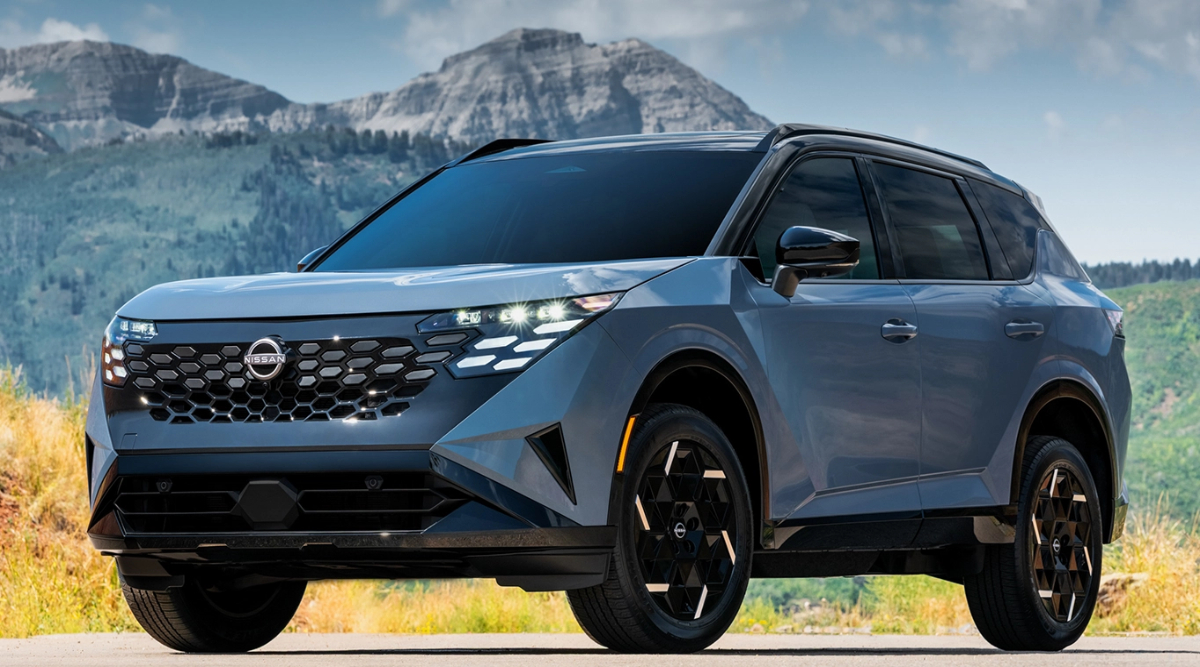
The automotive landscape is shifting at a dizzying pace, caught in a tug-of-war between strict environmental regulations, wavering consumer confidence, and the relentless march toward electrification. Into this complicated arena steps Nissan with a high-stakes, long-awaited addition to its US portfolio: the 2027 Nissan Rogue Hybrid.
Utilizing Nissan’s proprietary e-POWER technology, this new compact SUV promises consumers the instant throttle response, near-silent operation, and dynamic driving characteristics of a pure battery electric vehicle (BEV)—all without the perceived hassle of plugging in a charging cable. On paper, it sounds like an ideal stepping stone for range-anxious buyers or those lacking home-charging infrastructure.
However, a closer inspection reveals a more nuanced, and perhaps controversial, reality. Unlike plug-in hybrid electric vehicles (PHEVs) like the legendary Chevrolet Volt, the Rogue Hybrid features no external charging port whatsoever. Its wheels are driven exclusively by electric motors, but every single electron supplying those motors must ultimately trace its origin back to an onboard, turbocharged 1.5-liter three-cylinder gasoline engine.

As automakers flood the market with alternative powertrains—ranging from mild hybrids and traditional parallel hybrids to series hybrids and plug-ins—consumer confusion is at an all-time high. This investigative report breaks down how Nissan’s e-POWER system actually operates, examines its underlying specs, critiques its marketing narrative through an EV-advocacy lens, and outlines what buyers can expect when the vehicle hits US showrooms.
Detailed Chronology and Technical Breakdown
To understand why the 2027 Nissan Rogue Hybrid is sparking spirited debates among automotive journalists and clean-energy advocates alike, one must first look at the timeline and mechanics of the e-POWER architecture.
The Global Rollout Meets the US Market
Nissan has been championing its e-POWER technology internationally for several years. According to corporate figures, the company has successfully sold more than 4 million vehicles equipped with this system across more than 68 countries worldwide. Yet, despite its global ubiquity, the system has remained conspicuously absent from the United States market—until now.
The announcement of the Rogue Hybrid for the US market marks a strategic pivot. While major legacy automakers are adjusting their near-term EV production forecasts and doubling down on internal combustion engine (ICE) and hybrid alternatives to meet immediate consumer demand, Nissan is betting that American buyers are ready for a unique twist on the hybrid formula.

How e-POWER Works: Series Hybrid Mechanics
To appreciate the driving dynamics of the Rogue Hybrid, drivers must unlearn how conventional hybrids operate.
- Conventional Hybrids (Parallel Hybrids): Vehicles like the standard Toyota RAV4 Hybrid utilize a complex arrangement where both the gasoline engine and the electric motor can transmit mechanical power directly to the wheels via a specialized transmission.
- Nissan’s e-POWER (Series Hybrid): The Rogue Hybrid takes a drastically different approach. There is no mechanical connection whatsoever between the gasoline engine and the wheels. The vehicle’s wheels are turned entirely by its electric motors. The internal combustion engine serves one singular purpose: spinning an onboard generator to supply electricity to the battery pack and electric drive motors.
Because the wheels are powered directly by electricity, stepping on the accelerator pedal delivers the instant, linear torque profile that has made pure EVs a favorite among driving enthusiasts. Furthermore, Nissan has integrated a system called Smooth Stop, which automatically modulates brake pressure at the tail end of a stop to eliminate the abrupt "head-toss" motion often experienced in stop-and-go traffic, creating a refined deceleration profile.
Complementing this is Nissan’s e-Pedal functionality—familiarly known across the industry as regenerative braking—which captures kinetic energy during deceleration and feeds it back into the battery system.
Supporting Context & Metrics: Cutting Through the Marketing Claims
While the driving experience mimics an electric car, automotive analysts and efficiency advocates emphasize that the underlying physics tell a different story.
Debunking the "Self-Charging EV" Narrative
Upon its announcement, comparisons were inevitably drawn to pioneering extended-range electric vehicles like the Chevrolet Volt. However, industry experts point out that this comparison is fundamentally flawed.
- The Chevy Volt featured an external plug, a substantial 17 kWh battery pack, and roughly 50 miles of all-electric, plug-in range. Many Volt owners historically reported using fewer than 10 gallons of gasoline a year, relying almost exclusively on grid electricity for daily commutes.
- The Nissan Rogue Hybrid has no plug. Its battery pack cannot be topped up via a Level 1 or Level 2 home charger or a DC fast charger. The only way to replenish the battery is by burning gasoline through its 1.5-liter three-cylinder engine.
Nissan proudly highlights that this turbocharged three-cylinder engine achieves an impressive thermal efficiency of 42 percent. Internal company testing projects fuel economy figures of 40 mpg in the city, 36 mpg on the highway, and 38 mpg combined (though official EPA certifications are still pending).
While 38 mpg combined is undeniably respectable for a compact crossover utility vehicle, clean-energy advocates are quick to place these numbers in perspective. A true, modern battery electric vehicle is roughly three times more energy-efficient than an internal combustion or series-hybrid vehicle, frequently achieving EPA ratings equivalent to 120 MPGe or higher when factoring in upstream energy generation. The Rogue Hybrid, regardless of its clever packaging, remains a gasoline-burning automobile.

Unpacking the Spec Sheet
Beneath the glossy marketing materials lie specific technical parameters that shed light on the vehicle’s performance and capacity:
- Battery Capacity: A remarkably modest 1.67 kWh battery pack sits at the heart of the system.
- Electric Motors: The vehicle utilizes a dual-motor setup, featuring a front motor rated at 202 horsepower and 242 lb-ft of torque, alongside a rear motor rated at 134 horsepower and 144 lb-ft of torque.
- Total System Output: Interestingly, basic math does not apply here. Rather than combining the peak outputs of both motors for a hypothetical 336 horsepower, the powertrain’s total available output is capped at 225 horsepower.
- Torque Vectoring: Nissan notes that the e-POWER control unit continuously adjusts torque distribution between the front and rear axles to optimize traction and stability, even applying light braking to the inside wheels during cornering for tighter agility.
Critics argue that a 1.67 kWh battery is quite small to support a dual-motor setup effectively, meaning the 1.5-liter three-cylinder engine will likely need to fire up and spin the generator frequently during sustained driving or heavy acceleration.
Official Statements and Industry Perspectives
Navigating the transition to electrified transportation is fraught with messaging challenges. Automakers frequently lean on terminology that blurs the lines between true zero-emission vehicles and traditional fossil-fuel-burning platforms.
Ponz Pandikuthira, Chief Product and Planning Officer for Nissan Americas, defended the company’s strategic direction in the official press release, emphasizing that the vehicle was built directly around consumer feedback.
"The all-new Rogue Hybrid is exactly what customers have been asking for: the functionality, technology and packaging of a Rogue, now paired with an advanced hybrid powertrain that enhances efficiency while delivering a dynamic driving experience," said Pandikuthira.
"By listening closely to customers and designing around their needs, we’ve created a hybrid SUV that delivers an agile and spirited driving experience while adding the benefits of a hybrid powertrain. The instantaneous torque delivery, with a quiet and efficient powertrain, will redefine what hybrid means in this segment."
Despite corporate enthusiasm, critics within the clean-technology space argue that terms like "electric driving experience" applied to a non-plug-in hybrid risk misleading consumers who are genuinely looking to eliminate their tailpipe emissions and break free from volatile gasoline prices. History shows that labeling hybrids as "self-charging electric cars"—a marketing tactic previously utilized by brands like Toyota—creates widespread consumer confusion regarding how energy is sourced and consumed.

Interior Comforts, Pricing, and Future Outlook
Beyond the powertrain, the 2027 Nissan Rogue Hybrid delivers the modern creature comforts, advanced driver-assistance systems, and connectivity suites that contemporary crossover buyers expect. Cabin layouts feature crisp digital displays, intuitive infotainment touchscreens, and high-grade materials across multiple trim configurations.
According to data compiled by Kelley Blue Book, the pricing structure for the upcoming lineup is positioned competitively relative to the broader new-vehicle market in the United States:
| Trim Level & Package | Estimated Starting Price |
|---|---|
| 2027 Nissan Rogue Hybrid SV | $37,065 |
| 2027 Nissan Rogue Hybrid SV with SV Premium Package | $39,165 |
| 2027 Nissan Rogue Hybrid SR | $39,065 |
| 2027 Nissan Rogue Hybrid SR with SR Tech Package | $43,065 |
| 2027 Nissan Rogue Hybrid Platinum | $45,065 |
Launch Timeline
Market rollout is scheduled to occur in phases. The 2027 Nissan Rogue Hybrid SR with the Tech Package will hit dealer lots first in the fall, with the remaining trim levels slated for commercial availability in early 2027.
Final Verdict: Is It Right for You?
The 2027 Nissan Rogue Hybrid occupies a fascinating gray area in the automotive market. For buyers who want the instant throttle response, smooth power delivery, and hushed cabin environment characteristic of an EV, but who live in apartments without charging access, frequently tackle long cross-country road trips, or harbor deep-seated range anxiety, the Rogue Hybrid offers a compelling compromise.
However, consumers must approach the showroom with clear eyes. It is not an electric car, it cannot be plugged in to draw clean energy from the electrical grid, and its small battery pack means the gasoline engine will remain an active, necessary participant in every journey. For drivers seeking genuine fossil-fuel independence and true zero-emission driving, a dedicated plug-in hybrid or a pure battery electric vehicle remains the gold standard. For everyone else, Nissan’s e-POWER system introduces an intriguing, albeit conventional, new flavor to the crossover segment.