







Executive Overview
The commercial fishing industry remains one of the most hazardous civilian occupations in the world, a grim reality underscored by the release of Accident Investigation Report 18/2026. The report details the tragic events surrounding the UK-registered creel fishing vessel Sea Eagle, which ran aground on Inverbervie beach on the east coast of Scotland on December 20, 2025. Discovered abandoned and unmanned, the vessel’s discovery triggered a massive, multi-agency search and rescue operation across the freezing waters of the North Sea. Despite extensive aerial, surface, and shoreline sweeps, the lone skipper was never found. He is officially presumed to have drowned after entering the water while the vessel was underway.
The comprehensive investigation conducted by marine safety authorities sheds light on the precarious nature of solo commercial fishing operations. While investigators were unable to pinpoint the exact mechanical or human-factor trigger that caused the skipper to fall overboard, forensic analysis of the vessel’s operations, deck layout, and gear configuration pointed toward a high-risk operational environment. At the time of the incident, the skipper was actively working two strings of creels—heavy, wire-and-mesh traps used primarily for catching crabs and lobsters. This demanding workload significantly elevated the probability of an unintended interaction with active fishing gear, a recognized catalyst for man-overboard (MOB) tragedies in the creeling sector.
Crucially, the Sea Eagle incident brings to the forefront longstanding vulnerabilities inherent to single-handed fishing. Operating without a crew strips away the immediate safety net of a shipmate who can sound the alarm, maneuver the vessel back for a rescue, or haul a fallen colleague from the water. Furthermore, the investigation underscored the monumental, often insurmountable challenges of self-recovery—the ability of a lone fisherman to re-board a vessel that is either drifting away or continuing under its own propulsion.

Despite the profound loss of life, the latest Marine Accident Investigation Branch (MAIB) evaluation chose not to issue new safety recommendations. This decision was not made lightly; rather, it reflects a disheartening trend wherein the core safety issues identified in the Sea Eagle disaster have been documented repeatedly in past inquiries. The hazards of lone working, gear entanglement, and lack of man-overboard mitigation are already well understood within the maritime community. Consequently, investigators concluded that existing safety guidance remains directly applicable, serving as a poignant reminder that the greatest challenge facing the industry is not a lack of rules, but the persistent bridging of the gap between safety theory and daily operational reality.
Detailed Chronology of Events
The Final Voyage: December 20, 2025
While precise timestamps for every phase of the Sea Eagle‘s final journey remain partially reconstructed through electronic tracking, vessel systems analysis, and eyewitness accounts, the overarching narrative of December 20, 2025, paints a picture of a routine day of commercial fishing that rapidly deteriorated into catastrophe.
The Sea Eagle, a dedicated creel fishing vessel operating out of a Scottish port, put to sea under the command of its sole owner-operator. Operating a single-handed vessel requires meticulous time management and physical stamina. The skipper was tasked with tending to established fishing grounds along the Aberdeenshire coast, an area characterized by strong tidal streams, unpredictable North Sea weather, and heavy maritime traffic.
The Operations and the Fatal Transition
Evidence gathered from the vessel’s deck layout, the position of the remaining gear, and electronic logs indicated that the skipper was in the process of hauling and shooting two distinct strings of creels. Creel fishing is physically grueling; it involves grappling heavy ropes, hauling saturated traps from the seabed, emptying catches, rebaiting, and resetting the gear back into the water using hydraulic haulers and shooting tables.
At some point while the vessel was underway—meaning the engine was engaged and the boat was moving forward—an event occurred that precipitated the skipper’s entry into the water. Because there were no witnesses, automated distress signals, or functional voyage data recorders capturing the exact moment of the accident, investigators had to reconstruct the plausible chain of events through circumstantial evidence.
The most probable scenario involves a physical interaction with the working gear. When a string of creels is being hauled or shot, heavy groundlines run at high tension across the deck or through blocks. If a loop of rope catches a crew member’s clothing, footwear, or limbs, or if a sudden surge of the vessel causes a loaded creel to shift violently, a fisherman can be dragged overboard in a fraction of a second. Alternatively, a loss of footing on a wet, motion-affected deck while handling heavy gear could easily send a lone operator over the gunwale.
The Grounding and Discovery
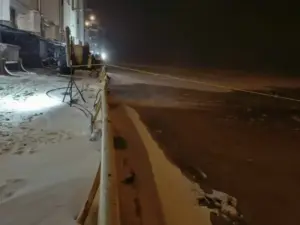
With the skipper in the water, the Sea Eagle continued on its course, effectively turning into a ghost ship. Unmanned and unsteered, the vessel eventually crossed the coastal shelf, heading directly toward the shoreline of Inverbervie beach, a coastal town in Aberdeenshire.
The vessel grounded on the sandy-shingle shore, its hull coming to an abrupt halt. The unusual sight of a vessel stranded and unattended immediately drew the attention of local residents and beachgoers, who recognized that something was severely amiss. Local emergency services were alerted, and maritime authorities were notified, setting off an urgent response protocol.
The Search and Rescue Operation
Upon receiving reports of an unmanned fishing vessel ashore, HM Coastguard launched a comprehensive, multi-agency search and rescue (SAR) operation. The response mobilized significant resources to scour both the marine and terrestrial environments:
- Air Support: Coastguard rescue helicopters equipped with thermal imaging technology and specialized night-sun searchlights were scrambled to sweep the coastal waters and intertidal zones.
- Surface Assets: Local RNLI all-weather and inshore lifeboats were deployed from nearby stations, conducting grid searches of the sea surface in the vicinity of Inverbervie and the surrounding coastline.
- Shoreline Teams: Volunteer Coastguard rescue teams from local stations conducted exhaustive foot patrols along the rocky shores, beaches, and cliffs, looking for signs of the missing skipper.
- Vessel Traffic Service (VTS) and Commercial Shipping: Broadcasts were issued to all shipping in the area to maintain a sharp lookout for a person in the water.
Despite the rapid mobilization and the exhaustive efforts of rescue personnel operating under challenging winter conditions, no trace of the skipper was found during the active search window. As hours turned to days without recovery, the operation transitioned from a rescue mission to a recovery operation, and the skipper was officially classified as missing, presumed drowned.
Supporting Context & Metrics: The Perils of Lone Fishing
The Anatomy of Creel Fishing Hazards
To understand the tragedy of the Sea Eagle, one must examine the specific working environment of creel fishermen. Creeling is often romanticized as a traditional, sustainable method of seafood harvesting. However, from an occupational safety standpoint, it is notoriously high-risk, particularly when conducted single-handedly.

A typical creel setup involves a heavy synthetic groundline (rope) anchored to the seabed at both ends, with dozens of individual baited traps (creels) attached at regular intervals. The physical demands are immense:
- Gear Handling: Fishermen routinely handle weights far exceeding their own body weight, particularly when hauling water-logged creels or struggling against snagged gear.
- Deck Layout Constraints: Small-scale fishing vessels like the Sea Eagle often have limited deck space. This creates a cluttered working environment where ropes, bait boxes, and catch containers are compressed into minimal square footage.
- Dynamic Stability: Working near open deck edges while the vessel pitches and rolls in North Sea swells requires constant physical equilibrium. A single wave hitting the beam unexpectedly can compromise balance.
Man Overboard (MOB): The Fatal Mathematics
When a fisherman falls overboard from a single-handed vessel, the statistical odds of survival drop precipitously within minutes. The core challenges of a solo MOB event include:
- The Absence of an Alarm: On a multi-crew vessel, an accidental fall is usually witnessed instantly, prompting an immediate "man overboard" shout, the marking of GPS coordinates, and the deployment of life rings or recovery systems. For a lone fisherman, no one notices the absence immediately. By the time the vessel grounds or is reported missing hours later, the critical golden hour for rescue has long passed.
- Cold Water Shock and Hypothermia: The waters off the Scottish coast in December are bitterly cold, typically hovering between 5°C and 8°C (41°F–46°F). Immersion in water of this temperature triggers immediate cold water shock—uncontrolled gasping, hyperventilation, and massive spikes in heart rate and blood pressure—which can cause drowning within the first minute. Even if the individual survives the initial shock, progressive hypothermia rapidly robs them of muscle strength, coordination, and consciousness within 15 to 30 minutes.
- The Impossibility of Self-Recovery: This is perhaps the most critical safety barrier in solo operations. Modern commercial fishing hulls are designed with high freeboards (the distance from the water line to the main deck) to prevent water from washing aboard. For a person swimming in heavy, water-logged clothing and sea boots, climbing back onto a vessel with a high freeboard—especially while the boat is either drifting away or moving under power—is practically impossible. Without a dedicated, accessible boarding ladder, a transom cutout, or a low-level recovery platform deployed and ready, a lone fisherman in the water has virtually no mechanical means of re-entering the boat.
Statistical Context within the UK Fleet
The Marine Accident Investigation Branch routinely tracks commercial fishing safety trends. Statistically, commercial fishing remains the most dangerous industrial sector in the United Kingdom. While overall fatality rates have seen incremental improvements over decades due to mandatory safety equipment regulations and enhanced training, man-overboard incidents—particularly involving single-handed vessels—continue to account for a disproportionate number of deaths.
Data compiled across previous MAIB investigations reveals several recurring themes:
- Owner-Operators at Highest Risk: Independent skippers who fish alone are significantly overrepresented in fatal MOB statistics compared to crewed vessels. Economic pressures often drive owners to operate solo to reduce overhead costs, inadvertently absorbing 100% of the operational risk.
- Underutilization of Personal Flotation Devices (PFDs): While regulations regarding the wearing of PFDs or lifejackets on deck have tightened significantly, compliance during routine, low-speed hauling operations remains inconsistent. In many historical cases, bodies recovered from the sea were found not wearing a PFD, or wearing one that was unzipped or unclipped.
- Lack of Engine Kill Cords: Unlike high-speed rigid inflatable boats (RIBs) and recreational craft where engine kill cords (stop switches) are legally mandated and widely used, commercial fishing vessels rarely utilize tethered kill switch systems. If a skipper falls overboard on a creeler, the vessel continues under power until it runs aground, hits another obstacle, or runs out of fuel, completely eliminating the chance that the boat will circle back or stop near the person in the water.
Official Statements and Regulatory Stance
The MAIB Position: Why No New Recommendations?
One of the most notable aspects of Accident Investigation Report 18/2026 is the absence of new safety recommendations. For external observers, this might spark frustration—how can a fatal accident occur without prompting new rules or engineering mandates?
The rationale behind the MAIB’s decision is rooted in investigative pragmatism and the principle of redundancy. The safety issues highlighted by the Sea Eagle disaster—namely, the profound hazards of single-handed fishing, the mechanics of gear entanglement, the dangers of working near open decks without secondary safety lines, and the severe limitations of self-recovery—are not novel discoveries. They are chronic, deeply entrenched challenges that have been analyzed in dozens of previous marine accident reports over the past two decades.
The official stance of the investigating authorities is that the safety issues are already well understood, and the existing regulatory framework and guidance material are directly applicable. Issuing new recommendations for the sake of appearances when comprehensive guidance already exists risks diluting the focus on compliance.
Existing Guidance and Industry Standards
Maritime safety agencies, including the Maritime and Coastguard Agency (MCA) and the Sea Fish Industry Authority (Seafish), publish extensive guidance specifically tailored to commercial fishermen. Key components of this existing framework include:
- Risk Assessments for Solo Operators: Regulations dictate that owners and skippers operating single-handed must conduct thorough, documented risk assessments specifically evaluating the hazards of working without backup. Guidance explicitly advises on minimizing the need to handle heavy gear while the vessel is underway or un-tethered.
- Man Overboard Recovery Equipment: Guidance emphasizes that all vessels, especially those operated single-handedly, should be fitted with effective, readily deployable re-boarding aids. These can include rope ladders lowered permanently into the water, stern-mounted recovery platforms, or automated engine cut-off systems linked directly to the skipper via a wireless MOB fob.
- Personal Protective Equipment (PPE): Mandatory adherence to wearing inherently buoyant PFDs or lifejackets equipped with integrated harnesses, whistles, and personal locator beacons (PLBs). A PLB, in particular, can transmit an immediate distress signal via satellite directly to rescue coordination centers the moment it is submerged or manually activated, dramatically shortening the response time.
Future Outlook: Navigating Toward a Safer Industry
The Cultural and Economic Dilemma
Addressing the safety crisis in single-handed fishing requires looking beyond technical regulations into the socio-economic realities of coastal fishing communities. For many independent fishermen, operating alone is not a matter of choice, but of economic survival. Margins are squeezed by fluctuating market prices, rising fuel costs, strict quota allocations, and environmental regulations. Hiring deckhands is often financially prohibitive for small-scale operators running under-10-meter vessels.
Consequently, any future outlook on maritime safety must grapple with how to support these independent operators without pricing them out of the industry. Simply telling a skipper not to fish alone is economically unrealistic if solo fishing is their only viable path to generating an income.
Technological Innovations on the Horizon
As the industry moves forward, technological advancements offer a glimmer of hope for mitigating the risks highlighted by the Sea Eagle report. Several emerging technologies are gradually finding their way into the small-scale commercial fleet:
- Wearable Engine Kill Switches and MOB Fobs: Wireless technology now allows crew members and skippers to wear small, lightweight transmitters on their wrists or integrated into their PFDs. If the wearer falls into the water and the fob is submerged beyond a certain distance from the receiver, the vessel’s engine is automatically killed, and an alarm is triggered. While still adopted slowly in the small-scale creeling sector, these systems represent a vital line of defense against the "ghost ship" scenario.
- Personal Locator Beacons (PLBs) with AIS: Integrating Automatic Identification System (AIS) technology into personal safety gear means that if a fisherman goes overboard wearing an AIS-enabled PFD, an emergency alert is instantly broadcast to all nearby vessels equipped with AIS receivers, allowing local traffic to assist long before official rescue services can arrive on the scene.
- Deck Safety Modifications: Naval architects and safety engineers continue to refine vessel designs for small craft, advocating for safer working deck layouts, emergency stop buttons reachable from multiple points on deck, and improved physical barriers to prevent accidental overboard excursions.
The Imperative of Cultural Change
Ultimately, the MAIB report on the Sea Eagle serves as a solemn call to action for the entire maritime community. Rules, guidelines, and technology are only as effective as the human culture that embraces them.
The tragedy underscores the urgent need for a cultural shift across the commercial fishing sector—moving away from a stoic acceptance of risk ("that’s just part of the job") toward a proactive, zero-tolerance approach to preventable accidents. For the independent skippers who brave the North Sea day in and day out, respecting the unforgiving nature of the sea requires bridging the gap between existing safety guidance and daily deck practices. Only through rigorous adherence to risk mitigation, the mandatory use of personal safety tech, and a realistic appraisal of the perils of solo operations can the industry hope to prevent future vessels from echoing the tragic fate of the Sea Eagle.