






Executive Overview
What should have been a festive conclusion to a sun-soaked weekend getaway turned into an unimaginable nightmare in the final hours of a voyage aboard the Norwegian Getaway. On Sunday night, August 23, 2026—just hours before the vessel was scheduled to dock in PortMiami—a male passenger tragically plummeted from an upper-deck stateroom balcony, landing on a lower exterior promenade. Despite the immediate and aggressive mobilization of the ship’s onboard medical team, the guest succumbed to his injuries.
The incident, which took place during the closing hours of a three-night Bahamas cruise that had departed from PortMiami on Friday, August 21, has sent shockwaves through the cruising community. It has also reignited intense public discourse regarding cruise ship balcony safety, the reliability of unverified social media accounts versus corporate communication, and the contentious policy of operational discretion exercised by major cruise lines during critical onboard emergencies.
While Norwegian Cruise Line (NCL) has officially confirmed the fatality, the exact sequence of events leading up to the fall remains heavily scrutinized. Eyewitness accounts shared across platforms like TikTok paint a chaotic picture of potential intoxication, heated altercations, and disputed deck elevations. Meanwhile, frustrated passengers have voiced concerns over what they perceived as a deliberate corporate cover-up or a severe lack of communication from ship administration during and after the crisis.
This in-depth investigative report examines the chronology of the tragedy, reconciles conflicting eyewitness testimonies with official statements, analyzes the standard operating procedures of cruise lines during onboard fatalities, and evaluates the broader implications for cruise industry safety protocols.
Detailed Chronology: The Final Hours of the Voyage
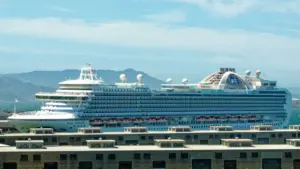
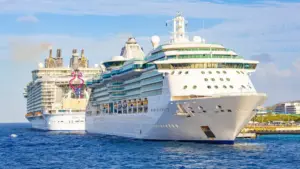
To fully understand the unfolding of events on the night of August 23, 2026, it is necessary to retrace the timeline of the Norwegian Getaway’s final evening at sea. The vessel, a Breakaway-class cruise ship capable of accommodating nearly 4,000 guests, was making its final transit back toward the Florida coastline. Earlier in the itinerary, the ship had called upon Nassau and Norwegian’s private Bahamian destination, Great Stirrup Cay, offering vacationers a standard, relaxing tropical escape.
However, as night fell on Sunday, the atmosphere aboard the ship shifted dramatically.
Late-Evening Altercations and Intoxication Reports
According to multiple passenger accounts circulating on social media, signs of distress and unruly behavior began manifesting earlier in the evening. Several guests reported encountering a man matching the description of the deceased individual, noting that he appeared visibly intoxicated. Allegations surfaced that the man may have been involved in a physical altercation in one of the ship’s public areas, reportedly swinging at another guest before retreating to his stateroom.
While these accounts have not been independently verified by law enforcement or Norwegian Cruise Line representatives, they have added a layer of complexity to the narrative, raising questions about onboard alcohol service policies and security intervention thresholds.
The Fall and Immediate Emergency Response
The critical incident occurred late in the evening, with reports placing the time between 11:00 p.m. and midnight on Sunday, August 23.
An eyewitness staying in a cabin directly above the victim reported hearing intense yelling and commotion emanating from the stateroom below. Moments later, the witness allegedly observed a man leaning heavily over the balcony railing before deliberately or accidentally lifting his legs and going completely over the edge.
Simultaneously, other passengers reported hearing a sudden, urgent public address (PA) announcement while moving through the ship’s interior elevators and common corridors. According to a viral TikTok post shared by a guest onboard, the emergency broadcast alerted crew members to a critical crisis: a passenger had fallen from an upper deck and impacted a lower promenade walkway.
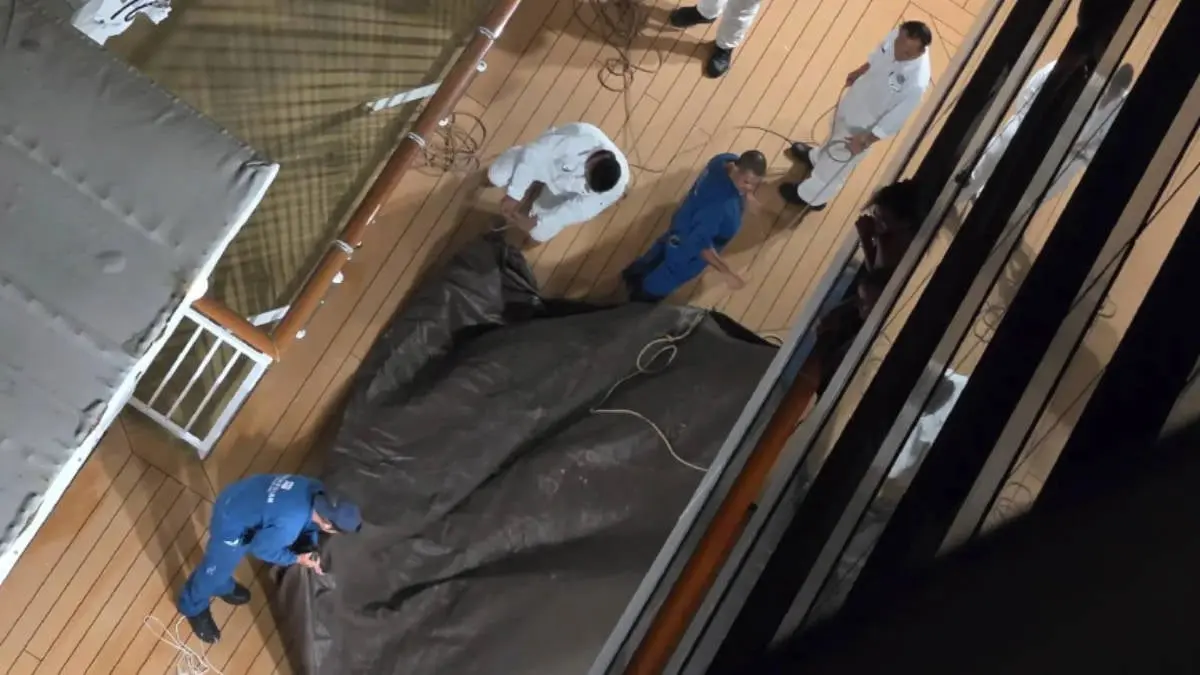
Crew members trained in rapid-response trauma care rushed to the scene. Passengers later shared photographic evidence showing crew personnel hastily deploying large privacy tarps across a significant expanse of the deck to shield the gruesome scene from public view and protect the privacy of the victim. The ship’s medical team initiated aggressive life-sustaining measures on the spot, but the trauma sustained from the multi-story fall proved insurmountable.
Port Arrival and Turnaround
Despite the gravity of the incident on board, the Norwegian Getaway maintained its scheduled nautical timeline. The vessel did not experience any significant operational delays and successfully docked at PortMiami on the morning of Monday, August 24.
Following standard maritime protocols for handling onboard deaths, local authorities, medical examiners, and maritime investigators were notified. Once clearance was granted, the ship disembarked its thousands of vacationing guests. Demonstrating the relentless cadence of the modern cruise industry, the 3,963-capacity vessel completed its turnaround in a matter of hours, departing Miami later that same afternoon on a subsequent four-night Bahamas itinerary.
Supporting Context & Metrics: Safety, Architecture, and Industry Realities
The tragedy aboard the Norwegian Getaway highlights several persistent safety and operational challenges inherent to the multi-billion-dollar modern cruise industry.
Balcony Safety Standards and Architectural Realities
Cruise ship balconies are engineered to stringent international maritime safety standards, primarily dictated by the International Convention for the Safety of Life at Sea (SOLAS) and regional authorities like the U.S. Coast Guard. Modern cruise ship balcony railings are legally mandated to be a minimum height—typically 42 to 45 inches (approx. 106 to 114 centimeters) from the deck floor. Furthermore, the vertical bars or glass panels are designed with narrow spacing to prevent children or adults from slipping through.
Despite these safety measures, accidental falls and intentional overboard incidents continue to occur across the global cruise fleet. According to historical data compiled by various maritime safety advocacy groups, an average of 15 to 20 people go overboard from cruise ships and ferries worldwide each year. While the vast majority of these incidents are attributed to intentional acts (suicide or self-harm) or severe intoxication coupled with reckless behavior—such as sitting on or climbing over balcony railings—structural design and human error inevitably intersect in fatal ways.
In the case of the Norwegian Getaway incident, conflicting reports emerged regarding the exact deck of origin. While initial social media posts claimed the victim fell from the 10th floor down to Deck 7, architectural layouts of Breakaway-class ships clarify that Deck 7 houses public venues like the casino, restaurants, and bars, while the major outdoor promenade is situated on Deck 8. Balcony staterooms span multiple upper levels, including Decks 10, 11, 12, and 13. Regardless of the exact numerical discrepancy in amateur witness reports, forensic investigators confirmed that the guest fell a distance spanning several stories, making survivability statistically improbable.
The Role of Alcohol on Cruise Ships
Alcohol is a staple of the contemporary cruise experience, serving as a major revenue driver for cruise lines through beverage packages and onboard bars. However, the intersection of free-flowing alcohol, multi-story open-air architecture, and lax self-regulation remains a leading contributing factor in maritime mishaps.
While cruise contracts explicitly state that staff reserve the right to cut off service to visibly intoxicated guests and disembark individuals who pose a threat to themselves or others, monitoring thousands of passengers simultaneously presents an immense logistical hurdle for security personnel. Incidents involving falls from balconies frequently feature intoxication as a primary underlying variable, impairing motor skills, lowering inhibitions, and compromising spatial awareness near high-drop edges.
Official Statements and Corporate Communication
In the vacuum of immediate information following Sunday night’s tragedy, rumors, speculations, and unverified theories spread rapidly across social media platforms like TikTok, Instagram, and Reddit. Passengers eager for answers criticized the cruise line for what they perceived as a lack of transparency.
The Cruise Line’s Official Response
Seeking clarity, maritime news outlets and investigators reached out to Norwegian Cruise Line corporate representatives. On Tuesday, August 25, 2026, NCL issued an official statement addressing the incident:
"On the evening of August 23, a guest went over their balcony, falling on a lower deck. While our crew acted immediately to provide life-sustaining measures, the guest did not survive. Our thoughts are with the guest’s family during this very difficult time."
The statement officially confirmed the nature of the event—that the guest went over their balcony and fell to a lower deck—and verified that emergency medical personnel rendered immediate life-saving aid, albeit unsuccessfully.
Decoding the Onboard Silence: Why Cruise Lines Restrict Information
A major point of contention among passengers on the Norwegian Getaway was the perceived secrecy maintained by the ship’s crew. Many travelers expressed frustration that no formal, detailed announcement was made to the entire ship explaining the situation either that night or the following morning.
“I was on that cruise, didn’t hear anything like that,” noted one passenger in the comments section of a viral social media post.
The original poster responded, “That’s one of the things we thought was crazy too, like the cruise tried so hard to downplay it.”
Industry experts and maritime PR specialists point out that this "silence" is rarely a malicious cover-up, but rather a calculated protocol designed to protect several critical interests:
- Privacy of the Victim and Family: Cruise lines are bound by privacy laws and basic human decency to protect the identities and personal circumstances of affected guests and their traveling companions. Blasting explicit details over the ship’s PA system can cause immense psychological distress to family members who may not yet have been officially notified.
- Operational Codes: Cruise ships utilize standardized emergency codes (such as "Alpha, Alpha, Alpha" or "Operation Brightstar") to dispatch medical or security teams discreetly. These codes ensure rapid response times without inciting mass panic or rubbernecking among the thousands of other vacationers onboard.
- Active Investigations: When a death occurs on a vessel under suspicious or tragic circumstances, the ship effectively becomes a crime scene or the subject of a formal marine casualty investigation. Law enforcement agencies (such as the FBI or local port authorities) often mandate that cruise operators refrain from releasing speculative details that could compromise an ongoing inquiry.
Future Outlook: Implications for the Cruise Industry
As the maritime community digests the tragic events aboard the Norwegian Getaway, the incident is certain to prompt renewed calls for enhanced safety measures across the wider cruise sector.
Potential Policy and Technological Shifts
While retrofitting existing mega-ships with higher balcony walls or enclosing them in plexiglass is largely considered architecturally and economically unfeasible due to weight distribution and guest aesthetic preferences, cruise lines are increasingly evaluating alternative technologies:
- Enhanced Motion and Fall Sensors: Advanced optical sensors and AI-driven camera systems capable of detecting when a person is climbing over a balcony railing are currently being explored by experimental tech firms working with maritime operators.
- Stricter Alcohol Management: Calls for more rigorous enforcement of responsible drinking policies, including automated tracking of beverage package consumption and increased security patrols along stateroom corridors late at night, are gaining traction among safety advocates.
- Improved Passenger Communication Frameworks: Cruise lines may need to reevaluate how they communicate critical safety incidents to passengers post-crisis. Striking a balance between protecting privacy and maintaining transparent communication can help mitigate the spread of panic-inducing misinformation and viral rumors on social media.
Conclusion
The loss of life aboard the Norwegian Getaway is a sobering reminder of the inherent risks associated with travel, high-altitude architecture, and human vulnerability. While the ship continues its operational rotation—having already embarked on its subsequent four-night Bahamas voyage—the echoes of that Sunday night tragedy will linger.
As investigations by relevant maritime authorities continue, the incident stands as a poignant call to action for the cruise industry to continually refine its safety protocols, balance guest autonomy with rigorous protection standards, and offer compassionate, transparent support to those affected by maritime tragedies.
Cruise Hive’s thoughts and deepest condolences remain with the family members, friends, guests, and crew members profoundly affected by this devastating event.