











By Blake Aued
Published October 7, 2026
Executive Overview
Throughout modern American political history, infrastructure development has frequently served as the physical manifestation of presidential ambition. From Dwight D. Eisenhower’s monumental creation of the Interstate Highway System to the various federal modernization packages proposed by successive administrations, the physical rebuilding of the nation has long been pitched as a bipartisan good—a catalyst for economic productivity, job creation, and national cohesion.
Yet, as the federal policy landscape shifts toward the mid-to-late 2020s, a striking paradox defines the infrastructure agenda championed by Donald Trump and his political allies: while the administration and its supporters have consistently voiced enthusiasm for sprawling mega-projects, highways, bridges, and aviation expansions, public mass transit remains conspicuously absent from their grand designs.
This article investigates a fundamental question currently vexing urban planners, transit advocates, and local policymakers across the country: Why is public transportation seemingly the only form of major infrastructure that Donald Trump does not want to build?
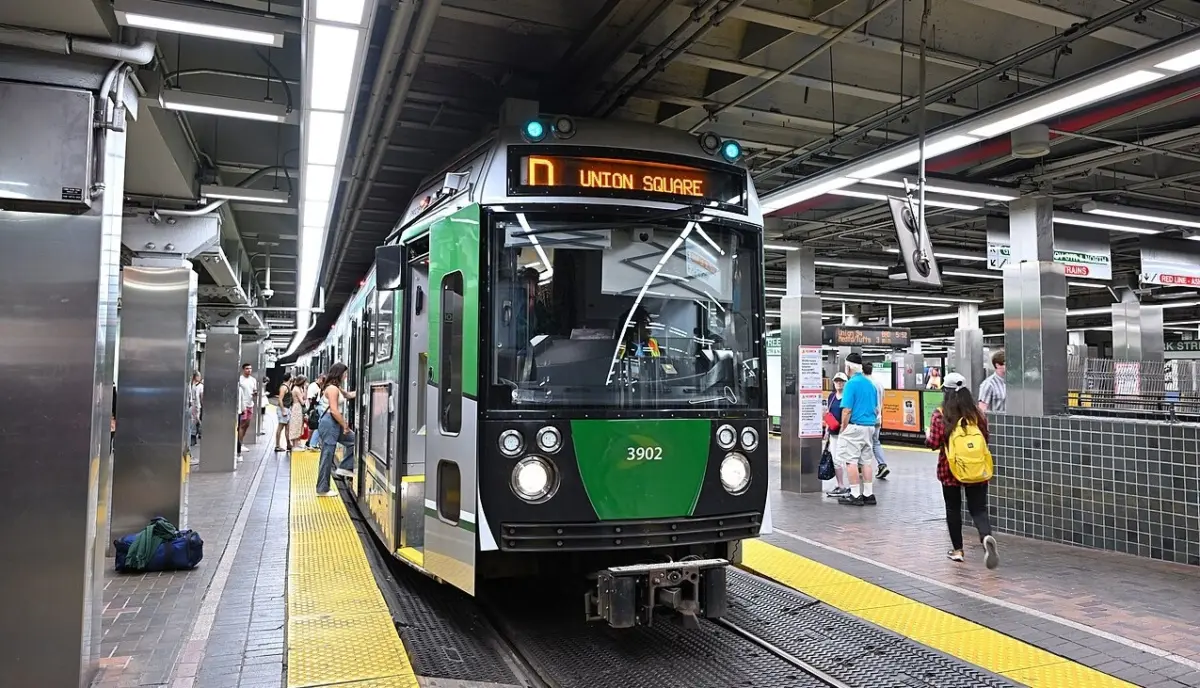
To understand this phenomenon, one must look beyond simple partisan gridlock. The exclusion of public transit from the administration’s core development priorities reflects a deeper ideological friction regarding land use, the future of American mobility, demographic shifts, and deeply entrenched political philosophies regarding federal intervention versus local responsibility. From the neglected tracks of Boston’s Green Line to the broader systemic underfunding of light rail, commuter rail, and bus rapid transit networks nationwide, the consequences of this ideological divide are reshaping the American urban landscape—often to the detriment of millions of daily commuters.
Detailed Chronology: The Evolution of Transit Policy and Federal Neglect
To contextualize the current state of public transit under the second-term Trump administration, it is essential to trace how federal priorities regarding transportation funding and urban mobility have evolved over the past decade.
The Pre-2016 Paradigm and Initial Friction
Long before returning to the national spotlight in the mid-2020s, Donald Trump’s first term in office (2017–2021) established a distinct blueprint for federal infrastructure oversight. While the administration repeatedly teased a trillion-dollar infrastructure package, the resulting proposals heavily favored private-public partnerships, toll roads, and traditional highway expansions. High-profile transit projects—most notably New York and New Jersey’s Gateway Program, which sought to construct a desperately needed rail tunnel under the Hudson River—faced consistent federal foot-dragging, budget cuts, and hostile rhetoric from the White House.
During this initial period, the Federal Transit Administration (FTA) often found its Capital Investment Grants (CIG) program—the primary discretionary funding source for major local transit expansions—on the defensive. Projects that had spent years navigating the rigorous multi-year approval process suddenly found their funding stalled or subjected to arbitrary down-ratings by political appointees.

The Post-Pandemic Divergence (2021–2025)
Following the disruptions of the COVID-19 pandemic, American public transit systems faced an existential fiscal cliff. While ridership patterns shifted toward hybrid work models, transit agencies nationwide relied heavily on federal relief funds to keep operations afloat.
When the federal government enacted massive legislative packages in the early 2020s, historic sums were allocated toward passenger rail, electrification, and urban mobility. However, as the political pendulum swung back toward a renewed Trump administration in the mid-2020s, these trends encountered fierce resistance. The administration pivoted sharply away from sustainable urban mobility initiatives, casting doubt on the long-term viability of fixed-guideway transit systems in an era of remote work and autonomous vehicles.
The 2026 Landscape: Stalled Networks and Deferred Maintenance
As of October 2026, the friction between federal policy goals and local transit needs has reached a critical juncture. Across the United States, systems like Boston’s historic MBTA Green Line, Chicago’s CTA, and various light rail networks in the Sun Belt are grappling with an alarming backlog of deferred maintenance.
While highway construction cranes dot the horizon from coast to coast, fueled by legacy funding streams and enthusiastic federal backing, major urban transit expansions are increasingly starved of discretionary federal support. Local transit agencies find themselves forced to hike fares, cut service frequencies, or defer critical safety upgrades—not because the demand for public mobility has vanished, but because the federal partner necessary to share the financial burden has effectively walked away from the negotiating table.
Supporting Context & Metrics: The Human and Economic Cost
To fully grasp the implications of federal resistance to public transit, one must examine the empirical data driving the debate. The divergence between highway investments and transit funding is not merely a matter of political taste; it has profound economic, environmental, and social repercussions.
The Disparity in Capital Allocation
Federal transportation budgets have historically favored highway maintenance and construction through the Highway Trust Fund, which is primarily financed by the federal gas tax. Despite decades of advocacy to establish a dedicated, stable, and equivalent funding stream for mass transit, public transportation systems must rely more heavily on general revenues and competitive discretionary grants.
Under the current administrative framework, this structural imbalance has widened:
- Highway and Roadway Outlays: Continue to receive robust, predictable allocations, framed by the administration as essential for supply chain resilience and commuter freedom.
- Discretionary Transit Grants: Face increased bureaucratic hurdles, stricter cost-effectiveness evaluations that penalize dense urban projects, and an administration preference for roadway capacity over rail expansion.
Ridership Realities vs. Misconceptions
Critics of public transit within conservative policy circles often point to post-pandemic remote-work trends to argue that rail and bus systems are "obsolete" or inefficient financial sinks. However, nationwide transit data reveals a nuanced and resilient reality:

- Essential Workers: While white-collar downtown office workers adopted hybrid schedules, millions of service industry, healthcare, and blue-collar workers continue to rely exclusively on public transit for their daily commutes.
- Congestion and Economic Productivity: In major metropolitan economic hubs—such as New York, Boston, Chicago, San Francisco, and Washington, D.C.—the complete suppression of transit expansion forces more single-occupancy vehicles onto already congested roadways, costing billions of dollars annually in lost productivity and wasted fuel.
Environmental and Safety Metrics
From an environmental standpoint, public transit remains one of the most effective tools for reducing per-capita carbon emissions in densely populated areas. Furthermore, statistical analyses consistently show that rail and bus travel are significantly safer per passenger-mile than travel via private automobile, reducing both traffic fatalities and serious injuries. By neglecting transit infrastructure, federal policy inadvertently locks municipalities into higher carbon footprints and less safe transportation networks.
Official Statements and Ideological Foundations
To understand why public transit occupies such a uniquely precarious position in Donald Trump’s infrastructure vision, one must examine the underlying philosophy that governs the administration’s approach to public space and personal mobility.
The Primacy of the Automobile and "Commuter Freedom"
At the core of the administration’s transportation philosophy is an unyielding reverence for the private automobile. Within populist political rhetoric, the car is frequently framed as the ultimate symbol of American independence, personal autonomy, and economic mobility.
In campaign speeches and policy briefings, the modernization of highways, the elimination of potholes, and the expansion of parking capacity are routinely presented as direct deliverables to the everyday citizen. Conversely, public transit is often subtly (and sometimes overtly) coded as collectivist, inefficient, or economically unviable—a top-down bureaucratic imposition that forces taxpayers to subsidize systems they may never use.
Critiques of Urban Densification
The administration’s skepticism toward transit is deeply intertwined with broader cultural and political anxieties regarding urban centers and suburban growth patterns. Public transit projects are intrinsically linked to high-density urban planning, transit-oriented development (TOD), and multi-modal living.
For a political coalition that draws significant strength from suburban and rural communities—voters who often view dense urban cores with suspicion—investing heavily in fixed-rail transit can be perceived as subsidizing blue-city governance models at the expense of car-dependent suburban growth. Consequently, federal dollars are preferentially directed toward projects that reinforce decentralized, auto-centric living arrangements.
Local vs. Federal Responsibility
When pressed by urban lawmakers regarding the neglect of transit systems like Boston’s Green Line, administration defenders frequently retreat to a philosophy of strict federalism. The argument posits that while national interstate highways clearly fall under federal jurisdiction as interstate commerce conduits, local subways, light rail lines, and municipal bus networks are strictly local matters.
Critics, however, point out a glaring hypocrisy in this stance: the federal government has never hesitated to invest heavily in local highway loops, urban bridges, and aviation hubs when politically expedient. The selective application of federalism—embracing local responsibility for mass transit while aggressively intervening in roadway projects—underscores the ideological nature of the transit freeze.

Future Outlook: Where Do American Cities Go From Here?
As the nation looks past the mid-2020s, the systematic sidelining of public transit by the federal government forces a profound reckoning for municipal leaders, state legislators, and urban planners. If Washington, D.C. refuses to build or maintain the transit systems of the 21st century, how will American cities adapt?
1. Increased Reliance on State and Local Funding
Without a reliable federal partner, progressive states and major metropolitan areas are increasingly forced to internalize the costs of transit maintenance and expansion. This has led to the creation of local ballot initiatives, regional sales tax measures, and state-level legislative packages designed to shore up failing transit trust funds. However, relying solely on local tax bases often creates deep inequities, as economically distressed cities struggle to raise the capital required for massive rail projects compared to their wealthier counterparts.
2. The Rise of Private-Public Partnerships and Micro-Mobility
Faced with federal gridlock, some transit agencies are turning toward alternative funding models, including private-public partnerships (P3s) and corporate sponsorships. While these arrangements can accelerate certain projects, they often introduce complex questions regarding public accountability, equitable fare structures, and the prioritization of profitable routes over socially necessary service. Simultaneously, cities are investing heavily in low-cost, flexible alternatives such as protected bike lanes, micro-mobility rentals, and bus rapid transit (BRT) networks that require lower capital outlays than heavy rail.
3. The Long-Term National Toll
Ultimately, patching together local funding fixes is no substitute for a cohesive, federally backed national transit strategy. As international competitors in Europe and Asia continue to invest heavily in high-speed rail, seamless multi-modal transit integration, and sustainable urban mobility, the United States risks falling further behind in infrastructure competitiveness.
Donald Trump’s aversion to building public transit is more than just a quirky policy preference; it is a defining characteristic of an infrastructure agenda that looks backward to the mid-20th-century highway boom rather than forward to the ecological and demographic realities of the 21st century. Until federal leadership recognizes that modern mobility requires a balanced ecosystem where trains, buses, bikes, and cars coexist, America’s transit systems will remain trapped in a holding pattern of neglect—waiting for a political vision that values the journey of every commuter, regardless of whether they are behind the wheel or holding a transit pass.


