Executive Overview
For over a century, the unwritten law of the automotive marketplace was straightforward, almost immutable: luxury, refinement, and effortless power carried a direct, predictable penalty. If a driver desired smoother acceleration, greater torque, and the serene quietness of a powerful engine, the cost of admission required more cylinders, a larger displacement, a higher initial purchase price, and a noticeable sacrifice at the fuel pump.
This transactional compromise defined generations of consumer choices. Buyers traded hard-earned cash for bigger internal combustion engines (ICE), willingly accepting poor fuel economy as the inevitable price of mechanical sophistication.
Today, that century-old paradigm has been utterly inverted.
The traditional upgrade path—fueled by larger gas-guzzling motors—is facing structural obsolescence. Modern automotive electrification, championed initially by battery electric vehicles (BEVs) and now aggressively democratized by advanced hybrid powertrains, has decoupled performance from fuel consumption. For the first time in automotive history, the mechanical attributes that define a premium driving experience—instantaneous torque, near-silent operation, and effortless passing power—are paired not with escalating fuel bills, but with dramatic leaps in fuel efficiency.
This profound shift marks the death of the displacement trade. As automakers grapple with a transitioning consumer base, and as vehicles like the hybridizing multi-row SUV segment demonstrate, the gateway drug of electrification is permanently rewriting what drivers expect from their hard-earned automotive dollars.
Detailed Chronology: The Evolution of the Automotive Upgrade Path
To understand the magnitude of today’s powertrain revolution, one must examine how the consumer upgrade path operated before silicon and electric motors entered the mainstream automotive consciousness.
The 1998 Benchmark: The Price of Refinement
In the late 1990s, automotive decision-making was bound tightly to mechanical constraints. Consider the landscape of 1998: a buyer entering the mid-sized sedan market faced a stark choice. Basic transportation was readily available via economical four-cylinder engines—functional, reliable, but inherently coarse. These powerplants groaned under heavy acceleration, transmitting vibrations and engine strain into the cabin. They got you from Point A to Point B efficiently, but they offered zero emotional resonance.

Stepping up to true luxury required a massive financial leap. Premium marques like Lexus offered the GS300 and GS400, commanding $40,000 to $50,000—roughly double the price of a mainstream family sedan. These luxury models delivered velvety smoothness, robust power bands, and a sense of mechanical ease that shielded the driver from the rigors of the road.
For budget-conscious buyers seeking a taste of that refinement without breaking the bank, automakers offered an intermediate compromise: the V6 upgrade.
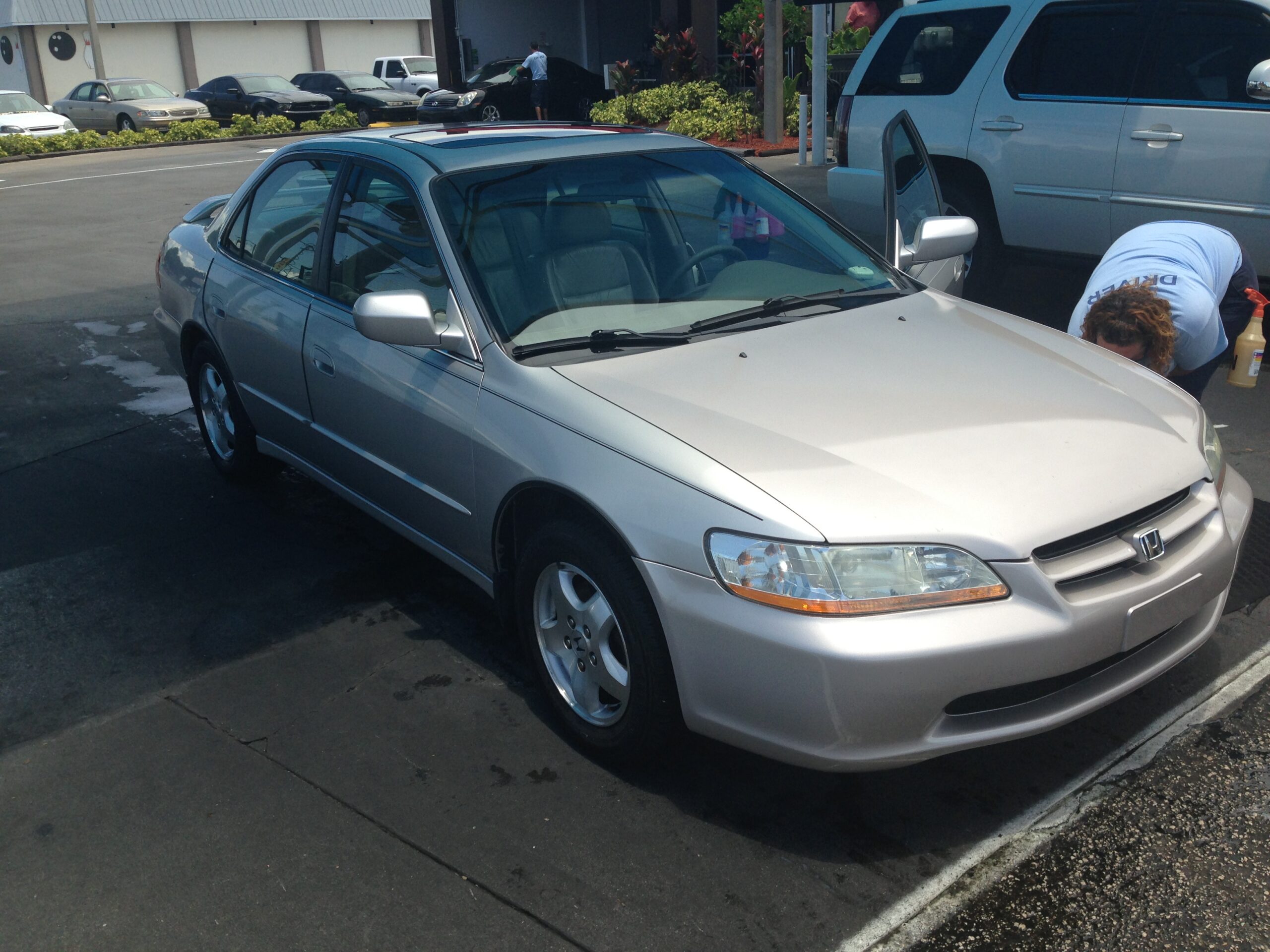
In 1998, a consumer could purchase a top-tier Honda Accord with a four-cylinder engine for around $20,000. However, for a mere $2,500 premium, that same Accord could be fitted with a V6 engine. The sales pitch was universally effective because the real-world experience delivered. The V6 Accord did not merely offer higher horsepower figures on a spec sheet; it transformed the character of the vehicle. It eliminated the strained, high-revving groan of the four-cylinder, replacing it with linear power delivery that mimicked cars costing twice as much.
The compromise was explicit: the buyer paid roughly $2,500 more upfront and accepted a lower miles-per-gallon (mpg) return. The motivation was never about fuel economy—it was about buying a luxury experience at a discount.
The 2027 Pivot: Redefining the Modern SUV
Fast forward nearly thirty years to the contemporary automotive landscape, and the rules of engagement have fundamentally fractured.
Recent automotive evaluations—such as those chronicled by industry authorities on programs like Consumer Reports’ “Talking Cars” podcast—highlight a radical shift in how modern consumers experience vehicular refinement. Take, for example, the modern paradigm embodied by platforms like the 2027 Kia Telluride Hybrid.
Under the old rules, stepping up to a high-performance or more refined powertrain meant accepting a severe fuel economy penalty. Under the modern electrified framework, the opposite occurs. The 2027 Kia Telluride Hybrid generates an impressive 329 horsepower through a turbocharged 2.5-liter four-cylinder engine paired with sophisticated electric motors. By comparison, its purely internal combustion counterpart produces 274 horsepower.
Rather than paying a penalty for this substantial power boost of 55 horses, the consumer reaps an extraordinary efficiency dividend. The front-wheel-drive EX hybrid trim achieves a stellar 35 mpg combined rating, obliterating the 22 mpg rating of the traditional gas-powered EX model. That is a massive 13 mpg improvement paired with a nearly 20% increase in horsepower.
The traditional upgrade path has been short-circuited. The consumer no longer chooses between efficiency and refinement; electrification delivers both simultaneously.
Supporting Context & Metrics: Decoding the Hybrid Advantage
The operational superiority of modern hybrids and electric vehicles goes far beyond simple EPA fuel economy ratings. To truly appreciate why the displacement trade is dead, one must examine the dynamics of torque delivery, mechanical efficiency, and real-world pricing structures.
The Mechanics of Instantaneous Torque
In a traditional internal combustion vehicle, acceleration is a lagging indicator of driver input. When a motorist depresses the throttle to execute a passing maneuver at highway speeds—say, accelerating from 45 mph to 65 mph—a cascading chain reaction must occur:

- The transmission control unit must process the command.
- The gearbox must execute a physical downshift, often dropping two or three gears.
- The engine rpm must rapidly climb.
- The turbocharger must spool up to generate positive manifold pressure.
This mechanical latency creates a perceptible hesitation—a "groan" of engine strain—before the vehicle actually begins to accelerate.
Electrified powertrains completely eliminate this lag. Because electric motors deliver maximum torque instantly from a dead stop or at cruising speed, power is delivered the exact millisecond the accelerator pedal is engaged. Passing maneuvers that once required careful planning and anticipation now occur in half the time, fundamentally transforming highway safety and driving confidence.
Financial Metrics: Analyzing the Cost-to-Benefit Ratio
Critics of hybrid and electric technology historically pointed to initial purchase price premiums as a deterrent. However, modern manufacturing economics have compressed those gaps significantly.
Using the Telluride Hybrid ecosystem as a baseline:
- Base Gas Model (LX): Starts at an accessible entry price point.
- Hybrid Entry Point: The hybrid powertrain bypasses the two cheapest, stripped-down gas trims entirely, introducing itself at the EX tier.
- The True Delta: When comparing equivalent trim levels (such as the gas-powered EX versus the hybrid EX), the actual price premium for the electrified system narrows to approximately $2,700.
When calculated against a 13 mpg fuel economy improvement, that $2,700 upfront differential is rapidly recouped at the fuel pump over normal driving cycles, even before factoring in reduced maintenance costs associated with regenerative braking and lower engine wear.
| Powertrain Era | Primary Upcharge | Power Change | Fuel Economy Impact | Character & Refinement |
|---|---|---|---|---|
| 1998 (V6 Upgrade) | +$2,500 | Increased | Worse (-4 mpg) | Smooth, quiet, luxury-like feel |
| 2027 (Hybrid Upgrade) | +$2,700 | Increased (+55 hp) | Significantly Better (+13 mpg) | Instant torque, silent operation, effortless power |
Future Outlook: The Gateway Drug to Full Electrification
While full battery electric vehicles (BEVs) represent the ultimate long-term horizon for sustainable transport, hybrid powertrains serve a vital, catalytic role in the global transition.
For millions of mainstream consumers who remain hesitant to commit to pure battery-electric infrastructure—whether due to charging access anxieties, initial capital constraints, or long-standing driving habits—hybrids function as the ultimate "gateway drug" to electrification. They prove, in daily operation, that electric propulsion is superior to fossil-fuel-burning engines in every measurable metric: smoothness, responsiveness, quietness, and efficiency.
The legacy automakers still pouring billions of dollars into developing new, standalone internal combustion engine platforms are fighting a rearguard action against an obsolete economic model. Consumers no longer want to pay more money for worse fuel economy just to get a smooth ride.
As the automotive market marches further through the late 2020s, the displacement trade will be remembered as a historical anomaly—a century-long compromise born of technological limitation. For the first time in modern industrial history, the attributes that make a car feel truly luxurious come completely free of charge at the fuel pump.