Executive Overview
The American energy sector is currently undergoing a profound structural transformation, driven by an ideological and economic tug-of-war. On one side of the ledger, centralized infrastructure projects—typified by the massive power demands of rapidly expanding artificial intelligence (AI) data centers—are meeting fierce, grassroots resistance. Communities across the United States are pushing back against heavy pollution and unchecked corporate grid dominance.
On the other side of the ledger sits a powerful, decentralized counter-movement: the explosive growth of home energy storage systems and virtual power plants (VPPs).
At the vanguard of this decentralized revolution is Sunrun, the leading residential rooftop solar and energy storage firm in the United States. In a strategic evolution that mirrors shifting consumer demands and volatile grid realities, Sunrun has executed a sharp, decisive pivot. While maintaining its core rooftop solar business, the company has transformed itself into a storage-first enterprise. This shift allows households to participate in money-saving, grid-stabilizing VPP networks regardless of whether they own rooftop solar panels.

By prioritizing individual customer autonomy, resilience, and financial return, Sunrun has helped redefine distributed energy resources (DERs). Backed by surging participation metrics, massive multi-megawatt grid coordination events—such as joint deployments with Tesla—and a robust domestic supply chain, Sunrun’s decentralized fleet now matches the output of conventional fossil-fuel peaker plants. This report examines Sunrun’s strategic pivot, the mechanics of modern virtual power plants, and what this decentralized future means for the broader American energy ecosystem.
Detailed Chronology: Milestones of a Storage-First Transformation
Sunrun’s rise as a dominant force in grid-scale residential storage did not happen overnight. It represents a carefully timed corporate strategy that accelerated dramatically over the course of 2025 and into 2026.
Early 2025: Exponential Growth in VPP Participation
Sunrun kicked off 2025 by releasing an operational recap that highlighted the massive acceleration of its distributed power plant programs. Customer participation skyrocketed fivefold, surging from roughly 20,000 active participants in 2024 to more than 106,000 by the close of 2025. This surge transformed Sunrun’s customer base into one of the largest aggregations of flexible, dispatchable energy in the United States. By the end of February 2025, the company’s cumulative energy storage portfolio had reached an impressive 416 megawatts (MW) of capacity—eclipsing the output of many traditional gas-fired peaker plants.
March 2025: The Energy Independence Pitch
Following geopolitical shocks in global energy markets—including strategic military actions ordered by the U.S. administration in late February—Sunrun seized the moment to emphasize the national security and self-reliance benefits of its technology. On March 12, 2025, CEO Mary Powell issued a corporate statement framing the company’s trajectory around household autonomy.

"Our deliberate and decisive pivot to provide Americans with energy independence is why Sunrun leads the residential energy storage sector," Powell stated, highlighting that the company’s battery fleet serves as the backbone of the nation’s leading distributed power network.
Summer 2025: Summer Heat Waves and Peak Readiness
As extreme summer weather strained regional power grids across the U.S., Sunrun announced in June that more than two-thirds of its storage fleet—representing over 130,000 home batteries—was actively enrolled in grid-support programs. This positioned the company to dispatch 650 megawatts of peak power during critical heat events, safeguarding local utilities from brownouts.
September 2025: The Tesla Coordination and Historic Dispatch
The viability of residential VPPs faced a major real-world test on the evening of September 9, 2025, during an intense regional heat wave. In a historic demonstration of cross-platform cooperation, Sunrun and Tesla coordinated an unprecedented 580 megawatts of residential battery capacity to relieve pressure on the California grid. Tesla contributed its Powerwall units, while Sunrun dispatched batteries from its diverse manufacturer portfolio.
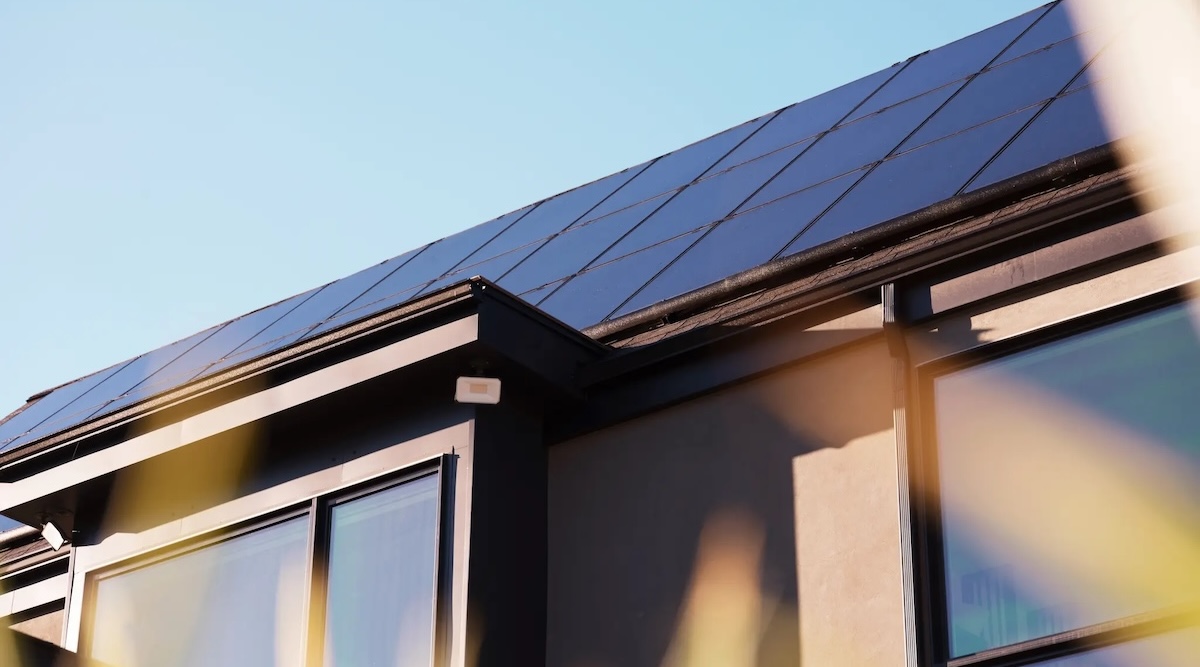
Just weeks later, on September 21, Sunrun reported that 70% of its new rooftop solar customers were opting to pair their systems with home batteries. To meet this insatiable demand, Sunrun partnered with domestic manufacturer Heliene on September 29, securing priority access to its newly introduced 108HC All-Black solar modules to shore up the domestic supply chain.
Supporting Context & Metrics: The Numbers Driving the Shift
To understand the scale of Sunrun’s transformation, one must examine the macroeconomic and industry-wide data defining the residential storage market.
The Wealth Disparity and Consumer Motives
Wealth disparity in the U.S. is increasingly manifesting as an energy divide. Centralized utilities frequently propose capital-intensive, pollution-heavy infrastructure to service corporate AI data centers, leaving everyday ratepayers to foot the bill. In stark contrast, home storage systems offer a granular, democratic alternative.
According to internal polling cited by CEO Mary Powell during New York City’s Climate Week, consumer motivations for adopting clean technology break down along surprising lines:
- 66% of customers prioritize energy control, financial independence, and grid resilience.
- 33% of customers prioritize environmental and climate concerns.
"Our customers are across the political spectrum. They always have been," Powell emphasized, noting that the desire to lower utility bills and secure backup power transcends traditional partisan boundaries.
Market Dominance and Cumulative Capacity
Data compiled by the Solar Energy Industries Association (SEIA) underscores Sunrun’s market leadership. In 2025 alone, Sunrun accounted for nearly 48% of all residential energy storage systems installed nationwide.
Key cumulative metrics highlight the company’s footprint:
- Total Systems Installed: Over 237,000 combined storage and solar systems.
- Networked Storage Capacity: Approximately 4.0 gigawatt-hours (GWh) of operational capacity.
- National Share: This volume accounts for roughly 44% of the total 9 gigawatt-hours of residential storage installed across the United States since the inception of the industry.
- Future Projections: Sunrun expects to surpass 10 gigawatt-hours of dispatchable energy under management within the next two years.
Official Statements and Industry Insights
Mary Powell on "Distributed" vs. "Virtual" Systems
During her interview with Fortune Executive Editorial Director Diane Brady at Climate Week, Mary Powell challenged industry nomenclature, arguing that framing clean tech through purely conceptual terms misses the physical reality of the transition.

While the industry commonly uses the term "Virtual Power Plant" (VPP), Powell expressed a preference for the more grounded phrase "distributed energy systems." She noted that while "virtual" can imply a nebulous, ghost-in-the-machine presence, the foundation of the network is physical, robust hardware located inside people’s homes. Furthermore, Powell stressed that customer-centric innovation must drive utility policy:
"Keeping the customer at the center of the conversation is what is lacking… It spurs more innovation when you put the customer first."
Paul Dickson on Energy Security and Peace of Mind
Addressing the psychological and physical security benefits of home batteries, Sunrun President and Chief Revenue Officer Paul Dickson highlighted regions like storm-plagued Texas, where grid failures are increasingly common. Home batteries provide absolute peace of mind through silent, zero-emission on-site backup power—outperforming noisy, fossil-fuel-guzzling diesel or gas generators.
Supply Chain Resilience: Heliene Partnership
The manufacturing side of the equation received a significant boost through Sunrun’s arrangement with Heliene. David Reasenberg, Chief Commercial Officer at Heliene, noted:
"Working with Sunrun allows us to invest in the domestic supply chain for rooftop solar."
This domestic alignment ensures that despite shifts in federal energy policies, consumer demand for energy control and local manufacturing remains robust and insulated from international supply chain shocks.
Future Outlook: The Horizon of Decentralized Power
As the American energy sector looks toward the late 2020s, the trajectory established by Sunrun signals a permanent paradigm shift away from purely centralized power generation.
- Decoupling Storage from Solar: By enabling households without rooftop solar to install standalone home batteries and participate in VPP networks, companies like Sunrun have unlocked a massive untapped addressable market. Urban renters, shaded properties, and multi-family units can now tap into grid-support rebates.
- Peaker Plant Replacement: With individual portfolios crossing gigawatt-hour thresholds and matching the dispatchable capacity of fossil-fuel peaker plants, VPPs are no longer experimental novelties. They are foundational pillars of grid reliability during peak heat waves and winter freezes.
- Overcoming NIMBYism to BANANA: As Powell pointed out, public sentiment regarding large-scale infrastructure has evolved from "Not In My Backyard" (NIMBY) to "Build Absolutely Nothing Near Anyone" (BANANA). The only sustainable path forward is distributed generation—putting power generation and storage directly into the hands of consumers.
Ultimately, the convergence of consumer desire for financial relief, national security concerns regarding foreign energy dependence, and cutting-edge smart-grid connectivity ensures that virtual power plants will anchor the future of American electricity. As Sunrun scales toward its target of 10 GWh of managed dispatchable capacity, "power to the people" is transitioning from a political slogan into an operational engineering reality.