











Executive Overview
As urban centers worldwide grapple with the compounding crises of traffic congestion, carbon emissions, and declining public health, active transportation has emerged as a critical pillar of modern municipal planning. Bicycling, long dismissed in many Western nations as a recreational pastime or a niche alternative for the intrepid commuter, is undergoing a profound renaissance. Urban planners, civil engineers, and policymakers are increasingly recognizing that robust cycling networks are not merely "nice-to-have" amenities, but essential infrastructure that underpins sustainable, economically vibrant, and resilient cities.
To understand the gold standard of contemporary active transportation, one need not look any further than two distinct case studies highlighted by prominent urban mobility commentators: Minneapolis, Minnesota, and Shanghai, China. These cities represent two vastly different geographical, cultural, and political landscapes, yet both offer profound lessons for municipal leaders striving to integrate two-wheeled transit into the urban fabric.
In the United States, Minneapolis has quietly cultivated what many urban transit advocates argue is the premier cycling network in the country. Earning high praise even from ardent rivals in neighboring Illinois—as showcased by the digital creator collective Chicagoans Who Bike—the Twin Cities have proven that high-latitude, winter-heavy American metropolises can successfully build world-class, protected cycling infrastructure. Their success hinges on engineering fortitude, political will, and year-round maintenance capability, setting a benchmark that other car-centric American cities desperately need to emulate.
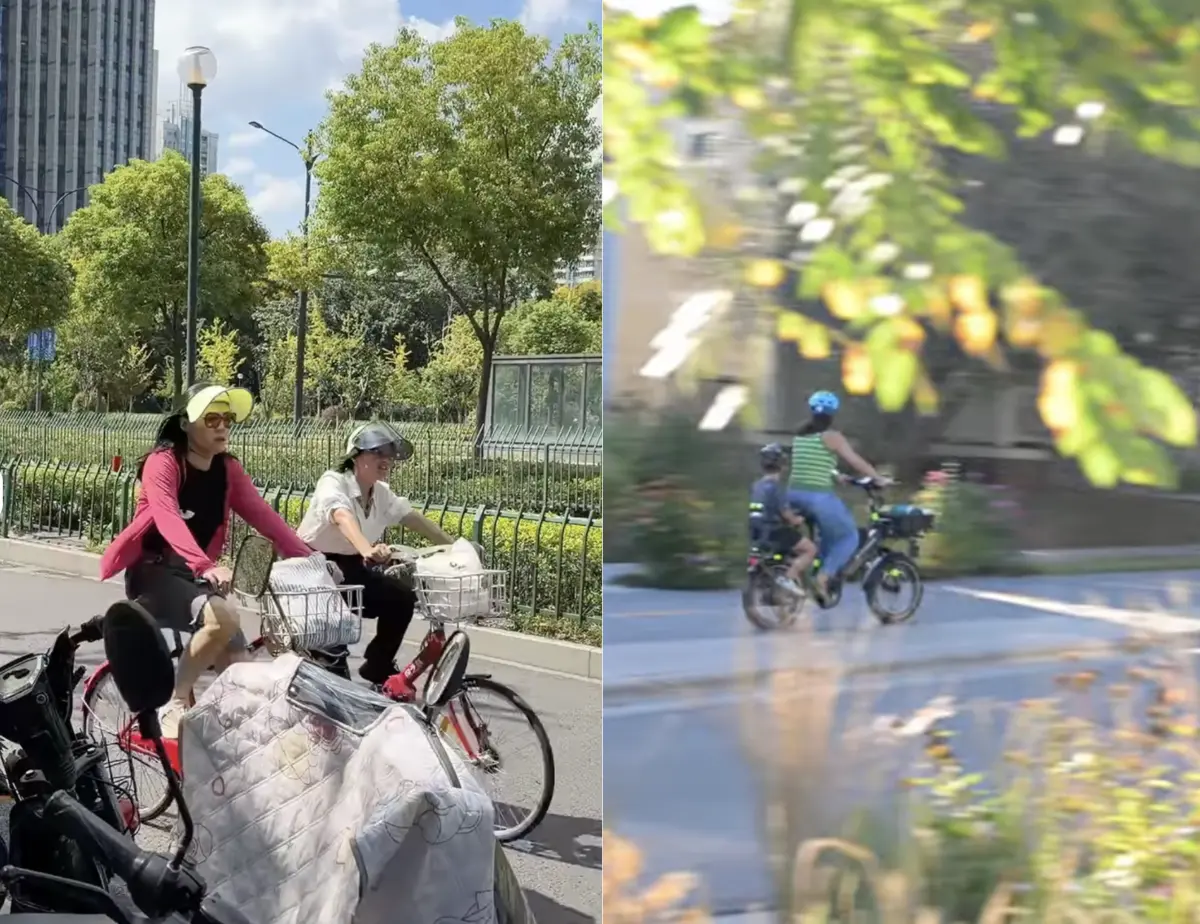
Conversely, looking across the Pacific reveals a narrative of monumental scale and historical complexity. Through the lens of the international transit channel Shifter, urban mobility enthusiasts are invited to reexamine China’s relationship with the bicycle. Far from being a recent phenomenon born of green initiatives, cycling was once the absolute lifeblood of Chinese megacities, boasting mode shares that eclipsed even the legendary cycling havens of Amsterdam and Copenhagen. Today, while cities like Beijing and Shanghai boast peerless physical infrastructure—the "hardware" of urban cycling—they grapple with evolving cultural perceptions—the "software."
This report provides an exhaustive, multi-faceted analysis of these two cycling paradigms. By examining the engineering triumphs of Minneapolis and the historical-cultural trajectory of Shanghai, urban planners, policymakers, and advocates can glean invaluable strategies for reshaping the future of global mobility.
Detailed Chronology: The Evolution of Cycling Infrastructure
The Minneapolis Miracle: From Cold-Weather Resistance to National Leadership
The transformation of Minneapolis into a cycling powerhouse did not happen overnight; it is the result of decades of deliberate municipal policy, visionary advocacy, and significant capital investment. Understanding how the city achieved its current status requires tracing its developmental milestones.
Phase I: Laying the Foundation (Late 20th Century)
Long before "Complete Streets" became a buzzword in urban planning, Minneapolis possessed a natural geographic advantage paired with a progressive political ethos. The city’s early efforts focused heavily on off-street multi-use trails, most notably the Midtown Greenway and the Chain of Lakes trail system. Built largely on abandoned railway corridors and parkland edges, these early arteries proved that citizens would embrace non-motorized commuting if routes were grade-separated and scenic. However, these trails functioned primarily as recreational amenities rather than integrated transit corridors for daily work and commerce.
Phase II: The On-Street Revolution (2000s–2010s)
As population densities increased and environmental consciousness grew, city leaders realized that off-street trails were insufficient. To capture true commuter mode share, Minneapolis needed to build a connected web of on-street infrastructure. This era saw the proliferation of painted bike lanes, sharrows, and early buffered lanes. While these interventions were a step forward, they frequently suffered from the same vulnerabilities seen across North America: lack of physical protection, vulnerability to double-parking delivery vehicles, and seasonal abandonment due to snow accumulation.
Phase III: The Protected Interventions and Year-Round Engineering (2010s–Present)
The turning point for Minneapolis arrived with a shift toward fully protected, curb-level bike lanes. City engineers recognized that paint is not infrastructure. By installing physical barriers—such as concrete medians, parked car buffers, and elevated track designs—Minneapolis drastically improved safety metrics and rider confidence.
Crucially, the city solved the Achilles’ heel of northern-climate cycling: winter maintenance. Rather than treating bike lanes as secondary paths to be cleared only after highways and residential streets were immaculate, Minneapolis invested in specialized, full-size snowplow fleets tailored specifically for its protected bike networks. This operational commitment ensured that cycling remained a viable, 365-day-a-year transportation option, directly dismantling the seasonal excuse used by colder cities to avoid investing in active transit.
China’s Cycling Saga: From Mass Transit to Modern Renaissance
To comprehend the current state of cycling in China, one must look beyond contemporary dockless bike-sharing apps and examine a century of profound socioeconomic transformation.
Phase I: The Bicycle Kingdom (1950s–1980s)
In the decades following the establishment of the People’s Republic of China, the bicycle emerged as one of the "Three Round Things" symbolizing a prosperous household (alongside a wristwatch and a sewing machine). Industrial giants like the Forever and Phoenix bicycle brands churned out millions of heavy, durable steel frames. During this era, Chinese megacities were effectively designed for human power. Vast arterial roadways featured dedicated, wide service lanes segregated from the sparse automotive traffic by concrete barriers or green spaces. Cycling mode shares in cities like Beijing, Tianjin, and Shanghai soared to staggering heights, routinely topping 60% to 64% of all urban trips.
Phase II: The Car-Centric Deluge (1990s–2010s)
As China experienced unprecedented economic liberalization and explosive GDP growth, national priorities shifted dramatically. The automobile transformed from a symbol of western decadence to the ultimate status symbol of the burgeoning urban middle class. City planners, seduced by Western models of car-oriented suburbanization and highway expansion, began engineering cities for motor vehicles. Iconic cycling boulevards were systematically narrowed to make room for multi-lane expressways, elevated flyovers, and sprawling parking lots. Cycling was increasingly stigmatized as a sign of poverty or backwardness, causing mode shares to plummet into the single digits.
Phase III: The High-Tech and Hardware Revival (2010s–Present)
The pendulum has begun to swing back, albeit in a radically different form. Faced with catastrophic urban air pollution, gridlocked traffic, and a public health crisis driven by sedentary lifestyles, Chinese municipal governments initiated massive investments in transit-oriented development.
Concurrently, the explosive, disruptive rise of dockless bike-sharing companies (such as Mobike and Ofo) flooded cities with millions of app-unlockable bicycles in the mid-2010s. Though this initial wave resulted in infamous "bicyclegraveyards" and regulatory chaos, it permanently re-acclimatized urban populations to cycling. Today, cities like Beijing and Shanghai boast some of the most extensive physical cycling "hardware" on earth—massive, grade-separated, and beautifully paved paths that dwarf Western interventions in scale.
Supporting Context & Metrics: Analyzing the Data
To substantiate the qualitative praise heaped upon Minneapolis and Shanghai, it is essential to examine the underlying metrics of modal share, infrastructure density, safety, and economic impact.
Minneapolis: Metrics of a Northern Cycling Haven
- Infrastructure Density: Minneapolis features over 230 miles of bicycling facilities, encompassing a balanced mix of off-street trails, buffered bike lanes, and increasingly, curb-separated protected bike lanes (often referred to in planning circles as cycle tracks).
- Commuter Mode Share: According to U.S. Census Bureau American Community Survey (ACS) data, Minneapolis consistently ranks in the top tier of large American cities for bicycle commuter mode share, frequently hovering between 4% and 5% overall, with certain neighborhoods exceeding 10% to 15%. This stands in stark contrast to the national U.S. average of roughly 0.5%.
- Winter Resilience Metrics: While most northern U.S. cities see cycling mode shares drop by 80% to 90% during winter months, Minneapolis’s dedicated snow clearance protocols for the Midtown Greenway and primary protected lanes have successfully mitigated this drop, retaining a significantly higher baseline of year-round ridership.
- Safety Outcomes: Vision Zero data indicates that streets retrofitted with protected cycling infrastructure experience a dramatic reduction in severe and fatal crashes, not only for cyclists but for pedestrians and motorists alike, due to the calming effect of narrower driving lanes and protected intersections.
Shanghai and China’s Megacities: The Macro-Data
- Historical Mode Share Peak: During the height of the "Bicycle Kingdom" era in the late 20th century, megacities such as Beijing and Shanghai recorded staggering bicycle mode shares of 60% to 64%. To put this in perspective, contemporary Amsterdam—widely regarded as the global capital of cycling—boasts a mode share of roughly 35% to 40% for all city trips.
- Physical Scale (Hardware): Modern Chinese infrastructure projects operate on a scale incomprehensible to most Western urban designers. Major ring roads in Beijing and Shanghai are frequently accompanied by dedicated, structurally isolated cycling tracks that span entire metropolitan regions, often wide enough to accommodate multi-file pelotons of riders moving at high speeds.
- The Software Gap: Despite superior physical hardware, urban analysts point out a distinct "software" lag. Cycling in modern China is frequently perceived by younger generations as a utilitarian necessity born of economic constraint or delivery work (exemplified by the massive gig-economy delivery fleets operated by platforms like Meituan and Ele.me), rather than an aspirational, healthy lifestyle choice. Cultivating a vibrant cycling culture remains the next frontier for Chinese urban centers.
Official Statements and Expert Insights
The insights driving the renaissance in urban cycling are increasingly validated by municipal leaders, transportation engineers, and digital chroniclers of urban space.
"If these ultra-wide, curb-level, full-size-snow-plow-ready paths can overcome the Bears/Vikings rivalry, you know they’ve got to be good."
— Chicagoans Who Bike (Commenting on the cross-cultural appeal and elite engineering standards of Minneapolis’s cycling infrastructure)
This lighthearted observation underscores a profound reality: exceptional design transcends regional parochialism. When infrastructure is built to a standard that guarantees safety, comfort, and reliability regardless of weather conditions, even residents from fiercely competing metropolitan regions are forced to concede its superiority.
On the international front, urban mobility expert Chris Bruntlett, co-author of Building the 8-to-80 City, frequently emphasizes the necessity of combining physical hardware with social software:
"Building the physical infrastructure is only half the battle. You can pour millions of tons of asphalt and concrete into protected lanes, but if society views the bicycle as a symbol of poverty, danger, or merely a tool for low-wage delivery labor, you will struggle to achieve broad societal adoption. We must upgrade our cultural software—normalizing cycling for politicians, executives, children, and grandparents alike."
Furthermore, municipal planning officials in Minneapolis have repeatedly emphasized that active transportation investment is fundamentally an equity issue, not merely an environmental one. Former Minneapolis Director of Transportation Public Works observed during network expansions:
"A truly great transportation network does not require you to own a two-ton, gas-powered metal box to access basic human needs like employment, education, and healthcare. By investing in protected, year-round cycling infrastructure, we are democratizing mobility for students, lower-income workers, and seniors."
Future Outlook: The Next Generation of Urban Mobility
As we look toward the horizon of urban planning in the mid-21st century, the lessons harvested from Minneapolis and Shanghai point toward several imperative trends and strategic trajectories.
1. Mainstreaming Winter and All-Weather Cycling
The success of Minneapolis proves unequivocally that cold weather is not a valid excuse for failing to build cycling infrastructure. As climate volatility increases and cities face mounting pressure to decarbonize, northern and alpine cities across North America, Europe, and Asia will be forced to adopt the Minneapolis playbook. This means treating protected bike lanes as essential emergency and transit arteries, deploying dedicated, appropriately scaled snow-removal machinery, and utilizing heated pavement technologies in high-traffic urban corridors.
2. Bridging the Hardware-Software Divide
The cautionary tale of Shanghai—possessing world-class physical infrastructure while navigating a cultural ambivalence toward everyday cycling—serves as a vital lesson for emerging economies and car-obsessed Western cities alike. Future urban planning must integrate sociological marketing, educational campaigns, and safety restructuring alongside concrete pourings. Initiatives such as "Open Streets" days, cargo-bike subsidies, corporate cycling incentive programs, and robust traffic enforcement to prevent motorists from blocking bike lanes will be essential to fostering a thriving cycling culture.
3. The Integration of Micro-Mobility and Electric Assist
The rise of e-bikes is rapidly redrawing the geographic boundaries of urban commuting. In both Minneapolis and Chinese megacities, pedal-assist and throttle-controlled electric bicycles are democratizing hilly terrain and extending viable commute distances from 3 miles to well over 10 miles. Urban planners must future-proof their networks by widening cycle tracks to accommodate differential speeds, upgrading bridge and overpass clearances, and installing secure, weather-protected charging infrastructure at transit hubs.
4. Toward the 15-Minute City
Ultimately, the ultimate convergence of the Minneapolis and Shanghai models lies in the realization of the "15-Minute City"—an urban planning concept where daily necessities and services can be easily reached by a 15-minute walk or bike ride. By prioritizing human-scale transit over vehicular throughput, cities can reclaim public space from asphalt parking lots and sprawling highways, transforming concrete jungles into vibrant, breathable, and deeply human habitats.
In conclusion, whether traversing the snow-dusted, protected corridors of the Twin Cities or marveling at the sweeping, arterial bicycle parkways of a Chinese megacity, the message to global municipal leaders is unmistakable: build it safe, build it connected, maintain it relentlessly, and the people will ride.


