











Executive Overview
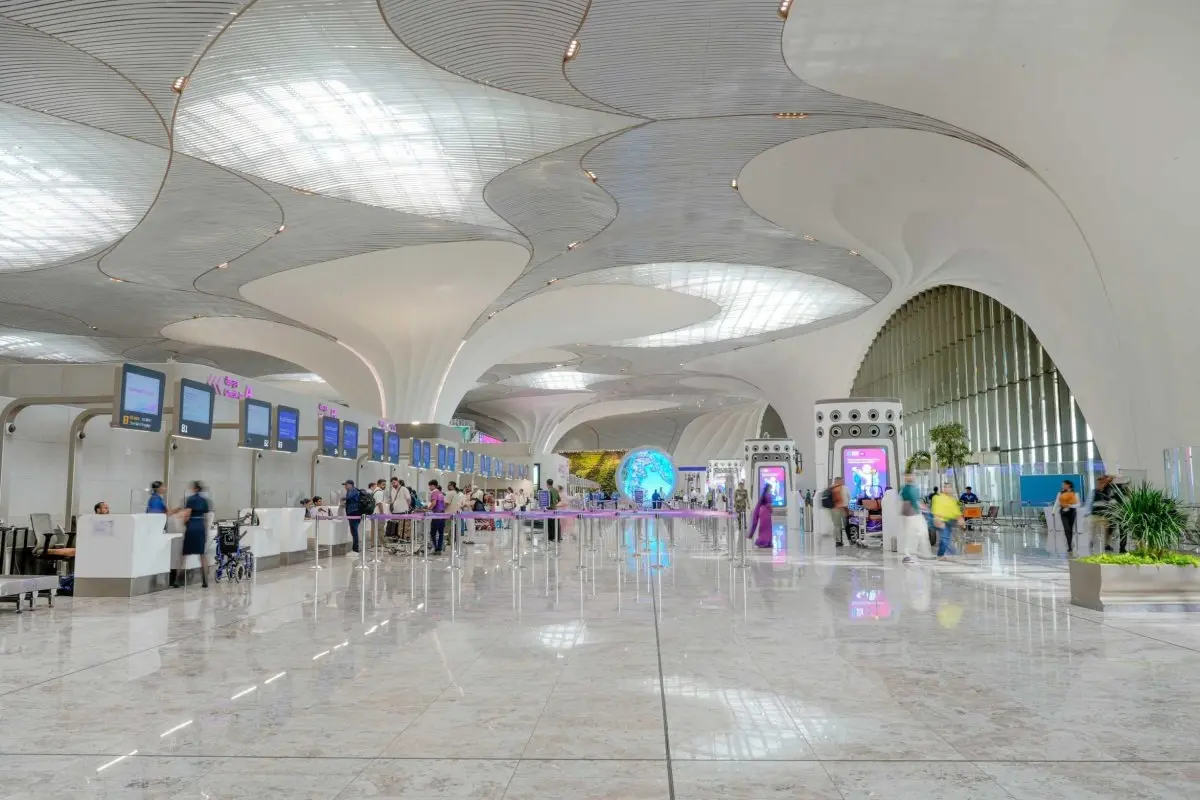
India’s civil aviation landscape is undergoing a massive, high-stakes infrastructure transformation. At the center of this evolution is the capital-intensive rollout of the Navi Mumbai International Airport (NMIA)—a project spearheaded by Adani Airport Holdings (AAHL), the dominant private airport operator managing both the legacy Chhatrapati Shivaji Maharaj International Airport (CSMIA) in Mumbai and the newly minted aviation hub across the harbor.
In a decisive regulatory intervention on Tuesday, India’s Ministry of Civil Aviation (MoCA) directed Adani Airport Holdings to temporarily halt its aggressive timeline for shifting a portion of international flight operations from CSMIA’s heavily congested Terminal 2 (T2) to the nascent Navi Mumbai facility. According to industry sources speaking exclusively to Skift, the government’s sudden pause is designed to grant airlines and the airport operator a crucial window to construct a cohesive, viable, and least-disruptive transition plan.
The intervention, which followed a high-stakes, 90-minute closed-door meeting in New Delhi, does not signal a policy reversal or an abandonment of the dual-airport strategy for the Mumbai Metropolitan Region (MMR). Rather, it represents a regulatory demand for operational prudence. Authorities have instructed both carriers and AAHL to return to the drawing board and submit a comprehensive, step-by-step roadmap for the migration of flights. The next critical milestone is scheduled for an October 13 review meeting, with a subsequent session expected by October 20 to finalize the transition protocols.
This high-level intervention unfolded against a backdrop of mounting carrier anxiety. The government’s directive arrived on the exact day that international and domestic airlines faced a rigid 4:00 PM deadline imposed by Mumbai International Airport Limited (MIAL) to declare which specific international frequencies and flight slots they were prepared to surrender or relocate. For carriers operating out of Mumbai—already grappling with constrained airspace, soaring operational costs, and tight turnaround windows—the suddenness of the shift threatened to trigger widespread passenger confusion, schedule degradation, and severe logistical headaches.
This article provides an exhaustive examination of the unfolding crisis, detailing the chronology of the intervention, the economic and operational metrics driving the dual-airport strategy, the stakeholder reactions, and the ultimate trajectory for India’s aviation sector as it attempts to balance mega-infrastructure ambitions with commercial reality.
Detailed Chronology: Anatomy of a Regulatory Intervention
The events leading up to the Ministry of Civil Aviation’s Tuesday intervention reveal a tense tug-of-war between aggressive private infrastructure management and the complex operational realities faced by commercial airlines.
The MIAL Deadline and the Pressure Cooker
For months, Adani Airport Holdings and its subsidiary MIAL have been grappling with CSMIA’s structural limitations. Operating near absolute capacity with a single primary intersecting runway system, Mumbai’s legacy airport handles upwards of 950 to 1,000 aircraft movements per day, making it one of the single-runway-dependent dual-operations airports with the highest density globally. Terminal 2, a architectural masterpiece inaugurated a decade ago to handle surging international and domestic traffic, has increasingly become a bottleneck during peak hours.

To alleviate this strain and prepare for the phased commercial activation of Navi Mumbai International Airport, MIAL issued a directive to international carriers operating out of T2. Airlines were instructed to review their schedules and submit a binding list of international flights slated for relocation by 4:00 PM on Tuesday.
To affected airlines, the timeline felt arbitrary and rushed. The relocation of international flights is not merely a matter of transferring aircraft parking stands; it requires the redeployment of ground-handling staff, the establishment of secure customs and immigration infrastructure, the renegotiation of catering and maintenance contracts, and the extensive updating of global distribution systems (GDS) for connecting passengers. Facing what they perceived as an untenable ultimatum, airline executives escalated their concerns directly to the highest echelons of India’s aviation bureaucracy in New Delhi.
The New Delhi Summit
Responding swiftly to industry pushback, the Ministry of Civil Aviation convened an emergency 90-minute meeting on Tuesday afternoon in the capital. Presided over by senior ministry officials and attended by key representatives from Adani Airport Holdings, MIAL, and major domestic and international carriers, the session served as a venting ground for carrier grievances and a reality check for the airport operator.
During the meeting, airline representatives outlined the systemic risks of a rushed transition. They highlighted potential disruptions to code-share agreements, passenger misconnections, and the lack of fully tested ground infrastructure at Navi Mumbai.
Weighing these operational vulnerabilities against the urgent need to commission the new airport, the ministry struck a middle ground. It ordered AAHL to put its immediate relocation notices on hold, effectively nullifying the 4:00 PM deadline pressure while establishing a structured framework for future negotiations.
The Roadmap Ahead: October Milestones
Crucially, the ministry’s directive is an operational pause, not a cancellation. Government authorities made it clear that Navi Mumbai International Airport must eventually absorb a substantial share of Mumbai’s traffic to relieve the metropolitan region’s aviation gridlock.
To ensure a seamless migration, the ministry has established a strict calendar of accountability:
- October 13, 2026: The first follow-up review meeting, where airlines and AAHL must present initial drafts of a collaborative transition framework.
- October 20, 2026: The target date for finalizing the comprehensive roadmap, including milestone dates for ground testing, slot allocations, and phased flight shifting.
Supporting Context & Metrics: The Mumbai Aviation Bottleneck
To understand why the government intervened, one must examine the staggering macroeconomic and operational metrics defining the Mumbai aviation market.
CSMIA: Operating at the Edge of Capacity
Chhatrapati Shivaji Maharaj International Airport is a masterclass in operational efficiency hampered by geographical constraints. Spanning a remarkably compact land parcel of roughly 2,000 acres—a fraction of the acreage boasted by global mega-hubs like Dallas/Fort Worth or Beijing Daxing—CSMIA manages immense passenger volumes.

- Passenger Throughput: Prior to the pandemic, CSMIA handled nearly 50 million passengers annually. Post-pandemic recovery has not only matched those figures but surpassed them, with traffic projected to clear 53 to 55 million passengers.
- Hourly Movement Rates: Despite having intersecting runways (Runway 09/27 and Runway 14/32), simultaneous operations are severely restricted. The airport regularly achieves 46 to 50 movements per hour, placing it among the busiest single-runway-dependent operations in the world.
- Slot Scarcity: International and domestic carriers have long battled for prime morning and evening banking slots at CSMIA. The scarcity has driven up aeronautical charges, increased taxiway congestion, and led to persistent flow-control delays.
Navi Mumbai: The Billion-Dollar Savior
Enter the Navi Mumbai International Airport, a greenfield project envisioned decades ago but brought to fruition under the stewardship of the Adani Group following its acquisition of Mumbai International Airport Limited.
- Investment and Capacity: Designed to be built in multiple phases, the initial phase of NMIA is engineered to handle 20 million passengers per annum (MPPA). Upon ultimate completion across all phases, the airport is expected to scale up to an astonishing 90 MPPA, effectively doubling the Mumbai Metropolitan Region’s aviation capacity.
- Infrastructure Specs: NMIA features parallel runways spaced to allow independent simultaneous operations, state-of-the-art terminal architecture designed for rapid passenger processing, and extensive cargo handling facilities intended to transform Western India into a global transshipment powerhouse.
- Connectivity and Access: To support the new hub, massive infrastructure projects are reaching completion, including the Mumbai Trans Harbour Link (MTHL)—officially named Atal Setu—along with suburban rail extensions and dedicated metro corridors designed to slash travel times between South/Central Mumbai and the Navi Mumbai site.
The Strategic Imperative of Dual-Airport Operations
For Adani Airport Holdings, managing both CSMIA and NMIA presents a unique balancing act. Known as a "two-airport system" model (similar to London with Heathrow and Gatwick, or Tokyo with Haneda and Narita), the Mumbai region requires careful traffic calibration.
If CSMIA is left unmitigated, safety margins narrow and delays compound. Conversely, shifting flights prematurely to Navi Mumbai before the surrounding commercial ecosystem, public transit links, and airline operational bases are fully hardened risks turning the new mega-airport into an underutilized ghost terminal or, worse, a logistical nightmare that alienates passengers and carriers alike.
Stakeholder Perspectives and Official Reactions
The tug-of-war over the Navi Mumbai transition plan highlights the diverging priorities of government regulators, airport operators, and commercial airlines.
The Airline Perspective: Cautious and Protective
For airlines—particularly full-service carriers like Air India and international operators with extensive long-haul networks—hub connectivity is paramount. CSMIA’s Terminal 2 functions as a seamless transfer engine where passengers disembark from a domestic flight and walk minutes to catch an international connection.
Airlines raised several critical concerns during the New Delhi discussions:
- Passenger Splitting: If some international flights move to Navi Mumbai while others remain at CSMIA, airlines face the nightmare of "split operations." An airline cannot easily manage dual-station staffing, baggage transfer systems, and lounge facilities across two airports separated by a grueling cross-city commute.
- Yield Protection: Premium business travelers who generate the bulk of airline profitability are sensitive to transit convenience. Moving flights to an unproven facility without established corporate lounges and fast-track immigration could depress yields.
- Infrastructure Readiness: Carriers demanded verifiable proof that fuel farms, catering facilities, aircraft maintenance hangars, and ground support equipment (GSE) pools at NMIA are fully operational before committing aircraft assets.
The Airport Operator’s Stance: Aggressive Modernization
Adani Airport Holdings has invested heavily of time, capital, and political capital into realizing the Navi Mumbai project on an accelerated timeline. From AAHL’s perspective, delaying the transition extends the congestion agony at CSMIA, where passenger dissatisfaction with crowded security lines and gate shortages continues to mount.
AAHL views the phased shift of international and domestic traffic not as a disruptive imposition, but as a therapeutic necessity to decompress Terminal 2. The operator maintains that airlines must be willing to embrace short-term operational adjustments to unlock the long-term capacity dividend that Navi Mumbai represents.
The Ministry’s Balancing Act: Public Interest First
The Ministry of Civil Aviation, caught between corporate ambition and consumer protection, has positioned itself as an impartial arbiter of systemic stability. By stepping in, the ministry has sent a clear message to private airport operators: infrastructure commissioning cannot outpace operational readiness.
A senior ministry official, speaking on the condition of anonymity, noted:
"While the economic imperative to operationalize Navi Mumbai is undeniable, we cannot allow the passenger experience or airline operational integrity to be compromised in a rush to meet calendar milestones. The transition must be collaborative, methodical, and backed by ironclad operational guarantees from all parties involved."
Future Outlook: Navigating the Road to October 20 and Beyond
As the aviation industry looks past Tuesday’s tense developments toward the upcoming October meetings, the focus shifts squarely to execution. The coming weeks will determine whether Adani Airport Holdings and the airline community can forge a harmonious transition blueprint or whether deep-seated operational resistance will prompt further regulatory interventions.
Key Deliverables for the October 13 and 20 Meetings
To satisfy the Ministry of Civil Aviation, the working groups must deliver a concrete framework addressing several critical domains:
- Phased Migration Matrices: Instead of a blunt, sweeping shift of international flights, the roadmap is expected to propose a gradual, wave-based transition. Low-cost carriers and point-to-point international operators may be shifted first, allowing full-service network carriers to transition later once transfer infrastructure is proven.
- Ground Infrastructure Audits: Independent technical audits of NMIA’s air traffic control systems, runway lighting, baggage handling systems, and security screening lanes will likely be mandated to verify readiness prior to any flight relocations.
- Passenger Facilitation and Transit Assurance: Detailed plans regarding how connecting passengers caught between CSMIA and NMIA will be managed, including dedicated inter-airport shuttle services, fast-track customs clearance, and baggage transfer protocols.
- Commercial Incentives: Discussions are expected to touch upon potential tariff discounts, landing fee waivers, or parking concessions at NMIA to sweeten the deal for airlines willing to take the early leap across the harbor.
The Broader Implications for Indian Aviation
The Navi Mumbai transition standoff serves as a bellwether for India’s broader aviation boom. As the country rapidly constructs dozens of greenfield airports under the UDAN and privatization paradigms, the friction between legacy congestion and new-age capacity will increasingly define the regulatory landscape.
If the Ministry of Civil Aviation successfully mediates a smooth, collaborative transition for Navi Mumbai, it will establish a golden template for future mega-airport commissionings across the subcontinent—such as Jewar (Greater Noida) serving Delhi, or Mopa serving Goa. Conversely, a botched or overly coercive transition risks damaging airline balance sheets and tarnishing India’s reputation as an efficient, business-friendly aviation market.
For now, the countdown is on. With the October 13 meeting looming, all eyes are fixed on New Delhi, Mumbai, and the gleaming new terminals of Navi Mumbai, where the future of Indian aviation hangs in the balance.


