










Executive Overview
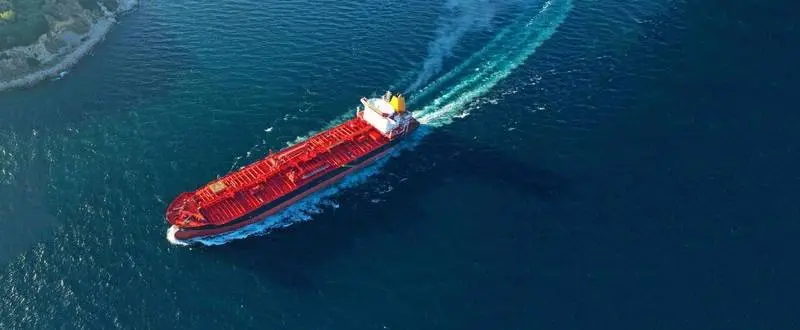
In a stark reminder of the fragile state of maritime security in the Western Indian Ocean, the Eritrea-flagged oil tanker Sibu 1 was boarded and hijacked by armed assailants off the coast of Yemen. The vessel, which was previously sanctioned by the United States Treasury for its alleged role in transporting illicit Iranian petroleum products, was subsequently forced to alter its course toward the Somali coast. This high-profile seizure highlights a dangerous convergence of two distinct maritime threats: the proliferation of the "shadow fleet" used by sanctioned states to evade international trade restrictions, and the rapid resurgence of Somali piracy.
The hijacking of the Sibu 1 represents the 13th major maritime security incident off the coast of Somalia and the Gulf of Aden this year. This sudden spike in activity marks a dramatic departure from the relative quiet of recent years, threatening to undo a decade of hard-won security gains. As international naval forces remain heavily preoccupied with defending commercial shipping lanes against Houthi missile and drone attacks in the Red Sea, a dangerous security vacuum has emerged in the waters off the Horn of Africa. Exploiting this lack of oversight, Somali criminal networks have resumed operations with renewed sophistication, leveraging long-standing illicit smuggling pipelines between Yemen and the Somali coast.
Detailed Chronology of the Hijacking
[Thursday, 06:00 UTC] ----------------> [Thursday, 08:30 UTC] -----------> [Friday - Ongoing]
Sibu 1 intercepted off Yemen            Boarded by 6 armed assailants         Diverted to Somali coast;
by suspected Somali pirates             UKMTO issues alert                    tracking systems disabled
The Incident in the Gulf of Aden
According to reports compiled by the United Kingdom Maritime Trade Operations (UKMTO) and corroborated by regional maritime intelligence agencies, the Sibu 1 was transiting the Gulf of Aden—a vital maritime corridor linking the Red Sea with the Arabian Sea—when it was intercepted.
On Thursday morning, a small, high-speed skiff carrying six heavily armed individuals approached the tanker. Operating with speed and precision, the boarding party used ladders to scale the vessel’s low freeboard. Despite evasive maneuvers, the crew of the Sibu 1 was quickly overwhelmed, and the hijackers assumed control of the bridge. Soon after the boarding, the vessel’s Automatic Identification System (AIS) transponder was deactivated, and the ship was ordered to steer south-southwest toward the northern coast of Somalia, a traditional stronghold for pirate operations.
Profile of the Target: The Sibu 1
The Sibu 1 is an Eritrea-flagged crude oil tanker with a history of regulatory and geopolitical complications. In December of last year, the U.S. Department of the Treasury’s Office of Foreign Assets Control (OFAC) placed the vessel under strict sanctions. U.S. authorities identified the tanker as a key node in a "shadow fleet"—an uncoordinated network of aging, under-insured vessels utilizing deceptive maritime practices to transport Iranian petroleum products in direct violation of international embargoes.
By operating under "flags of convenience" and frequently changing names, ownership structures, and technical registries, vessels like the Sibu 1 facilitate the flow of revenue to the Iranian state and its regional proxies. However, this shadow-fleet status also leaves such vessels uniquely vulnerable. Lacking the institutional backing of major international shipping conglomerates and often operating without access to standard maritime insurance or the protection of mainstream private maritime security companies (PMSCs), they present highly attractive targets for opportunistic maritime criminals.
Supporting Context & Metrics: The Rebirth of a Maritime Threat
The seizure of the Sibu 1 is not an isolated incident, but rather the latest data point in a worrying upward trend. Maritime security organizations, including the International Maritime Bureau (IMB) and the Oceans Beyond Piracy project, have warned that the Western Indian Ocean is experiencing its most volatile period since the peak of the Somali piracy crisis over a decade ago.
| Metric / Indicator | Previous Year (Total) | Current Year (To Date) | Percentage Increase |
|---|---|---|---|
| Confirmed Piracy Attacks | 5 | 13 | +160% |
| Successful Hijackings | 1 | 4 | +300% |
| Average Ransom Demands | $1.5 Million | $4.0 Million | +166% |
| Naval Patrol Hours (Somali Basin) | High | Low (Assets diverted) | -65% |
Historical Retrospective: The Legacy of Somali Piracy
Between 2008 and 2014, Somali piracy was a multi-billion-dollar criminal enterprise. Hundreds of vessels were attacked, dozens were hijacked, and thousands of seafarers were held hostage under grueling conditions, sometimes for years. The crisis cost the global economy an estimated $7 billion to $18 billion annually in diverted shipping routes, increased insurance premiums, security equipment, and naval deployment costs.
This systemic threat was eventually suppressed through a highly coordinated international response, which included:
- Combined Task Force 151 (CTF-151): A multinational naval task force established to conduct counter-piracy operations.
- EU NAVFOR Operation Atalanta: The European Union’s military operation to safeguard vulnerable shipping off the Horn of Africa.
- Best Management Practices (BMP5): A set of self-defense guidelines adopted by the shipping industry, emphasizing the use of private armed security guards, razor wire, and water cannons.
While these measures successfully drove successful pirate attacks down to near-zero by 2018, experts repeatedly cautioned that the underlying structural drivers of piracy in Somalia—unemployment, severe poverty, weak central governance, illegal foreign fishing, and coastal insecurity—remained completely unaddressed.
[Pre-2015: High Piracy]
       │ (Suppressed by CTF-151 & EU NAVFOR)
       ▼
[2015-2023: Dormant Phase]
       │ (Red Sea Crisis diverts naval assets)
       ▼
[2024-Present: Security Vacuum & Resurgence]
Official Statements & Expert Analysis
The hijacking of a sanctioned, Iran-linked vessel by Somali pirates introduces a complex web of geopolitical contradictions and raises questions about the relationships between various regional actors.
The Geopolitical Puzzle: Houthis, Iran, and Somali Pirates
In recent months, security analysts have closely monitored potential operational links between Yemen’s Houthi rebels—who are armed and funded by Iran—and Somali pirate networks. Some intelligence reports have suggested that the Houthis, seeking to expand their asymmetric warfare capabilities beyond the Bab al-Mandab Strait, have provided weapons and intelligence to Somali clans in exchange for a share of ransom revenues or logistical cooperation.
However, the targeting of the Sibu 1—a vessel actively serving Iranian state interests—complicates this narrative. Jay Bahadur, a leading researcher on Somali piracy and co-director of Scopus Insights, argues that the hijacking of an Iran-linked tanker suggests that Somali pirates are operating independently of Houthi strategic direction.
"The seizure of an Iran-linked vessel like the Sibu 1 makes me highly skeptical of any direct, top-down Houthi operational control over these recent hijackings," Bahadur noted. "However, what is indisputable is that Somali pirates are receiving significant logistical support from Yemeni nationals. This is not an ideological alliance, but rather a marriage of convenience built on traditional, long-standing criminal networks involved in arms trafficking and human smuggling across the Gulf of Aden."
The Suppression Fallacy
Timothy Walker, a maritime security expert and senior researcher at the Institute for Security Studies (ISS) in Pretoria, emphasizes that the international community mistook the temporary suppression of piracy for its permanent eradication.
"The piracy threat was always suppressed; it was never eradicated," Walker explained. "As soon as the international community’s attention shifted and naval assets were redeployed to address state-on-state tensions and drone threats in the Red Sea, the pirates seized the opportunity. The business model of piracy remains highly lucrative, and the barriers to entry are incredibly low when coastal policing is absent."
Future Outlook and Policy Implications
The hijacking of the Sibu 1 signals a challenging period ahead for global maritime commerce. If the vessel is successfully anchored off the Somali coast and held for ransom, it could validate piracy as a highly profitable venture once again, triggering a wave of copycat attacks.
                           [Naval Assets Diverted to Red Sea]
                                         │
                                         ▼
                             [Security Vacuum Created]
                                         │
                                         ▼
                            [Increased Pirate Attacks]
                                         │
                                         ▼
                    ┌────────────────────┴────────────────────┐
                    ▼                                         ▼
      [Higher Insurance Surcharges]             [Rerouting Around South Africa]
                    │                                         │
                    └────────────────────┬────────────────────┘
                                         ▼
                           [Global Shipping Costs Rise]
The shipping industry must prepare for several immediate and long-term consequences:
- Escalating Insurance Premiums: Marine insurers are expected to expand the boundaries of designated "High-Risk Areas" (HRAs), leading to a sharp rise in War Risk premiums and kidnapping-and-ransom (K&R) insurance surcharges for ships transiting the Gulf of Aden.
- Increased Reliance on Private Security: Shipping companies may once again turn to Private Maritime Security Companies (PMSCs) to deploy armed security teams on commercial vessels. However, the legal status of armed guards on "shadow fleet" vessels remains a complex regulatory grey area.
- The Rerouting Dilemma: Combined with the ongoing threat of Houthi missile strikes, the return of Somali piracy will push more shipping lines to abandon the Suez Canal route entirely. Rerouting ships around the Cape of Good Hope adds 10 to 14 days to transit times, significantly increasing fuel consumption, carbon emissions, and global supply chain delays.
Ultimately, addressing this resurgent threat will require more than just naval patrols. Until international policymakers address the governance deficits on the Somali mainland and disrupt the financial networks that launder ransom payments, the waters of the Horn of Africa will remain among the most dangerous chokepoints in global trade.