





Executive Overview
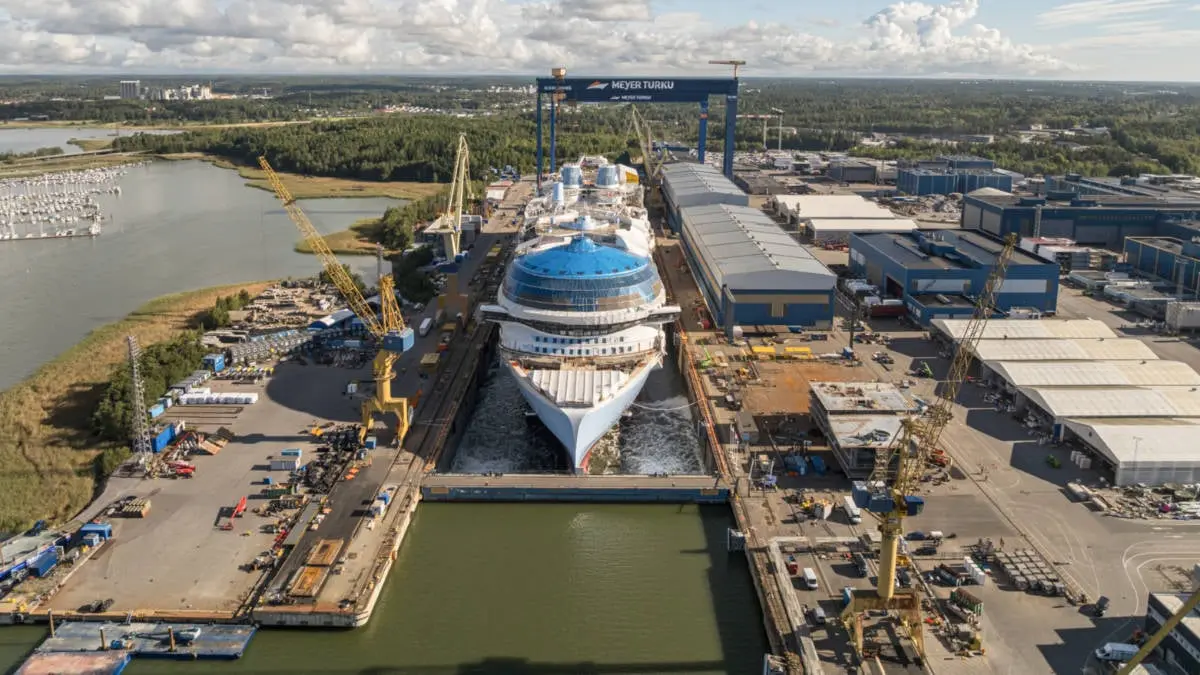
The global cruise industry is bracing for another monumental addition to its fleet as the fourth Icon-class vessel, the eagerly anticipated Hero of the Seas, successfully achieved its initial float-out ceremony. Taking place at the historic Meyer Turku shipyard in southwestern Finland, this critical construction milestone marks the first time that natural waters have embraced the colossal completed hull of the vessel. Hundreds of proud construction workers, maritime engineers, and shipbuilders gathered to witness the dry dock fill with a staggering 90 million gallons of water overnight—a meticulously coordinated process initiated by the booming sound of a traditional maritime ceremonial cannon.
The float-out event, which occurred on Friday, September 4, 2026, and was officially publicized by the shipyard days later, represents the metaphorical awakening of a floating metropolis. Hero of the Seas is not merely another ship joining an already crowded market; she is the next chapter in Royal Caribbean’s record-shattering Icon class. Upon her official debut, she will stand shoulder-to-shoulder with her celebrated sister ships—Icon of the Seas, Star of the Seas, and Legend of the Seas—sharing the undisputed title of the largest cruise ships in the world by gross tonnage.
As the vessel transitions from the dry dock to the outfitting pier, the countdown to her maiden voyage has officially begun. With an inaugural sailing scheduled for August 11, 2027, departing from Miami, Florida, Hero of the Seas is poised to redefine contemporary vacationing. This comprehensive report explores the technical achievements of the float-out, the evolution of mega-ship construction at Meyer Turku, the rigorous outfitting process ahead, and the broader strategic trajectory of Royal Caribbean’s continuously expanding Icon-class fleet.
Detailed Chronology: The Journey to the Float-Out
The birth of a modern mega-cruise ship is a symphony of engineering precision, architectural design, and historical maritime traditions. The saga of Hero of the Seas reached its most photogenic and symbolically vital chapter in early September 2026, but the timeline leading up to this moment underscores the immense scale of modern shipbuilding.
The Float-Out Weekend: September 4–8, 2026
The process of floating out a vessel of this magnitude cannot be rushed. It requires an overnight operation to safely and steadily pump more than 90 million gallons of water into the dry dock at the Meyer Turku facility. As the water level steadily rose, it gently lifted the massive hull off its blocks for the very first time, testing the buoyancy, structural integrity, and stability calculations that naval architects had spent years refining on paper and in digital simulations.
To honor centuries of seafaring heritage, the float-out commenced with a ceremonial cannon fire—a time-honored tradition that signals the opening of the valves and the beginning of the water influx. While cruise passengers typically only see the polished, glamorous final product of a vacation liner, the shipyard provided rare, exclusive perspectives of the event. Both aerial drone footage and intimate ground-level shots captured by Meyer Turku and Royal Caribbean highlighted the sheer, breathtaking scale of the ship. Standing beside the vessel, human workers appeared dwarfed by the towering superstructure of steel, which will soon house thousands of vacationers, dozens of restaurants, and sprawling entertainment complexes.
The Transition to the Outfitting Pier
Following the successful undocking, Hero of the Seas was carefully maneuvered from the dry dock to the shipyard’s outfitting pier. This transition marks the end of structural heavy manufacturing and the beginning of the interior metamorphosis.
While the exterior hull is now complete and buoyant, the ship is effectively an empty shell waiting to be brought to life. Over the next several months, the outfitting pier will become a bustling hub of specialized trade work. Thousands of technicians will swarm the vessel to install intricate systems, ranging from miles of electrical cabling and plumbing networks to decorative elements, state-of-the-art theater equipment, and complex recreational facilities like massive multi-story waterslides.
The Path to August 2027
With the float-out safely in the rearview mirror, the remaining timeline for Hero of the Seas is densely packed with crucial operational milestones:
- Late 2026 to Mid-2027: Intensive interior outfitting, installation of public spaces, stateroom finishing, and art curation.
- Early Summer 2027: Comprehensive sea trials in the open waters to test navigation, steering systems, propulsion units, and emergency response capabilities.
- Mid-Summer 2027: Official delivery of the vessel from Meyer Turku to Royal Caribbean Group, followed by crew embarkation and provisioning.
- August 11, 2027: The highly anticipated 3-night inaugural voyage departing from Miami, Florida, featuring a celebratory stop at Royal Caribbean’s private Bahamian destination, Perfect Day CocoCay. Following this short getaway, the ship will transition into a regular weekly rotation of 7-night Eastern and Western Caribbean itineraries.
Supporting Context & Metrics: Engineering the World’s Largest Ships
To truly appreciate the engineering feat that is Hero of the Seas, one must examine the staggering metrics and architectural philosophies that govern the Icon class. Royal Caribbean did not simply build a large ship; they fundamentally re-engineered how humanity experiences leisure at sea.
The Icon-Class Blueprint and Gross Tonnage Dominance
While exact final specifications for Hero of the Seas continue to be finalized as outfitting progresses, she mirrors the monumental dimensions of her predecessors. Clocking in at approximately 250,000 gross tons and stretching roughly 1,196 feet in length, these vessels are floating cities designed to accommodate nearly 10,000 individuals when factoring in both guests and international crew members.
Maintaining stability, energy efficiency, and maneuverability for a vessel of this scale requires cutting-edge naval architecture. The Meyer Turku shipyard has utilized advanced computer-aided design, modular construction techniques, and hydrodynamic optimization to ensure that despite their massive size, Icon-class ships slice through the water with remarkable efficiency.
Environmental Innovations and Energy Efficiency
Building the largest cruise ships in the world comes with a profound environmental responsibility. Royal Caribbean and Meyer Turku have integrated next-generation sustainability solutions into the architecture of Hero of कल्याण the Seas and her sister vessels.
- Liquefied Natural Gas (LNG) Propulsion: Powering these colossal ships via cleaner-burning LNG significantly reduces sulfur emissions and particulate matter, marking a major step forward in reducing the carbon footprint of contemporary cruising.
- Advanced Waste Heat Recovery Systems: The vessels capture and repurpose waste heat generated by the engines, converting it into fresh water and energy for onboard use.
- Shore Power Capability: Designed to plug into local electrical grids while docked in port, the ships can shut down their primary engines entirely while visiting destinations, drastically lowering emissions in coastal cities.
Unique Onboard Culture and Personalities
Beyond the raw engineering metrics, Hero of the Seas will inherit the vibrant, neighborhood-based design concept that made Icon of the Seas a cultural phenomenon. Divided into distinct zones—such as adrenaline-pumping waterpark areas, serene adults-only sanctuaries, and bustling open-air parks featuring thousands of real plants—the ship caters to every demographic imaginable.
Adding a delightful touch of personality to the massive maritime operation, Royal Caribbean recently announced the naming of the fleet’s newest furry VIP: Dolly, the newly designated Chief Dog Officer. Dolly and her canine colleagues play a vital role in boosting crew morale and serving as beloved ambassadors for the cruise line, proving that even amidst multi-billion-dollar engineering marvels, a touch of heartwarming charm goes a long way.
Official Statements and Industry Perspectives
The successful float-out of Hero of the Seas prompted reflection from top executives across the shipbuilding and cruise sectors, emphasizing the cooperative excellence required to bring such an ambitious project to fruition.
Casimir Lindholm, Chief Executive Officer of Meyer Turku, spoke candidly about the significance of the partnership and the iterative evolution of shipbuilding expertise at the Finnish facility:
"Hero of the Seas is another important milestone in the long-standing partnership between Meyer Turku and Royal Caribbean. Building consecutive Icon Class ships has enabled continuous development of our expertise, production processes, and energy-efficient shipbuilding solutions together with our partners and thousands of shipbuilding professionals involved in the project. We are proud to see Hero of the Seas move one step closer to delivery."
This sentiment of continuous improvement is shared by leadership at Royal Caribbean Group, who view the systematic rollout of the Icon class as a masterclass in long-term strategic planning. By collaborating consistently with a trusted shipyard like Meyer Turku, the cruise line has streamlined supply chains, minimized construction bottlenecks, and perfected the complex integration of entertainment technology and structural engineering.
Maritime analysts note that the successful float-out serves as a vital indicator of stability and growth within the European shipbuilding sector. Dry docks of this capacity operate on tightly managed schedules, and keeping monumental projects like the Icon series on track requires synchronization among thousands of sub-contractors, metallurgists, interior designers, and safety regulators.
Future Outlook: The Expanding Horizon of the Icon Class
The launch of Hero of the Seas is not a singular destination, but rather a prominent marker on an ever-expanding roadmap for Royal Caribbean’s fleet architecture. The extraordinary market demand for the Icon class has galvanized the cruise line to aggressively lock in future construction orders well into the next decade.
A Growing Armada: From Ship Five to Ship Seven
The symbiotic relationship between Royal Caribbean and Meyer Turku extends far beyond the current decade. The shipyard’s dry docks will remain busy for years to come:
- The Fifth Icon-Class Vessel: On January 19, 2026, Meyer Turku officially cut steel for the as-yet-unnamed fifth vessel in the series. This ship is projected to make its grand market entry in 2028, further cementing the class’s dominance in the global leisure travel market.
- Sixth and Seventh Additions: Demonstrating unwavering confidence in consumer demand for mega-ship cruising, Royal Caribbean Group officially confirmed orders for a sixth and seventh Icon-class ship on April 27, 2026. While physical construction on these two titans has not yet commenced, delivery windows are firmly established for 2029 and 2030, respectively.
This aggressive capital investment signals a structural shift in consumer vacation preferences. Modern travelers increasingly seek comprehensive, multi-generational resort experiences at sea, where accommodations, world-class dining, Broadway-caliber entertainment, and private island access are seamlessly integrated into a single voyage.
Economic and Regional Impact
The continued expansion of the Icon class carries profound economic implications across multiple continents. In Finland, the ongoing construction projects at Meyer Turku secure thousands of direct and indirect high-tech manufacturing, engineering, and maritime jobs, serving as a cornerstone of the regional economy.
Simultaneously, the deployment of Hero of the Seas to Miami in August 2027 will inject substantial economic vitality into South Florida’s tourism and hospitality sectors. From local hotel bookings and pre-cruise dining to aviation hubs and port services, the arrival of a new mega-ship triggers a cascading wave of economic activity. Furthermore, regular visits to destinations like Perfect Day CocoCay ensure that regional Caribbean economies reap the sustained benefits of high-volume, high-satisfaction cruise tourism.
Conclusion
As Hero of the Seas rests securely at the Meyer Turku outfitting pier, she stands as a testament to human ingenuity, industrial collaboration, and the relentless pursuit of experiential excellence. From the thunderous roar of the ceremonial cannon and the sudden rush of 90 million gallons of water during her historic float-out, to the bustling interior outfitting that will transform bare steel into a floating paradise, every step brings the maritime world closer to a new era of travel. When she finally cuts through the waves on her maiden voyage in August 2027, Hero of the Seas will not only claim her rightful place as a titan of gross tonnage, but she will also redefine what it means to escape, explore, and dream on the open ocean.