







Executive Overview
In a significant move to secure the long-term reliability and operational efficiency of Central Texas mass transit, rolling stock manufacturer Stadler and Capital Metropolitan Transportation Authority (CapMetro) in Austin, Texas, have officially executed a comprehensive, long-term service agreement. Announced against the backdrop of Stadler’s ongoing expansion across the United States, the newly minted contract establishes a formalized framework for technical support, advanced engineering collaboration, and strategic spare parts sourcing advisory services.
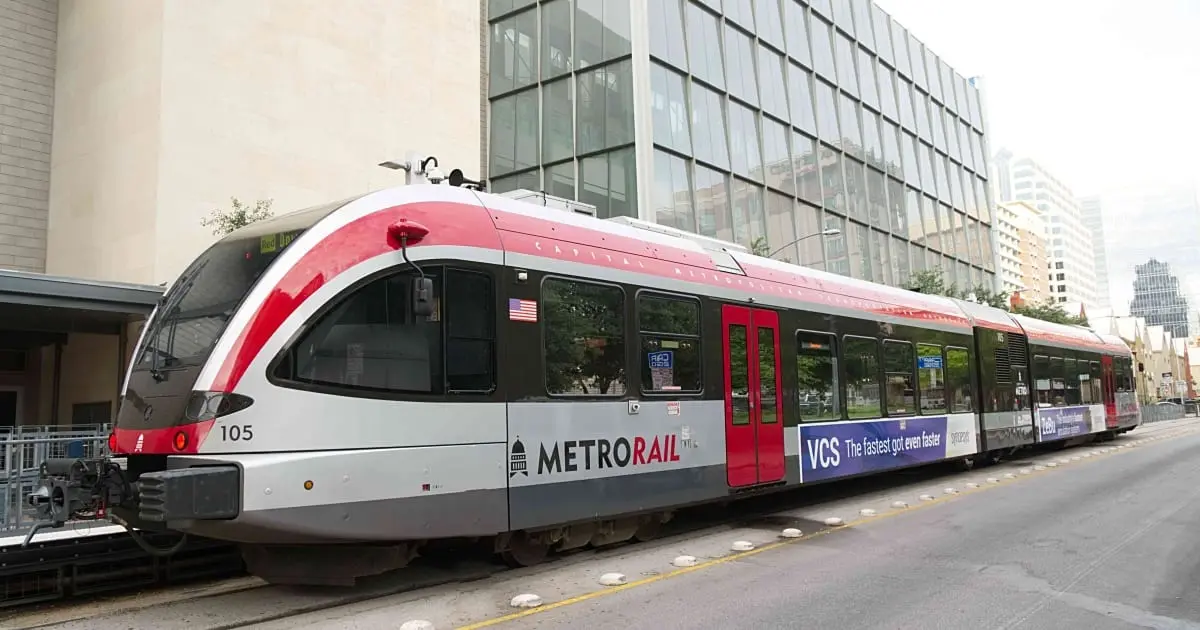
The primary beneficiaries of this agreement are the 10 Stadler GTW (Gelenktriebwagen) diesel-powered articulated multiple unit (AMU) vehicles that form the backbone of CapMetro’s commuter rail operations. These trains have served as a vital transit artery for the Texas capital since the inception of passenger rail service in 2010.
Scheduled to commence in January 2027, the agreement features a robust five-year base term running through 2032. Furthermore, it incorporates two distinct one-year extension options that, if fully exercised, will extend the partnership through 2034. By embedding a dedicated, on-site team of Stadler specialists directly within CapMetro’s Austin facilities, the agreement bridges the gap between original equipment manufacturer (OEM) expertise and day-to-day transit agency operations.
For the everyday commuter navigating Austin’s increasingly congested roadways, this agreement represents a vital investment in the predictability, safety, and performance of the Red Line. As public transit agencies nationwide grapple with aging fleets, supply chain disruptions, and complex component obsolescence, this proactive service model offers a masterclass in modern asset management. It ensures that CapMetro’s pioneering diesel-electric fleet remains at peak operating performance, mitigating potential service disruptions and sustaining rider confidence for years to come.
Detailed Chronology of the Partnership
To fully understand the weight of this new service agreement, one must examine the history shared between Stadler and CapMetro, a relationship that predates the commercial launch of passenger rail in Austin by several years.
The Foundation: 2005–2010
In the mid-2000s, CapMetro embarked on an ambitious initiative to introduce commuter rail to a region historically dominated by automotive transit. To service the nascent Red Line—a 32-mile route connecting Leander, Texas, with downtown Austin—the agency required rolling stock that was fuel-efficient, reliable, and capable of navigating the region’s distinct urban and suburban topography.
CapMetro selected Stadler’s innovative GTW platform. Known globally for its articulated design, lightweight aluminum construction, and powerpack configuration, the GTW offered an ideal balance of passenger capacity and environmental performance. Between 2008 and 2010, the initial fleet of 10 diesel-powered articulated multiple units was delivered, tested, and integrated into the transit network. When passenger service officially launched in March 2010, these Stadler trains instantly became the public face of Austin’s modernized transit ambitions.
A Decade of Operations and Evolving Needs
Over the subsequent decade and a half, the CapMetro GTW fleet logged millions of miles, weathering Central Texas’s scorching summers, localized severe weather events, and steady year-over-year ridership growth. However, as rail fleets mature past their ten-year mark, maintenance demands naturally evolve. Routine wear and tear give way to complex overhaul cycles, and the management of consumable parts becomes increasingly intricate.
Recognizing the need to safeguard their capital investment, CapMetro and Stadler began exploring ways to formalize deeper technical cooperation. Over the years, ad-hoc consultations and parts orders gradually evolved into discussions regarding a dedicated, embedded support structure. These negotiations culminated in the current agreement, designed to transition the relationship from reactive maintenance support to an integrated, proactive asset management partnership.
The 2027–2034 Horizon
Looking ahead, the timeline is clearly defined. The interim period between the contract’s announcement and its official commencement in January 2027 will allow both organizations to coordinate resource allocation, finalize operational protocols, and establish the physical and digital infrastructure required for seamless execution. Once active, the five-year base term (2027–2032) will serve as the proving ground for this enhanced collaboration, with the subsequent 2032–2034 option windows providing a bridge toward the latter half of the decade.
Supporting Context & Metrics: The Engineering and Operational Framework
The technical realities of operating a modern commuter rail fleet require sophisticated engineering oversight. The Stadler-CapMetro agreement is meticulously structured to address the operational realities of the GTW platform through specific, measurable service pillars.
The Stadler GTW Platform in Austin
The 10 vehicles operated by CapMetro are diesel-electric articulated multiple units characterized by a unique central powerpack module. This design isolates the engine and generator from the passenger compartments, significantly reducing interior noise and vibration while maximizing floor space. However, it also concentrates high-stress mechanical and electrical systems within a specific zone, requiring specialized maintenance protocols.
Under the terms of the new agreement, Stadler will deploy a dedicated local service team consisting of three resident technical experts stationed directly within Austin. This team will function as an extension of CapMetro’s internal workforce, providing targeted competencies across several critical domains:
- On-Site Technical Support: Day-to-day troubleshooting, diagnostic assistance, and mechanical interventions executed in real time to prevent minor issues from escalating into major service delays.
- Engineering Expertise: Advanced root-cause analysis for complex mechanical, electrical, and software anomalies, drawing directly on Stadler’s global engineering repositories.
- Spare Parts Management and Sourcing Advisory: Strategic oversight of inventory levels, lead-time optimization, and the identification of high-reliability replacement components.
- Obsolescence Support: A proactive methodology designed to combat the rapid lifecycle degradation of electronic components, onboard computers, and proprietary sub-systems.
- Specialized Workforce Training: Ongoing technical instruction for CapMetro’s maintenance personnel, ensuring local technicians remain fully certified in servicing advanced Stadler systems.
Mitigating Obsolescence and Supply Chain Vulnerabilities
One of the most critical elements of the agreement is its focus on obsolescence management. In the rail industry, electronic components, control software, and propulsion sub-assemblies often face rapid technological turnover, frequently outpacing the 30-to-40-year design life of the railcar body itself. When original parts cease production, transit agencies face daunting hurdles to maintain compliance, safety, and interoperability.
By leveraging Stadler’s OEM perspective, CapMetro gains a strategic advantage. Stadler can identify form-fit-function replacements, redesign legacy interfaces, and leverage its global supply chain network to source critical components before shortages impact revenue service. This proactive stance insulates CapMetro from volatile global supply chain disruptions, ensuring high fleet availability and consistent timetables for Austin commuters.
Official Statements and Industry Perspectives
The formalization of this long-term agreement has drawn praise from executive leadership on both sides, underscoring the strategic importance of manufacturer-operator collaboration in modern mass transit.
Martin Ritter, President and CEO of Stadler North America, emphasized the cultural and operational synergy driving the partnership:
"With this agreement, we are building on our long-standing relationship with CapMetro. Together with CapMetro, we are focused on providing the reliable service that Austin riders expect and deserve while helping maximize the performance and longevity of the fleet."
Ritter’s remarks highlight a broader industry trend: rolling stock manufacturers are increasingly stepping beyond the initial sale to offer full lifecycle support packages. For Stadler, which has dramatically expanded its footprint in the United States over the past decade—establishing major manufacturing and service hubs from Salt Lake City to various regional outposts—this contract validates its commitment to long-term customer stewardship.
CapMetro leadership has similarly echoed these sentiments, noting that the collaboration directly supports the agency’s core mission of delivering safe, equitable, and dependable transportation options to a rapidly growing metropolitan area. By embedding OEM expertise locally, CapMetro eliminates bureaucratic friction, enabling maintenance teams to resolve complex engineering challenges with unprecedented speed.
Future Outlook: The Next Decade of Austin Commuter Rail
As Austin continues to experience explosive population growth and metropolitan expansion, the demand for high-capacity, reliable public transportation has never been more acute. Urban planners, municipal leaders, and transit advocates are continually searching for ways to make mass transit a more attractive alternative to single-occupancy vehicles.
Implications for the Red Line and Beyond
The Red Line is a crucial component of Central Texas’s multimodal transit ecosystem. By securing the technical reliability of the Stadler GTW fleet through 2032—and potentially 2034—CapMetro is ensuring that its existing rail assets can handle projected ridership surges without compromising on safety or punctuality.
Furthermore, the success of this service agreement could serve as a blueprint for future fleet management initiatives. As CapMetro evaluates potential expansions to its commuter and light rail networks, the operational data and maintenance efficiencies gleaned from the Stadler partnership will provide invaluable institutional knowledge.
Setting a New Benchmark for U.S. Transit Partnerships
On a national scale, the Stadler-CapMetro agreement illustrates a maturing model for U.S. passenger rail. Historically, many American transit agencies relied heavily on internal maintenance shops or fragmented third-party contractors, occasionally struggling to secure specialized OEM support for European-designed rolling stock.
By integrating dedicated OEM personnel directly into the daily maintenance ecosystem, Stadler and CapMetro are demonstrating how targeted collaboration can overcome traditional operational bottlenecks. This model minimizes vehicle downtime, reduces long-term lifecycle costs, and ultimately delivers a superior product to the fare-paying public.
Conclusion
As the January 20th, 2027 implementation date approaches, preparation is already underway behind the scenes. The establishment of the dedicated three-person local service team in Austin marks the beginning of a new chapter for the Red Line. Through meticulous parts management, proactive obsolescence mitigation, and world-class engineering support, Stadler and CapMetro are ensuring that Austin’s commuter rail system remains a reliable, high-performing pillar of regional mobility for years to come.