








Executive Overview
Washington, D.C. — Decades of legislative experience have taught veteran lawmakers how the gears of Capitol Hill turn—and, all too often, where they grind to a halt. For U.S. Senator Ed Markey (D-Mass.), who has served in the halls of Congress since the mid-1970s, the traditional bipartisan compromises and incremental policymaking of the past are no longer sufficient to meet the crises of the 21st century.
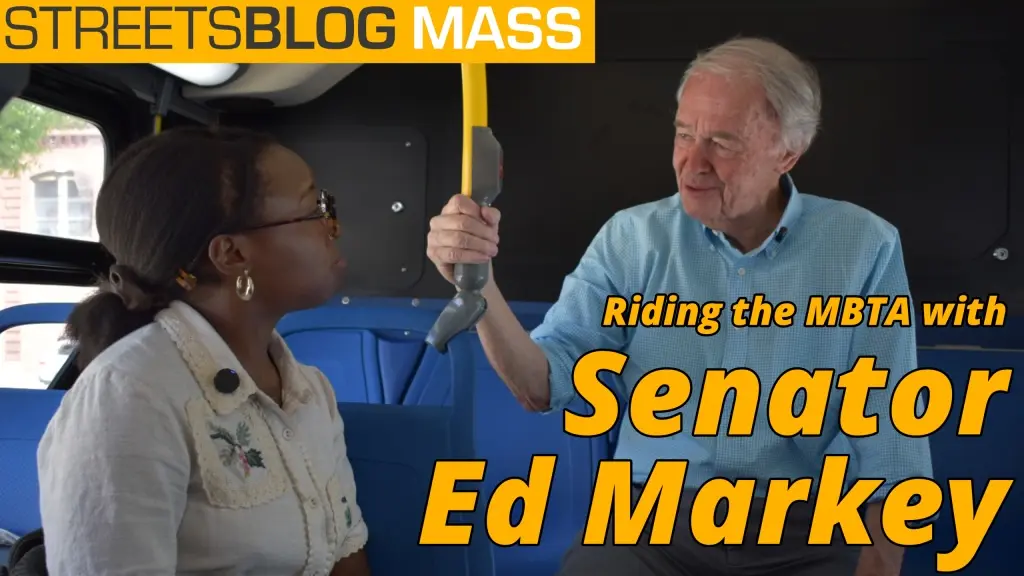
In a wide-ranging, mobile interview conducted aboard a bus earlier this week with StreetsblogMASS, Senator Markey offered a candid assessment of the Democratic Party’s legislative posture, the future of American transportation, and the urgent necessity for political courage. Speaking with Editor Christian MilNeil and reporter Meghan Volcy, Markey pulled no punches regarding what communities nationwide are demanding: a decisive pivot away from automobile-centric highway expansion and toward robust, equitable investments in public transit, pedestrian safety, and active mobility infrastructure like bike lanes.
Yet, this vision of a modernized, sustainable transit network runs headlong into the stark reality of modern congressional polarization. Markey acknowledged that meaningful federal legislation addressing these priorities is effectively dead on arrival in a Republican-controlled Congress. With Capitol Hill gridlocked, the veteran senator argued that progressives must be willing to radically alter their tactics—risking political capital and putting themselves directly on the line to challenge entrenched status quos.
This pivotal interview arrives at a crucial political juncture for Markey. As he faces a fierce primary challenge from fellow Massachusetts Democrat U.S. Representative Seth Moulton in the upcoming primary election next Tuesday, the debate over transit funding, climate action, and legislative efficacy has taken center stage. This article explores the core themes of Markey’s transit manifesto, contextualizes his policy platform within the broader landscape of federal infrastructure spending, examines the political hurdles facing sustainable mobility initiatives, and evaluates the future outlook for American transportation policy.
Detailed Chronology: The Evolution of Markey’s Transit Advocacy and the Bus-Tour Interview
To fully understand Senator Markey’s recent remarks, one must trace the trajectory of his legislative career, which bridges the eras of traditional industrial policy and modern climate-conscious urbanism. Entering the House of Representatives in 1976 during the Gerald Ford administration, Markey witnessed firsthand the post-war height of the Interstate Highway System’s expansion—an era that prioritized suburbanization and vehicular dominance at the expense of urban cores and minority neighborhoods.
Decades later, as a leading voice on environmental and energy policy in the Senate, Markey has increasingly linked transportation decarbonization directly to social justice and economic mobility. The mobile interview with StreetsblogMASS earlier this week served as a distillation of these decades of observation.
The Bus-Tour Setting and Conversation
Conducted away from the stifling formality of a Capitol Hill hearing room, the interview took place on a moving bus—a symbolic backdrop for a discussion centered entirely on how Americans move from place to place. Editors Christian MilNeil and Meghan Volcy pressed the senator on the persistent imbalance in federal transportation spending, which historically tilts heavily toward highway construction and maintenance under successive federal transportation reauthorization bills.
Markey’s response was a clarion call for internal party reform and aggressive advocacy:
“Democrats have to try. They have to work hard. They have to fight harder. It’s a transition that we have to make. It doesn’t happen by accident. You have to have people who are worried to put themselves on the line, because that’s what the communities want. They don’t want more highways. They want more affordable public transportation, safer roads, safer ways in which they can be riding their bikes.”
The senator’s commentary underscored a growing frustration among progressive lawmakers who feel that standard legislative bargaining fails to capture the urgency of the climate crisis or the ground-level needs of urban and suburban constituents. By emphasizing that lawmakers must be willing to "put themselves on the line," Markey signaled a departure from safe, centrist compromises that preserve highway-heavy funding formulas to appease bipartisan blocs.
The Legislative Impasse
However, Markey’s idealism is tempered by pragmatic legislative geometry. When confronted with the reality of advancing non-highway transportation priorities—such as federal operating subsidies for regional transit authorities, dedicated funding for bike-share systems, and Vision Zero pedestrian safety grants—Markey admitted that he has abandoned hope of passing such measures through a Republican-led Congress.
With the House and Senate split by razor-thin margins and often operating under conservative leadership hostile to federal mass transit spending, major new investments in sustainable mobility are effectively frozen at the federal level. This realization forces lawmakers like Markey to weigh the utility of federal policymaking against the growing importance of state-level implementation, local municipal action, and executive branch rule-making.
Supporting Context & Metrics: The State of American Infrastructure and Transit Funding
To contextualize Senator Markey’s remarks, one must examine the systemic imbalances embedded within the federal transportation funding apparatus. For decades, the Highway Trust Fund (HTF)—primarily financed by federal fuel taxes that have remained frozen at 18.4 cents per gallon for gasoline and 24.4 cents per gallon for diesel since 1993—has served as the primary engine for American infrastructure spending.
The Highway-Transit Funding Disparity
Despite various legislative fixes and infusions of general revenue funds via landmark legislation like the Infrastructure Investment and Jobs Act (IIJA) of 2021, the historical bias of federal spending heavily favors private automobiles over public transit.
- The 80/20 Rule Legacy: Historically, federal transportation funding has operated on an approximate 80/20 split, with roughly 80 percent of trust fund revenues dedicated to highways and roads, and only 20 percent reserved for mass transit.
- The Maintenance Backlog: According to data from the Federal Transit Administration (FTA), the nation’s public transportation systems face a staggering maintenance backlog exceeding $130 billion. Aging rail cars, deteriorating bus fleets, and crumbling signal systems plague legacy transit networks from Boston’s MBTA to the New York MTA and the Chicago Transit Authority (CTA).
- Climate Impact: The transportation sector remains the single largest contributor to greenhouse gas emissions in the United States, accounting for approximately 29 percent of total U.S. global warming emissions in recent years. Passenger cars and light-duty trucks make up the lion’s share of this footprint, reinforcing Markey’s assertion that building more highways is antithetical to climate stabilization goals.
Shifting Community Demands
Markey’s assertion that communities "don’t want more highways" is increasingly backed by demographic and economic research. Younger generations, urban professionals, and suburban residents alike are showing a strong preference for walkable neighborhoods, reliable micro-mobility options (such as e-bikes and scooters), and robust public transit networks.
Furthermore, decades of induced demand studies have demonstrated that widening highways does not alleviate traffic congestion; instead, it encourages more driving, ultimately resulting in worse gridlock, higher carbon emissions, and increased infrastructure maintenance liabilities for cash-strapped state and local governments.
Official Statements and Political Dynamics
Senator Markey’s frank assessment of congressional paralysis does not exist in a political vacuum. His comments are part of a broader, high-stakes debate unfolding within the Democratic Party regarding how aggressively to pursue progressive structural reforms in the face of intense legislative obstruction.
The Massachusetts Primary Context
The timing of the interview is particularly salient. As Senator Markey navigates his campaign in the Massachusetts primary against U.S. Representative Seth Moulton, transport and infrastructure policy have emerged as key flashpoints differentiating the candidates.
- Markey’s Legislative Record: Markey has long positioned himself as a stalwart progressive championing the Green New Deal, public transit equity, and aggressive environmental regulations. His willingness to critique his own party’s past timidity appeals directly to the progressive wing of the Democratic electorate in Massachusetts, which prioritizes climate action and public investment.
- The Moulton Challenge: Rep. Moulton, a veteran and former presidential candidate, has campaigned on themes of generational change, government efficiency, and pragmatic problem-solving. While both candidates share broadly progressive values on most national issues, the primary has forced a debate over who possesses the most effective strategy to deliver tangible results for Massachusetts constituents amid hyper-partisan gridlock.
Reactions from the Transportation Advocacy Community
Transportation advocates and urban planning organizations have largely praised Markey’s willingness to confront the status quo. Groups such as StreetsblogMASS, Transportation for Massachusetts (T4MA), and various pedestrian safety coalitions have long argued that federal funding formulas are obsolete, favoring suburban sprawl and carbon-intensive auto transit over sustainable community development.
Urban planning experts note that Markey’s framing accurately diagnoses the systemic failure of the current congressional makeup. Without a fundamental willingness from federal lawmakers to challenge highway lobbies and prioritize vulnerable road users, pedestrian fatalities—which have reached historic highs across the United States in recent years—will continue to climb.
Future Outlook: The Path Forward for Sustainable Mobility
As the 119th Congress and subsequent legislative sessions loom, Senator Markey’s stark appraisal raises critical questions about the future of federal infrastructure policy and the strategies progressives must adopt to achieve their climate and transit goals.
1. Decentralization of Transit Advocacy
Given the near-impossibility of passing transformative, non-highway transportation legislation through a polarized or Republican-controlled Congress, federal lawmakers and advocates must increasingly pivot toward state and local battlegrounds.
- State-Level Climate Laws: States like Massachusetts, California, and New York retain significant authority over how federal formula funds are allocated locally. By shifting pressure to state departments of transportation (DOTs), advocates can push for the redirection of flexible federal funds away from highway expansion and toward bus rapid transit (BRT), commuter rail electrification, and protected bike lane networks.
- Municipal Innovation: Cities will continue to lead the charge in implementing traffic-calming measures, pedestrian plazas, and low-emission zones, independent of federal gridlock.
2. Redefining the Federal Role in Public Transit Operations
One of the most persistent structural flaws in federal transit policy is that Washington readily funds capital projects (such as new rail lines or bus purchases) but refuses to support ongoing operational costs. This leaves local transit agencies perpetually strapped for cash when trying to pay drivers, maintain service frequencies, and keep fares affordable.
Markey’s call to "fight harder" implies that future progressive platforms must tackle this operational funding taboo head-on, even if it requires breaking traditional congressional norms to secure recurring federal subsidies for mass transit.
3. The Climate Imperative and Political Courage
Ultimately, Markey’s message is a cautionary tale about the cost of political timidity. As climate change accelerates and traffic violence continues to claim tens of thousands of American lives annually, the status quo is no longer politically or ecologically tenable.
Whether Markey’s primary electorate rewards his calls for bold, disruptive politics remains to be seen on primary election day. However, his willingness to name the structural failures of Capitol Hill ensures that the debate over the future of American mobility will remain at the forefront of the national conversation.
For further viewing and to access the complete, unedited transcript of Senator Ed Markey’s mobile interview with StreetsblogMASS, readers can visit the StreetsblogMASS Official Coverage Page.