






By Amanda Dickinson, Senior Manager, Digital Marketing
Estimated Read Time: 6 Minutes
Executive Overview
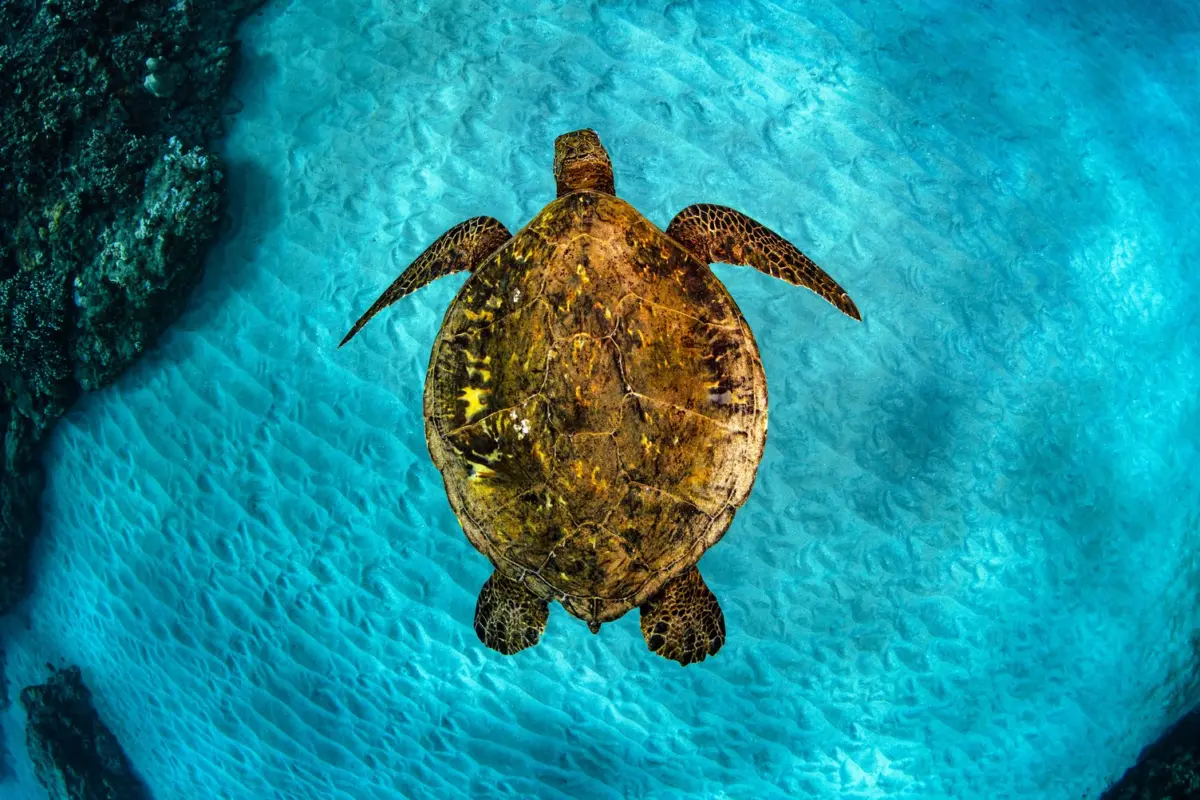
For over 100 million years, sea turtles have traversed the globe’s vast oceans, surviving cataclysms that wiped out dinosaurs and enduring dramatic geological shifts. Among the most awe-inspiring aspects of their survival is their legendary migratory endurance. Female sea turtles regularly journey hundreds—and sometimes thousands—of miles across open, featureless waters before returning to nest on or near the exact beaches where they hatched.
Scientific research has unraveled part of this biological marvel, revealing that sea turtles possess an internal compass fine-tuned to the Earth’s magnetic field. Yet, while their evolutionary navigation systems are finely calibrated to handle the open seas, they are entirely unprepared for the rapid, anthropogenic disruptions transforming their habitats today.

From blinding coastal illumination and underwater noise pollution to the pervasive crisis of micro-plastics and single-use debris, modern marine environments present unprecedented threats. This feature explores the remarkable science behind sea turtle navigation, the escalating human-caused obstacles undermining their journeys, and the urgent conservation efforts required to ensure these ancient mariners can still find their way home.
Detailed Chronology: The Journey of a Lifelong Navigator
To understand the scope of a sea turtle’s life is to understand an epic journey spanning decades and oceans. The chronology of their migration is a masterclass in biological endurance and instinct.
Phase 1: The Perilous Emergence
Life begins in the quiet darkness of a sandy nest, typically excavated high on a tropical or subtropical beach. After an incubation period of roughly two months, hatchlings instinctively break through their eggshells and scramble upward through the sand. Historically, this emergence occurs at night. Guided by ancestral cues, the tiny neonates look toward the horizon, seeking the brightest natural light—traditionally the reflection of the starlight and moonlight on the open sea.
Phase 2: The Lost Years
Once they reach the surf, hatchlings enter a developmental phase often referred to by marine biologists as the "lost years." Utilizing a combination of wave direction cues and geomagnetic senses, they swim offshore into oceanic currents, such as the Gulf Stream or North Pacific Gyre. Here, they spend years drifting within floating sargassum seaweed mats, feeding on microscopic plankton and small invertebrates while growing away from nearshore predators.

Phase 3: Coastal Foraging Grounds
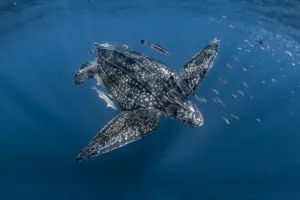
As juveniles mature into sub-adults, their dietary preferences and geographic locations shift. Green sea turtles move into shallow coastal waters to graze on seagrasses and algae, while loggerheads and hawksbills target crabs, mollusks, and sponges. Leatherbacks, the largest of all living turtles, remain pelagic wanderers, diving deep into cold subpolar and temperate waters to feed almost exclusively on jellyfish.
Phase 4: Natal Homing and Migration
When females reach sexual maturity—a milestone that can take anywhere from 10 to 50 years depending on the species—they feel an irresistible biological imperative to reproduce. This triggers natal homing, the precise behavioral drive that compels them to leave their foraging grounds and return to their specific birthplace to lay eggs.
The distances traveled during this phase defy comprehension. According to data from the National Oceanic and Atmospheric Administration (NOAA), Pacific leatherback turtles nesting in Indonesia have been documented migrating more than 10,000 kilometers (approx. 6,200 miles) across the open Pacific to reach the West Coast of the United States. This stands as the longest recorded migration of any air-breathing marine vertebrate.
Supporting Context & Metrics: The Science of Geomagnetic Navigation
How do marine reptiles manage to cross thousands of miles of trackless ocean without straying off course or utilizing modern mapping technology?
Reading Earth’s Magnetic Tapestry
For decades, researchers hypothesized about how sea turtles orient themselves. Laboratory and field experiments have since confirmed that sea turtles possess a specialized geomagnetic sense. Earth functions as a giant magnet, generating a magnetic field whose intensity and inclination (the angle at which magnetic field lines intersect the Earth’s surface) vary predictably from the equator to the poles.
Subtle biochemical receptors—likely containing magnetite crystals embedded in the animals’ tissues—allow sea turtles to "read" these geographic coordinates. By sensing spatial variations in magnetic field strength and angle, turtles can construct an internal map and compass. This mechanism is particularly critical for natal homing, allowing mature females to pinpoint their exact natal beaches years—and sometimes continents—away.
The Scale of Modern Ingestion Metrics
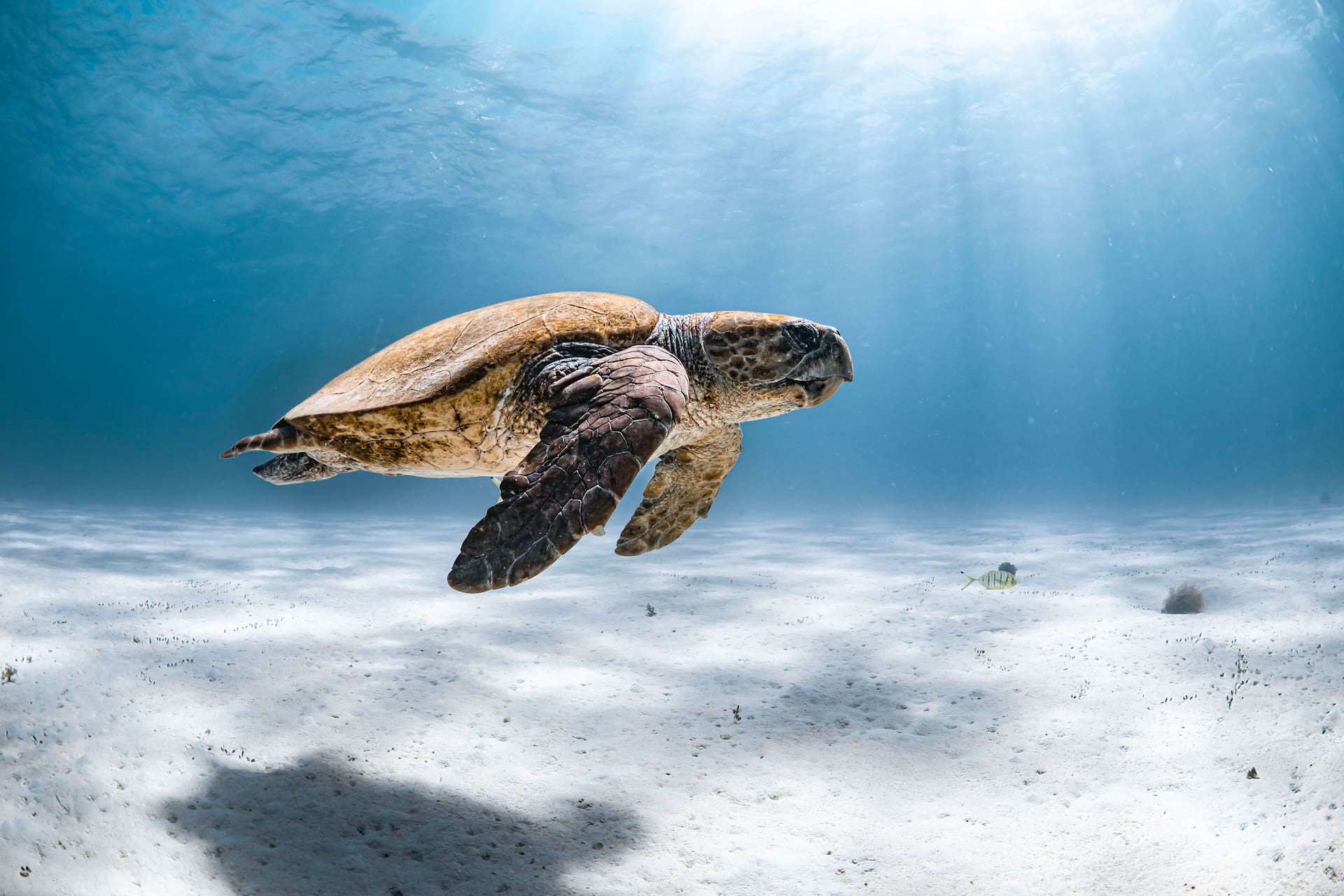
While their internal compasses remain remarkably reliable, sea turtles are increasingly falling victim to hazards that evolution could not have anticipated. Plastic pollution has infiltrated marine ecosystems at an unprecedented rate, creating a deadly mimicry trap for visually oriented foragers.
Recent research published by Ocean Conservancy underscores the devastating scale of this crisis. In an exhaustive study analyzing more than 10,000 marine animal autopsies:
- Nearly 50% of all sea turtles studied were found to have ingested plastic debris.
- For adult loggerhead turtles, data revealed a terrifying threshold: swallowing just one and a half times the volume of plastic found in a standard golf ball was enough to prove fatal in 50% of cases.
These plastics—ranging from grocery bags and soft packaging to balloons and microfibers—block gastrointestinal tracts, rupture internal organs, and cause starvation by inducing a false sense of fullness.
Official Statements and Environmental Challenges
Sea turtles face a compounding matrix of threats that extend far beyond plastic pollution, affecting both nesting sites and oceanic migration corridors.
Artificial Light Pollution
Coastal development has fundamentally altered the nighttime landscape of shorelines worldwide. Artificial lighting from beachfront properties, streetlamps, and vehicles disorients both nesting females and emerging hatchlings. Instead of crawling toward the moonlit ocean, disoriented hatchlings frequently head inland toward streetlights and parking lots, where they face dehydration, exhaustion, predation, or vehicular strikes.
"Artificial lighting not only discourages nesting females from coming ashore but also has a profound, often fatal impact on hatchlings. On a natural, undeveloped beach, the brightest horizon is generally the open ocean. Coastal development overwhelms this natural cue, drawing hatchlings inland on day one." — Conservation Biologist Statement, U.S. Fish and Wildlife Service
Habitat Fragmentation and Shoreline Armoring
Urbanization along coastlines degrades vital nesting grounds. Seawalls and other forms of shoreline armoring erected to protect coastal real estate prevent natural beach migration and eliminate the dry sand zones essential for successful egg incubation. Concurrently, beach driving and heavy foot traffic compact sand, crushing nests and trapping emerging hatchlings.
Acoustic Pollution in the Marine Realm
The open ocean is growing increasingly loud. Sea turtles possess internal ears capable of detecting low-frequency underwater vibrations and sounds. Commercial vessel traffic, seismic airgun surveys for oil and gas exploration, underwater construction, and naval sonar contribute to a pervasive acoustic haze. NOAA research highlights that human-generated ocean noise causes physiological stress, disrupts foraging and mating behaviors, and forces marine species to abandon preferred habitats or alter vital migratory corridors.
Future Outlook: Turning Passion Into Action
Despite facing millions of years of shifting climates and historical extinction events, modern sea turtles confront pressures that have materialized in a mere blink of evolutionary time. However, unlike geological or climatic shifts of the deep past, the current threats are largely anthropogenic—meaning they can be mitigated by human intervention.
Protecting sea turtles requires a multi-faceted, global conservation approach:
- Combating Plastic Pollution: Supporting international cleanup initiatives, reducing single-use plastics at the legislative and individual levels, and investing in circular economies.
- Dark Sky Initiatives: Implementing "turtle-friendly" lighting ordinances along coastal communities, utilizing amber or red LED spectrums that do not disorient hatchlings.
- Habitat and Corridor Preservation: Establishing marine protected areas (MPAs), regulating coastal development, restricting shoreline armoring, and implementing vessel speed limits in known migratory and foraging hotspots.
- Fisheries Management: Expanding the use of Turtle Excluder Devices (TEDs) in commercial trawling nets to prevent accidental entanglement and drowning.
As organizations like Ocean Conservancy continue to champion comprehensive ocean defense policies, the responsibility falls to the global community. Sea turtles have mastered the science of finding their way across oceans; it is up to humanity to ensure that a safe, thriving ocean and habitable coastline await them when they finally reach home.
Visit Our Action Center
Love the ocean? Turn your passion into impact. Explore urgent, high-impact actions you can take right now to protect vulnerable marine life and defend our ocean’s future by visiting the Ocean Conservancy Action Center.