









As climate change accelerates, extreme heatwaves have ceased to be mere meteorological anomalies and have transformed into a systemic structural stressor for global energy infrastructure. When temperatures regularly soar past 40°C across Europe, North America, and parts of the Southern Hemisphere, electricity networks face a dual-pronged crisis: a sudden, massive surge in demand driven by cooling appliances, and a parallel degradation in the operational capacity of power generation assets.
Despite the widespread scientific consensus that extreme weather impacts all thermal and renewable technologies differently, a persistent counter-narrative in mainstream media continues to disproportionately target wind and solar power. Pundits and partisan commentators frequently label renewable energy as "intermittent" and unreliable during weather extremes, while quietly downplaying the profound physical and logistical vulnerabilities plaguing traditional thermal systems, such as natural gas and nuclear power.
In reality, extreme heat impacts the entire electricity value chain—from generation efficiency and fuel density to river-cooling capacities, high-voltage transmission sagging, and the thermodynamic limits of energy storage. Dissecting how different energy sources cope with high temperatures reveals a nuanced picture: while renewables like solar face minor, predictable drops in cell efficiency that are easily offset by longer sunlight hours, conventional power generation and transmission infrastructure often grapple with severe, compliance-driven curtailments and dramatic fuel efficiency losses.

Understanding how nuclear, gas, wind, solar, and battery storage perform under thermal stress is critical for modern grid planners. As heatwaves intensify in frequency and duration, grid resilience will depend less on defaulting to fossil-fuel narratives and more on investing in system flexibility, interconnection, demand response, and intelligent energy storage.
Detailed Chronology: Summer 2026’s Extreme Heat and Grid Strain
The summer of 2026 provided a real-time stress test for global power grids, illustrating how rapidly extreme heat can destabilize regional energy markets.
- Late June 2026 (Western Europe): A severe heat dome settled over France, the United Kingdom, and neighboring nations, sending temperatures soaring above 40°C. In France, daily electricity demand spiked by nearly 20% over a two-week period as citizens rushed to deploy air conditioning units. Simultaneously, wind generation plummeted due to high-pressure, low-wind conditions, with UK wind power dropping to just 15% of the generation mix.
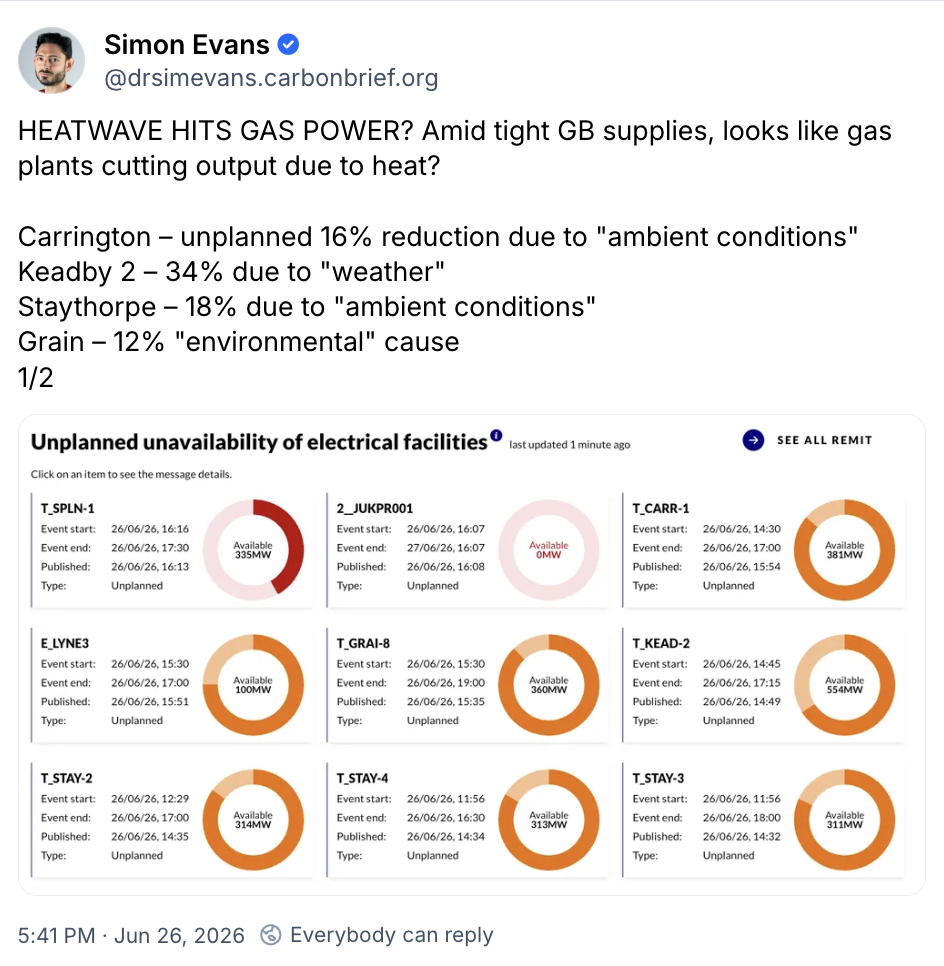
- June 24, 2026 (The UK Grid Event): Great Britain’s National Electricity System Operator (Neso) was forced to execute aggressive emergency balancing measures. Amid tight supplies and constrained gas plants, Neso paid up to £1,400 per megawatt-hour to secure 1.7 gigawatts of imported power—nearly twenty times the seasonal average—highlighting the financial penalties of grid strain.
- Late June to Early July 2026 (Solar Records): Despite anti-renewables media claims, European solar assets proved resilient. Across the European Union, solar generated a record 52 terawatt-hours in June, beating the previous month’s high. In the UK, homes equipped with solar panels generated the equivalent of five hours of free, self-supplied air conditioning daily during the peak heatwave.
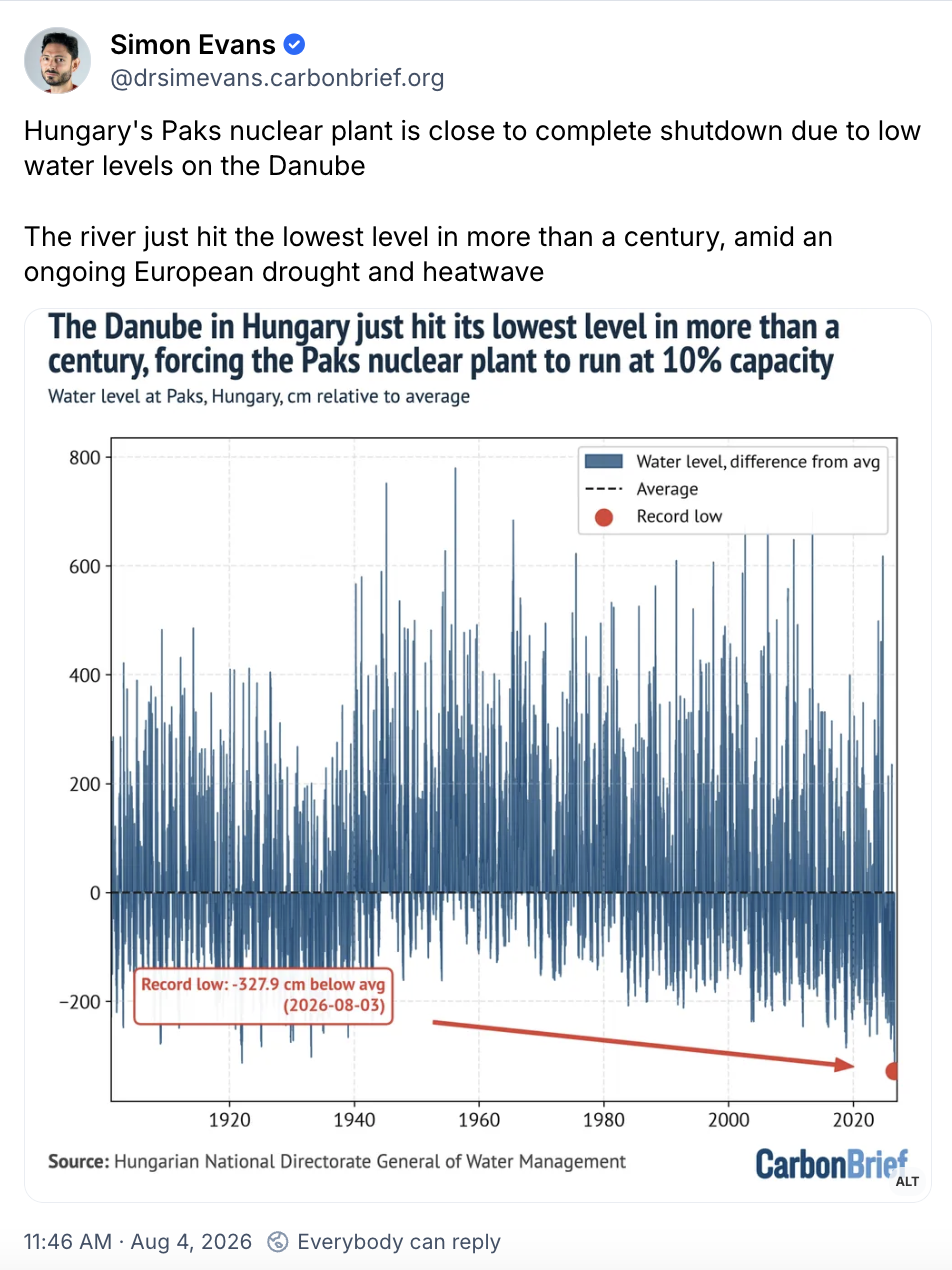
- Mid-July to August 2026 (The Central/Eastern European Drought): As the heatwave persisted, severe drought conditions gripped Central and Eastern Europe. Low water levels on the Danube River created a looming energy emergency. By early August, approximately 2.44 GW—or 40%—of Southeast Europe’s nuclear capacity was forced offline due to a combination of high river temperatures and critically low water flows. In France, up to 12% of the nuclear fleet was temporarily sidelined for heat-related reasons.
Supporting Context & Metrics: How Different Generation Sources React to Thermal Stress
Nuclear Power: The Thermodynamic and Regulatory Squeeze
Nuclear reactors generate massive amounts of thermal energy via nuclear fission, which creates steam to spin turbines. To maintain this cycle, plants require vast amounts of cooling water—typically drawn from nearby rivers or the sea. Once-through river-cooled plants make up roughly 14% of the global nuclear fleet.
When river temperatures rise, the cooling capacity of the water drops, reducing plant efficiency. According to Forbes, nuclear plants lose roughly 0.6% to 1% in cycle efficiency for every additional degree Celsius of ambient or intake water temperature. However, the more immediate pressure point is regulatory rather than technical. Environmental laws dictate strict limits on the temperature of water returned to natural waterways to protect aquatic ecosystems. When river temperatures spike, operators are legally mandated to curtail generation or shut down reactors entirely.

Drought presents an even more protracted threat. While high river temperatures normalize quickly once a heatwave breaks, low water levels can persist for months, stranding nuclear capacity as seen along the Danube in Romania and Hungary during the summer of 2026.
Natural Gas: Firm Capacity Under Scrutiny
Often praised as "firm, dispatchable" capacity that can turn on instantly, natural gas plants are nonetheless vulnerable to thermal physics. As ambient air temperatures rise, air density drops. Because gas turbines rely on burning a mixture of fuel and intake air, lower air density means less oxygen is available for combustion, forcing plants to output less power.
At 40°C, a gas-fired power station can experience a 13% reduction in capacity and a 7% drop in efficiency compared to running at 20°C. Furthermore, simple-cycle peaking gas turbines can see their output fall by about 10% per 10°C increase. While gas fleets often maintain operational slack—running at lower capacity averages—relying on extra gas turbines during heatwaves leads to extreme price spikes that inflate consumer energy bills.
Wind Power: The "Heat Dome" Effect
Wind generation is indirectly affected by heatwaves because high-pressure heat domes create sustained periods of calm air. Data shows that high temperatures are linked to low wind speeds across roughly 75% of the globe, with regional wind power dropping by 30% to 50% during extreme heat events in Europe, Australia, and northern Asia. Furthermore, hot air is less dense, meaning wind turbines capture slightly less kinetic energy.
Despite these limitations, grid operators factor summer wind lulls into long-term seasonal planning. Wind also pairs effectively with solar; clear, hot days that reduce wind speeds simultaneously maximize solar generation.
Solar Photovoltaic (PV): Efficiency vs. Volume
Solar panels face minor efficiency losses during extreme heat, with output dropping by approximately 0.2% to 0.5% for every degree Celsius above standard test conditions (typically 25°C). However, this minor thermodynamic penalty is overwhelmingly compensated for by the abundance of cloudless, high-insolation hours characteristic of summer heatwaves.
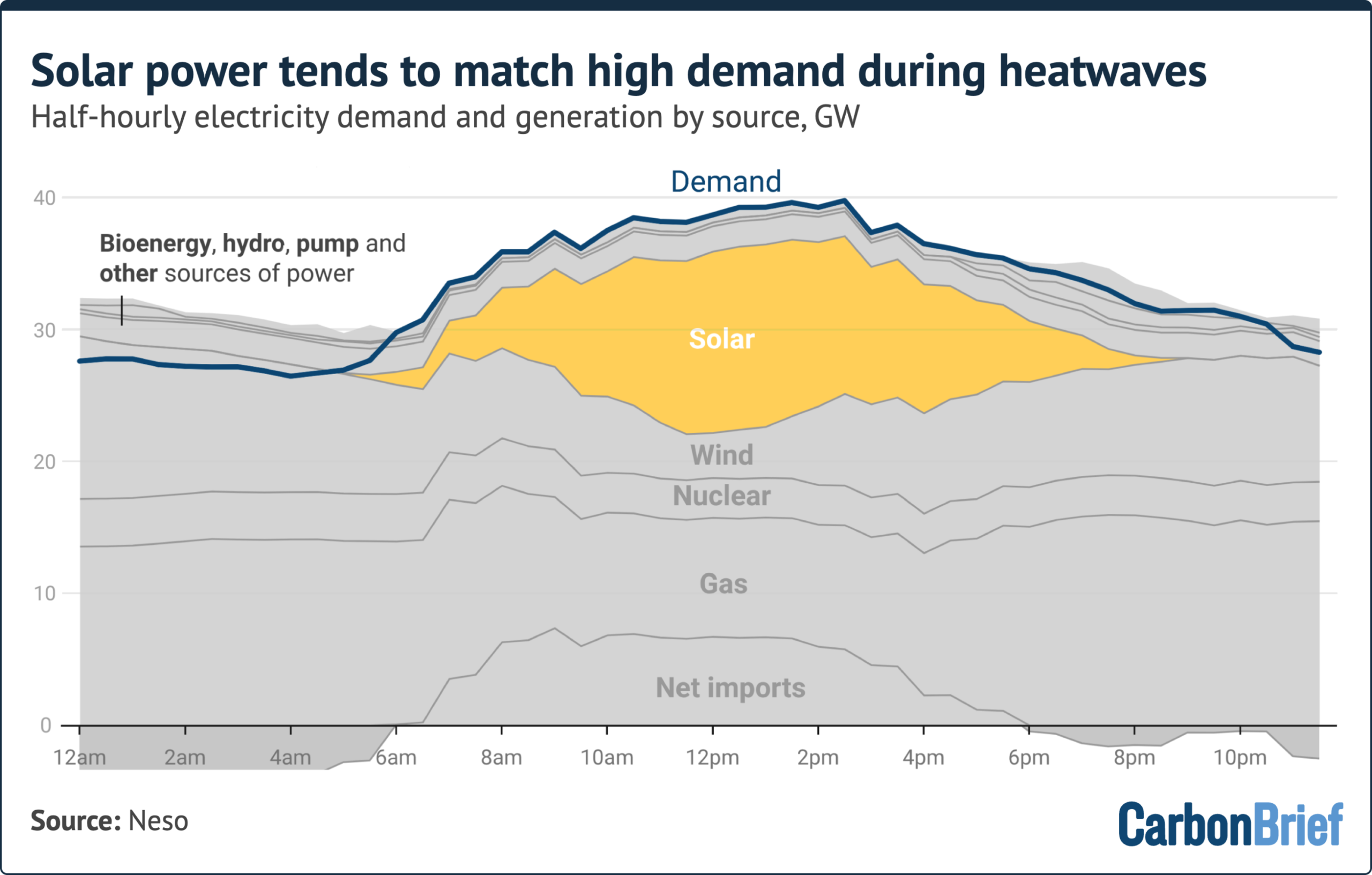
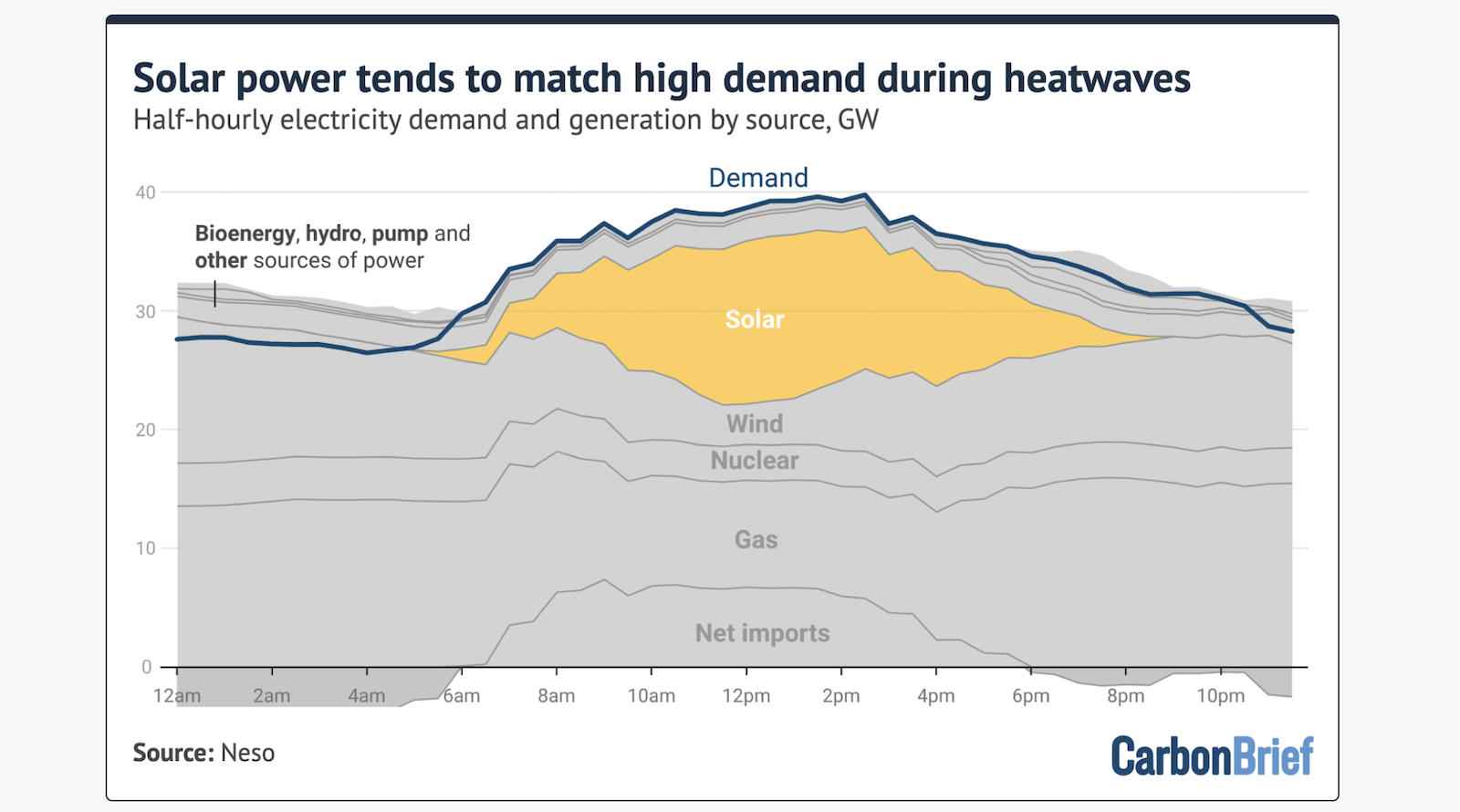
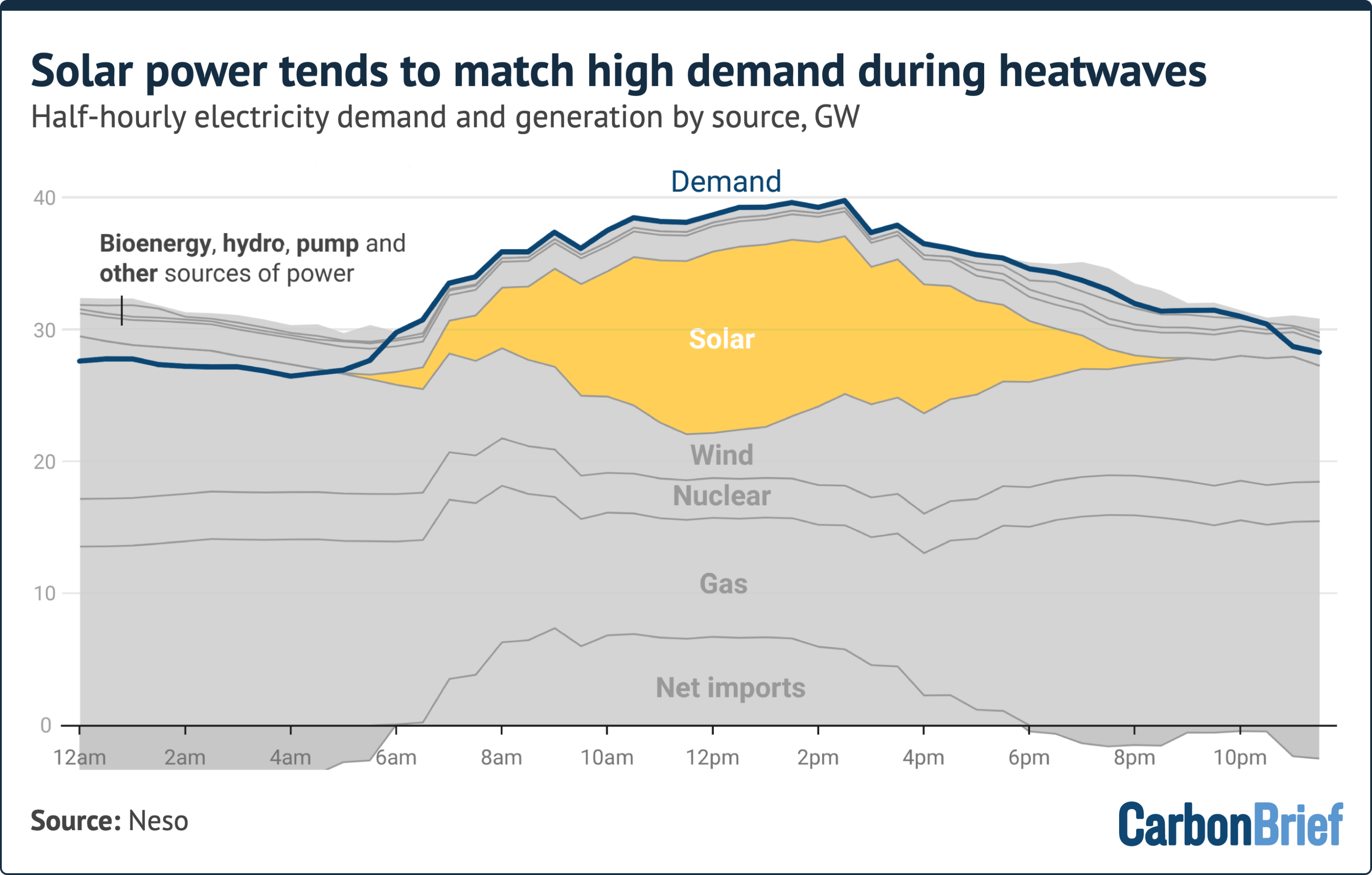
Solar generation tightly mirrors cooling demand profiles. As temperatures peak in the mid-afternoon, driving up air conditioning loads, solar generation reaches its daily maximum, helping to suppress midday electricity prices.
Battery and Energy Storage Systems
Utility-scale battery storage has emerged as the critical backbone for managing evening demand peaks when the sun sets but cooling needs remain high. However, lithium-ion batteries also suffer performance degradation and accelerated component wear at elevated temperatures. While advanced liquid and air-cooling systems are designed to handle ambient temperatures up to 45°C, prolonged extreme heat can strain thermal management systems, requiring careful operational oversight.
Official Statements and Expert Perspectives
Industry leaders and energy analysts emphasize that while extreme weather stresses all generation assets, proactive adaptation can dramatically reduce vulnerabilities.
-
Michael Tadrous, Researcher at McMaster University’s DeGroote School of Business:
"The impact [of heatwaves] is real, but it is far smaller than many headlines suggest… The real pressure point during a heatwave is usually legal rather than technical. Plants return their cooling water to the river a few degrees warmer than they drew it and the law limits how warm that water may be in order to protect aquatic life."
Tadrous also highlighted the immense progress in nuclear resilience, noting that France’s river-cooled fleet lost 5.5 terawatt-hours during the historic 2003 heatwave, but losses fell by roughly 90% to 0.5 TWh during the severe 2022 heat and drought summer due to targeted infrastructure upgrades.
-
Dr. Iain Staffell, Imperial College London:
"Simple gas turbines (the kind which turn on rapidly to meet peak demand) are hit harder [than solar], with their power output falling by about 10% per 10C… The issue is less that they can’t deliver, but we have to pay through the nose to persuade more to turn on at critical times, adding to sky-high energy bills."
-
Dr. Chris Rosslowe, Senior Energy Analyst for Europe at Ember:
"Power systems are less reliant on wind power in the summer months and its lower-than-average output is already expected and planned for. Heatwaves often bring still, but clear conditions, highlighting the benefit of wind and solar as a duo — poor conditions for one often mean good conditions for the other… Solar, battery storage and air conditioning are a highly complementary trio of technologies during heatwaves. There’s a high overlap between solar output and demand from AC."
-
Pawel Czyzak, Europe Programme Director at Ember:
"Heatwaves will not go away — they will only get more severe in the future. Solutions that can help mitigate their impacts, such as battery storage, interconnection, demand flexibility and dynamic tariffs, should become a key part of grid planning and power market design."

Future Outlook: Building a Heat-Resilient Grid
As global temperatures continue to rise, electricity grids must evolve rapidly to withstand prolonged thermal stress. The notion that any single generation technology is entirely immune to extreme heat is a fallacy. Nuclear plants face river-cooling constraints and drought-induced shutdowns; natural gas turbines suffer from thermodynamic efficiency losses and high fuel-cost volatility during peak demand; wind assets experience seasonal low-pressure lulls; and solar panels face minor temperature-induced efficiency drops.
Mitigating the risks posed by future heatwaves will require a multifaceted approach centered on modern grid architecture:
- Accelerated Deployment of Energy Storage: Utility-scale battery systems must continue to scale rapidly. By capturing cheap solar power during peak daylight hours, batteries can discharge reliably during evening demand peaks, preventing reliance on expensive, heat-constrained gas peaker plants.
- Infrastructure Hardening: Nuclear and thermal operators must invest in closed-loop cooling towers, deeper water intake structures, and advanced heat-exchanging technologies to decouple plant output from fragile river ecosystems.
- Enhanced Grid Interconnection: Expanding cross-border and inter-regional transmission lines allows regional grids to share power dynamically, pulling surplus renewable generation from unaffected areas during localized heat domes.
- Demand-Side Flexibility: Implementing dynamic pricing tariffs, smart-charging protocols for electric vehicles, and automated demand response programs will empower consumers to shift energy-intensive tasks away from critical peak hours.
Ultimately, transitioning to a flexible, highly interconnected, and diversified clean energy system is the only viable path forward. By moving past partisan narratives and focusing on engineering resilience, global power systems can successfully weather the compounding challenges of a warming world.