







Executive Overview
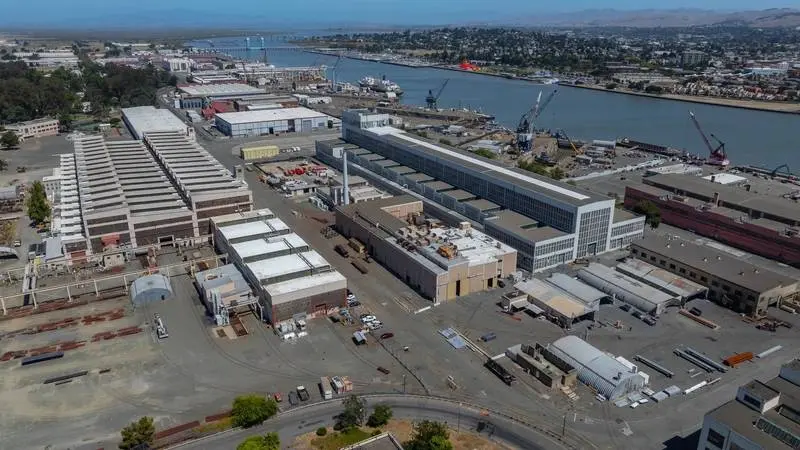
In a move that signals a major pivot in the United States’ domestic defense industrial strategy, global real estate services firm JLL has been exclusively retained to market and strategically advise on the repositioning of the Mare Island Maritime Campus. Located in Vallejo, California, this historic, massive deepwater asset represents one of the most significant privately held maritime industrial properties in the nation. Owned by The Nimitz Group, the campus spans two million square feet of existing industrial buildings, four operational dry docks, and extensive deepwater berthing.
This repositioning effort comes at a critical geopolitical juncture. Decades of deindustrialization and shipyard closures have left the United States with a dangerously consolidated domestic shipbuilding capacity, even as geopolitical tensions in the Indo-Pacific escalate and the U.S. Navy faces severe backlogs in submarine maintenance and vessel construction. Driven by sweeping federal mandates, bipartisan legislative pushes, and international security pacts like AUKUS, the United States is embarking on its largest maritime industrial mobilization since World War II.
Recognizing this historic demand, JLL is advising The Nimitz Group on structuring flexible transactions designed to attract defense contractors, major shipbuilders, institutional capital, and maritime operators. By offering configurations ranging from public-private partnerships (P3s) and build-to-suit facilities to direct asset leases and strategic joint ventures, the marketing of Mare Island is poised to serve as a bellwether for the revitalization of the American defense industrial base.
Detailed Chronology
The trajectory of Mare Island reflects the broader arc of American naval power, from its mid-19th-century expansion to post-Cold War demobilization, and now, to its 21st-century resurgence.
[1854] Established as West Coast's first permanent Navy base by Commander David Farragut
   │
[1914-1945] Peak expansion across WWI & WWII; workforce topped 40,000 during WWII
   │
[1950s-1960s] Pivot to nuclear-powered submarine construction and advanced Cold War systems
   │
[1996] Closed under BRAC commission; devastating local economic impact on Vallejo
   │
[2010s-Present] Acquired by The Nimitz Group; transition to modern industrial and tech-focused campus
   │
[Current] JLL retained to align the asset with the largest U.S. naval mobilization since WWII
The Foundation and Golden Era (1854–1945)
Established in 1854 under the leadership of Commander David Farragut, Mare Island Naval Shipyard was the first permanent U.S. military installation on the Pacific Coast. Positioned strategically within the San Francisco Bay Area, the shipyard quickly became the cornerstone of American naval hegemony in the Pacific.
During World War I, the yard set shipbuilding speed records, constructing the destroyer USS Ward in just over 17 days. During World War II, Mare Island reached its operational zenith. The workforce swelled to more than 40,000 civilian and military personnel, operating 24 hours a day to build, repair, and overhaul hundreds of vessels, ranging from landing craft to heavy cruisers.
The Nuclear Age and Cold War Supremacy (1950s–1960s)
Following World War II, Mare Island transitioned into a highly specialized center for technological innovation. In the 1950s and 1960s, the shipyard became one of the few facilities globally capable of constructing nuclear-powered submarines. It successfully built and launched 17 nuclear submarines, including the USS Halibut, a highly classified vessel that played a pivotal role in Cold War intelligence operations. During this period, the yard developed a reputation for precision engineering, metallurgy, and advanced electronics.
Closure and Decades of Transition (1996–2020)
As part of the post-Cold War peace dividend and the federal Base Realignment and Closure (BRAC) process, Mare Island Naval Shipyard was officially decommissioned in 1996. The closure was a devastating economic blow to the city of Vallejo, resulting in the loss of thousands of high-paying blue-collar jobs and leaving behind a sprawling, underutilized industrial footprint.
For over two decades, local planners, developers, and municipal officials struggled to fully revitalize the property, grappling with environmental remediation challenges and the sheer scale of the infrastructure. However, the acquisition of key maritime parcels by The Nimitz Group laid the groundwork for a cohesive, long-term redevelopment strategy.
The Modern Pivot (Present Day)
Today, Mare Island is no longer viewed merely as a historical relic or a local real estate project. Instead, it has re-emerged as a vital national security asset. With JLL taking the helm as exclusive strategic advisor, the property is being repositioned to resolve the modern Pentagon’s most pressing logistical bottleneck: a severe lack of domestic shipyard capacity.
Supporting Context & Metrics
The decision to market Mare Island is underpinned by severe capacity constraints in the global and domestic maritime sectors.
The Geopolitical Imperative
The U.S. defense industrial base is under historic strain. According to the Department of Defense and congressional watchdogs, American shipyards are currently struggling to meet the Navy’s target of producing two Virginia-class attack submarines and one Columbia-class ballistic missile submarine annually. This shortfall is compounded by the AUKUS security agreement, which obligates the United States to sell several nuclear-powered submarines to Australia in the coming decade.
Furthermore, China’s rapid naval expansion has eclipsed the United States in total battle force ships. This shift has prompted bipartisan legislation, such as the Shipyard Act, aimed at injecting tens of billions of dollars into domestic shipyard infrastructure.
               U.S. NAVAL SHIPBUILDING BOTTLENECK

   Demand: ──► [Virginia-Class Subs] + [Columbia-Class Subs] + [AUKUS Exports]
                     │                       │                     │
                     ▼                       ▼                     ▼
   Capacity: ──► [Overburdened Public Shipyards (Only 4 Active Yards Nationwide)]
                     │
                     ▼
   Result:   ──► Multi-Year Maintenance Backlogs & Production Delays
                     │
                     ▼
   Solution: ──► Activate Private Sites (Mare Island Maritime Campus)
Technical Specifications of the Campus
The Mare Island Maritime Campus possesses heavy industrial features that are virtually impossible to replicate under modern environmental and coastal zoning regulations:
- Existing Footprint: Two million square feet of industrial buildings, offering immediate dry storage, manufacturing space, and administrative offices.
- Operational Dry Docks: Four active dry docks capable of accommodating vessel maintenance, repairs, and shipbuilding.
- Shipways & Berthing: Three heavy-duty shipways alongside two miles of seawall and one mile of active deepwater berthing.
- Draft Capacity: A 30-foot channel depth with direct deepwater access to the Pacific Ocean via the San Francisco Bay, allowing for the passage of large commercial and naval vessels.
- Power Infrastructure: Over 30 megawatts of immediate, available power capacity, with scalable options to support heavy industrial welding, advanced manufacturing, and electrical grid demands of modern warships.
- Expansion Capabilities: Significant tracts of development-ready land, allowing tenants to design and build custom manufacturing halls, automated assembly plants, or specialized defense facilities.
| Metric | Specification | Strategic Value |
|---|---|---|
| Existing Buildings | 2,000,000 sq. ft. | Immediate manufacturing & logistics staging |
| Operational Dry Docks | 4 | Critical bottleneck relief for vessel maintenance |
| Seawall / Berthing | 2 miles / 1 mile | Multi-vessel mooring and outfitting |
| Channel Depth | 30 feet | Deepwater access for mid-to-large draft vessels |
| Power Capacity | >30 Megawatts | Support for energy-intensive advanced manufacturing |
The Silicon Valley Connection
A unique advantage of the Mare Island Maritime Campus is its geographic proximity to Silicon Valley, located just 60 miles south. Modern maritime warfare and commercial shipping are increasingly defined by software, artificial intelligence, autonomous systems, and advanced sensors.
The San Francisco Bay Area is home to roughly 20% of the United States’ artificial intelligence talent pool. By establishing operations at Mare Island, defense contractors and maritime operators can bridge the traditional gap between heavy industrial manufacturing and cutting-edge software development. This proximity is critical as the Pentagon accelerates initiatives like "Replicator," which aims to field thousands of cheap, autonomous, AI-driven maritime drones.
Official Positions and Market Alignments
The marketing push led by JLL is designed to appeal to a broad spectrum of stakeholders, from traditional defense primes to institutional investors looking for recession-resistant, federally backed real estate assets.
The Landowner’s Strategy
The Nimitz Group’s decision to engage JLL highlights their shift from long-term real estate holding to active industrial activation. Rather than pursuing a slow, piecemeal redevelopment, the group is looking to capture the immediate capital flowing from the Department of Defense’s industrial base expansion programs. By offering flexible transaction structures, the ownership group is positioning Mare Island as a low-friction option for companies that need to scale up manufacturing capacity quickly to meet federal contracts.
JLL’s Strategic Mandate
JLL is targeting four primary segments for the Mare Island Maritime Campus:
- Defense Primes & Subcontractors: Companies looking to expand submarine component manufacturing, unmanned underwater vehicle (UUV) production, and naval vessel maintenance.
- Commercial Shipbuilders: Firms seeking West Coast facilities to service the domestic commercial fleet, offshore wind support vessels, and Jones Act-compliant shipping.
- Advanced Technology Firms: Marine robotics, autonomous shipping startups, and green-energy maritime ventures looking to integrate hardware and software testing.
- Institutional Capital & Infrastructure Funds: Investors seeking stable, long-term yields backed by defense spending and critical national infrastructure.
The property’s status as a privately controlled site is a major selling point. Unlike public naval shipyards, which are subject to strict military command structures and federal bureaucracy, Mare Island can move at the speed of private industry, allowing for faster capital deployment and flexible operational configurations.
Future Outlook
The revitalization of Mare Island is poised to play a central role in the broader effort to rebuild the United States’ industrial capacity. As JLL begins marketing the site, several long-term trends will shape the campus’s future.
Integration into the Defense Supply Chain
Over the next decade, the U.S. Navy plans to spend billions of dollars modernizing its shipyard infrastructure. Mare Island is highly competitive for these federal dollars, particularly through the Submarine Industrial Base (SIB) program. As public shipyards remain bottlenecked, private facilities like Mare Island will likely secure lucrative federal contracts to perform non-nuclear maintenance, component fabrication, and auxiliary vessel construction.
         FUTURE COLLABORATIVE ECOSYSTEM AT MARE ISLAND

   ┌─────────────────────────────────────────────────────────┐
   │             Mare Island Maritime Campus                 │
   └────────────────────────────┬────────────────────────────┘
                                │
       ┌────────────────────────┼────────────────────────┐
       ▼                        ▼                        ▼
┌──────────────┐         ┌──────────────┐         ┌──────────────┐
│ Defense Tech │         │ Heavy Marine │         │ AI & Systems │
│ Integrators  │         │ Engineering  │         │ Research     │
│ (Drones/UUVs)│         │ (Dry Docks)  │         │ (Bay Area)   │
└──────────────┘         └──────────────┘         └──────────────┘
Economic Revitalization of Vallejo
For the city of Vallejo, the return of heavy maritime industry to Mare Island could bring a major economic windfall. The high-paying, skilled union jobs associated with modern shipbuilding—metallurgists, precision welders, electrical engineers, and software developers—would provide a substantial boost to the local economy, fulfilling the economic transition that began when the base closed in 1996.
A Modern Testing Ground for Maritime Innovation
Beyond traditional shipbuilding, Mare Island is well-positioned to become a hub for green maritime technology. As the global shipping industry faces pressure to decarbonize, the campus could host development and testing facilities for hydrogen-powered vessels, electric ferries, and advanced hull designs.
By combining historical heavy industrial capacity with Silicon Valley’s tech ecosystem, the Mare Island Maritime Campus is set to become more than just a historical shipyard. It is positioned to be a key asset in the United States’ efforts to secure both its national defense and its industrial future.