









Executive Overview
The portable power station market has reached a critical maturity threshold. No longer confined to the niche realms of weekend camping trips and emergency backup for rural cabins, high-capacity lithium batteries are rapidly embedding themselves into urban apartments, modern residential energy ecosystems, and professional worksites. Jackery, a pioneer in consumer-grade portable power, has consistently adapted to these shifting demands. With the recent launch of the Jackery HomePower 1000 Plus v2, the company aims to bridge the gap between hyper-portable generators and modular home energy storage systems.
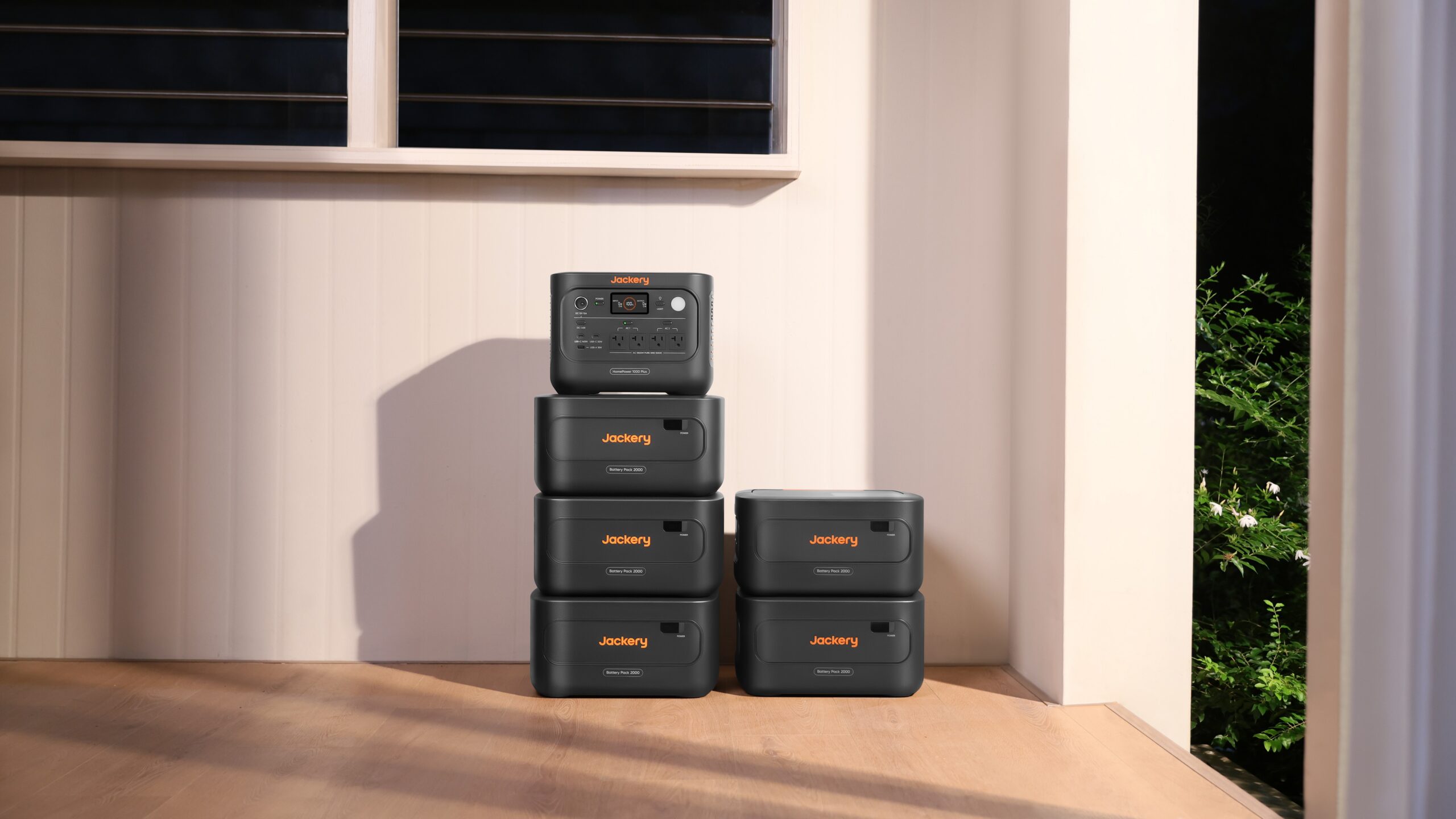
Out of the box, the HomePower 1000 Plus v2 packs 1,024 watt-hours (kWh) of energy storage into a remarkably compact frame. However, its defining architectural leap lies in its expandability: unlike its predecessor, this iteration supports up to five 2-kWh expansion packs, pushing the system’s total ceiling to an impressive 11 kWh. By marrying automotive-grade cell-to-pack engineering with robust output metrics, intelligent battery management systems (BMS), and versatile charging configurations, Jackery has positioned this unit as a Swiss Army knife for energy resilience.
This review explores the hardware specifications, architectural innovations, practical performance benchmarks under real-world residential tests, and the broader implications of deploying modular point-of-use energy storage in an era defined by grid instability and the clean energy transition.

Detailed Chronology and Hardware Evolution
The trajectory of Jackery’s product ecosystem reflects a broader industry-wide transition away from traditional nickel-manganese-cobalt (NMC) chemistries and toward safer, longer-lasting lithium iron phosphate (LFP) formulations. The HomePower 1000 Plus v2 is built entirely around premium LFP cells engineered to deliver an exceptional lifespan of 6,000 charge cycles, a metric underscored by the manufacturer’s comprehensive five-year warranty.
Architectural Innovations: The Cell-to-Pack Advantage
One of the most noteworthy engineering choices in the v2 model is its adoption of "cell-to-pack" (CTP) construction. Historically utilized primarily in electric vehicle (EV) manufacturing, CTP technology bypasses traditional module-level housings. By integrating individual battery cells directly into the structural framework of the pack, Jackery has eliminated dead space, reduced overall weight, and heightened physical durability.
Measuring just 12.4 inches by 7.9 inches by 9.2 inches and tipping the scales at a mere 23.8 pounds, the unit is surprisingly compact—significantly lighter and smaller than a standard 30-pack of canned beverages. The integrated handle offers a secure, ergonomic grip for easy transport. While the chassis lacks a built-in shoulder strap or custom backpack for rugged backcountry hiking, its diminutive physical footprint makes it exceptionally easy to stow in a car trunk, slide under a desk, or carry up multiple flights of stairs in a walk-up apartment.

Power Output and Circuit Compatibility
Performance-wise, the v2 model steps up its game compared to its predecessor. Continuous AC power output has been dialed up to 1,800 watts, with a peak surge capacity of 3,600 watts delivered across four North American-standard 120V AC outlets. This represents a solid upgrade over the 1,500W continuous / 3,000W peak rating across three outlets found in the original version.

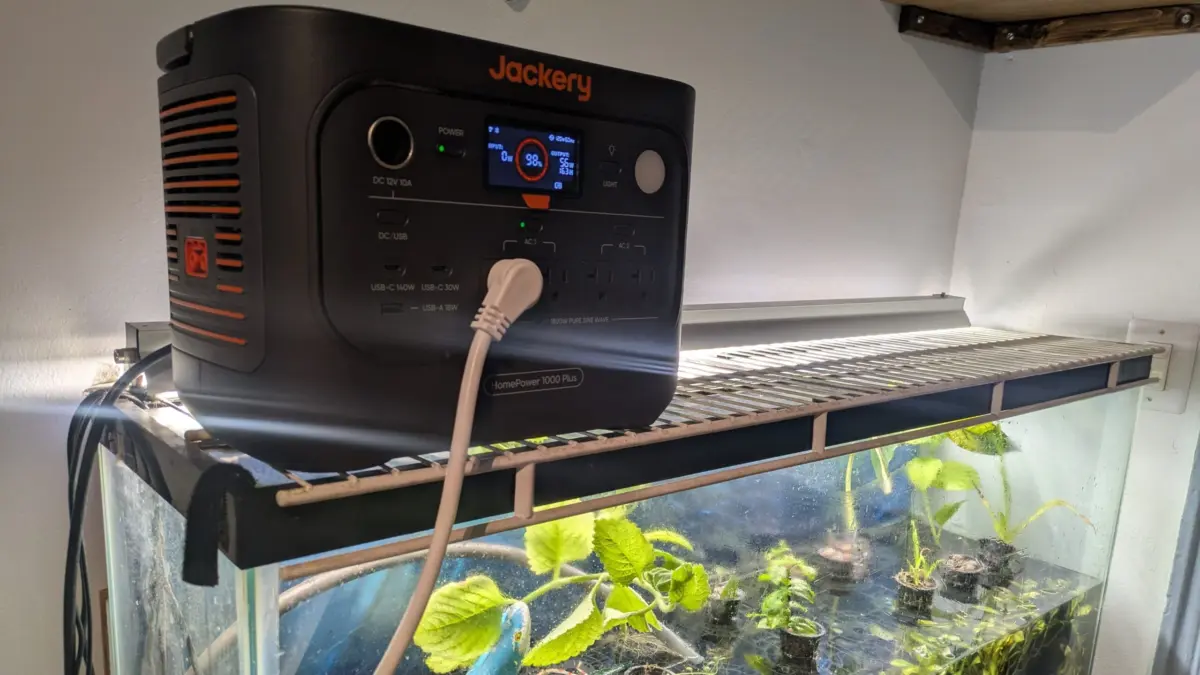
While an 1,800-watt ceiling is not intended to run an entire household during a blackout (barring tiny homes or off-grid cabins), it effortlessly handles the maximum load capacity of a standard 120V, 15-amp residential circuit. This makes the HomePower 1000 Plus v2 uniquely capable of serving as a heavy-duty point-of-use power source. In professional workshops, it eliminates the need to trail hazardous, voltage-dropping extension cords across large rooms. On construction sites, it mitigates the noise, emissions, and fuel-transport hazards associated with running small gasoline generators.
Supporting Context & Technical Metrics
To fully understand the utility of the HomePower 1000 Plus v2, one must look closely at its input/output array, safety architecture, and energy management capabilities.
Comprehensive I/O and Connectivity
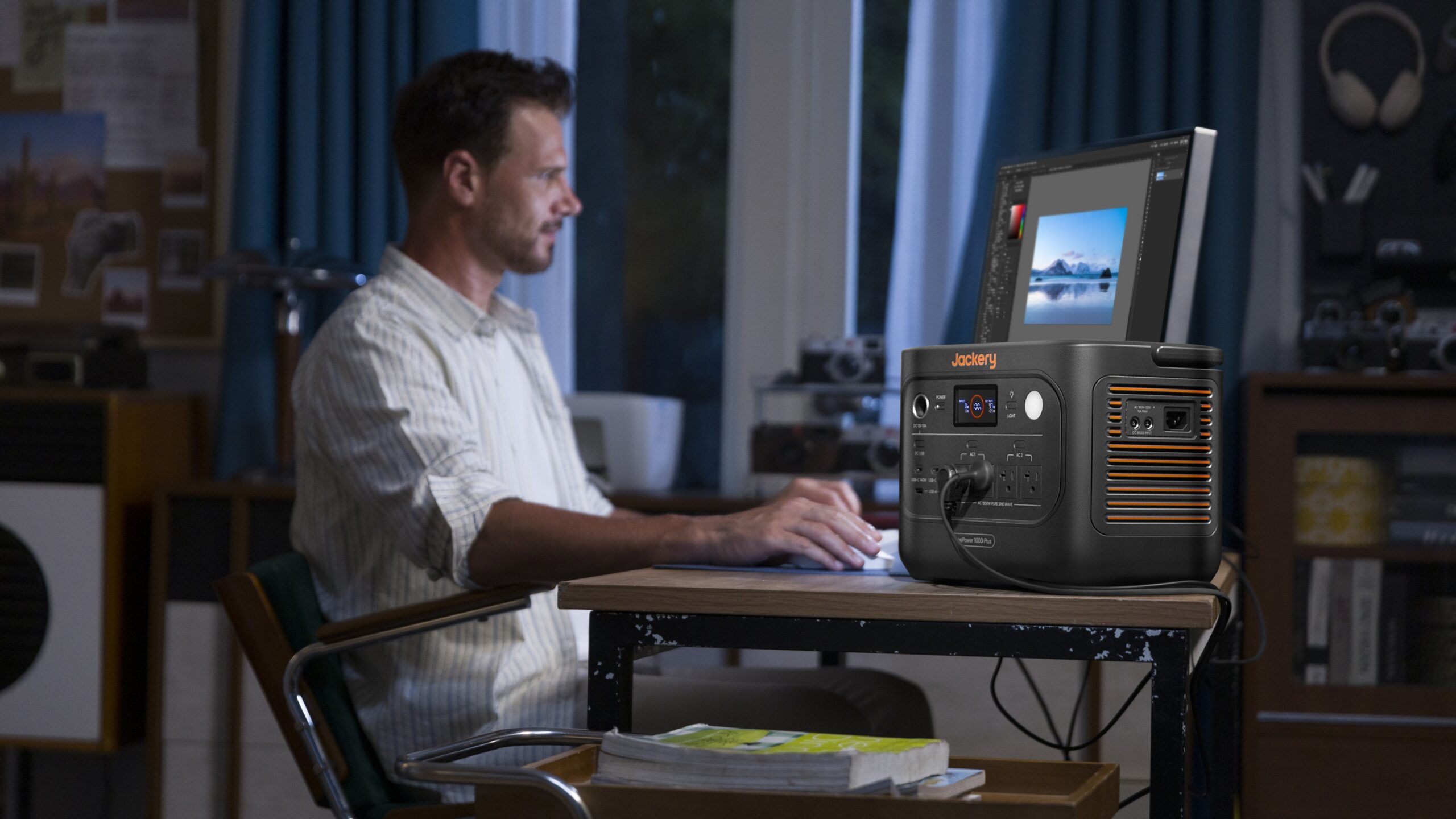
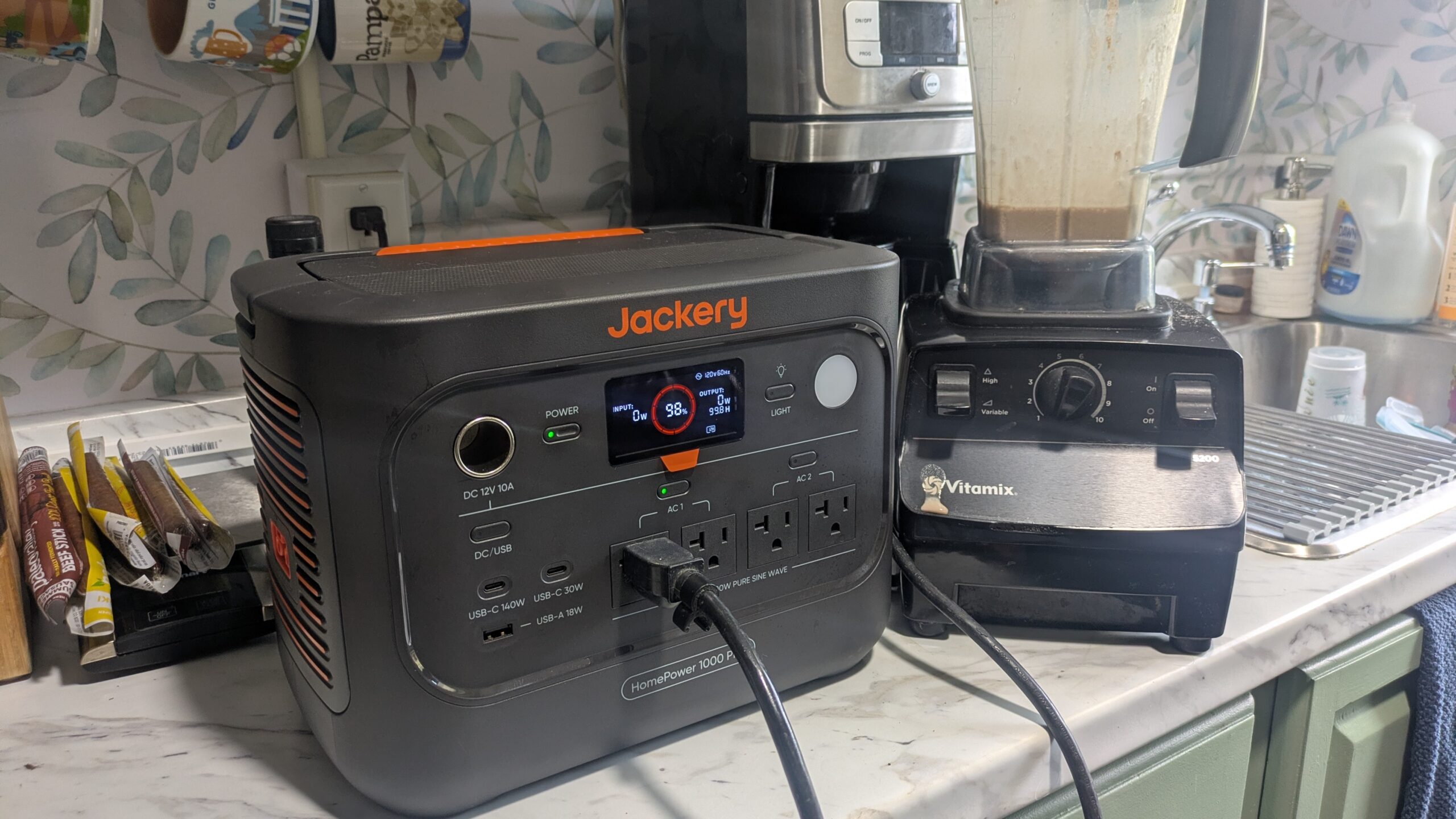
Beyond its four AC receptacles, the unit features a diverse suite of DC and USB connections designed to eliminate bulky power bricks:
- DC Output: One 12V/10A automotive-style DC socket.
- USB-C: Two ports, including a high-output 140W port capable of fast-charging power-hungry laptops and professional gear, alongside a secondary 30W port.
- USB-A: One 18W port for legacy peripherals and accessories.
- Emergency Illumination: A built-in LED panel capable of continuous area lighting or flashing an S.O.S. distress signal in Morse code during emergency outages.
Uninterruptible Power Supply (UPS) and Surge Protection
For sensitive electronics—such as desktop workstations, 3D printers, network routers, and high-end audio-visual gear—the unit functions as a reliable Uninterruptible Power Supply (UPS) with a swift 10-millisecond switchover time. It delivers clean, "pure sine-wave" AC power, safeguarding delicate components from the degradation often caused by dirty inverter signals. Furthermore, the unit incorporates 3kV/1,000J of built-in surge protection to fend off sudden voltage spikes.
Rapid Charging Ecosystem
When it comes to replenishment, the HomePower 1000 Plus v2 shines through multiple input vectors:
- AC Wall Charging: Utilizing standard grid power, the unit can recharge from 0% to 80% in just 36 minutes, reaching a full 100% charge in a blistering 50 minutes. (Note: When passing AC power through to connected devices while simultaneously charging, the system dynamically throttles input speeds to prevent tripping upstream wall outlets).
- DC & Solar Input: The unit features dual DC8020 input ports. A single port accepts 16–60V at 12A, while dual simultaneous ports can handle up to 21A for a maximum of 400W solar input. This setup achieves a full solar recharge in approximately 2 hours and 43 minutes. When combined with AC wall power, total replenishment time drops to an incredible 47 minutes.
- Self-Powered Mode: Via the companion application, users can engage a "self-powered" mode that prioritizes connected solar generation over grid power, minimizing utility draw when both sources are active.
Pricing and Configurations
Jackery has introduced the HomePower 1000 Plus v2 at a competitive baseline MSRP of $749, with introductory promotional pricing frequently slashing entry costs down to $619. Bundled packages scale with user needs:
- Base + 200W Portable Solar Panel: MSRP $949 (Promotional pricing varies).
- Base + 2,000 Wh Expansion Battery: MSRP $1,499 (Promotional pricing $1,269).
- Ultimate Bundle (Base + Expansion Battery + Two 200W Solar Panels): MSRP $2,139 (Promotional pricing $1,809).
Practical Testing & Real-World Performance
To evaluate the claims made by Jackery, the unit was subjected to an array of rigorous residential and appliance-load tests.
Urban Apartment Stress Tests
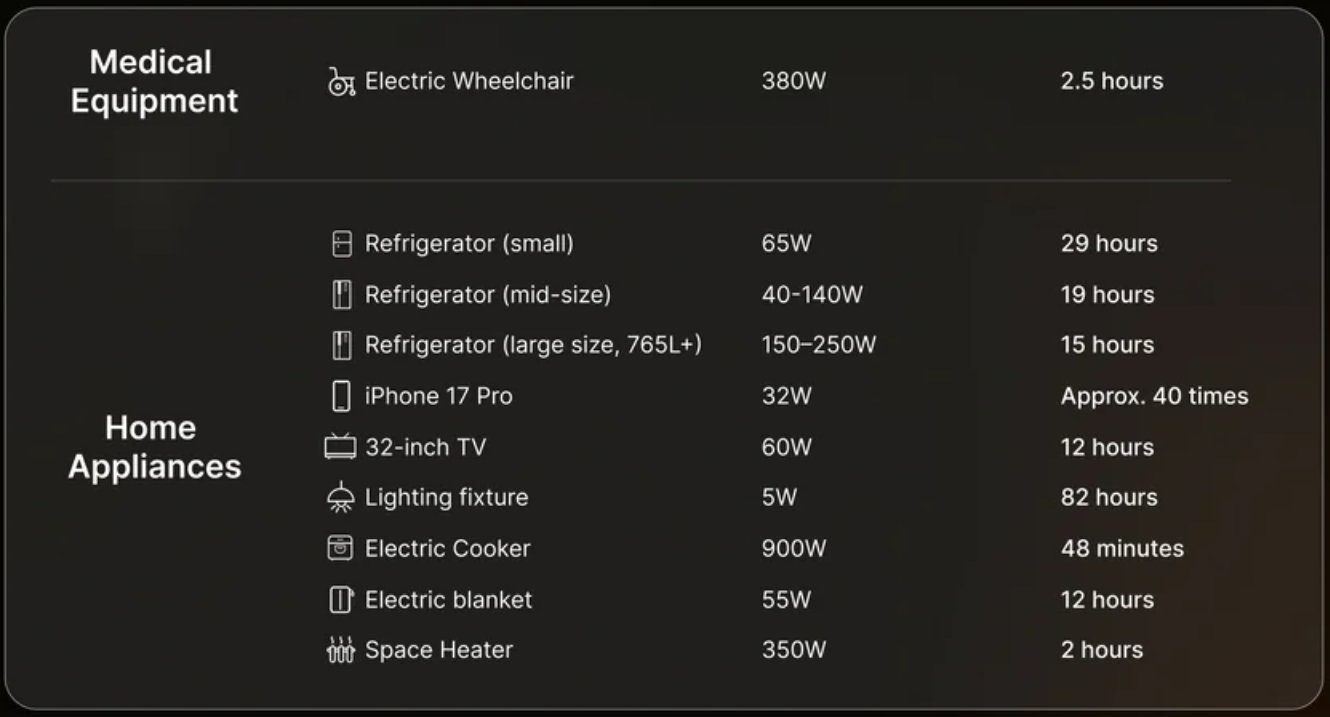
In a pre-war, largely uninsulated urban apartment featuring towering 10-foot ceilings, the HomePower 1000 Plus v2 was tasked with driving a 12,000 BTU Midea U window air conditioner. Operating during a mild weather window, the portable unit successfully dropped interior temperatures roughly 5 degrees below ambient outdoor levels. Because the cooling load barely taxed the inverter’s limits, testing quickly pivoted to heavier household appliances.
Kitchen and Appliance Benchmarks
- Laundry: A full cycle on a compact washing machine was completed with ease, showing minimal voltage sag or thermal stress on the inverter.
- Culinary Gear: Running a rice cooker and a high-powered Vitamix blender simultaneously failed to rattle the battery. The system demonstrated its readiness for off-grid tailgating, picnics, and remote food preparation—easily handling crockpots, electric griddles, and blenders.
- Dishwasher Load: A standard normal cycle on an automatic dishwasher—notoriously energy-intensive due to internal water-heating elements—was executed successfully from start to finish.
Notably, stress-testing revealed that Jackery’s continuous output ratings are refreshingly conservative. During evaluation, the unit was pushed slightly past its 1800W continuous threshold and deliberately drained all the way down to a 1% state of charge without triggering safety lockouts or thermal shutdowns.
Future Outlook: Point-of-Use Resilience and the Energy Transition
As climate change accelerates extreme weather events and grid vulnerability rises across North America, energy resilience is moving from a luxury to a necessity. However, whole-home solar and battery storage arrays remain financially out of reach for millions of homeowners, while renters face structural roadblocks that preclude permanent electrical modifications.
This is where modular, point-of-use power stations like the Jackery HomePower 1000 Plus v2 carve out their transformative value proposition.
Democratizing Storage for Renters and Urban Dwellers
For apartment dwellers and tenants, installing a permanent backup battery or balcony solar array is often restricted by landlords or building codes. The HomePower 1000 Plus v2 offers a workaround: renters can harness the financial and security benefits of battery storage without touching a single wire in the building’s electrical panel. When it’s time to move, the modular system packs up effortlessly, serving as a portable companion for remote work, outdoor recreation, or future residences.
Time-of-Use (TOU) Rate Arbitrage
Beyond emergency backup, these units play a vital role in everyday economics. By utilizing smart-scheduling via mobile apps, users on Time-of-Use (TOU) utility plans can charge the battery during off-peak hours (when electricity is cheap) and deploy stored energy to power localized loads—such as running window air conditioning units or home office setups—during expensive peak rate hours. Over the lifespan of its 6,000 LFP cycles, these minor energy arbitrage strategies can translate into meaningful utility bill savings.
Wildfire Mitigation and Clean Recreation
In the great outdoors, compact LFP power stations are quietly revolutionizing how people camp, tailgate, and work remotely. By replacing noisy, polluting fossil-fuel generators and risky campfires or gas grills with silent, zero-emission battery power, users can enjoy the wilderness while drastically reducing the risk of accidental wildfires—a mounting ecological crisis in fire-prone regions.

Conclusion
The Jackery HomePower 1000 Plus v2 is more than just an incremental update to a popular power station line; it is a masterclass in packing scalable resilience into a portable form factor. Whether you are an urban professional looking to safeguard a home office against rolling blackouts, a renter seeking relief from soaring peak utility rates, or an outdoor enthusiast in search of clean, reliable off-grid power, Jackery’s latest offering delivers robust performance, safety, and future-proof modularity.