




Executive Overview
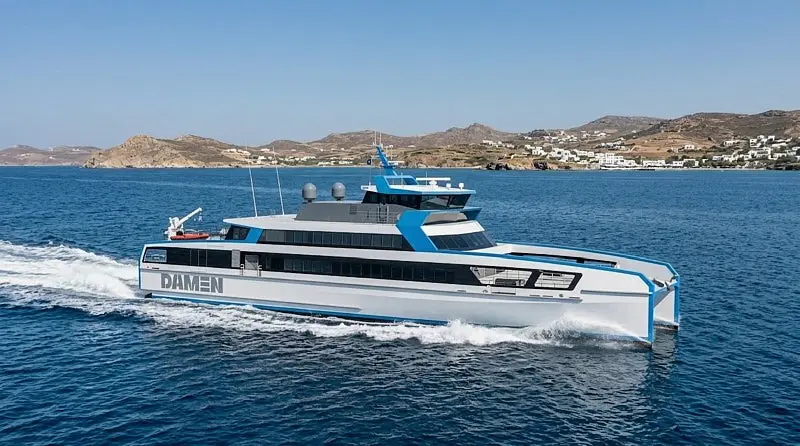
In a strategic move aimed at reshaping high-speed maritime transportation, international shipbuilding giant Damen Shipyards Group has officially unveiled its newest vessel: the Fast Ferry (FF) 5012. Developed as a direct evolution of the widely acclaimed Fast Ferry 4212 platform, this 50-metre catamaran represents a sophisticated synthesis of scaled capacity, enhanced hydrodynamic performance, and optimized passenger experience.
As global demand for reliable, high-capacity, and sea-kindly coastal transit continues to escalate, the release of the FF 5012 comes at a pivotal juncture for ferry operators. Marine carriers face simultaneous pressures: increasing passenger yields, managing rising operational costs, guaranteeing strictly regulated safety standards, and ensuring transit comfort across increasingly unpredictable marine environments.
By leveraging Damen’s proprietary "Enlarged Ship Concept," the FF 5012 addresses these industry imperatives head-on. The extended aluminum catamaran hull features a significantly elevated tunnel height engineered specifically to absorb rougher sea states and mitigate wave-slamming forces in open waters. Capable of accommodating up to 450 passengers across two expansive decks without compromising strict High-Speed Craft (HSC) Code Category A regulations, the FF 5012 introduces a new benchmark for vessel balance—harmonizing high operational availability with enhanced ancillary revenue streams and reduced passenger motion discomfort.
Detailed Chronology and Technical Evolution
================================================================================
                    EVOLUTION OF DAMEN'S CATAMARAN PLATFORM
================================================================================

  Fast Ferry 4212 (Legacy)                      Fast Ferry 5012 (Next-Gen)
+-------------------------------+             +-------------------------------+
| • 42-Metre Hull Length        |             | • 50-Metre Hull Length        |
| • Standard Tunnel Clearance   |             | • Elevated Tunnel Height      |
| • Standard Passenger Layout   |   =======>  | • Aft-Shifted Accommodation   |
| • Core Passenger Capacity     |             | • 450-Passenger Capacity      |
| • Standard Luggage Area       |             | • Enhanced Retail & Logistics |
+-------------------------------+             +-------------------------------+
                                  ENLARGED SHIP
                                     CONCEPT
================================================================================
The Legacy of the Fast Ferry 4212
To understand the engineering architecture of the FF 5012, one must examine its predecessor, the Fast Ferry 4212. Over the past decade, the FF 4212 established itself as a reliable workhorse for regional ferry operators across Southeast Asia, the Mediterranean, South America, and the Caribbean. Its twin-hull design delivered a balance of speed, stability, and fuel economy, becoming a trusted asset on point-to-point island and inter-city routes.
However, evolving market dynamics over recent years signaled a shift in operator requirements. Increasing passenger volumes on primary routes frequently pushed 42-metre vessels to their maximum operational capacity during peak seasons. Furthermore, operators navigating open coastal stretches faced winter sea states that tested passenger comfort limits, occasionally forcing speed reductions or route cancellations to prevent excessive vertical acceleration and hull slamming.
Engineering Innovation: The Enlarged Ship Concept
To address these challenges without embarking on a costly, clean-sheet design process that could inflate acquisition costs for operators, Damen applied its proven "Enlarged Ship Concept" (ESC) to the 4212 platform.
The core philosophy behind ESC involves stretching the hull length relative to the vessel’s beam and operational displacement. By lengthening the hull to 50 metres, Damen’s naval architects achieved several vital hydrodynamic and structural advantages:
- Increased Tunnel Clearance: The structural gap between the sea surface and the catamaran’s wet deck (the underside of the bridge structure connecting the two hulls) has been significantly elevated. This increased tunnel height reduces the frequency and impact of wave slamming—a primary cause of structural stress and low-frequency acceleration that induces motion sickness.
- Reduced Longitudinal Pitching: A longer waterline length naturally mitigates a vessel’s pitch response in head and head-quartering seas. By extending the hull, the FF 5012 cuts through wave crests more efficiently, smoothing out the vessel’s dynamic response in rougher, open-water routes.
- Strategic Accommodation Displacement: Utilizing the expanded deck area, Damen moved the primary passenger accommodation envelope relatively further aft. In catamaran dynamics, vertical accelerations felt during transit are most severe near the bow and minimal toward the stern. Shifting the center of passenger gravity aft dramatically reduces the Motion Sickness Dose Value (MSDV) experienced by passengers.
+-----------------------------------------------------------------------------+
|                      FF 5012 PROFILE & MOTION REDUCTION                     |
+-----------------------------------------------------------------------------+
|                                                                             |
|  [HIGH-PITCH BOW ZONE]           [LOW-ACCELERATION AFT ZONE]                 |
|  (Minimal Passenger Seating)     (Primary Passenger Accommodation)          |
|                                                                             |
|      / ____________________________________________                         |
|     /                                                                      |
|    /     Forward Panoramic Views     Upper Deck                            |
|   /  _________________________________________________                     |
|  /  /                                                                      |
| /__/____________________________________________________                   |
|  _____________________ELEVATED TUNNEL___________________/                  |
|          ~~~ ~~~ ~~~ ~~~ ~~~ ~~~ ~~~ ~~~ ~~~ ~~~ ~~~ ~~~                    |
|          <-------- Reduced Wave Slamming & Pitch ------->                   |
+-----------------------------------------------------------------------------+
Supporting Context, Operational Metrics, and Regulatory Framework
Regulatory Mastery: Operating Within HSC Code Cat A
Navigating the regulatory landscape of high-speed passenger shipping requires precise engineering trade-offs. The International Maritime Organization’s (IMO) International Code of Safety for High-Speed Craft (HSC Code) governs vessels operating at high velocity, categorizing them primarily into Category A and Category B craft.
- Category A Craft: Fast ferries carrying passengers along designated routes where suitable shore-based search and rescue facilities are readily available, and where the total number of passengers is limited to prevent complex, large-scale evacuation protocols.
- Category B Craft: Larger fast craft that must incorporate redundant machinery, fire protection systems, and structural survivability standards similar to conventional passenger ships, driving up lightship weight, capital cost, and operating overheads.
The FF 5012 achieves a major design breakthrough by accommodating up to 450 passengers while remaining strictly within the HSC Code Category A framework. This allows operators to maximize their passenger payload per trip without triggering the steep capital outlay, heavier structural weights, and higher operational crewing demands required by Category B classification.
| Specification / Feature | Damen Fast Ferry 4212 | Damen Fast Ferry 5012 | Operational Advantage |
|---|---|---|---|
| Overall Length (LOA) | 42.2 metres | 50.0 metres | Improved seakeeping & longitudinal stability |
| Hull Configuration | Twin-hull Catamaran | Extended Catamaran (ESC) | Enhanced hydrodynamic efficiency |
| Maximum Passenger Capacity | ~300 – 350 passengers | Up to 450 passengers | Up to 30%+ increase in yield potential |
| Tunnel Height | Standard | Significantly Elevated | Reduced wave-slamming in open seas |
| Regulatory Status | HSC Code Category A | HSC Code Category A | Lower capital/operating expense profile |
| Passenger Motion Comfort | Standard Seakeeping | Optimized (Aft-shifted) | Reduced motion sickness, higher comfort |
| Onboard Amenities | Standard Seating/Kiosk | Expanded Retail & Crew Space | Increased ancillary revenue streams |
| Baggage Logistics | Standard Storage | Large Hold w/ Side Access | Faster port turnarounds |
Maximizing Commercial Yield: Revenue and Logistics Integration
The extended footprint of the FF 5012 introduces strategic operational enhancements designed to maximize an operator’s yield per passenger-nautical mile.
+-----------------------------------------------------------------------------+
|                         FF 5012 ANCILLARY REVENUE FLOW                      |
+-----------------------------------------------------------------------------+
|                                                                             |
|   +-----------------------+     +-----------------------+                   |
|   |   450-PASSENGER       |     | TWO-DECK PANORAMIC    |                   |
|   |   PAYLOAD CAPACITY    |     | VIEW EXPERIENCE       |                   |
|   +-----------+-----------+     +-----------+-----------+                   |
|               |                             |                               |
|               +--------------+--------------+                               |
|                              |                                              |
|                              v                                              |
|   +-----------------------------------------------------+                   |
|   |          ONBOARD CONSUMPTION & MONETIZATION         |                   |
|   |  • Premium Seating Upgrades  • Expanded Cafeteria   |                   |
|   |  • Duty-Free / Retail Space  • Kiosk Vending Zones  |                   |
|   +--------------------------+--------------------------+                   |
|                              |                                              |
|                              v                                              |
|   +-----------------------------------------------------+                   |
|   |               OPTIMIZED TURNAROUND TIME             |                   |
|   |  • Large Dedicated Baggage Hold w/ Side Access      |                   |
|   |  • Rapid Cargo/Luggage Embarkation & Disembarkation |                   |
|   +-----------------------------------------------------+                   |
+-----------------------------------------------------------------------------+- Expanded Retail and Ancillary Spaces: Beyond increasing pure passenger seating capacity, the FF 5012 provides floor real estate for expanded retail zones, premium duty-free displays, full-service catering galleys, and automated vending areas. On long-distance coastal passages, these amenities allow operators to boost non-ticket revenue per passenger.
- Dedicated Crew Accommodation: Maritime Labor Convention (MLC) compliance and crew fatigue management are critical concerns for long-shift operations. The FF 5012 integrates a dedicated, isolated crew room, ensuring staff can take required rest periods in a quiet, purpose-built environment without sacrificing passenger seating space.
- Streamlined Luggage Logistics: Turnaround time at the quay directly impacts a fast ferry’s daily earning potential. The FF 5012 comes standard with a high-capacity, dedicated luggage hold equipped with its own independent side access door. This enables shore crews to load and unload passenger baggage simultaneously with passenger boarding, reducing port stay durations and supporting tight daily operating schedules.
- Panoramic Passenger Experience: Both passenger decks are designed with large, forward-facing panoramic windows. Supplying uninhibited views of the horizon not only elevates the passenger journey but plays a proven psychological role in mitigating motion sickness.
Official Statements and Strategic Analysis
Underscoring the strategic philosophy behind the new design, Lodewijk van Os, Product Manager Fast and City Ferries at Damen Shipyards Group, emphasized the balance achieved by the platform:
"The FF 5012 allows operators to carry up to 450 passengers, and provides space for additional onboard services and comfort enhancements while remaining within the HSC Code Cat A framework. In our view, this new vessel provides the optimal balance between passenger comfort, operational capability and revenue potential."
Industry Perspective and Market Mechanics
Naval architects and maritime market analysts view the introduction of the FF 5012 as a calculated response to the economic realities facing passenger ferry lines today.
                                    MARKET PRESSURES
                       +----------------------------------------+
                       | • Volatile Marine Fuel Prices          |
                       | • Heightened Passenger Expectations    |
                       | • Strict HSC Safety Regulations        |
                       | • Port Congestion & Turnaround Delays  |
                       +-------------------+--------------------+
                                           |
                                           v
                                 THE FF 5012 RESPONSE
                       +----------------------------------------+
                       | • 450 Passengers under Cat A Rules     |
                       | • Hydrodynamic ESC Hull Efficiency     |
                       | • Integrated Ancillary Retail Space    |
                       | • Rapid Side-Access Luggage Handling   |
                       +----------------------------------------+
Following post-pandemic travel recoveries and escalating coastal tourism, operators are challenged by volatile fuel costs and rising labor expenses. Achieving profitability relies heavily on maximizing revenue per transit cycle while minimizing off-hire time caused by adverse weather.
By extending the hull to 50 metres, Damen offers a platform that minimizes weather cancellations on routes exposed to open seas. The enlarged hull provides a stable platform that protects passenger comfort levels during sea states that might ground smaller 40-to-42-metre fast craft. Consequently, operators can offer more consistent, reliable schedules—a critical metric for winning market share against regional airlines and land-based transport alternatives.
Future Outlook and Strategic Implications
Global Market Penetration
The Fast Ferry 5012 is positioned to target key fast-ferry growth zones worldwide:
- The Mediterranean & Aegean Seas: Connecting mainland hubs with archipelagos subject to summer Meltemi winds and heavy seasonal tourist surges.
- Southeast Asia & The Pacific Rim: Supporting inter-island links in Indonesia, the Philippines, and French Polynesia, where deep-water passages between island groups demand open-sea stability.
- The Caribbean Basin: Providing reliable regional connections between island nations facing variable sea conditions and heavy cruise-tourist traffic.
- Northern Europe: Enhancing coastal and fjord crossings exposed to cold-water wave energy and high daily commuting volumes.
Sustainability and Modernization Pathways
As the global maritime industry works toward Net-Zero target deadlines set by the IMO, the FF 5012 platform offers a future-ready foundation. Damen’s standardized modular construction methods allow the FF 5012 hull form to adapt to evolving propulsion technologies:
- IMO Tier III Compliance: The engine room layout easily accommodates Selective Catalytic Reduction (SCR) exhaust gas treatment systems to minimize nitrogen oxide ($textNO_x$) emissions.
- Hybrid and Alternative Fuel Readiness: The extra hull volume inherent in the 50-metre design provides structural flexibility to integrate battery bank spaces, hybrid-electric drive configurations, or future alternative fuel storage systems (such as methanol) as maritime infrastructure matures.
Conclusion
With the official introduction of the Fast Ferry 5012, Damen Shipyards Group reasserts its commitment to practical, operator-focused innovation in the high-speed transit sector. By applying the Enlarged Ship Concept to an established platform, Damen offers ferry operators a compelling value proposition: higher passenger payload, enhanced ancillary revenue options, reduced turnaround times, and superior open-water performance—all wrapped within a cost-effective, HSC Code Category A regulatory framework. As coastal transport networks expand, the FF 5012 stands ready to play a major role in the future of modern maritime ferry operations.