






Executive Overview
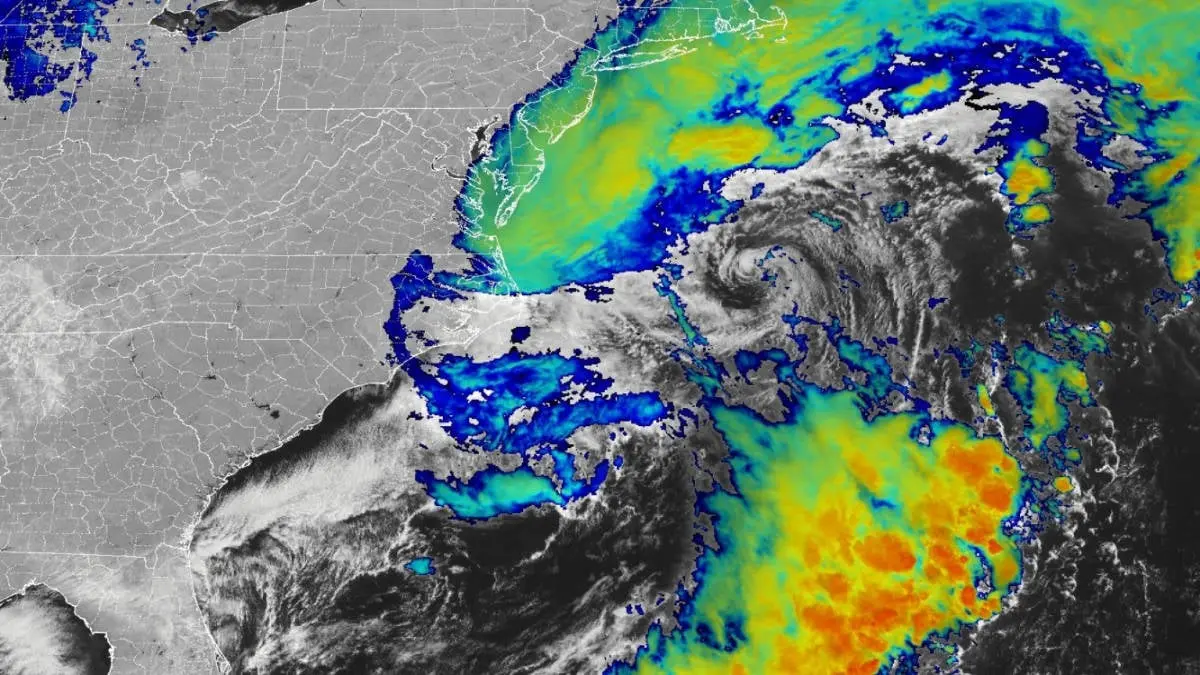
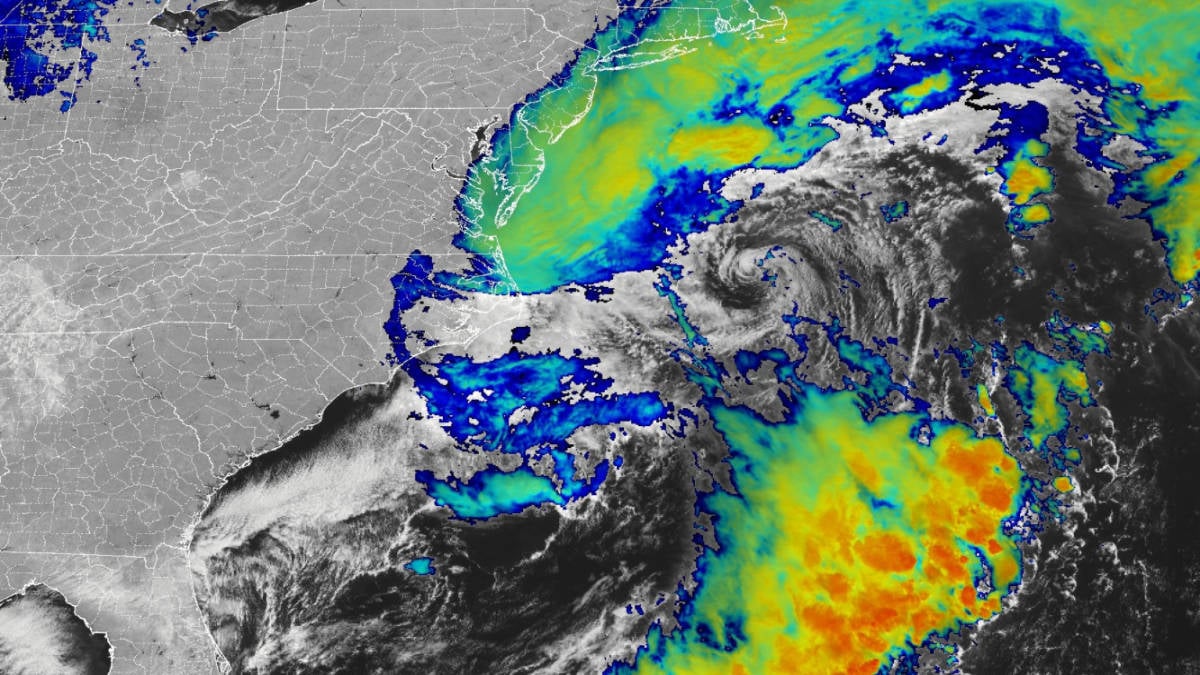
A powerful and expansive meteorological convergence—formed by the merging of several low-pressure systems—has birthed a colossal nor’easter off the United States East Coast and Canadian Atlantic seaboard. Characterized by gale-force winds, high seas, and severely reduced visibility, this severe weather system has forced major cruise lines to radically alter their operational schedules.
As of late September, major operators including Carnival Cruise Line, Norwegian Cruise Line, and Royal Caribbean International have implemented significant itinerary adjustments, route diversions, and departure delays. The primary objective, according to industry spokespersons and maritime authorities, is to steer clear of the storm’s ferocious core, thereby guaranteeing the safety and comfort of passengers and crew members alike.
The disruptions have rippled through key homeports—including Norfolk, Virginia; New York City, New York; and Baltimore, Maryland—affecting thousands of vacationers. While modern cruise vessels are equipped with advanced radar, satellite weather monitoring, and state-of-the-art stabilizers, the sheer velocity and unpredictable trajectory of a major autumnal nor’easter necessitate proactive seamanship. Rather than challenging the turbulent seas, captains have opted to slow speeds, trim port visits, alter courses entirely, or delay departures.
This comprehensive report examines the specific impacts on four primary cruise vessels, details the operational challenges faced by cruise lines, reviews official communications, and provides a broader outlook for other vessels operating in the Northeast corridor.
Detailed Chronology of Impacts and Itinerary Alterations
The rapid intensification of the nor’easter triggered a cascade of operational changes across multiple cruise lines. Below is the detailed breakdown of how individual ships and their respective operators managed the developing crisis.
1. Carnival Sunshine: Proactive Out-to-Sea Diversion and Delayed Turnaround
- Homeport: Norfolk, Virginia
- Impact: Itinerary delay and forced route diversion
Carnival Sunshine has found itself directly in the crosshairs of the developing tempest. Carnival Cruise Line issued urgent notifications to all guests booked on the vessel’s upcoming sailing departing out of Norfolk, Virginia.
To evade the worst of the nor’easter’s punishing swells and sustained winds, the ship was forced to take a wide berth, diverting far out into open, calmer waters. Consequently, Carnival Sunshine could not maintain its original timeline and failed to arrive back at its homeport in time for the originally scheduled embarkation.
To resolve the logistical bottleneck safely, Carnival Cruise Line pushed back the voyage by 24 hours. The updated schedule sees the cruise embarking from Norfolk a full day later, turning what would have been a standard turnaround into a carefully managed delayed departure designed to ensure the vessel does not re-enter the path of lingering storm debris.
2. Norwegian Escape: Slashed Halifax Stay for an Early Return to New York
- Homeport: New York City, New York
- Impact: Shortened port call and early arrival
For the 4,266-guest Norwegian Escape, a 7-night Canada and New England itinerary began under clear skies on Saturday, September 19. However, the rapidly shifting meteorological landscape forced Norwegian Cruise Line to fundamentally rewrite the final chapters of the voyage.
The ship’s itinerary originally featured a leisurely, full-day call at Halifax, Nova Scotia, scheduled from 9:00 AM to 10:00 PM on Thursday. Recognizing that lingering in Atlantic Canada would trap the vessel between the advancing storm and the coastline, ship leadership made the executive decision to truncate the Halifax visit.
Guests received formal notification letters on Thursday morning explaining the rationale. The ship hoisted anchor and departed Halifax several hours ahead of schedule, punching south through the open ocean to outrun the worst of the impending gale.
By steaming ahead of the storm’s core, Norwegian Escape secured an early arrival into New York City late Friday evening—substantially ahead of its customary 7:00 AM Saturday disembarkation slot. To accommodate passengers, the vessel remained safely secured at the cruise terminal overnight. While Friday’s planned leisurely day at sea was replaced by a high-speed transit, guests were treated to an unexpected bonus: a breathtaking nocturnal transit past the illuminated New York City skyline as the ship tucked into port ahead of schedule.
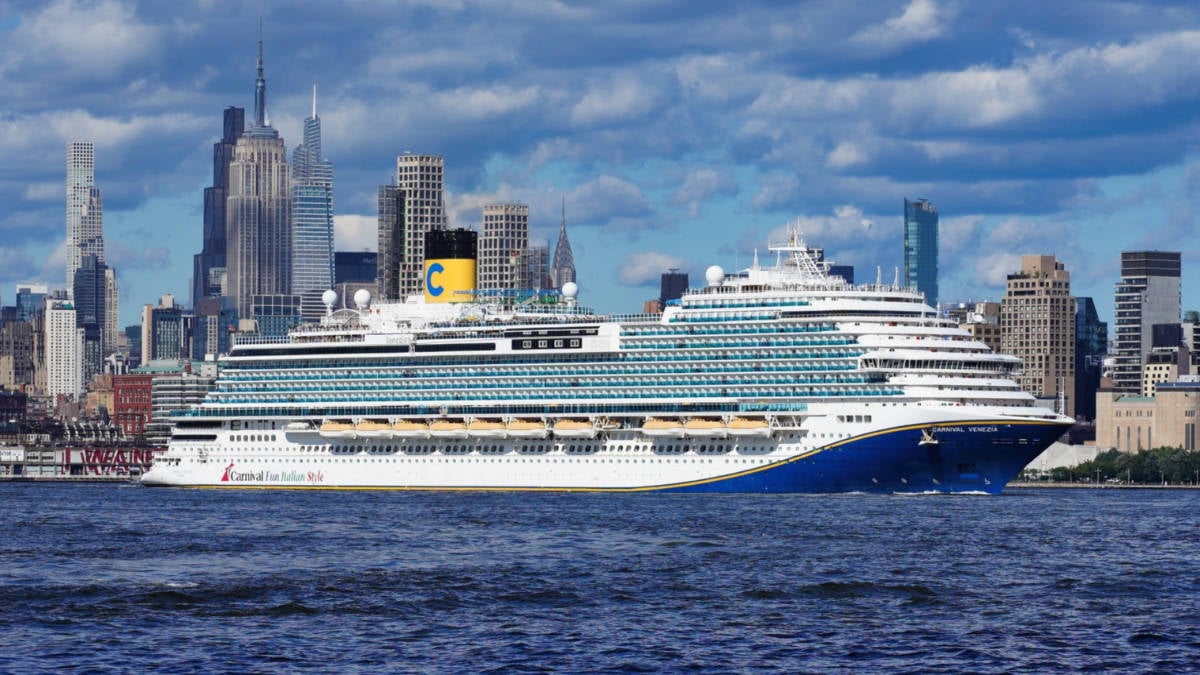
3. Carnival Venezia: Bermuda Itinerary Compressed and Return Voyage Delayed
- Homeport: New York City, New York
- Impact: Shortened port time in Bermuda, delayed return, and postponed subsequent embarkation
Carnival Venezia, boasting a capacity of 4,090 guests, departed New York on a 4-night Bermuda sailing. Almost immediately, the ship’s captain was forced to adjust tactics. On the opening full day of the voyage, passengers were informed that their anticipated getaway to the British Overseas Territory would be drastically compressed.
To maximize passenger comfort, the captain intentionally reduced speed, allowing the ship to ride out the tumultuous sea conditions with minimal lateral rolling and pitching. While this cautious navigation successfully protected passengers from severe motion sickness, it severely impacted the ship’s turnaround timeline upon returning to New York.

The resulting delay in New York cascaded into the vessel’s subsequent assignment: a 5-night Bermuda itinerary that originally promised an extended overnight stay. Because of the delayed departure from the homeport and necessary storm-evading detours along the southern route, arrival in Bermuda was pushed back from Saturday morning to Sunday morning.
4. Vision of the Seas: A Complete Southern Pivot to the Bahamas
- Homeport: Baltimore, Maryland
- Impact: Total itinerary replacement, delayed embarkation, and strict CBP restrictions
Perhaps the most dramatic operational pivot was executed by Royal Caribbean International for the 2,050-guest Vision of the Seas. The ship was originally scheduled to depart Baltimore on a 9-night Canada and New England voyage. Facing the imminent fury of the nor’easter along the northern tracking lanes, Royal Caribbean pulled the plug on the northern itinerary entirely.
Instead of sending the ship toward the freezing, wave-tossed waters of Atlantic Canada, the cruise line pivoted the vessel completely to the south.
- The Schedule Shift: The ship remained docked overnight in Baltimore through Thursday, finally slipping its moorings at 3:00 PM on Friday.
- The New Route: Rather than heading north, Vision of the Seas charted a course for the sun-drenched waters of Florida and the Bahamas. Its revised itinerary features warm-weather port calls at Port Canaveral, Nassau, and Grand Bahama Island, before returning safely to Maryland.
- Embarkation Complications: The sudden change threw terminal operations into disarray. Embarkation was significantly delayed, with the terminal doors remaining closed until late Thursday afternoon. Furthermore, due to strict U.S. Customs and Border Protection (CBP) regulations governing ship movements and passenger manifests during unscheduled terminal holds, guests who had already boarded were legally prohibited from disembarking to explore Baltimore.
Supporting Context & Metrics: The Anatomy of a Nor’easter
To fully understand why modern cruise lines take such drastic, proactive measures, one must examine the unique meteorological threat posed by a North American nor’easter.
[Low-Pressure System 1] ↘
                         +---> [Merging Air Masses] ---> [Nor'easter Formation] ---> [Gale-Force Winds & High Swells]
[Low-Pressure System 2] ↗                                                                       │
                                                                                                v
                                                                                    [Cruise Line Intervention]
                                                                                                │
                                                                       ┌────────────────────────┴────────────────────────┐
                                                                       ▼                                                 ▼
                                                            [Route Diversions & Speed Reductions]             [Itinerary Cancellations & Port Skips]
What is a Nor’easter?
A nor’easter is a macro-scale storm system that occurs along the East Coast of North America. It derives its name from the direction of the winds that blow from the northeast over the coastal waters. These storms form when cold Arctic air masses sweeping down from Canada collide with warm, moist air streaming northward from the Atlantic Ocean and Gulf of Mexico.
When these contrasting air masses clash—particularly during the transitional autumn months—they create intense atmospheric pressure gradients. The resulting low-pressure center deepens rapidly, generating hurricane-force winds, torrential rainfall, and massive oceanic swells that can easily exceed 20 to 30 feet in height.
The Vulnerability of Passenger Cruise Ships
While modern cruise ships are marvels of maritime engineering designed to withstand extreme sea states, passenger comfort and structural safety margins dictate strict avoidance protocols.

- Center of Gravity: Cruise ships possess high vertical profiles (superstructures) that act much like sails in high winds. Gale-force winds blowing broadside can make precise harbor maneuvering nearly impossible and induce uncomfortable roll angles.
- Passenger Experience: Unlike cargo vessels, cruise ships carry thousands of civilian vacationers. Prolonged periods of severe pitching and rolling lead to widespread motion sickness, injuries from falls, and catastrophic interior damage to unsecured public spaces and passenger cabins.
- Harbor Navigation: Restricted waterways, narrow navigational channels, and shallow approach paths into ports like New York, Baltimore, and Halifax become exceptionally hazardous when compounded by zero-visibility rain squalls and crosswinds. Consequently, cruise executives prefer to sacrifice a port of call or alter a destination entirely rather than risk a high-stakes battle with coastal gale conditions.
Official Statements and Industry Insights
The transparency of cruise line executives and brand ambassadors has played a critical role in managing passenger expectations during this meteorological event.
John Heald, Carnival Cruise Line’s outspoken Brand Ambassador, took to social media to address concerned passengers and praise the seamanship of Carnival’s fleet captains. In a widely viewed update regarding the Carnival Venezia, Heald emphasized the human element of storm navigation:
"I must say thank you to the guests on board now who have a delayed debarkation in New York this morning because the Captain slowed the ship to make it more comfortable for them in the bad weather."
This sentiment highlights the difficult balancing act cruise operators face. While slowing down or altering a route invariably results in missed excursions, frustrated vacationers, and delayed schedules for incoming passengers, prioritizing passenger safety and comfort remains the undisputed gold standard of the industry.
Similarly, corporate communications distributed by Norwegian Cruise Line and Royal Caribbean stressed the preemptive nature of their decisions. In official advisories issued to passengers aboard the Norwegian Escape, management noted:
"Based on the latest forecasts and to allow the ship to safely navigate the region ahead of the storm’s expected strongest conditions, this adjustment is necessary to support our planned arrival into New York City."
These official statements reflect an industry-wide shift toward hyper-vigilant risk management. Empowered by real-time satellite telemetry and advanced predictive modeling, cruise lines are increasingly willing to disrupt schedules days in advance rather than reacting defensively once a storm has already closed in.
Future Outlook: Extended Watches and Advisory for Travelers
As the massive nor’easter continues to churn off the seaboard, the maritime sector remains on high alert. Although only four vessels have enacted confirmed, sweeping changes as of late September, meteorological projections indicate that the storm’s footprint will continue to expand, threatening additional homeports and regional itineraries.
Vessels Under Close Watch
Maritime operations teams are closely monitoring a secondary wave of ships scheduled to dock or depart across the Northeast and Mid-Atlantic corridors over the coming days:
- New York & New Jersey Hubs: Crystal Symphony (Friday), Queen Mary 2 (Saturday), Valiant Lady (Sunday), Independence of the Seas (Saturday), and Oasis of the Seas (Sunday).
- Baltimore & Mid-Atlantic: Carnival Pride, scheduled to dock in Baltimore on Sunday, September 27, faces potential turnaround delays.
- New England & Canadian Gateways: Silversea’s Silver Wind (Saturday), Norwegian Breakaway (Sunday) in Boston, and Celebrity Silhouette expected in Portland, Maine.
- Delaware River: Norwegian Jewel, slated for Philadelphia on Saturday, September 26, remains vulnerable depending on how far inland the outer rain bands and tidal surges reach.
Essential Guidance for Cruise Passengers
For travelers currently holding tickets for upcoming autumn sailings along the Eastern Seaboard, uncertainty is likely to persist until the weather system fully dissipates and moves out to sea. Industry experts recommend the following best practices:
- Maintain Direct Communication: Ensure that your mobile phone number and email address are up to date with your cruise line or travel agent. Automated SMS alerts and email broadcasts provide the earliest warnings of schedule shifts.
- Monitor Official Channels: Check cruise line apps and dedicated operational update pages rather than relying solely on speculative social media forums.
- Build Travel Flexibility: Travelers flying into homeports like New York, Baltimore, or Norfolk are strongly advised to arrive a day early and maintain flexible return travel arrangements in the event of delayed debarkations or extended sailings.
As maritime infrastructure and cruise operators continue to adapt to increasingly volatile seasonal weather patterns, proactive communication and decisive captaincy remain the most effective defenses against the unpredictable fury of a North American nor’easter.