








Executive Overview
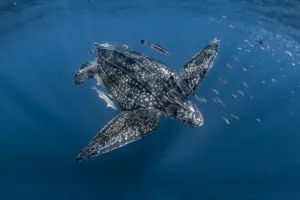
From the deep trenches of the abyss to the sunlit shallows of coastal estuaries, Earth is a planet defined by water. Every single day, majestic and rhythmic migrations play out across the globe. Humpback whales journey thousands of miles to ancient calving grounds, while nightly vertical migrations see trillions of plankton, fish, and cephalopods rise from the ocean depths toward the surface to feed. These biological rhythms have persisted for millennia, acting as the lifeblood of marine ecosystems.
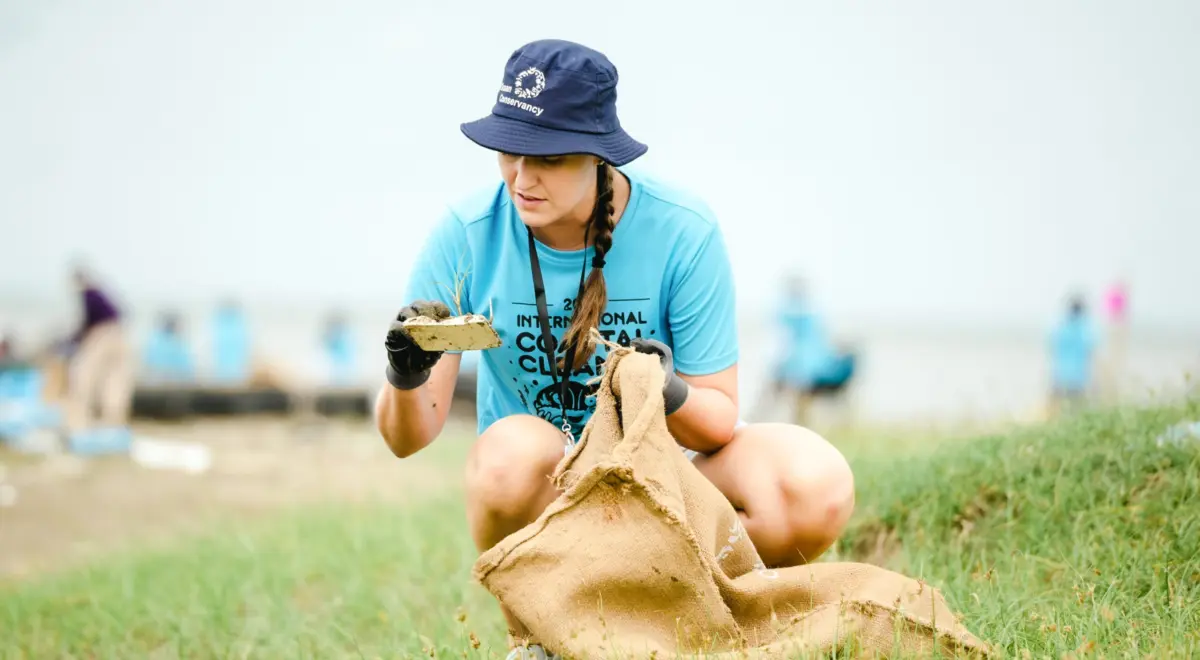
Yet, a new, anthropogenic migration has emerged to rival these natural wonders. Every year, hundreds of thousands of human beings flock to the shores of creeks, rivers, lakes, and oceans across the globe. Their mission is not to harvest, but to heal—to scour waterways and remove the suffocating tide of plastic debris and anthropogenic trash left behind by modern society.
This is the International Coastal Cleanup® (ICC), spearheaded by the Ocean Conservancy. As the movement enters its 41st season, the urgency of its mission has never been more pronounced. Sarah Weller, Associate Director of the ICC, captures the profound personal and collective weight of the movement as she prepares for this year’s mobilization—her first with her eight-month-old daughter in tow.
This comprehensive report explores the architecture of the ICC, the empirical science driving modern conservation, the deeply human motivations inspiring millions to act, and the roadmap toward a future where marine debris is nothing more than a historical footnote.
Detailed Chronology: The Evolution and Mechanics of the ICC
The International Coastal Cleanup is far more than a single day of community service; it is a meticulously coordinated global campaign that has evolved over four decades into the world’s largest volunteer effort for ocean health.
From Humble Beginnings to Global Movement
Launched over 40 years ago, the ICC was born from a simple yet radical idea: that local hands picking up trash on a single beach could aggregate into a dataset powerful enough to shift global environmental policy. Over the decades, the initiative has expanded from a localized coastal sweep into a borderless phenomenon. Volunteers now gather in over 100 countries, ranging from remote island archipelagos to densely populated urban riverbanks.
While the apex of global participation traditionally crests in September, the ICC operates as a 365-day commitment. Communities organize cleanups year-round, adapting to seasonal weather patterns and local environmental crises. Crucially, the democratization of data collection has transformed every individual beachgoer into a citizen scientist.

The Power of Technology: The Clean Swell® App
At the heart of modern ICC operations is Clean Swell®, Ocean Conservancy’s free mobile application. Designed to streamline data collection, the app allows volunteers to log every piece of trash they retrieve in real-time.
When a participant picks up a plastic bottle, a discarded fishing net, or a food wrapper, they log it via Clean Swell. This data feeds directly into a massive, open-access online database. This repository is not merely an archive of human pollution; it is an analytical tool used by researchers, policymakers, and international bodies to track pollution trends, identify primary corporate and consumer waste contributors, and craft legislation—such as single-use plastic bans and extended producer responsibility (EPR) laws—tailored to stop the plastic crisis at its source.
Supporting Context & Metrics: The Scale of the Crisis and Scientific Impact
To understand the necessity of the ICC, one must confront the staggering scale of marine pollution. The numbers generated during past cleanups paint a vivid portrait of an ocean under siege, while modern scientific breakthroughs are beginning to quantify the exact ecological benefits of volunteer intervention.
By the Numbers: The 41st Season Prepares
During the previous year’s cleanup campaign, the metrics achieved by the global volunteer network were both inspiring and sobering:
- Total Volunteers: Over 630,000 individuals mobilized across the globe.
- Mass Removed: An astonishing 7.9 million pounds (3.4 million kilograms) of trash was extracted from aquatic ecosystems.
- Items Tallied: Volunteers meticulously counted and categorized 13.8 million individual items of debris.
These figures represent a fraction of the millions of metric tons of plastic that enter the ocean annually. However, every pound of plastic removed represents a direct intervention in the life cycle of a potential ecological hazard.
The Wildlife Impact Calculator: Quantifying Conservation
Historically, conservationists understood that removing trash helped the environment, but quantifying the precise biological benefit proved challenging. That paradigm shifted following recent, award-winning research led by Ocean Conservancy scientists—work that was recognized with the highly selective Cozzarelli Prize for scientific excellence.
Building upon these peer-reviewed findings, the Ocean Conservancy developed the Wildlife Impact Calculator. Integrated directly into the Clean Swell® app, this tool bridges the gap between raw data collection and ecological preservation.
When a volunteer submits their cleanup data through the app, the Wildlife Impact Calculator instantly computes how many marine birds, sea turtles, marine mammals, and fish have been protected from potential entanglement, ingestion, or toxic exposure based on the specific items removed. This real-time feedback loop transforms abstract cleanup numbers into tangible, emotional victories for participants, demonstrating precisely how their afternoon on the beach saved wildlife.
Official Statements & Voices from the Frontlines
The heartbeat of the International Coastal Cleanup is its community—a diverse coalition of scientists, parents, students, and lifelong environmental stewards. Recently, Ocean Conservancy surveyed its global supporters to ask a fundamental question: What does the ocean mean to you, and why do you feel called to protect it?
The responses reflect a deep, visceral connection to the marine environment that transcends geographic and cultural boundaries:
"I would love for future generations to be able to see the beautiful ocean we have. We need to stop the destruction of pollution, overfishing, and warming of our oceans."
— Debra E., Ocean Conservancy Supporter
For many, the ocean represents both our planetary life support system and an awe-inspiring frontier:
"It is our future! And it is an honor to explore it at times. I wish everyone could see its beauty below the surface."
— Suzy W."It’s one of the most important places on the planet and it is still as unknown to us as outer space, for this is the final frontier to be explored. And now more than ever, our future depends on a healthy thriving ocean."
— Derek H.
This sentiment of stewardship is frequently rooted in formative personal experiences:
"The ocean and wildlife were part of my childhood. It was where I felt like I belonged. I want to protect it so future generations can have the connection that I had."
— Cynthia K.
Synthesizing these thoughts, long-time advocate Laurie S. offered a profound philosophical reflection on the irreplaceable value of marine ecosystems:
"The ocean is life itself; a vast, breathing force whose rhythms sustain the planet, nourish entire ecosystems, and cradle an extraordinary tapestry of wildlife. It embodies natural beauty in its purest form, from shimmering surfaces to the hidden worlds below, each layer reminding us of the delicate balance that keeps Earth alive. Without the ocean, all life ends; with it, the planet thrives. It is both a wonder and a responsibility, a reminder that we must protect the oceans if we hope to protect ourselves and the future of every living thing."
Future Outlook: Envisioning a World Without Plastic Pollution
As the International Coastal Cleanup embarks on its 41st season, leaders and participants alike are forced to look toward the horizon. While cleanups are vital triage measures, they are not, in and of themselves, the ultimate cure for the plastic crisis.
The Ultimate Goal: Obsolescence
The overarching aspiration of the Ocean Conservancy and its global network is bold yet simple: to make cleanups obsolete.
Sarah Weller encapsulates this generational dream:
"Like so many of our supporters, I dream of a future where my daughter and her generation do not have to do cleanups, and the plastic pollution crisis would be a thing of the past."
This vision is not an impossible utopia. The technological tools, economic models, and policy solutions required to stem the tide of plastic pollution already exist. From biodegradable packaging alternatives and advanced chemical recycling to global plastic treaties and circular economy frameworks, humanity possesses the blueprints for a sustainable future.
The Path Forward
Reaching this future requires the prioritization and aggressive implementation of these solutions at municipal, national, and international levels. However, until systemic transformation is fully realized, grassroots action remains indispensable.
Cleaning up the debris and plastics already fouling our environment protects vulnerable wildlife today, engages communities, and generates the critical data needed to hold polluters accountable tomorrow.
The annual migration of good—the swelling tide of volunteers stepping onto beaches with gloves and trash bags—continues to grow. It is an act of love for our blue planet, an affirmation of our shared responsibility, and a powerful demand for change.
Will you answer the call? Join the International Coastal Cleanup® today, download the Clean Swell app, and take your place in the movement to secure a healthy ocean and a thriving planet, forever and for everyone.