






Executive Overview
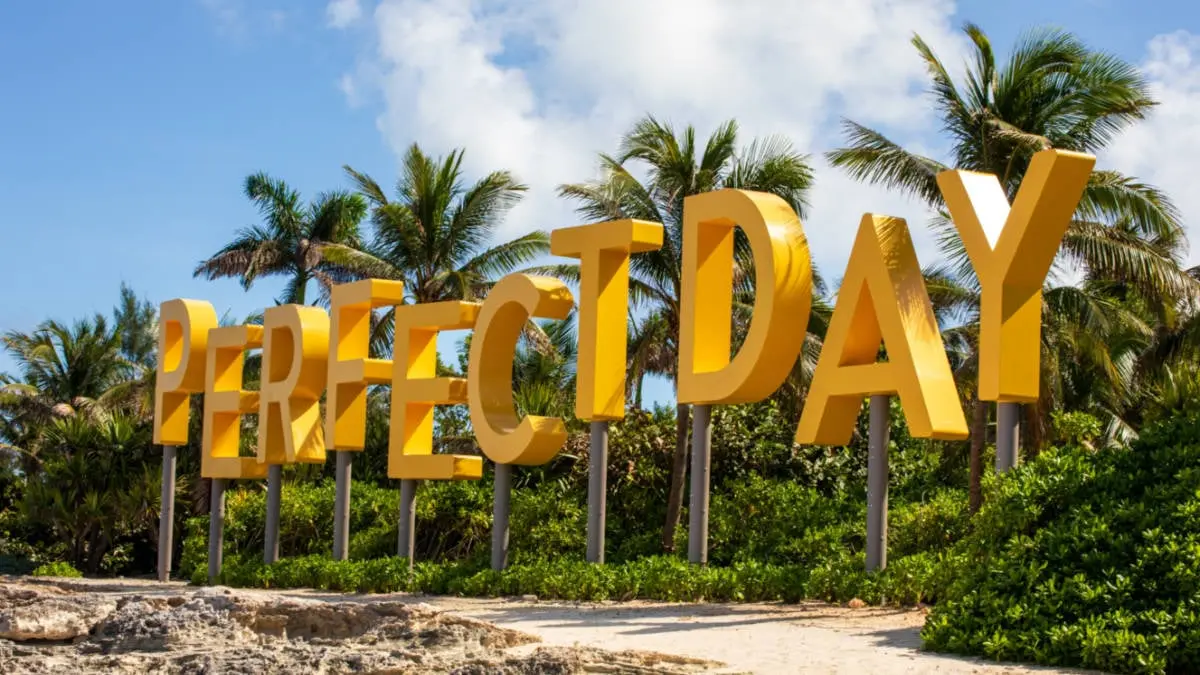
In the fast-paced, high-stakes world of cruise line branding, minor adjustments can carry major corporate significance. Royal Caribbean International has officially initiated a quiet yet deliberate rebrand of its crown-jewel private island in the Bahamas. Guests, travel advisors, and cruise enthusiasts can officially say goodbye to the prepositional phrase that has defined the resort experience for half a decade. Moving forward, the island formerly known as "Perfect Day at CocoCay" is now simply—and officially—"Perfect Day CocoCay."
The alteration, while seemingly semantic, marks a strategic evolution in how Royal Caribbean Group structures its growing portfolio of exclusive leisure destinations. This subtle pruning of a single, two-letter word has rippled across the cruise line’s digital ecosystem, instantly transforming the interface of its online booking engine, reservation invoices, public-facing marketing collateral, and official website. Furthermore, the updated nomenclature extends to sister brand Celebrity Cruises, whose vessels began making regular calls to the Bahamian hot spot in April 2024.
To announce the transition, Royal Caribbean leaned heavily into modern, self-aware social media marketing. Rather than issuing a dry, corporate press release, the cruise line dropped a humorous, highly engaging video across its official channels, playfully policing its own brand ambassadors for using the legacy terminology.
While the physical island—complete with its massive Thrill Waterpark, pristine freshwater pools, exclusive beach clubs, and soaring helium balloon—remains entirely unchanged, this corporate housekeeping provides a fascinating window into modern destination branding. As Royal Caribbean continues to expand its footprint of proprietary beach clubs and potential future island developments, standardizing the nomenclature of its luxury portfolio has become a top priority for the cruise line’s executive and marketing teams.
Detailed Chronology of the Rebrand
The transition away from the legacy moniker did not happen overnight, though its public-facing rollout culminated in a coordinated digital campaign in late August 2026.
The Social Media Reveal
On Thursday, August 27, 2026, Royal Caribbean published a short, lighthearted promotional clip across its social media platforms, including Facebook and Instagram. The video was explicitly designed to catch the attention of loyal cruisers while simultaneously setting a new standard for how staff, performers, and digital creators reference the island.
Filmed against the scenic backdrop of the arrival pier with the prominent "CocoCay" signage visible in the distance, the sketch features a lively resort entertainer dressed in a pirate costume. Stepping up to the camera, she enthusiastically delivers a scripted welcome: "Welcome to a Perfect Day at CocoCay!"

Instantly, the production value shifts. A playful ship’s horn sound effect bleeps out the word "at," while an animated ice cream cone emoji pops up to playfully cover the performer’s mouth. A deadpan narrator interrupts the scene, instructing the cast member: "Wait, you can’t say that! Try again!"
After a second playful flub, the third and final take hits the mark cleanly: "Welcome to Perfect Day CocoCay!" accompanied by a triumphant, winning chime sound effect.
The accompanying captions drove the point home with internet-savvy humor. On Instagram, the cruise line cheekily noted, "The ‘at’ in Perfect Day CocoCay has left the chat." Meanwhile, Facebook captions reassured anxious fans: "Say goodbye to the ‘at’ in Perfect Day at CocoCay — from now on, it’s Perfect Day CocoCay. A different name, with the same award-winning island experience you know and love."
Within days of publication, the video drew tens of thousands of views and thousands of positive engagements, cementing the name change in the cultural lexicon of the cruise community.
The Digital and Administrative Rollout
Behind the scenes, the marketing department had already laid the groundwork for the change. By the time the social media video aired, the technical infrastructure supporting the brand had already been scrubbed of the preposition.
Travelers logging into their Crown & Anchor Society accounts, browsing upcoming Caribbean itineraries, or reviewing detailed booking invoices noticed the streamlined title. The change was implemented globally across:
- Royal Caribbean International’s consumer-facing website and mobile application.
- Travel agent booking portals and administrative backend systems.
- Onboard signage, promotional brochures, and digital display screens aboard the fleet.
- Collateral materials utilized by Celebrity Cruises for its growing Bahamian itineraries featuring the island.
Supporting Context & Metrics: The Evolution of Private Destinations
To understand why Royal Caribbean chose to streamline "Perfect Day at CocoCay," one must examine the broader strategic architecture of the cruise line’s destination portfolio. Over the past decade, private islands and exclusive shoreside retreats have transformed from simple beach-day diversions into primary economic drivers and key competitive differentiators within the multi-billion-dollar cruise industry.
The "Ultimate Destinations" Strategy
Royal Caribbean Group has increasingly grouped its proprietary locations under the overarching banner of "Ultimate Destinations by Royal Caribbean." Within this corporate strategy, uniformity and brand scalability are critical.
Consider the nomenclature of the cruise line’s upcoming and established beach club concepts:
- Royal Beach Club: Paradise Island (Bahamas)
- Royal Beach Club: Santorini (Greece)
In each instance, the brand employs a clean, colon-separated naming convention that pairs the overarching brand family (Royal Beach Club) with the specific geographic locale.
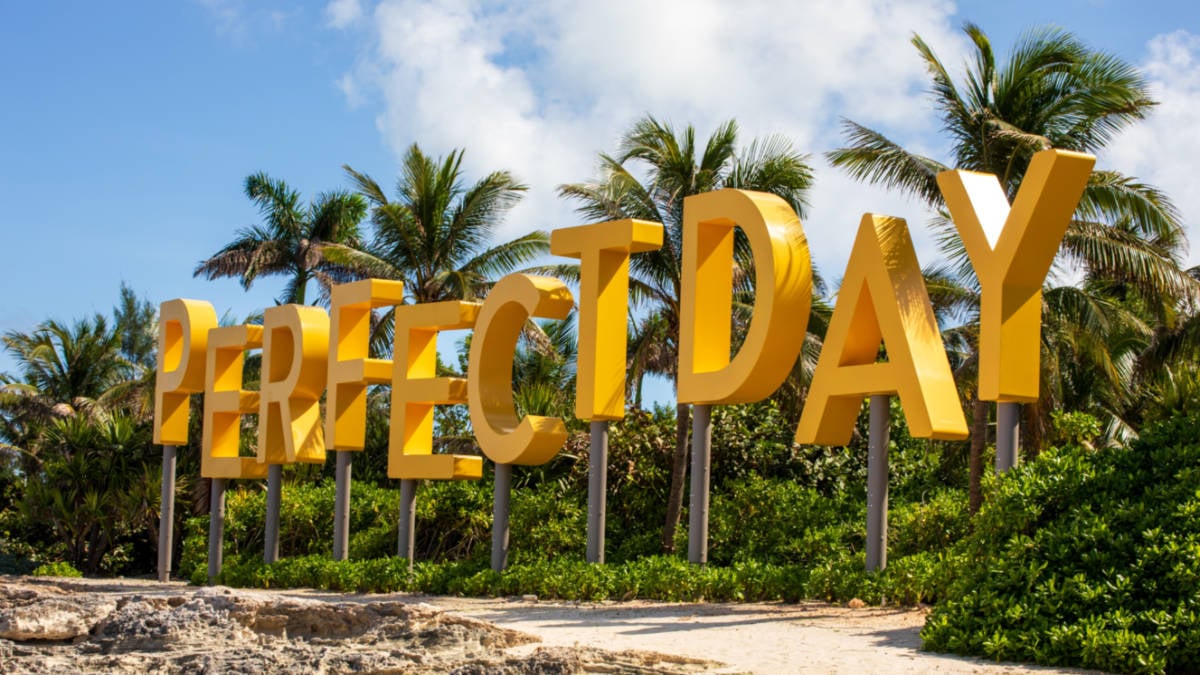
When analyzing the proposed—though ultimately altered—expansion into Mexico, the naming logic becomes even clearer. The planned development near Costa Maya, Mexico, was slated to be called "Perfect Day Mexico." Notably, leadership never considered naming it "Perfect Day at Mexico" or "Perfect Day in Mexico."
By stripping the preposition "at" from CocoCay, Royal Caribbean has effectively harmonized its premier private island with the structural template of Perfect Day Mexico and its Royal Beach Club portfolio. It creates a unified, master-brand architecture where every proprietary destination follows a sleek, predictable naming convention.
Engagement and Digital Footprint
The public reception of the rebrand highlights the immense digital gravity that CocoCay holds among cruise enthusiasts. Since its transformative, multi-million-dollar reinvention debuted in 2019, the island has consistently ranked as the highest-rated port of call across Royal Caribbean’s entire global itinerary network.
Within the first 48 hours of the August 27, 2026 announcement, the social media campaign generated significant metrics:
- Nearly 60,000 organic views on Facebook within the first day.
- Over 2,200 direct likes and hundreds of comments on Instagram.
- Widespread discussion threads across major cruise dedicated forums, including Reddit’s r/royalcaribbean and the Cruise Critic message boards, where fans debated the stylistic merits of the missing preposition.
Official Statements and Corporate Branding Philosophy
While cruise executives have not published a dense white paper detailing the linguistic rationale behind the change, corporate communications emphasize that the alteration is purely stylistic.
A spokesperson for Royal Caribbean reiterated that the guest experience, operational protocols, island infrastructure, and staffing structures remain entirely unaffected. The multi-million-dollar investment portfolio poured into the island—ranging from the towering Daredevil’s Peak water slide to the exclusive, high-end Coco Beach Club—continues to operate under the exact same standards.
From a branding perspective, dropping minor prepositions is a well-established practice in modern corporate evolution. Much like tech giants streamlining their product names for global readability and digital interface optimization, cruise lines are increasingly leaning toward punchy, minimalist destination branding.
Furthermore, eliminating the word "at" removes potential translation friction for international markets. For non-native English speakers booking cruises originating from Europe, Latin America, and Asia, direct translations of prepositions in proper nouns can often create awkward syntax. A streamlined destination name—Perfect Day CocoCay—translates much more cleanly across global digital booking engines, ensuring universal brand recognition regardless of the user’s native language.
Future Outlook: The State of Royal Caribbean’s Destination Portfolio
The strategic refinement of the CocoCay brand occurs at a pivotal moment for Royal Caribbean’s private destination portfolio, which currently presents a landscape of both triumphant expansion and complex geopolitical challenges.
The Expansion Horizon
The "Perfect Day" branding framework was explicitly built to be replicated. Following the massive commercial success of the Bahamian iteration, Royal Caribbean Group has spent years actively scouting international waters for additional real estate capable of supporting a high-capacity, highly curated private resort experience.
Although the initial vision for a Mexican outpost near Costa Maya faced regulatory hurdles—with the Mexican government ultimately rejecting the original design proposal—the overarching ambition remains very much alive. Industry analysts fully expect Royal Caribbean to announce alternative sites for future "Perfect Day" installations in the Caribbean and potentially other global cruising corridors. Having a clean, standardized brand framework like "Perfect Day CocoCay" and "Perfect Day [Location]" ensures that future additions will effortlessly plug into the existing marketing ecosystem.
The Labadee Conundrum
While CocoCay enjoys unmitigated success and a newly polished brand identity, the broader picture of Royal Caribbean’s exclusive destinations reveals distinct operational hurdles. As of August 2026, the cruise line’s other major exclusive destination—Labadee, Haiti—presents a stark contrast.
Unlike CocoCay or the upcoming Royal Beach Clubs, Labadee is formally classified by the cruise line as an "Exclusive Destination" rather than a "Perfect Day" or "Royal Beach Club" location, leaving it outside the new naming convention entirely. More critically, however, Labadee has been entirely absent from cruise itineraries for over two years.
Following escalating civil unrest, widespread gang violence, jailbreaks, and the eventual collapse of civil government infrastructure in Haiti, Royal Caribbean was forced to suspend all ship calls to Labadee beginning in March 2024. The safety and security of passengers and crew remain the absolute priority for the cruise line, prompting a continuous series of rolling cancellations.
In mid-July 2026, Royal Caribbean confirmed that cancellations for Labadee had been officially extended through at least June 2027. This ongoing closure impacts more than 60 future itineraries across multiple ships in the fleet. Marine operations teams have been actively rerouting affected voyages to alternative regional ports of call, such as Grand Turk, Falmouth (Jamaica), or Nassau, to minimize the disruption to passenger vacations.
Conclusion
Ultimately, the decision to drop the "at" from Perfect Day CocoCay is much more than a petty grammar exercise or a fleeting social media stunt. It is a calculated corporate alignment designed to future-proof Royal Caribbean’s destination portfolio. As the cruise line looks toward an era of expanding beach clubs and potential new island developments, streamlining its brand architecture ensures that every guest immediately recognizes the standard of luxury, adventure, and relaxation awaiting them at shore.
Whether passengers call it by its old name out of habit or quickly adapt to the new digital reality, Perfect Day CocoCay remains firmly anchored as the undisputed jewel of the Caribbean cruise experience.