









Executive Overview
The ground transportation industry stands at a critical juncture. Rapidly shifting economic headwinds, emerging technological disruptions, labor market volatility, and changing consumer expectations have transformed the operational landscape for transit agencies and private bus operators alike. In this high-stakes environment, traditional leadership models—often characterized by reactive problem-solving and rigid hierarchies—are no longer sufficient to guarantee long-term viability. Survival and sustained growth demand a fundamental pivot toward proactive organizational health, strategic empathy, and the intentional creation of operational options.
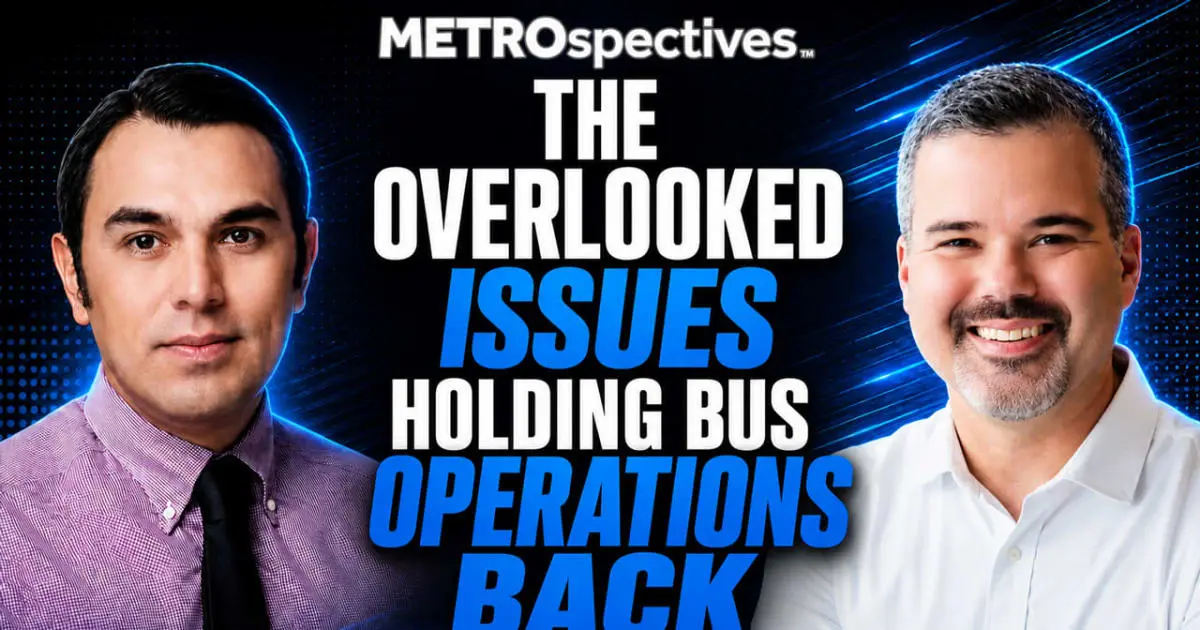
To unpack these complex dynamics, METRO Executive Editor Alex Roman sat down with Brian Dickson, a prominent industry veteran, seasoned operator, executive, and the founder of both Bus Business Consultants and Ground Transportation Insights (GTI). In a wide-ranging, insightful interview featured on the METROspectives podcast, Dickson leveraged decades of firsthand experience to deconstruct what it truly takes to build a resilient, future-proof transportation organization.
This article explores the core themes of Dickson’s masterclass in leadership, examining how modern transit leaders can move beyond short-term firefighting to cultivate thriving organizational cultures, anticipate industry disruption, and future-proof their operations in an era of unprecedented transformation.
Detailed Chronology & Evolution of an Industry Leader
To understand Brian Dickson’s current philosophy on leadership and organizational health, one must examine the trajectory of his career within the ground transportation sector. Dickson’s insights are not born from theoretical textbooks; they are forged in the crucible of real-world operational challenges, executive decision-making, and decades of observation across multiple facets of the passenger transportation industry.
From the Frontlines to the C-Suite
Dickson’s journey mirrors the evolution of the modern transportation sector. Beginning his career on the frontlines of daily operations, he gained an intimate, granular understanding of the mechanical, logistical, and human elements required to move people safely and efficiently. This foundational experience provided him with a rare perspective—one that bridged the gap between daily driver realities and corporate boardrooms.
As he transitioned into executive leadership roles, Dickson observed a recurring pattern across struggling transit companies and motorcoach operators: organizations frequently faltered not due to a lack of capital or technical know-how, but because of foundational fractures in leadership and internal communication. Companies would experience explosive growth during favorable economic cycles, only to fracture under the weight of unexpected market shocks because they lacked internal organizational health.
The Birth of Bus Business Consultants and GTI
Recognizing a systemic void in how transportation businesses approached long-term strategy and cultural health, Dickson stepped away from traditional corporate roles to found Bus Business Consultants and Ground Transportation Insights (GTI). His mission was clear: to provide operators with the strategic frameworks, operational audits, and leadership development tools necessary to break the cycle of reactive management.
Through his consultancy work, Dickson has engaged with dozens of transit systems, private motorcoach companies, and mobility providers. Over the years, his mandate has expanded from tactical efficiency consulting to deep organizational transformation. In his discussion on METROspectives, Dickson reflects on how these cumulative experiences have shaped his core thesis: that the health of an organization is the ultimate determinant of its ability to survive disruption.
Supporting Context & Industry Metrics: The State of Ground Transportation
The urgency behind Dickson’s leadership framework is underscored by the current macroeconomic and operational realities facing the ground transportation industry. Modern transit and motorcoach operators face a convergence of unprecedented pressures that test the limits of traditional management structures.
The Labor Crisis and Workforce Retention
Perhaps the most acute challenge facing the industry is the persistent shortage of qualified commercial drivers and maintenance technicians. According to recent workforce reports from major transit associations, driver shortages continue to impact service reliability, route expansions, and overall fleet utilization.
Dickson’s philosophy addresses this directly, arguing that workforce shortages are rarely just a recruitment problem—they are fundamentally a retention and organizational health problem. When companies fail to foster an environment of psychological safety, mutual respect, and clear communication, turnover skyrockets. Conversely, organizations that treat staff development as a strategic priority find themselves insulated from the worst effects of labor market crunches.
Technological Disruption and Fleet Modernization
Simultaneously, the industry is undergoing a massive technological revolution. The transition toward zero-emission fleets—comprising battery-electric and hydrogen fuel-cell buses—requires entirely new maintenance protocols, charging infrastructure investments, and workforce upskilling. Furthermore, the proliferation of mobility-as-a-service (MaaS) platforms, real-time passenger information systems, and automated dispatching software has raised customer expectations to all-time highs.
In this environment, operators cannot afford to treat technology as an afterthought. Dickson emphasizes that integrating new tools successfully requires an organizational culture capable of absorbing change without breaking down internally.
Official Insights & Core Leadership Lessons from Brian Dickson
During his conversation on METROspectives, Brian Dickson distilled decades of hard-won wisdom into actionable principles for transportation leaders. His insights challenge conventional corporate wisdom, reframing what it means to lead effectively in a complex industry.
1. Kindness as a Strategic Advantage
One of Dickson’s most compelling assertions—and the subject of his broader industry writings—is that kindness is not soft; it is strategic. In high-pressure operational environments where dispatchers manage tight schedules and drivers face heavy traffic and demanding passengers, leadership styles have historically leaned toward command-and-control authoritarianism.
Dickson argues that this outdated approach is counterproductive. True strategic leadership requires empathy, active listening, and a genuine investment in the well-being of employees. When leaders practice empathy, they build psychological safety. This encourages front-line workers to report safety hazards immediately, share innovative ideas for efficiency, and remain loyal to the company during difficult times. Kindness, in Dickson’s framework, directly correlates with reduced turnover, fewer safety incidents, and a more resilient operational culture.
2. Moving Beyond Reactive Management
Too many transportation organizations operate in a state of perpetual crisis management. Whether dealing with sudden fuel price spikes, unexpected vehicle breakdowns, or severe staffing shortages, reactive leaders spend 100% of their energy putting out fires.
Dickson stresses that operational health begins the moment an organization stops merely reacting to events and starts intentionally shaping its trajectory. Healthy organizations build buffers—financial, operational, and cultural—that allow them to absorb shocks and pivot swiftly when market conditions shift.
3. Creating Options for Long-Term Success
A central theme of Dickson’s consulting philosophy is the concept of optionality. In a volatile industry, the worst position a company can find itself in is having only one course of action available during a crisis.
Dickson advises executives to continuously cultivate strategic options. This includes:
- Diversifying revenue streams by balancing charter, commuter, and contract services.
- Cross-training personnel to ensure operational continuity during staffing shortages.
- Fostering adaptive leadership teams capable of steering the organization through unforeseen regulatory or economic changes.
By deliberately expanding their strategic horizon, transportation leaders transform uncertainty from an existential threat into a manageable variable.
Future Outlook: Building the Resilient Transportation Enterprise of Tomorrow
As the ground transportation industry looks toward the horizon, the lessons articulated by Brian Dickson serve as a vital roadmap for sustainable success. The coming decade will undoubtedly bring new disruptions—ranging from regulatory shifts to emerging mobility technologies—that will test the mettle of transit executives and private operators.
The Imperative of Cultural Resilience
Technology and capital will always be critical components of a successful transportation enterprise, but Dickson’s insights remind us that the human element remains the true anchor of organizational health. Leaders who embrace strategic empathy, prioritize internal communication, and dismantle toxic operational silos will build workforces capable of weathering any storm.
A Call to Action for Industry Professionals
For transit leaders, motorcoach owners, and industry executives seeking to future-proof their operations, the blueprint is clear. It requires stepping back from the daily whirlwind of tactical firefighting to invest in long-term organizational design.
As highlighted in the METROspectives episode, transforming a transportation company from a fragile, reactive entity into a resilient, forward-looking enterprise does not happen overnight. It is an intentional, daily practice rooted in sound leadership principles, respect for the front-line workforce, and an unwavering commitment to creating strategic options for the future.
To catch the full conversation with Brian Dickson and explore more insights from industry leaders, make sure to tune in to the METROspectives podcast. Stay ahead of industry trends by signing up for the METRO Express newsletter and connecting with METRO Magazine on LinkedIn, Facebook, and Twitter.