











Executive Overview
Every year, millions of recreational boaters and commercial mariners take to coastal waters, inland lakes, and major river systems, drawn by the allure of open spaces and maritime recreation. However, the aquatic environment remains inherently unpredictable. Mechanical failures, sudden squalls, fires, and hull breaches can rapidly transform a peaceful excursion into a life-or-death struggle. When a marine emergency unfolds, time is the ultimate currency, and the ability to effectively communicate distress to nearby vessels and rescue authorities becomes paramount.
At the heart of maritime survival and search-and-rescue (SAR) operations are Visual Distress Signals (VDS). These specialized tools are engineered to cut through environmental glare, nighttime darkness, and turbulent weather to alert rescuers of an urgent need for assistance and pinpoint a vessel’s exact location. Despite stringent federal and state regulations designed to ensure that every vessel carries the appropriate gear, maritime incidents continue to occur where boaters are either unequipped, unfamiliar with their safety gear, or improperly utilizing distress signals.
This investigative report provides an authoritative, comprehensive examination of marine visual distress signals. Drawing on current United States Coast Guard (USCG) regulations, safety standards, and maritime rescue expert insights, this guide details the regulatory frameworks governing VDS carriage, breaks down the mechanical and practical differences between pyrotechnic flares and electronic alternatives, and outlines strategic protocols for deployment. Furthermore, this analysis examines common mistakes made by mariners, clarifies the appropriate use of non-emergency towing versus emergency maritime distress, and establishes a blueprint for comprehensive on-water preparedness.
Detailed Chronology: The Evolution of Marine Distress Signaling
To understand the modern landscape of marine safety, it is essential to trace the chronological evolution of how mariners communicate peril. From the earliest days of open-ocean navigation to the sophisticated electronic ecosystems of the twenty-first century, the methods used to signal for help have undergone a profound transformation.
The Era of Primitive and Improvised Signals (Pre-20th Century)
For centuries, mariners relied on rudimentary, highly visible adjustments to their vessels to signal distress when encountering trouble far from shore. Historical logs document practices such as flying the national ensign upside down—a universal symbol of distress still recognized today—firing cannons at regular intervals, or setting large bonfires on the decks of wooden ships if close to land. Handheld torches, lanterns hoisted aloft, and the waving of dark flags against light horizons served as the primary means of catching the eye of passing merchant vessels. While these methods occasionally succeeded, they lacked standardization, suffered heavily from poor weather conditions, and offered virtually no way to transmit precise geographic coordinates.
The Pyrotechnic Revolution and Standardization (Mid-to-Late 20th Century)
The twentieth century brought rapid industrialization to maritime safety, marked by the invention and widespread adoption of chemical pyrotechnics. The introduction of red handheld flares, rocket-propelled aerial meteors, and high-intensity smoke canisters revolutionized marine survival. Governments realized that standardization was vital for multi-agency rescue coordination.
During the mid-to-late 1900s, national and international maritime bodies—such as the International Maritime Organization (IMO) and the United States Coast Guard—codified specific requirements for VDS carriage. Regulations began dictating which vessels were legally mandated to carry pyrotechnic devices based on length, tonnage, and operating zones (such as coastal waters versus inland lakes). These rules established clear distinctions between daytime signals (predominantly orange smoke and flags) and nighttime signals (bright red pyrotechnic flames and aerial flares), dramatically increasing the survival rates of shipwrecked sailors and distressed boaters.

The Electronic and Digital Age (21st Century)
As technology progressed into the 2000s and beyond, the limitations of traditional pyrotechnics—namely, their single-use nature, expiration dates, fire hazards, and potential for accidental discharge—spurred the development of electronic alternatives. The introduction of USCG-approved electronic visual distress signal devices (eVDSDs) marked a major milestone in marine safety. Emitting repeating, high-intensity light patterns without open flames or chemical reactions, these devices offered a reusable, non-expiring nighttime solution.
Concurrently, the proliferation of satellite-based Emergency Position-Indicating Radio Beacons (EPIRBs) and Personal Locator Beacons (PLBs) transformed SAR operations. While electronic beacons do not replace visual signals, their integration with global satellite constellations ensured that rescuers could be alerted instantaneously, while VDS devices provided the vital final-stage visual confirmation needed by rescue helicopters and surface vessels zeroing in on a target in heavy seas.
Supporting Context & Metrics: Understanding the Regulatory Landscape and Equipment Dynamics
Operating a vessel safely requires a deep understanding of federal, state, and local legal frameworks. The requirements governing Visual Distress Signals are multifaceted, depending heavily on vessel dimensions, geographic operating zones, and the time of day.
Federal Requirements and Operating Zones
Under United States federal law, specific VDS requirements apply to vessels operating on the Great Lakes, the territorial seas, and those waters connected directly to them, up to a point where the waterway is less than two miles wide. Furthermore, coastal waters and the high seas fall under strict carriage rules.
- Vessels Under 16 Feet: Generally exempt from carrying daytime signals unless operating at night, in which case they must carry approved nighttime signals.
- Vessels 16 Feet and Over: Must carry readily accessible visual distress signals approved for both day and night use at all times when operating on applicable waters.
- Exceptions: Open sailboats under 26 feet long that are not equipped with propulsion machinery, and manually propelled boats (canoes, kayaks, rowboats), are typically exempt from daytime requirements but must carry nighttime signals if operated between sunset and sunrise.
Day vs. Night Conditions: The Dual-Requirement Principle
A core tenet of marine safety law is that daytime signals and nighttime signals serve fundamentally different purposes and cannot be universally interchanged.
- Daytime Signals: Must be clearly visible against bright sunlight, ocean glare, and the surrounding horizon. Devices like orange smoke canisters and orange distress flags rely on contrast and color recognition.
- Nighttime Signals: Must be exceptionally bright and visible after dark over considerable distances. Handheld red flares, aerial meteors, and approved electronic distress lights fulfill this need.
- The Combination Rule: Boaters operating past daylight hours must carry equipment that covers both conditions. Relying solely on a daytime flag leaves a vessel dangerously non-compliant and invisible after dusk. Conversely, carrying only a nighttime light may fail daytime inspection standards unless paired with an approved daytime signal.
Technical Breakdown of Approved VDS Equipment
| Equipment Type | Operating Window | Primary Advantages | Critical Limitations & Maintenance |
|---|---|---|---|
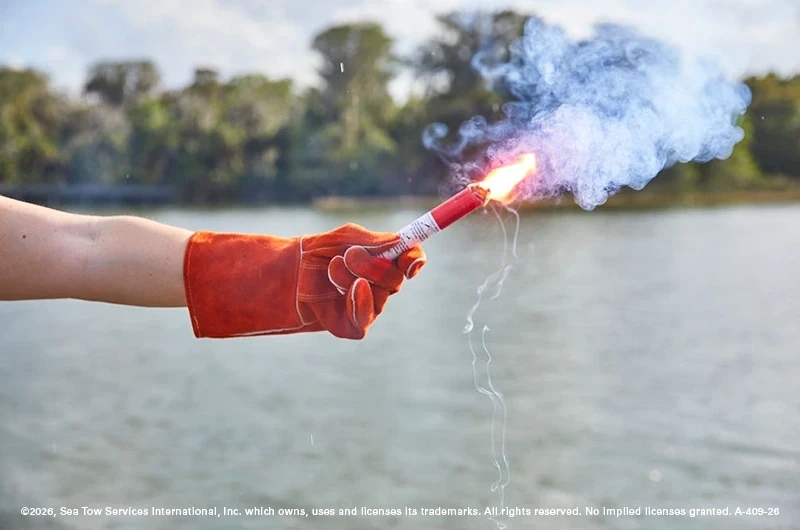
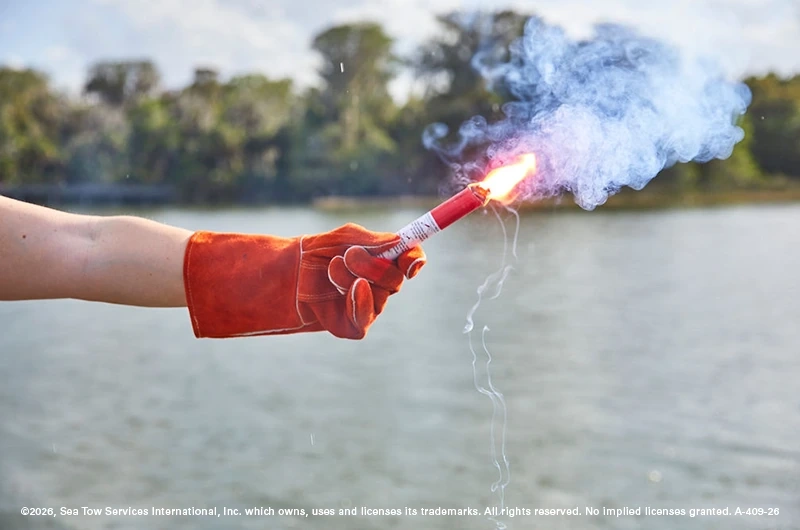
| Handheld Red Flares | Night (and some day) | Intense, unmistakable red flame visible over long distances. | Single-use, expires within 42 months of manufacture, produces hot slag, requires careful lee-side handling. |
| Aerial Meteors / Flares | Day & Night | Launches high into the air, expanding the line-of-sight visibility zone significantly. | Requires precise aiming away from people and rigging; single-use; expires; fire hazard. |
| Orange Smoke Canisters | Day Only | Excellent for signaling aircraft and nearby boats; indicates wind direction via smoke drift. | Useless at night; produces dense smoke; single-use; expires. |
| Electronic Distress Lights (eVDSD) | Night Only | Reusable, no expiration date, no fire risk, repeating SOS flash pattern. | Requires fresh batteries/maintenance; must be USCG-approved; must be paired with an approved daytime signal. |
| Orange Distress Flags | Day Only | Reusable, durable, does not expire, highly visible in bright sunlight. | Ineffective at night; depends heavily on wind and height for visibility. |
Official Statements and Expert Guidance
Navigating the complexities of marine safety equipment requires heeding the collective wisdom of maritime authorities, search-and-rescue professionals, and industry leaders.
The U.S. Coast Guard Perspective
The United States Coast Guard consistently emphasizes that carrying safety equipment is only half the battle; proper education and accessibility are equally critical. In official safety advisory releases, Coast Guard officials note:
"A visual distress signal is your lifeline when conventional communications fail. It is not enough to simply stow an expired box of flares deep within a dry locker where passengers cannot reach them. Captains must ensure that all crew members and regular passengers know precisely where distress equipment is kept, how to inspect it, and how to deploy it safely under high-stress conditions."
Furthermore, maritime safety agencies urge boaters to utilize Vessel Safety Checks (VSCs) offered free of charge by the Coast Guard Auxiliary and America’s Boating Club. These voluntary inspections help mariners verify that their VDS inventory matches current federal and state mandates, ensuring that no expired or unserviceable pyrotechnics are onboard before casting off.
Sea Tow Maritime Experts on Non-Emergency vs. Emergency Protocols
As a premier leader in on-water assistance, Sea Tow operations deal extensively with the aftermath of improper distress signaling. Marine experts within the organization frequently reiterate the crucial distinction between routine assistance requests and true life-threatening emergencies:
"Flares and visual distress signals communicate immediate peril—situations involving sinking, fire, severe medical crises, or imminent danger to life and limb. Using a pyrotechnic flare for a routine tow request, such as a dead battery or running out of fuel in calm weather, is a dangerous misuse of emergency equipment. It drains valuable Coast Guard resources, triggers unnecessary multi-agency search-and-rescue responses, and introduces severe fire hazards to your vessel. For non-emergency assistance, mariners should always rely on marine VHF radio channels, cellular communication, or dedicated apps like the Sea Tow App."
Future Outlook: Emerging Technologies and the Next Generation of Marine Safety
As maritime technology continues to evolve at a rapid pace, the future of marine distress signaling is shifting toward enhanced connectivity, automation, and sustainable electronic design.
Integration of Smart Marine Electronics
The traditional boundary between visual signals and electronic communication is blurring. Future advancements point toward the integration of smart marine electronics that synchronize visual alerts with digital distress broadcasts. For instance, next-generation electronic distress beacons are increasingly incorporating automated identification system (AIS) transponder technology. When activated, these devices not only flash high-intensity visual distress patterns visible to the human eye and night-vision equipment but simultaneously transmit an AIS distress message directly to the navigation screens of all commercial and recreational vessels within VHF range.
Sustainable and Non-Hazardous Pyrotechnics
Environmental and safety concerns regarding traditional chemical pyrotechnics are driving research into eco-friendly manufacturing. Traditional flares contain hazardous perchlorates and heavy metals that can contaminate marine ecosystems upon discharge. The next wave of marine safety equipment focuses on biodegradable casings, non-toxic chemical formulations, and high-output LED electronic flares that completely eliminate the risk of accidental deck fires, chemical burns, and hazardous waste disposal issues.
Regulatory Adaptations and Global Harmonization
As autonomous vessels and advanced recreational watercraft become more commonplace, international maritime authorities are actively reviewing and updating safety regulations. The future outlook suggests a move toward broader acceptance and standardization of advanced eVDSDs worldwide, potentially reducing the heavy reliance on single-use pyrotechnics altogether. However, until regulatory bodies fully transition to electronic primacy, mariners must remain vigilant, strictly adhering to current federal and state carriage rules while embracing modern safety technologies to safeguard their passengers on every voyage.


