










Executive Overview
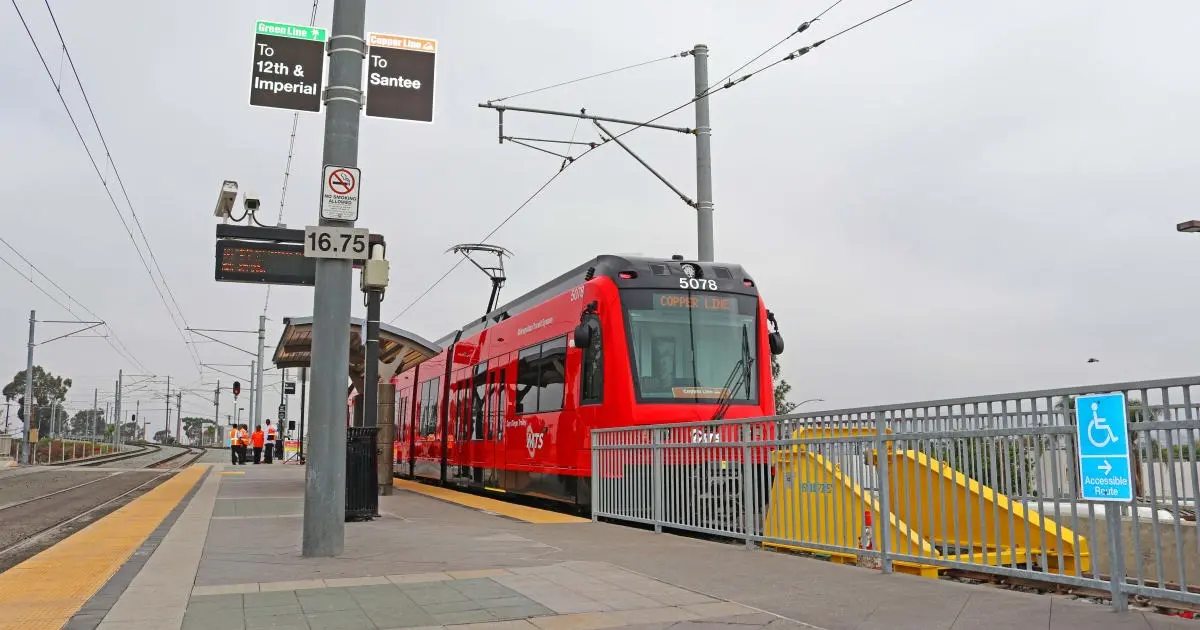
In what is being heralded as a defining moment for modern urban mobility in Southern California, the San Diego Metropolitan Transit System (MTS) has officially shattered its all-time historical ridership records. Driven by an intense surge in everyday commuter demand, optimized service frequencies, and high-capacity logistics management for massive regional summer gatherings, MTS recorded a staggering 4.1 million passenger trips across its light-rail Trolley network in July 2026.
This achievement marks a monumental threshold: it is the first time in the entire history of the agency that monthly Trolley ridership has crossed the four-million mark. Surpassing the previous all-time high of 3,938,761 trips set in October 2024—and significantly outperforming historical July benchmarks of 3.87 million and 3.92 million trips from previous years—this milestone underscores a permanent structural shift in how San Diegans commute, recreate, and navigate their rapidly evolving region.
Beyond the headline-grabbing Trolley figures, the broader transit ecosystem experienced robust participation, with MTS buses accounting for an additional 3,082,492 passenger trips during the same thirty-one-day window. Together, these figures illustrate a resilient, high-performing transit infrastructure that has not only fully recovered from the catastrophic disruptions of the COVID-19 pandemic but has fundamentally outpaced its pre-2020 operational baselines.
This comprehensive report examines the catalysts behind July 2026’s historic numbers, analyzes the operational mechanics that made the surge possible, reviews line-by-line performance data, and evaluates what this sustained momentum means for the future of West Coast public transportation.
Detailed Chronology: The Anatomy of a Record-Breaking Month
To understand how MTS achieved this unprecedented volume of passenger trips, transit historians and urban planners must look closely at the unique convergence of structural advantages, demographic shifts, and calendar events that defined July 2026.
The Convergence of Commuter Demand and Major Events
The record-breaking trajectory was not accidental; it was the result of a meticulously planned operational calendar colliding with organic urban growth. The month began with steady, high-volume weekday commuter loads. Unlike historical summer trends—where public transit systems traditionally experience a slight lull due to university recesses and holiday vacations—San Diego’s transit corridors hummed with activity. The steady influx of local professionals, students attending summer sessions, and tourists utilizing transit for regional exploration kept baseline weekday numbers exceptionally high.
The true tipping point, however, arrived during the final week of the month. San Diego hosted its crown-jewel cultural event: Comic-Con International. Tens of thousands of visitors, cosplayers, and pop-culture enthusiasts descended upon the downtown core, packing hotels, restaurants, and, crucially, public transit vehicles.
Recognizing the immense logistical challenge, MTS deployed its specialized "Special Event Line" and dramatically increased service frequencies across the system. The results were instantaneous and quantifiable: the Special Event Line alone captured 132,315 passenger trips during the convention.
Yet, industry analysts note a critical nuance that highlights the organic health of the system: even if every single Comic-Con trip is entirely subtracted from the monthly tally, the remaining Trolley ridership for July 2026 stands at a phenomenal 3,973,288 trips. This baseline-adjusted figure alone would have broken the previous all-time monthly record, proving that the four-million milestone was propelled by everyday ridership adoption rather than a one-off convention spike.
Operational Escalation and Real-Time Adjustments
Achieving historical ridership is impossible without flawless operational execution. Behind the scenes, MTS control centers managed rolling stock, monitored dwell times at high-volume transfer stations, and deployed backup trains to mitigate platform crowding.
Throughout July, maintenance teams operated on tightened schedules to ensure maximum fleet availability. With zero tolerance for mechanical delays during peak travel windows, the agency’s rolling stock availability hovered near all-time highs. Operators, dispatchers, and station agents coordinated in real-time to adjust headways, ensuring that passengers waiting at platforms experienced minimal wait times—a core pillar of modern transit retention strategies.
Supporting Context & Metrics: Data Dive into the Post-Pandemic Bounce-Back
To properly contextualize the July 2026 milestone, one must analyze the broader financial and operational trajectory of the San Diego MTS over the preceding half-decade.
The Long Road to Recovery: From 2020 Lows to 2026 Highs
Like transit agencies across the globe, MTS suffered devastating ridership losses during the height of the COVID-19 pandemic in 2020 and 2021. Remote work mandates, safety lockdowns, and institutional closures hollowed out daily commuter numbers. However, while many major metropolitan systems struggled indefinitely with permanent structural deficits and stagnant recovery curves, San Diego pursued an aggressive, forward-thinking capital and operational strategy.
Instead of cutting service to save short-term costs—a counterproductive death spiral that plagues struggling transit systems—MTS doubled down on investments in:
- Service Frequency: Reducing wait times on key corridors to make transit competitive with private automobiles.
- Passenger Safety: Implementing enhanced transit policing, cleanliness protocols, and customer-facing support staff to rebuild public trust.
- Customer Experience: Modernizing fare payment technologies, upgrading station infrastructure, and deploying real-time tracking applications.
These strategic investments yielded immediate financial and operational dividends. In Fiscal Year 2025, MTS achieved a major milestone by surpassing 80 million annual passenger trips for the first time since the pandemic, capturing over 95% of its pre-COVID ridership baseline. This momentum did not plateau. In Fiscal Year 2026, annual ridership climbed even higher, reaching 81.2 million passenger trips, setting the stage for the historic July surge.
Line-by-Line Breakdown: The Engine Rooms of the Trolley Network
The Trolley system’s extraordinary performance in July 2026 was powered by three primary rail arteries, each serving distinct geographical and demographic segments of the San Diego metropolitan area:
- The UC San Diego Blue Line: Dominating the network, the Blue Line recorded the highest ridership volume in July, pulling in an astonishing 2.36 million+ passenger trips. The line’s exceptional performance is directly tied to the highly successful extension connecting downtown San Diego directly to La Jolla and the University Town Center (UTC). By bridging major employment hubs, medical centers, residential communities, and the sprawling UC San Diego campus, the Blue Line has transformed into a high-capacity economic engine.
- The Green Line: Serving vibrant residential, commercial, and cultural centers from Santee through Mission Valley, SDSU, and into downtown San Diego, the Green Line recorded 971,266 passenger trips in July. Its steady performance reflects the heavy reliance of university students, retail workers, and event-goers traversing the eastern and central corridors.
- The Orange Line: Connecting East County communities like El Cajon and Lemon Grove with downtown San Diego, the Orange Line accounted for 587,174 passenger trips. This corridor remains a vital lifeline for working-class commuters and students requiring reliable, affordable access to the urban core.
Combined with the 132,315 trips on the Special Event Line, these figures paint a picture of a balanced, highly utilized rail network that serves every corner of the regional economy. Meanwhile, the bus division’s 3,082,492 passenger trips demonstrate that rubber-tired transit remains an indispensable first-and-last-mile feeder network, working in tandem with the light-rail system to move millions of residents seamlessly.
Official Statements: Leadership Perspectives on a Historic Milestone
The achievement of the four-million-trip milestone elicited widespread praise from regional civic leaders, transportation executives, and municipal planners who have spent years championing public infrastructure investments.
Stephen Whitburn, MTS Board Chair, emphasized the broader socioeconomic implications of the milestone during a press briefing following the release of the July data:
"Record-breaking ridership reflects the region’s growing reliance on fast, frequent, and reliable public transit. More people are choosing the Trolley to get to work, school, sporting events, and major destinations throughout the region. This milestone demonstrates the vital role public transit plays in keeping San Diego moving."
Whitburn’s sentiments were echoed by MTS Chief Executive Officer Sharon Cooney, who pointed to the deliberate, multi-year strategic roadmap that positioned the agency for sustainable growth:
"This achievement reflects years of work to make transit a more attractive option for people across our region. When you build a system that is dependable, safe, and connected to the places people actually want to go, the community responds. We are seeing that response loud and clear today."
Transportation economists and urban development experts have similarly praised San Diego’s model. Unlike cities that rely solely on legacy transit systems, San Diego’s willingness to aggressively expand rail corridors—exemplified by the multi-billion-dollar Mid-Coast Trolley extension—coupled with Transit-Oriented Development (TOD) zoning policies, has created a symbiotic relationship between housing growth and transit utilization. As new residential towers and mixed-use commercial developments sprout up directly adjacent to Trolley stations, a built-in customer base is generated organically.
Future Outlook: Sustaining Momentum and Expanding Horizons
While celebrating the historic achievements of July 2026, leadership at the San Diego Metropolitan Transit System is already looking forward. The structural challenges of a rapidly growing region, combined with ambitious climate action goals, mean that resting on laurels is not an option.
Capital Investments and Fleet Modernization
To accommodate the surging demand, MTS is actively planning for the next generation of regional transit infrastructure. Priorities include:
- Fleet Upgrades: Acquiring modern, high-capacity light-rail vehicles to increase passenger capacity on the Blue and Green lines during peak hours.
- Zero-Emission Bus Transition: Continuing the aggressive rollout of battery-electric and hydrogen fuel-cell buses, ensuring that the agency’s environmental footprint shrinks even as ridership expands.
- Station Enhancements: Upgrading older stations with modern digital signage, improved lighting, weather shelters, and enhanced accessibility features compliant with the Americans with Disabilities Act (ADA).
Regional Integration and Equity
Furthermore, MTS is collaborating with SANDAG (San Diego Association of Governments) to refine regional transit integration. Efforts to streamline fare structures across different municipal operators, implement contactless payment technologies, and expand regional micro-transit feeder services are expected to remove remaining friction points for potential riders.
As housing costs in Southern California continue to place financial pressure on working families and traffic congestion on regional freeways worsens, high-capacity public transit is no longer viewed merely as an alternative option—it is increasingly recognized as an absolute necessity for regional economic survival and environmental sustainability.
Conclusion
The July 2026 ridership record stands as a watershed moment for the San Diego Metropolitan Transit System. By surpassing 4.1 million Trolley trips in a single month, MTS has proven that with strategic capital investment, unwavering operational focus, and a deep commitment to customer experience, public transit can not only recover from existential shocks but reach unprecedented heights. As San Diego looks toward the horizon, the foundations laid today will ensure that the region remains connected, mobile, and economically vibrant for decades to come.